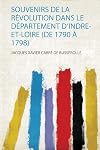
A Group of Noble Dames
by Thomas Hardy
On This Page
Description
Whether you're a long-time fan of Thomas Hardy's works or a first-time reader who is curious about the author of such masterpieces as Tess of the d'Urbervilles and Far From the Madding Crowd, this collection of short stories offers a gratifying introduction to the renowned British naturalist's literary talent..
Tags
Recommendations



















Member Reviews
A collection of stories on the theme of the romances and misfortunes of noble women, meant to be told by a group of men who gather for a series of talks that do not happen. Luckily, that second part is not much of the story. The 10 tales are a somewhat mixed bag of lost loves, secret marriages, misunderstandings, and pretty much every human foible of relationships. This being Hardy he does manage to wring quite a bit of pathos from each one, some more successfully than others. I found the first and the last the most engaging, they seemed to be actual stories with proper development of place and character and dialouge. Some of the middle stories read more like plot summaries. However, as part of my "Read All Hardy Prose" adventure, this show more was a worthwhile venture. show less
Ten short stories, all beautifully written by the master, in whch young marriagable women and men find themselves often in all kinds of bother because they have not been quite truthful at the outset of romance, or they have been too hasty in declaring their love.
I found that the longer the story, the more satisfying it was. Hence, 'The First Countess of Wessex" "The Lady Penelope" and "The Honourable Laura" are three of the more memorable for me.
Perhaps collecting ten stories, all similarly themed, might not be a fully successful means of collecting short stories in a volume for retention in one's memory, but this is a minor quibble.
I found that the longer the story, the more satisfying it was. Hence, 'The First Countess of Wessex" "The Lady Penelope" and "The Honourable Laura" are three of the more memorable for me.
Perhaps collecting ten stories, all similarly themed, might not be a fully successful means of collecting short stories in a volume for retention in one's memory, but this is a minor quibble.
I quite enjoyed this group of short stories with the common theme of the lives and loves of upper class women. Some of the situations these women got into seem incredibly modern i.e. children conceived out of wedlock, running away with unsuitable men and finding out that your husband is already married to someone else. However I guess I shouldn't be surprised that women and men followed their passions then as they do now. Nor that they sometimes lived to regret it.
Each story is narrated by a different member of the Wessex Field and Antiquarian Clubs. Usually the meetings were devoted to "papers on deformed butterflies, fossil ox-horns, prehistoric dung-mixens, and such like" but on this occasion the planned field trip couldn't take show more place due to rain. So the local historian produced a manuscript of a story about The First Countess of Wessex and read it to entertain the members. That story reminded someone else of another which reminded another member of a story they had been told and so on.
I think the story I liked most was the eigth about The Lady Penelope. She was courted by three men at the same time and whenever one suitor encountered another suitor paying his respects to Penelope tempers flared. Penelope told them that she would not allow a man in her presence again if he broke the peace with one of the others. She then made a declaration that she soon regretted:
'Have patience, have patience, you foolish men! Only bide your time quietly, and, in faith, I will marry you all in turn.'
That didn't come out quite right but the men laughed and repeated the remark to their acquaintances until all the folk in the county knew what Penelope had said. She eventually decided to marry one of them but he died a few months after the wedding. One of the other men soon began to court the widow and, although of the two remaining Penelope liked the other best, since her first choice was out of the country she decided to marry the man at hand. She soon regretted her choice because this man was quite cruel to her. He became ill and died too but again the third man was out of the country. Finally the third suitor returned and, after a decent interval, the two were wed. However, rumours started to fly that Penelope had poisoned her second husband and when the third heard these he left the country and Penelope. Penelope wasted away in his absence and he returned just in time for Penelope to declare on her deathbed that she had not poisoned her second husband. This was borne out by a physician who had examined the body and found that the death was by natural causes. It was too late to save Penelope but it did clear her name. This, to me, is pure Hardy. show less
Each story is narrated by a different member of the Wessex Field and Antiquarian Clubs. Usually the meetings were devoted to "papers on deformed butterflies, fossil ox-horns, prehistoric dung-mixens, and such like" but on this occasion the planned field trip couldn't take show more place due to rain. So the local historian produced a manuscript of a story about The First Countess of Wessex and read it to entertain the members. That story reminded someone else of another which reminded another member of a story they had been told and so on.
I think the story I liked most was the eigth about The Lady Penelope. She was courted by three men at the same time and whenever one suitor encountered another suitor paying his respects to Penelope tempers flared. Penelope told them that she would not allow a man in her presence again if he broke the peace with one of the others. She then made a declaration that she soon regretted:
'Have patience, have patience, you foolish men! Only bide your time quietly, and, in faith, I will marry you all in turn.'
That didn't come out quite right but the men laughed and repeated the remark to their acquaintances until all the folk in the county knew what Penelope had said. She eventually decided to marry one of them but he died a few months after the wedding. One of the other men soon began to court the widow and, although of the two remaining Penelope liked the other best, since her first choice was out of the country she decided to marry the man at hand. She soon regretted her choice because this man was quite cruel to her. He became ill and died too but again the third man was out of the country. Finally the third suitor returned and, after a decent interval, the two were wed. However, rumours started to fly that Penelope had poisoned her second husband and when the third heard these he left the country and Penelope. Penelope wasted away in his absence and he returned just in time for Penelope to declare on her deathbed that she had not poisoned her second husband. This was borne out by a physician who had examined the body and found that the death was by natural causes. It was too late to save Penelope but it did clear her name. This, to me, is pure Hardy. show less
Read for my on-going Hardy reading project, this was the first book of Hardy’s work I hadn’t read previously, the only other one I haven’t read is A Changed man and other tales – which is scheduled for next May. I was therefore looking forward to reading a selection of short stories which were new to me, and over all I wasn’t disappointed, although these won’t be my favourites Hardy stories. In these stories there are little of the pastoral scenes which I so love in Hardy’s work, the emphasis being instead themes of love and marriage in stories largely of women.
For each of these ten stories Hardy has taken the idea of noble country families – and the stories which could lie behind them. Each story is set historically show more (from Hardy’s time) and is told by a different gentleman of the Wessex Field and Antiquarian Clubs.
Focusing on the lives, loves and marriages of aristocratic women, Hardy examines the secrets and hypocrisies of some country families. Marriage is a recurring theme in many Hardy novels, and each of these perfectly constructed stories could quite easily be stretched to novel size, such is their depth and complexity – several of the tales span many years. It’s always so hard to review short stories – talking about each story in detail could end up being rather wordy. I will try therefore to just give a brief flavour of the whole collection – which recount the fortunes of some very memorable young ladies. Hardy’s female characters are always fascinating – and these are no exception. Not all of these women are likeable, Hardy is very good presenting his female characters as real and flawed people, be they shallow, conniving, romantic or proud.
In the opening story we meet the first Countess of Wessex – whose early marriage at thirteen, arranged by her mother, so incensed her adoring father. Having lived apart from her husband until she is eighteen, she contemplates being reunited with her husband nervously. In the second story, Barbara marries a beautiful poorly educated young man unwisely and in haste, but when her young Adonis returns from abroad horrifically disfigured following a fire, she is unable to reconcile the memory of her lovely young husband with the changed man before her.
“O Edmond – it is you? – it must be?’ she said, with clasped hands, for though his figure and movement were almost enough to prove it and the tones were not unlike the old tones, the enunciation was so altered to seem that of a stranger”
Another noble young woman who marries secretly quickly repents her choice – so when her husband dies suddenly she finds an ingenious way of covering up her hasty union, only things take an unexpected turn, and she is unable to undo her lies. Then there is the Lady Penelope who is courted by three different men, and foolishly makes a hasty declaration.
“I would have you know, then, that a great many years ago there lived in a classical mansion with which I used to be familiar, standing not a hundred miles from the city of Melchester, a lady whose personal charms were so rare and unparalleled that she was courted, flattered, and spoilt by almost all the young noblemen and gentlemen in that part of Wessex.”
Heartbreak, deceit and the inconsistencies of romance all play a part in these stories. Thomas Hardy really was a consummate storyteller, and these stories like The Wessex Tales which the Hardy group read last – really show how he was a gifted writer of shorter fiction too. show less
For each of these ten stories Hardy has taken the idea of noble country families – and the stories which could lie behind them. Each story is set historically show more (from Hardy’s time) and is told by a different gentleman of the Wessex Field and Antiquarian Clubs.
Focusing on the lives, loves and marriages of aristocratic women, Hardy examines the secrets and hypocrisies of some country families. Marriage is a recurring theme in many Hardy novels, and each of these perfectly constructed stories could quite easily be stretched to novel size, such is their depth and complexity – several of the tales span many years. It’s always so hard to review short stories – talking about each story in detail could end up being rather wordy. I will try therefore to just give a brief flavour of the whole collection – which recount the fortunes of some very memorable young ladies. Hardy’s female characters are always fascinating – and these are no exception. Not all of these women are likeable, Hardy is very good presenting his female characters as real and flawed people, be they shallow, conniving, romantic or proud.
In the opening story we meet the first Countess of Wessex – whose early marriage at thirteen, arranged by her mother, so incensed her adoring father. Having lived apart from her husband until she is eighteen, she contemplates being reunited with her husband nervously. In the second story, Barbara marries a beautiful poorly educated young man unwisely and in haste, but when her young Adonis returns from abroad horrifically disfigured following a fire, she is unable to reconcile the memory of her lovely young husband with the changed man before her.
“O Edmond – it is you? – it must be?’ she said, with clasped hands, for though his figure and movement were almost enough to prove it and the tones were not unlike the old tones, the enunciation was so altered to seem that of a stranger”
Another noble young woman who marries secretly quickly repents her choice – so when her husband dies suddenly she finds an ingenious way of covering up her hasty union, only things take an unexpected turn, and she is unable to undo her lies. Then there is the Lady Penelope who is courted by three different men, and foolishly makes a hasty declaration.
“I would have you know, then, that a great many years ago there lived in a classical mansion with which I used to be familiar, standing not a hundred miles from the city of Melchester, a lady whose personal charms were so rare and unparalleled that she was courted, flattered, and spoilt by almost all the young noblemen and gentlemen in that part of Wessex.”
Heartbreak, deceit and the inconsistencies of romance all play a part in these stories. Thomas Hardy really was a consummate storyteller, and these stories like The Wessex Tales which the Hardy group read last – really show how he was a gifted writer of shorter fiction too. show less
I found the tales in this collection a bit hit or miss. Can’t remember any specifics, unfortunately, as I’m reviewing this nearly six years after reading it, but as it’s Thomas Hardy, I would like to give it a second read some time.
My interest in this Hardy book was more about its usage than the content. This copy was once the property of Cranbook County Library, Kent County Council; and Tenterden Branch Library, 55 High Street, Tenterden, Kent. Three issue labels remain affixed to the book and show 112 loans between October 1973 and September 1990. That is a pretty high usage rate unless of course just one person kept renewing it. I also like the solid Greenwood edition volumes of which this is one.
Ratings
Members
- Recently Added By
Author Information

476+ Works 85,026 Members
Thomas Hardy was born on June 2, 1840, in Higher Bockhampton, England. The eldest child of Thomas and Jemima, Hardy studied Latin, French, and architecture in school. He also became an avid reader. Upon graduation, Hardy traveled to London to work as an architect's assistant under the guidance of Arthur Bloomfield. He also began writing poetry. show more How I Built Myself a House, Hardy's first professional article, was published in 1865. Two years later, while still working in the architecture field, Hardy wrote the unpublished novel The Poor Man and the Lady. During the next five years, Hardy penned Desperate Remedies, Under the Greenwood Tree, and A Pair of Blue Eyes. In 1873, Hardy decided it was time to relinquish his architecture career and concentrate on writing full-time. In September 1874, his first book as a full-time author, Far from the Madding Crowd, appeared serially. After publishing more than two dozen novels, one of the last being Tess of the d'Urbervilles, Hardy returned to writing poetry--his first love. Hardy's volumes of poetry include Poems of the Past and Present, The Dynasts: Part One, Two, and Three, Time's Laughingstocks, and The Famous Tragedy of the Queen of Cornwall. From 1833 until his death, Hardy lived in Dorchester, England. His house, Max Gate, was designed by Hardy, who also supervised its construction. Hardy died on January 11, 1928. His ashes are buried in Poet's Corner at Westminster Abbey. (Bowker Author Biography) show less
Series
Belongs to Publisher Series
Work Relationships
Common Knowledge
- Canonical title*
- Ylhäisiä naisia
- Original title
- A group of noble dames
- Original publication date
- 1891
- Important places
- Wessex, England, UK (fictional)
- Original language*
- englanti
*Some information comes from Common Knowledge in other languages. Click "Edit" for more information.
Classifications
Statistics
- Members
- 185
- Popularity
- 175,626
- Reviews
- 6
- Rating
- (3.23)
- Languages
- 7 — English, Finnish, French, Greek, Italian, Spanish, Swedish
- Media
- Paper, Audiobook, Ebook
- ISBNs
- 65
- ASINs
- 11