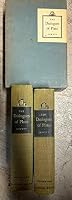
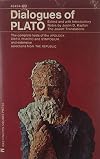
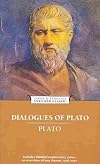
Dialogues of Plato: The Jowett Translations
by Plato
On This Page
Description
One of the leading scholars and academic administrators of his time, Benjamin Jowett (1817-1893) was Master of Balliol College as well as Regius Professor of Greek and, for a time, vice-chancellor at Oxford University. Along with his achievements in the area of academic reform, Jowett is remembered for this four-volume translation of Plato's dialogues. Characterising Plato as the 'father of idealism', Jowett reminds readers that while 'he may be illustrated by the writings of moderns ... he show more must be interpreted by his own, and by his place in the history of philosophy'. In this third volume, he includes six middle and late dialogues such as Gorgias, Parmenides, and the Statesman, each presented with a separate editorial introduction. Jowett's work represents a towering achievement in the field of classical and philosophical studies that had important influence on the subsequent study of Plato. show lessTags
Recommendations
















Member Reviews
Two volumes with all the dialogues and Jowett's introductions. Victorian English handles ancient Greek better from a rhetorical perspective--elaborate language sounds off in contemporary English. Also, this translation tends to show the literary quality of Plato's writing...and not to get too bogged down in the philosophical language Plato was trying to create out of ordinary Greek. Still my favorite translation.
Librería 6. Estante 2.
Dec 16, 2019Spanish
Ratings
Members
- Recently Added By
Lists

Western Canon
206 works; 2 members
Author Information

2,739+ Works 100,781 Members
Plato was born c. 427 B.C. in Athens, Greece, to an aristocratic family very much involved in political government. Pericles, famous ruler of Athens during its golden age, was Plato's stepfather. Plato was well educated and studied under Socrates, with whom he developed a close friendship. When Socrates was publically executed in 399 B.C., Plato show more finally distanced himself from a career in Athenian politics, instead becoming one of the greatest philosophers of Western civilization. Plato extended Socrates's inquiries to his students, one of the most famous being Aristotle. Plato's The Republic is an enduring work, discussing justice, the importance of education, and the qualities needed for rulers to succeed. Plato felt governors must be philosophers so they may govern wisely and effectively. Plato founded the Academy, an educational institution dedicated to pursuing philosophic truth. The Academy lasted well into the 6th century A.D., and is the model for all western universities. Its formation is along the lines Plato laid out in The Republic. Many of Plato's essays and writings survive to this day. Plato died in 347 B.C. at the age of 80. (Bowker Author Biography) show less
All Editions
Some Editions
Work Relationships
Common Knowledge
- Canonical title
- Dialogues of Plato: The Jowett Translations
Classifications
Statistics
- Members
- 177
- Popularity
- 185,057
- Reviews
- 3
- Rating
- (4.00)
- Languages
- English
- Media
- Paper, Ebook
- ISBNs
- 9
- ASINs
- 23