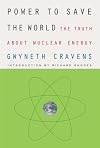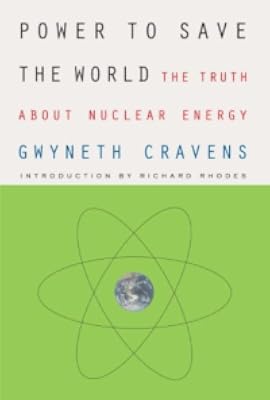
Power to Save the World: The Truth About Nuclear Energy
by Gwyneth Cravens
On This Page
Description
Gwyneth Cravens offers a comprehensive overview of the myths, fears, and truths surrounding nuclear energy, and shares her own experiences using and studying nuclear energy, describing what she learned about nuclear power and the promise it holds for the future.Tags
Recommendations




Member Reviews
Gwyneth Cravens grew up in Albuquerque, New Mexico, the Sandia Mountains in the distance. With Sandia National Laboratories close by, she worried that the Soviets were going to bomb her home into oblivion. As she got older, like many Americans, she associated nuclear power with nuclear bombs and thus became anti-nuclear. After relocating to Long Island, she joined protesters in successfully preventing the Shoreham nuclear power plant from ever coming on line. It's now something she regrets.
In the early 90's, while visiting friends and family back in Albuquerque, she met Dr. D. Richard "Rip" Anderson, a scientist at Sandia National Laboratories, and his wife at a party. She struck up a conversation with him that would ultimately lead her show more over the next decade through a tour of the entire nuclear power industry: uranium mines, research labs in Idaho, Three Mile Island, power plants, old weapons test sites, and waste disposal sites. Although she didn't visit Chernobyl, there's a chapter that analyzes what went wrong and why it couldn't happen here. Cravens covers radiation, mining, fuel supply, politics and regulations, costs, risk assessment, waste storage, improvements in reactor design, safety, terrorism, baseline energy demand, and contrasts the nuclear industry with coal. The end result is: "Power To Save The World: The Truth About Nuclear Energy."
This is an amazing book. Cravens, a novelist by trade, is able to make a book about physics and engineering, which could be dull to non-technical readers, a compelling read. We're there as she makes her journey through the nuclear world. Vivid descriptions and colorful anecdotes break up the science lessons and statistical evidence presented to destroy the myths and allay the fears that people (including herself) have regarding nuclear power.
The most illuminating portion of the book for me was the fact that we are awash in radiation from natural sources. The universe, our planet, and everything we eat, exposes us to radiation. Had a banana lately? Anything with potassium in it harbors Potassium-40 atoms, which emits beta radiation. Feeling sick now? You shouldn't. Cravens tears apart the belief that radiation exposure is harmful at all levels as all the evidence shows that low level exposure is harmless and that there is a threshold that must be passed before damage occurs. However, regulations have been established that all radiation is bad, hence the great lengths that power plants and waste repositories must go through to insulate the public. For example, the EPA states that the neighbors of nuclear power plant must not be subjected to more than 15 millirems of radiation. All American nuclear power plants emit 1-2 millirem/year. By contrast, a chest X-ray exposes you to 10 millirem. Dental X-ray 29 millirem. A roundtrip flight from NYC to LA gives you 3 millirem. The granite in Grand Central Station exposes people to 540 millirem (assuming you were there round the clock). People living in Denver are exposed to 700 millirem/year (the higher the altitude, the less atmosphere there is to shield you, not to mention all that granite). Yet there are no cancer clusters among Grand Central workers, dental technicians, airline pilots, flight attendants, or the residents of Denver. By comparison, cigarette smokers who have a one pack per day habit expose themselves to 8,000 millirem/year. Tobacco plants, it seems, have an affinity for radionuclides.
While she defends the science of nuclear power and defends the engineering incorporated into structures, she doesn't brown nose the corporations that own the power plants. She acknowledges that they've miscommunicated, kept things hidden, and made poor strategic decisions. The industry is over regulated. And while that's forced workers to adopt a culture of safety (a good thing she argues) it's over the top. I worked for a chemical company that would've been shut down if it had to report every single little spill that happened. A few milliliters of a non-reactive substance is harmless. So too are the "accidents" at nuclear power plants that you read in the paper or hear about from shrill anti-nuclear groups. But even water leaks that don't come into contact with the reactor are required to be reported. Do you tell your health insurance company every time you blow your nose? In fact, if the chemical, oil, and coal industries had to live up to the standards imposed on the nuclear industry, they wouldn't be able to stay in business due to regulatory expenditures. "Cheap coal" would be an oxymoron.
There's just so much in this book. I could go on and on and on about the material in this book (especially about radiation) but time, space, and my kids prevent me from doing so. I strongly recommend that everyone read this book (it's in paperback now too) to get the facts about nuclear power. Or go to Cravens' website.
At the end of the book, Cravens visits a clinic to determine her level of exposure after ten years of researching her book. After visiting uranium mines, Three Mile Island, a couple nuclear power plants, nuclear research sites, bomb test sites, and waste repositories, her test results came back negative. show less
In the early 90's, while visiting friends and family back in Albuquerque, she met Dr. D. Richard "Rip" Anderson, a scientist at Sandia National Laboratories, and his wife at a party. She struck up a conversation with him that would ultimately lead her show more over the next decade through a tour of the entire nuclear power industry: uranium mines, research labs in Idaho, Three Mile Island, power plants, old weapons test sites, and waste disposal sites. Although she didn't visit Chernobyl, there's a chapter that analyzes what went wrong and why it couldn't happen here. Cravens covers radiation, mining, fuel supply, politics and regulations, costs, risk assessment, waste storage, improvements in reactor design, safety, terrorism, baseline energy demand, and contrasts the nuclear industry with coal. The end result is: "Power To Save The World: The Truth About Nuclear Energy."
This is an amazing book. Cravens, a novelist by trade, is able to make a book about physics and engineering, which could be dull to non-technical readers, a compelling read. We're there as she makes her journey through the nuclear world. Vivid descriptions and colorful anecdotes break up the science lessons and statistical evidence presented to destroy the myths and allay the fears that people (including herself) have regarding nuclear power.
The most illuminating portion of the book for me was the fact that we are awash in radiation from natural sources. The universe, our planet, and everything we eat, exposes us to radiation. Had a banana lately? Anything with potassium in it harbors Potassium-40 atoms, which emits beta radiation. Feeling sick now? You shouldn't. Cravens tears apart the belief that radiation exposure is harmful at all levels as all the evidence shows that low level exposure is harmless and that there is a threshold that must be passed before damage occurs. However, regulations have been established that all radiation is bad, hence the great lengths that power plants and waste repositories must go through to insulate the public. For example, the EPA states that the neighbors of nuclear power plant must not be subjected to more than 15 millirems of radiation. All American nuclear power plants emit 1-2 millirem/year. By contrast, a chest X-ray exposes you to 10 millirem. Dental X-ray 29 millirem. A roundtrip flight from NYC to LA gives you 3 millirem. The granite in Grand Central Station exposes people to 540 millirem (assuming you were there round the clock). People living in Denver are exposed to 700 millirem/year (the higher the altitude, the less atmosphere there is to shield you, not to mention all that granite). Yet there are no cancer clusters among Grand Central workers, dental technicians, airline pilots, flight attendants, or the residents of Denver. By comparison, cigarette smokers who have a one pack per day habit expose themselves to 8,000 millirem/year. Tobacco plants, it seems, have an affinity for radionuclides.
While she defends the science of nuclear power and defends the engineering incorporated into structures, she doesn't brown nose the corporations that own the power plants. She acknowledges that they've miscommunicated, kept things hidden, and made poor strategic decisions. The industry is over regulated. And while that's forced workers to adopt a culture of safety (a good thing she argues) it's over the top. I worked for a chemical company that would've been shut down if it had to report every single little spill that happened. A few milliliters of a non-reactive substance is harmless. So too are the "accidents" at nuclear power plants that you read in the paper or hear about from shrill anti-nuclear groups. But even water leaks that don't come into contact with the reactor are required to be reported. Do you tell your health insurance company every time you blow your nose? In fact, if the chemical, oil, and coal industries had to live up to the standards imposed on the nuclear industry, they wouldn't be able to stay in business due to regulatory expenditures. "Cheap coal" would be an oxymoron.
There's just so much in this book. I could go on and on and on about the material in this book (especially about radiation) but time, space, and my kids prevent me from doing so. I strongly recommend that everyone read this book (it's in paperback now too) to get the facts about nuclear power. Or go to Cravens' website.
At the end of the book, Cravens visits a clinic to determine her level of exposure after ten years of researching her book. After visiting uranium mines, Three Mile Island, a couple nuclear power plants, nuclear research sites, bomb test sites, and waste repositories, her test results came back negative. show less
Daughter read this book for her Biology debate and told me that it may change my opinions about the right kind of energy to use in the future...so here I am. After finishing the book in two days, I have to say...I'm impressed. Gwyneth Cravens presented a very complex and scary subject(in most people's mind, including mine) in a way that is fun and simple to read. She addressed every fear that we have, including waste disposal, safety, radiation, cost, cancer risk..., about nuclear energy (which most were speculation) and convinced me and most readers that this IS the best option. It's not only the best, but the only option that we have for energy generation for now....in order for our children and grandchildren to continue to enjoy the show more world as we do...
There are many surprising facts about nuclear energy, as well as the alternatives, that she presented in her book. The ones were the most shocking was that if we use nuclear energy to power all our need, in our whole life, the amount of waste would fit perfectly in a SODA CAN. I also learned the cost, the pollution, the danger, and the space and cost that are required to use other forms of energy production, including wind, sun, water and our present fuels. There's just no other way that would produce enough energy to power what we need, which increases exponentially yearly, with lowest cost and the least pollution. This book definitely opened my eyes..and my narrow-mindness, and I'd recommend it to everyone I know. We need to educate our children early, so they're not fed with fear and the wrong information. show less
There are many surprising facts about nuclear energy, as well as the alternatives, that she presented in her book. The ones were the most shocking was that if we use nuclear energy to power all our need, in our whole life, the amount of waste would fit perfectly in a SODA CAN. I also learned the cost, the pollution, the danger, and the space and cost that are required to use other forms of energy production, including wind, sun, water and our present fuels. There's just no other way that would produce enough energy to power what we need, which increases exponentially yearly, with lowest cost and the least pollution. This book definitely opened my eyes..and my narrow-mindness, and I'd recommend it to everyone I know. We need to educate our children early, so they're not fed with fear and the wrong information. show less
This was an excellent read, and for me an important one. Although I became fairly overwhelmed with acronyms throughout, this book offers up a readable and logical argument for nuclear power as a viable alternative to fossil fuels. I picked this up after reading and becoming moved by "Nuclear Madness," which in retrospect appeals more to one's emotions than reason. I am not a scientist, and neither is the author. Her journey of understanding as she interviews scientists, details various nuclear facilities, reviews reports and statistics, etc. is in turn the reader's journey, not only to understanding more about nuclear energy, but about being open and flexible to new information.
For anyone who is truly concerned about the environment and is willing to accept that we've been given a bunch of feel-good bones while oil and coal manufacturers politically maneuver our leaders and the media into positions that ensure their profits and bypasses any regulation to curb their underestimated environmental impact. At times, the book is a bit heavy-handed as Cravens dispels myths about radiation, nuclear power, nuclear waste, and the impact of the nuclear industry on the environment. Nevertheless, the science is sound.
Informative, and readable but I couldn't conclude that it is completely even-handed. "In 50 years of operation, they have caused no deaths to the public" - that just isn't true. Check out "Idaho Falls" (ISBN 978-1550225624) for details on the SL-1 accident, which killed 3 US personnel. Human error will continue with nuclear power, resulting in radiation exposure and casualties, and it's important to consult several works to stay informed.
Some of the statements are difficult to square with international experiences. Chernobyl resulted in deaths.
Some of the statements are difficult to square with international experiences. Chernobyl resulted in deaths.
I tried reading this, but I didn't find it entertaining enough to finish it. I had no real problem with the content or her arguments. My difficulty was that I was expecting fun non-fiction book. Lots of imformative books find a way to be entertaining, this one didn't and so was a slow and somewhat boring read.
Ratings
Members
- Recently Added By
Author Information

Common Knowledge
- Canonical DDC/MDS
- 333.7924
- Canonical LCC
- TK9146.C65
Classifications
- Genres
- Nonfiction, Science & Nature, General Nonfiction, Economics
- DDC/MDS
- 333.7924 — Society, government, & culture Economics Economics of land and energy Conservation, Alternative Energy Sources Energy - alternative, renewable Primary forms of energy - solar, nuclear Nuclear energy
- LCC
- TK9146 .C65 — Technology Electrical engineering. Electronics. Nuclear engineering Electrical engineering. Electronics. Nuclear Nuclear engineering. Atomic power
- BISAC
Statistics
- Members
- 171
- Popularity
- 190,344
- Reviews
- 6
- Rating
- (4.13)
- Languages
- English, Italian
- Media
- Paper, Ebook
- ISBNs
- 4
- ASINs
- 2