Lotte in Weimar
by Thomas Mann 
On This Page
Description
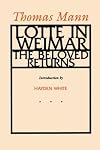
Thomas Mann, fascinated with the concept of genius and with the richness of German culture, found in Johann Wolfgang von Goethe the embodiment of the German culture hero. Mann's novelistic biography of Goethe was first published in English in 1940. Lotte in Weimar is a vivid dual portrait--a complex study of Goethe and of Lotte, the still-vivacious woman who in her youth was the model for Charlotte in Goethe's widely-read The Sorrows of Young Werther. Lotte's thoughts, as she anticipates show more meeting Goethe again after forty years, and her conversations with those in Weimar who knew the great man, allow Mann to assess Goethe's genius from many points of view. Hayden White's fresh appraisal of the novel reveals its consonances with our own concerns. show lessTags
Recommendations




















Member Recommendations

Cecrow Mann developed his narrative almost as a response to Goethe's novel The Sorrows of Young Werther.
Member Reviews
The premise for this book is the recorded fact that Charlotte Kestner, the woman who was famously the original of the heroine of Werther, made a visit to Weimar in the autumn of 1816, during which she met Goethe again for the first time in 44 years. Mann ingeniously uses this rather flimsy hook as the support for a complicated historical novel exploring Goethe and his relationships with his creative talent, with his family and entourage, with the court and people of Weimar, and with German politics and culture. Like all historical novels, it seems to be as much about the time it is written in as the time it is set in: Mann's strong identification with Goethe's role as a literary and political celebrity, his ageing and ill-health, and show more his troublesome family, are very obvious, whilst the reflections on Germanness Mann puts into Goethe's mouth sometimes risk turning him into the prophet who foretold the rise of Hitler. (This element of the book notoriously got Mann into trouble later on, when the prosecutor at the Nuremberg Trials, Sir Hartley Shawcross, quoted one of Goethe's prescient speeches from the novel thinking he was quoting Goethe's own words.)
As you would expect from Mann, the form of the book is far from conventional. It's written, quite literally, in the language of Goethe: not only does Mann choose to use early-19th-century idioms, spelling, and grammatical forms throughout, but most of the time he also has his characters talk like characters in an early-19th-century novel - only more so. The speeches are long-winded, theatrical (in a good way), and deeply thoughtful. Worthy of Weimar, in every way. Fortunately, Mann has the very un-Weimarish and practical widow Lotte on hand to interrupt them and pull them back to earth when they get too full of their own hot air.
We only meet Goethe face to face about two-thirds of the way through the book: before that, Lotte has had long conversations with several peripheral figures: the Irish celebrity-hunter "Miß Cuzzens", the secretary Dr Riemer, Adele Schopenhauer, and Goethe's son August. And missed her lunch with the sister she has come to visit. So we get to see Goethe in the first place through the eyes of the people (including Lotte) whose lives take place largely in his shadow. When we do actually meet him, Mann surprises us by shifting to a modernist stream-of-consciousness style (though more than ever sticking to Goethe's own language - he constantly seems to be paraphrasing his own work) as we encounter the great man waking up, itemising his old man's aches and pains, launching into his duties of the day, and studiously avoiding showing any excitement about the sudden reappearance of his long-lost love.
Not exactly light reading, but fascinating, very clever, and unexpectedly modest and witty at the same time. show less
As you would expect from Mann, the form of the book is far from conventional. It's written, quite literally, in the language of Goethe: not only does Mann choose to use early-19th-century idioms, spelling, and grammatical forms throughout, but most of the time he also has his characters talk like characters in an early-19th-century novel - only more so. The speeches are long-winded, theatrical (in a good way), and deeply thoughtful. Worthy of Weimar, in every way. Fortunately, Mann has the very un-Weimarish and practical widow Lotte on hand to interrupt them and pull them back to earth when they get too full of their own hot air.
We only meet Goethe face to face about two-thirds of the way through the book: before that, Lotte has had long conversations with several peripheral figures: the Irish celebrity-hunter "Miß Cuzzens", the secretary Dr Riemer, Adele Schopenhauer, and Goethe's son August. And missed her lunch with the sister she has come to visit. So we get to see Goethe in the first place through the eyes of the people (including Lotte) whose lives take place largely in his shadow. When we do actually meet him, Mann surprises us by shifting to a modernist stream-of-consciousness style (though more than ever sticking to Goethe's own language - he constantly seems to be paraphrasing his own work) as we encounter the great man waking up, itemising his old man's aches and pains, launching into his duties of the day, and studiously avoiding showing any excitement about the sudden reappearance of his long-lost love.
Not exactly light reading, but fascinating, very clever, and unexpectedly modest and witty at the same time. show less
social philosophy disguised as literary criticism disguised as a modernist novel disguised as historical fiction. do you want to read 100 pp of platonic dialogue on the nature of genius between Friedrich Wilhelm Riemer and Charlotte Buff? do you want to read 100 pp of florid melodrama narrated by a young Adele Schopenhauer? how about 100 pp of alternatingly hilarious, infuriating, and breathtaking stream-of-consciousness from the mind of the genius himself, JW von Goethe?
and beyond all these intensely revivified personae, Mann still allows some time for himself, easing us into the book with some delightful character sketches. he’s at his most nuclear here, the most focused in his themes and the most refined in his prose. truly perfect!!
and beyond all these intensely revivified personae, Mann still allows some time for himself, easing us into the book with some delightful character sketches. he’s at his most nuclear here, the most focused in his themes and the most refined in his prose. truly perfect!!
I can't believe I actually finished reading this. Lotte in Weimar is probably one of the most boring books I've ever read, mostly because I managed to finish it where similar books would have been back on the shelf weeks before. My reason: I don't do well with dialogue, and the novel is pretty much all dialogue, for all four hundred fifty pages. Dear Thomas Mann: It's not you, it's me. So sorry I didn't like your book that much.
It wasn't all bad and boring, though. Thomas Mann is a great writer and did a really nice job with telling the tale of Lotte's later life and dealings with Goethe, it's just that my teenage mind kept zoning out of the interminable discussions. I'm sure a seventy-page view of Goethe's inner mind is fascinating, show more but I can't focus on his ramblings for that long. I was able to identify some with Lotte, though she's several decades older than myself. The feeling of love with another person being avoided by a few twists of everyday fate, the wondering of the what-could-have-been, the longing to see and talk to the other person some, even if just within your own mind, can be universal across ages. I also caught the reflection upon the sacrifices other people make to the "genius" of an author, which reminded me of Sofia Tolstoy's diary. Mann's Goethe bore similarities in temperament and "genius" to Sofia Tolstoy's images of her famous husband, which makes me glad that Lotte did not further engage herself with Goethe and end up in a position similar to that of Sofia. The novel also re-emphasized my dislike of the whiny, selfish Werther of Goethe's novel and how, whatever his immediate desires, Werther's want to be with Lotte could never have ended up well in the long run. So, Thomas Mann, I will happily revisit your novel later when I feel more up to the task of dealing with all that talking. show less
It wasn't all bad and boring, though. Thomas Mann is a great writer and did a really nice job with telling the tale of Lotte's later life and dealings with Goethe, it's just that my teenage mind kept zoning out of the interminable discussions. I'm sure a seventy-page view of Goethe's inner mind is fascinating, show more but I can't focus on his ramblings for that long. I was able to identify some with Lotte, though she's several decades older than myself. The feeling of love with another person being avoided by a few twists of everyday fate, the wondering of the what-could-have-been, the longing to see and talk to the other person some, even if just within your own mind, can be universal across ages. I also caught the reflection upon the sacrifices other people make to the "genius" of an author, which reminded me of Sofia Tolstoy's diary. Mann's Goethe bore similarities in temperament and "genius" to Sofia Tolstoy's images of her famous husband, which makes me glad that Lotte did not further engage herself with Goethe and end up in a position similar to that of Sofia. The novel also re-emphasized my dislike of the whiny, selfish Werther of Goethe's novel and how, whatever his immediate desires, Werther's want to be with Lotte could never have ended up well in the long run. So, Thomas Mann, I will happily revisit your novel later when I feel more up to the task of dealing with all that talking. show less
Thomas Mann admired Goethe tremendously, wrote essays about him and gave lectures on this author. It is safe to say that Mann was fascinated by the author. This novel portrays Goethe as a difficult, irritating, selfish aging man who is devoted primarily to his own special interests and pursuits. The psychology of a man like this is plumbed with the acuity of the great writer that Mann was by the late nineteen-thirties. The character of Goethe is delineated through the perspectives of Lotte, Goethe's son August, and Adele Schopenhauer. The views of Goethe of each of these in turn seem to mirror their perspectives. Filled with scenes from Goethe's life his character is gradually revealed, his genius as a writer is plumbed, and his works show more are revealed through interpolated quotations. The novel is an interesting experiment in style that differs in many ways from other of Mann's works I have read, while still maintaining the voice of the author. show less
Direct zet Thomas Mann de toon. Als de heer Mager in dienst van Gasthof "Zum Elephanten" in Weimar ontdekt dat Hofräthin Charlotte Kestner, geb. Buff zich onder zijn nieuwe gasten bevindt, begint hij dit nieuwtje direct rond te bazuinen. Waarom? Zij is Lotte uit Goethes "Die Leiden des jungen Werther". Charlotte was al verloofd, toen Goethe in Wetzlar op het toneel verscheen en haar het hof maakte. Ze koos ervoor om mevrouw Kestner te worden en Goethe verdween weer van het toneel. In het boek pleegt Werther zelfmoord, maar dat moet je eerder in de romantische context van "Sturm und Drang" zien. De realiteit was gelukkig niet zo dramatisch.
Mager is het ultieme bewijs dat niet enkel vrouwen goed zijn in roddelen, want nog voor Charlotte show more uitgerust is van haar reis, staat er al een rij nieuwsgierigen te wachten. Eerst is er Miss Cuzzle, een paparazzo avant-la-lettre, die een portret van haar wil tekenen. Het verhaal speelt zich in de herfst van 1816 af, anders had ze wel enkele foto's genomen.
Zij wordt afgelost door Dr. Riemer. Hij was privéleraar van August, Goethes zoon, maar dat liep niet zo vlot. Hij was ook secretaris van Goethe, voor wie hij een diepe bewondering koestert. Langzaam komen ook de kleine kantjes van de grote Goethe ter sprake. Zo klaagt Charlotte dat Goethe hen nooit heeft opgezocht, waarop Dr. Riemer antwoordt dat hij zelfs zijn eigen moeder niet ging bezoeken, ook niet als hij in de buurt was. Charlotte is in Weimar zogezegd om haar jongere zus en haar schoonbroer te bezoeken, maar eigenlijk wil ze Goethe nog eens ontmoeten. Ze denkt daarbij aan de jonge Goethe, die zich als een koekoek tussen haar en haar verloofde kwam nestelen.
We maken ook kennis met Adèle Schopenhauer, zus van Arthur, die niet zo'n fraai beeld van August schetst en Charlotte vraagt om het huwelijk met haar beste vriendin Ottilien te verhinderen. In haar monoloog komt de schrijver Goethe over als een tiran die helemaal niet open staat voor nieuwe ideeën of schrijvers.
Tenslotte maakt Charlotte kennis met August, die haar komt uitnodigen voor het middageten enkele dagen later. Als ze August ziet, die haar aan de jonge Goethe herinnert, vergeet ze op slag alle negatieve kritiek van Adèle.
Was het beter dat Charlotte Goethe nooit meer had ontmoet? Beide vertonen tekenen van ouderdom, waardoor er barsten in het vroegere beeld komen. Het choqueert Charlotte ook dat Goethes "vrienden" niet meer zijn dan een stelletje ja-knikkers die zelfs lachen op bevel.
Thomas Mann maakt handig van de gelegenheid gebruik om kritiek te spuien op nazi-Duitsland. Hij publiceerde het boek in 1939 en was toen al uit Duitsland verdreven. Een mooi voorbeeld is hoe hij Goethe over een progmor ten nadele van de Joden laat vertellen. Verder schetst hij ook treffend de verhouding van Goethe tot Napoleon en de algemene tijdsgeest in het begin van de 19de eeuw.
Ik begrijp dat het boek op sommige lezers enkel een saaie indruk maakt, een aaneenschakeling van monologen zonder dat er iets gebeurt. Ik heb het boek in het Duits gelezen, oude spelling by the way, en ik heb genoten van de rijke taal, de overpeinzingen over de tijd en de personen, de humor. Het boek heeft me aangenaam verrast. show less
Mager is het ultieme bewijs dat niet enkel vrouwen goed zijn in roddelen, want nog voor Charlotte show more uitgerust is van haar reis, staat er al een rij nieuwsgierigen te wachten. Eerst is er Miss Cuzzle, een paparazzo avant-la-lettre, die een portret van haar wil tekenen. Het verhaal speelt zich in de herfst van 1816 af, anders had ze wel enkele foto's genomen.
Zij wordt afgelost door Dr. Riemer. Hij was privéleraar van August, Goethes zoon, maar dat liep niet zo vlot. Hij was ook secretaris van Goethe, voor wie hij een diepe bewondering koestert. Langzaam komen ook de kleine kantjes van de grote Goethe ter sprake. Zo klaagt Charlotte dat Goethe hen nooit heeft opgezocht, waarop Dr. Riemer antwoordt dat hij zelfs zijn eigen moeder niet ging bezoeken, ook niet als hij in de buurt was. Charlotte is in Weimar zogezegd om haar jongere zus en haar schoonbroer te bezoeken, maar eigenlijk wil ze Goethe nog eens ontmoeten. Ze denkt daarbij aan de jonge Goethe, die zich als een koekoek tussen haar en haar verloofde kwam nestelen.
We maken ook kennis met Adèle Schopenhauer, zus van Arthur, die niet zo'n fraai beeld van August schetst en Charlotte vraagt om het huwelijk met haar beste vriendin Ottilien te verhinderen. In haar monoloog komt de schrijver Goethe over als een tiran die helemaal niet open staat voor nieuwe ideeën of schrijvers.
Tenslotte maakt Charlotte kennis met August, die haar komt uitnodigen voor het middageten enkele dagen later. Als ze August ziet, die haar aan de jonge Goethe herinnert, vergeet ze op slag alle negatieve kritiek van Adèle.
Was het beter dat Charlotte Goethe nooit meer had ontmoet? Beide vertonen tekenen van ouderdom, waardoor er barsten in het vroegere beeld komen. Het choqueert Charlotte ook dat Goethes "vrienden" niet meer zijn dan een stelletje ja-knikkers die zelfs lachen op bevel.
Thomas Mann maakt handig van de gelegenheid gebruik om kritiek te spuien op nazi-Duitsland. Hij publiceerde het boek in 1939 en was toen al uit Duitsland verdreven. Een mooi voorbeeld is hoe hij Goethe over een progmor ten nadele van de Joden laat vertellen. Verder schetst hij ook treffend de verhouding van Goethe tot Napoleon en de algemene tijdsgeest in het begin van de 19de eeuw.
Ik begrijp dat het boek op sommige lezers enkel een saaie indruk maakt, een aaneenschakeling van monologen zonder dat er iets gebeurt. Ik heb het boek in het Duits gelezen, oude spelling by the way, en ik heb genoten van de rijke taal, de overpeinzingen over de tijd en de personen, de humor. Het boek heeft me aangenaam verrast. show less
First, a warning: This is not for the young. Wait until you are 40 or, better still, 50. You also have to have read Goethe and be interested in him as a person. It is a novel without action, at least hardly any overt action, all action lies in the encounters, their tensions revealed through dialogs and thoughts of the protagonists, above all Lotte, the heroine of the ‘Werther’, Goethe’s beloved 40 years earlier, and the large shadow of Goethe – he presents himself in a long monologue but otherwise remains invisible except for a brief encounter - who dominates the thoughts and lives of all around him. So a portrait of Goethe is drawn here through the eyes of the persons with whom he comes into daily contact, each and all show more conscious of their respective social positions in the tiny principality of Weimar in the early 19th century.
The little principalities were unique to Germany of that time. In 1786, 30 years prior to Lotte’s stay in Weimar, Goethe had broken out of their claustrophobic and suffocating intimacy and escaped to Italy.* The small haut-bourgeois / aristocratic circle adopted a rigid social etiquette and a formalized language. The language of the dialogues cannot be separated from this particular social milieu; can it then be convincingly translated into English? I had no opportunity to compare the translations, but I doubt it.
Goethe selbst dazu: „So unübersetzlich sind die Eigenheiten jeder Sprache: denn vom höchsten bis zum tiefsten Wort bezieht sich alles auf Eigentümlichkeiten der Nation, es sei nun in Charakter, Gesinnungen oder Zuständen.“ (Goethe, It.R., 5. Okt. 1786 Nachts)
In addition, the very distinct language of Thomas Mann, in its complicated sentence structure comparable to Proust, is here in the refined dialogues taken a hundred years further back. The French, the language of diplomacy, may lend itself, but I doubt the English, to convey its courtoisie let alone the very dry humor of Th. Mann that shines through here and there. Reading it gave me tremendous pleasure that surpassed even the pleasure of the last novel I read, Hoffmann’s Murr. (III-12) *****
* I was mistaken: this was not his motives. Rather his passion for Antiquity among others. He mentions these several times in the ‘Italienische Reise’.
Einige Notizen (die Seitenangaben beziehen sich auf die 1959 Ausgabe in der Fischer Bücherei):
„Es giebt überall und jederzeit ... so manches Mißverständnis und Mißverhältnis zwischen Eltern und Kindern, so manche Unduldsamkeit der Kinder gegen das Eigenleben der Eltern, der denn auch ein mangelnder Sinn der Eltern für das besondere Recht der Kinder [...] erwiedern mag.“ (55)
Über den Künstler G. und den Prozess des Schaffens (60-61): Es handelt sich „keineswegs um eine Schöpfung des Augenblicks“ sondern „ein durch Jahre ... Vorbereitetes und Gehegtes“, ein „im Geheimen sich Ausbildende“.
Riemer über G‘s Prosa-Sprache: (68-69)
R. (Th.M.?) über Gott und Teufel (70): „daß es ganz irrtümlich ist, Gott und Teufel als entgegengesetzte Principien aufzufassen ... Da Gott das Ganze ist, so ist er auch der Teufel, ...“, und später (75): „Identität von All und Nichts“, und (71): „Der Blick ... der absoluten Kunst, welche zugleich die absolute Liebe und die absolute Vernichtung oder Gleichgültigkeit ist und [ ... eine] erschreckende Annäherung ans Göttlich-Teuflische bedeutet“
- „der Doppelsegen [oder Fluch] des Geistes und der Natur“
R über G: „Kälte und Steifigkeit, ein gepanzertes Ceremoniell,“ ... (76) „magische Ordung“ (77)
Adele Sch.: „Einmal mehr ward ich … gewahr, wie gering mein Glaube ist an die übermäßige Echtheit der Empfindungen, aus welchen die Menschen zu handeln vorgeben. Nicht aus sich selbst handeln sie, sondern nach Maßgabe einer Situation, die ihnen ein bestimmtes, conventionelles Verhaltenscliché in die Hand giebt. Ist es Grausamkeit, wozu die Situation Erlaubnis giebt – desto besser. ... die meisten Menschen warten nur darauf, daß endlich einmal die Umstände ... ihnen gestatten, nach Herzenslust brutal zu sein.“ Th.M. illustriert dies in G‘s Erzählung einer Nacht des Judenmordens in Eger, die Bevölkerung aufgewiegelt durch die Predigt eines Barfüßermönches (330).
Th.M. läßt G. über die Deutschen urteilen: „daß ihnen Dunst und Rausch und all berserkerisches Unmaß so teuer ist ... – daß sie sich jedem verzückten Schurken gläubig hingeben, der ihr Niedrigstes aufruft, sie in ihren Lastern bestärkt und sie lehrt, Nationalität als Isolierung und Rohheit zu begreifen, - u.s.w.“ (267). Alles Anspielungen auf die Hitlerzeit natürlich.
Der alte G. über den jungen G. des Werther (258): „spatzenjung und schon ganz bereit, Liebe, Leben und Menschheit an die Kunst zu verraten.“ (dazu G. in Lottes Traum: „sein Schicksal sei es vielleicht von jeher, sich in unschuldiger Schuld zu winden“ (360)
Über das Altern (Metamorphose: Hoffunung und Begierde) und die Wiederbegegnung im Alter: Verzicht/Untreute – Erfüllung ) pp.356 show less
The little principalities were unique to Germany of that time. In 1786, 30 years prior to Lotte’s stay in Weimar, Goethe had broken out of their claustrophobic and suffocating intimacy and escaped to Italy.* The small haut-bourgeois / aristocratic circle adopted a rigid social etiquette and a formalized language. The language of the dialogues cannot be separated from this particular social milieu; can it then be convincingly translated into English? I had no opportunity to compare the translations, but I doubt it.
Goethe selbst dazu: „So unübersetzlich sind die Eigenheiten jeder Sprache: denn vom höchsten bis zum tiefsten Wort bezieht sich alles auf Eigentümlichkeiten der Nation, es sei nun in Charakter, Gesinnungen oder Zuständen.“ (Goethe, It.R., 5. Okt. 1786 Nachts)
In addition, the very distinct language of Thomas Mann, in its complicated sentence structure comparable to Proust, is here in the refined dialogues taken a hundred years further back. The French, the language of diplomacy, may lend itself, but I doubt the English, to convey its courtoisie let alone the very dry humor of Th. Mann that shines through here and there. Reading it gave me tremendous pleasure that surpassed even the pleasure of the last novel I read, Hoffmann’s Murr. (III-12) *****
* I was mistaken: this was not his motives. Rather his passion for Antiquity among others. He mentions these several times in the ‘Italienische Reise’.
Einige Notizen (die Seitenangaben beziehen sich auf die 1959 Ausgabe in der Fischer Bücherei):
„Es giebt überall und jederzeit ... so manches Mißverständnis und Mißverhältnis zwischen Eltern und Kindern, so manche Unduldsamkeit der Kinder gegen das Eigenleben der Eltern, der denn auch ein mangelnder Sinn der Eltern für das besondere Recht der Kinder [...] erwiedern mag.“ (55)
Über den Künstler G. und den Prozess des Schaffens (60-61): Es handelt sich „keineswegs um eine Schöpfung des Augenblicks“ sondern „ein durch Jahre ... Vorbereitetes und Gehegtes“, ein „im Geheimen sich Ausbildende“.
Riemer über G‘s Prosa-Sprache: (68-69)
R. (Th.M.?) über Gott und Teufel (70): „daß es ganz irrtümlich ist, Gott und Teufel als entgegengesetzte Principien aufzufassen ... Da Gott das Ganze ist, so ist er auch der Teufel, ...“, und später (75): „Identität von All und Nichts“, und (71): „Der Blick ... der absoluten Kunst, welche zugleich die absolute Liebe und die absolute Vernichtung oder Gleichgültigkeit ist und [ ... eine] erschreckende Annäherung ans Göttlich-Teuflische bedeutet“
- „der Doppelsegen [oder Fluch] des Geistes und der Natur“
R über G: „Kälte und Steifigkeit, ein gepanzertes Ceremoniell,“ ... (76) „magische Ordung“ (77)
Adele Sch.: „Einmal mehr ward ich … gewahr, wie gering mein Glaube ist an die übermäßige Echtheit der Empfindungen, aus welchen die Menschen zu handeln vorgeben. Nicht aus sich selbst handeln sie, sondern nach Maßgabe einer Situation, die ihnen ein bestimmtes, conventionelles Verhaltenscliché in die Hand giebt. Ist es Grausamkeit, wozu die Situation Erlaubnis giebt – desto besser. ... die meisten Menschen warten nur darauf, daß endlich einmal die Umstände ... ihnen gestatten, nach Herzenslust brutal zu sein.“ Th.M. illustriert dies in G‘s Erzählung einer Nacht des Judenmordens in Eger, die Bevölkerung aufgewiegelt durch die Predigt eines Barfüßermönches (330).
Th.M. läßt G. über die Deutschen urteilen: „daß ihnen Dunst und Rausch und all berserkerisches Unmaß so teuer ist ... – daß sie sich jedem verzückten Schurken gläubig hingeben, der ihr Niedrigstes aufruft, sie in ihren Lastern bestärkt und sie lehrt, Nationalität als Isolierung und Rohheit zu begreifen, - u.s.w.“ (267). Alles Anspielungen auf die Hitlerzeit natürlich.
Der alte G. über den jungen G. des Werther (258): „spatzenjung und schon ganz bereit, Liebe, Leben und Menschheit an die Kunst zu verraten.“ (dazu G. in Lottes Traum: „sein Schicksal sei es vielleicht von jeher, sich in unschuldiger Schuld zu winden“ (360)
Über das Altern (Metamorphose: Hoffunung und Begierde) und die Wiederbegegnung im Alter: Verzicht/Untreute – Erfüllung ) pp.356 show less
Members
- Recently Added By
Lists

Read the book and saw the movie
1,170 works; 195 members

German Literature
518 works; 55 members

Lives of the Poets (and Philosophers)
110 works; 5 members

Writers as Characters in Fiction
120 works; 18 members

Books Read in 2016
4,666 works; 199 members

Books Read in 2021
5,361 works; 113 members
Author Information

Thomas Mann was born into a well-to-do upper class family in Lubeck, Germany. His mother was a talented musician and his father a successful merchant. From this background, Mann derived one of his dominant themes, the clash of views between the artist and the merchant. Mann's novel, Buddenbrooks (1901), traces the declining fortunes of a merchant show more family much like his own as it gradually loses interest in business but gains an increasing artistic awareness. Mann was only 26 years old when this novel made him one of Germany's leading writers. Mann went on to write The Magic Mountain (1924), in which he studies the isolated world of the tuberculosis sanitarium. The novel was based on his wife's confinement in such an institution. Doctor Faustus (1947), his masterpiece, describes the life of a composer who sells his soul to the devil as a price for musical genius. Mann is also well known for Death in Venice (1912) and Mario the Magician (1930), both of which portray the tensions and disturbances in the lives of artists. His last unfinished work is The Confessions of Felix Krull, Confidence Man (1954), a brilliantly ironic story about a nineteenth-century swindler. An avowed anti-Nazi, Mann left Germany and lived in the United States during World War II. He returned to Switzerland after the war and became a celebrated literary figure in both East and West Germany. In 1929 he was awarded the Nobel Prize for literature. (Bowker Author Biography) show less
Thomas Mann has a Legacy Library. Legacy libraries are the personal libraries of famous readers, entered by LibraryThing members from the Legacy Libraries group.
Some Editions
Awards and Honors
Notable Lists
Series
Belongs to Publisher Series
Work Relationships
Is contained in
Has the adaptation
Was inspired by
Common Knowledge
- Canonical title*
- Lotte in Weimar
- Original title
- Lotte in Weimar
- Original publication date
- 1939
- People/Characters
- Johann Wolfgang von Goethe; Charlotte Kestner
- Important places
- Weimar, Thuringia, Germany
- Important events
- German Campaign of 1813 (1813); Confederation of the Rhine (1806)
- Related movies*
- Lotte in Weimar (1975 | IMDb)
- Epigraph*
- Durch allen Schall und Klang
Der Transoxanen
Erkühnt sich unser Sang
Auf deine Bahnen!
Uns ist für garnichts bang
In dir lebendig;
Dein Leben daure lang,
Dein Reich beständig!
(WEST-... (show all)ÖSTLICHER DIVAN) - First words*
- Der Kellner des Gastofes "Zum Elephanten" in Weimar, Mager, ein gebildeter Mann, hatte an einem fast noch sommerlichen Tage ziemlich tief im September des Jahres 1816 ein bewegendes, freudig verwirrendes Erlebnis. Nich... (show all)t, daß etwas Unnatürliches an dem Vorfall gewesen wäre; und doch kann man sagen, daß Mager eine Weile zu träumen glaubte.
- Quotations*
- [Charlotte Kestner]: Aber da sieht man's daß die Männer - und die Poeten gar - nur an sich denken; denn er bedenkt nicht, daß wir die Neugiersnot auch noch auszustehen haben wie er, zu allem andern dazu, was er uns angetan... (show all), Deinem guten seligen Vater und mir, mit seiner hellosen Vermischung von Dichtung und Wahrheit ...
(Aus dem Ersten Kapitel)
[Adele Schopehauer]: "Wie aber der Meister [Goethe] unserem Doktor Passow, dem Gymnasiallehrer, den Kopf wusch ob seinen Ansichten, das hab' ich mit eigenen Ohren gehört [...]. Passow nämlich, der sehr gut sprach, hatte sic... (show all)h bewegten Wortes darüber ergangen, wie seine ganze Seele an dem Gedanken hänge, durch Enthüllung des hellenistischen Altertums, durch Entwicklung des griechischen Geistes wenigstens im Gemüte von Einzelnen das herzustellen, was den Deutschen im Ganzen schmachvoll abhanden gekommen: Begeisterung für Freiheit und Vaterland. [...]
'Hören Sie mich an!', sagte er [Goethe] jetzt. 'Von den Alten bilde auch ich mir ein etwas zu verstehen, aber der Freiheitssinn und die Vaterlandsliebe, die man aus ihnen zu schöpfen meint, laufen Gefahr und sind jeden Augenblicke im Begriffe eine Fratze zu werden.' [...] 'Unsere bürgerliche Existenz', fuhr er fort, 'unterscheidet sich gar sehr von der der Alten, unser Verhältnis zum Staat ist ein ganz anderes. Der Deutsche, statt sich in sich selbst zu beschränken, muß die Welt in sich aufnehmen, um auf die Welt zu wirken. Nicht feindliche Absonderung von anderen Völkern darf unser Ziel sein, sondern freundschaftlicher Verkehr mit aller Welt, Ausbildung der gesellschaftlichen Tugenden, auch auf Kosten angeborener Gefühle, ja Rechte. [...] Ich weiß, Sie meinen es gut. Aber es gut und rein zu meinen, genügt nicht; man muss auch die Folgen abzusehen vermögen seines Betreibens. Vor dem Ihrigen graut mir, weil es die noch edle, noch unschuldige Vorform ist von etwas Schrecklichem, das sich eines Tages unter den Deutschen zu den grassesten Narrheiten manifestieren wird, und wovor Sie selbst sich, wenn etwas davon zu Ihnen dränge, in Ihrem Grabe umdrehen würden.'"
(Aus dem Fünften Kapitel, Adeles Erzählung)
[Adele Schopenhauer zu Charlotte Kestner]: "Liebste, die Begeisterung ist schön, allein wenn es ihr gar zu sehr an Erleuchtung fehlt und exaltierte Spießbürger in heißem Feindesblut schwelgen, weil eben die historische St... (show all)unde ihnen ihre bösen Lüste freigibt, so hat das selbstverständlich sein Peinliches."
(Aus dem Fünften Kapitel, Adeles Erzählung)
[August von Goethe zu Charlotte Kestner]: "[Die Politik] ist in allem übrigen enthalten und gebunden, im Sittlichen, Ästhetischen, scheinbar nur Geistigen und Philosophischen, und glücklich die Zeiten, wann sie, ihrer unbe... (show all)wußt, im Stande gebundener Unschuld verharrt, wann nichts und niemand außer ihren engsten Adepten, ihre Sprache spricht. In solchen vermeintlich unpolitischen Perioden - ich möchte sie Perioden politischer Latenz nennen - ist es möglich, das Schöne frei und unabhängig von der Politik, womit es in stiller, doch unverbrüchlicher Entsprechung steht, zu lieben und zu bewundern. Es ist leider nicht unser Los, in einer so milden, Duldung gewährenden Zeit zu leben. Die unsrige hat ein scharfes Licht von unerbittlicher Deutlichkeit und läßt in jedem Dinge, jeder Menschlichkeit, jeder Schönheit die ihr inärente Politik aufbrechen und manifestiert werden. Ich bin der letzte, zu leugnen, daß daraus mancher Schmerz und Verlust, manche bittere Trennung entsteht."
(Aus dem Sechsten Kapitel)
[Goethe im Selbstgespräch]: Selbständigkeit, möcht wissen, was das ist. Er war ein Original, und aus Originalität - Er andern Narren gleichen tät. Da war ich Zwanzig und ließ schon die Anhänger im Stich, machte mich lu... (show all)stig über die Originalitätsgrimasse der genialen Schule. Ich wußte, warum Ist ja Originalität das Grauenhafte, die Verrücktheit, Künstlertum ohne Werk, empfängnisloser Dünkel, Altjungfern- und Hagestolzentum des Geistes, sterile Narrheit. Ich verachte sie unsäglich, weil ich das Productive will, das Weibheit und Mannheit auf einmal, ein empfangend Zeugen, persönliche Hochbestimmbarkeit.
(Aus dem Siebten Kapitel)
[Goethe im Selbstgespräch]: So solltens die Deutschen halten, darin bin ich ihr Bild und Vorbild. Welt-empfangend und welt-beschenkend, die Herzen weit offen, jeder fruchtbaren Bewunderung, groß durch Verstand und Liebe, du... (show all)rch Mittlertum, durch Geist - denn Mittlertum ist Geist - so sollten sie sein, und das ist ihre Bestimmung, nicht aber als Originalnation sich zu verstocken, in abgeschmackter Selbstbetrachtung und Selbstverherrlichung sich zu verdummen und gar in Dummheit, durch Dummheit zu herrschen über die Welt. Unseliges Volk, es wird nicht gut ausgehen mit ihm, denn es will sich selber nicht verstehen, und jedes Mißverstehen seiner selbst erregt nicht das Gelächter allein, erregt den Haß der Welt und bringt es in äußerste Gefahr. Was gilts, das Schicksal wird sie schlagen, weil sie sich selbst verrieten und nicht sein wollten, was sie sind; es wird sie über die Erde zerstreuen wie die Juden, - zu Recht, denn ihre Besten lebten immer bei ihnen im Exil, und im Exil erst, in der Zerstreuung, werden sie die Masse des Guten, die in ihnen liegt, zum Heile der Nation entwickeln und das Salz der Erde sein ..."
(Aus dem Siebten Kapitel) - Last words*
- (Click to show. Warning: May contain spoilers.)"Frau Hofrätin!", sagte er [Kellner Mager], "willkommen wie immer! Möchten Frau Hofrätin in unserem Musentempel einen erhebenden Abend verbracht haben! Darf ich diesen Arm offerieren zu sicheren Stütze? Guter Himmel, Frau Hofrätin, ich muss es sagen: Werthers Lotte aus Goethes Wagen zu helfen, das ist ein Erlebnis - wie soll ich es nennen? Es ist buchenswert."
- Publisher's editor*
- Edhasa
- Blurbers*
- Zweig, Stefan
- Original language
- German
*Some information comes from Common Knowledge in other languages. Click "Edit" for more information.
Classifications
- Genres
- Fiction and Literature, General Fiction
- DDC/MDS
- 833.912 — Literature & rhetoric German & related literatures German fiction 1900- 1900-1990 1900-1945
- LCC
- PT2625 .A44 .L62 — Language and Literature German, Dutch and Scandinavian literatures German literature Individual authors or works 1860/70-1960
- BISAC
Statistics
- Members
- 897
- Popularity
- 30,028
- Reviews
- 13
- Rating
- (3.54)
- Languages
- 24 — Czech, Dutch, English, Esperanto, Estonian, Finnish, French, German, Greek, Hebrew, Hungarian, Italian, Japanese, Norwegian (Bokmål), Norwegian, Polish, Portuguese, Romanian, Russian, Serbian, Croatian, Spanish, Swedish, Turkish
- Media
- Paper, Audiobook, Ebook
- ISBNs
- 60
- UPCs
- 1
- ASINs
- 37