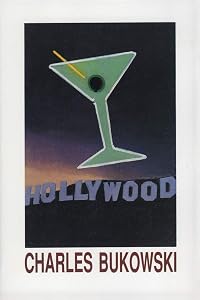
Hollywood
by Charles Bukowski
On This Page
Description
From iconic tortured artist/everyman Charles Bukowski, Hollywood is the fictionalization of his experience adapting his novel Barfly into a movie by the same name. Henry Chinaski, Bukowski's alter-ego, is pushed to translate a semi-autobiographical book into a screenplay for John Pinchot. He reluctantly agrees, and is thrust into the otherworld called Hollywood, with its parade of eccentric and maddening characters: producers, artists, actors and actresses, film executives and journalists. show more In this world, the artistry of books and film is lost to the dollar, and Chinaski struggles to keep his footing in the tangle of cons that comprise movie making. Hollywood is Dirty Old Man Bukowski at his most lucid. It overflows with curses, sex, and alcohol. And through it all, or from it all, Bukowski finds flashes of truth about the human condition. show lessTags
Recommendations

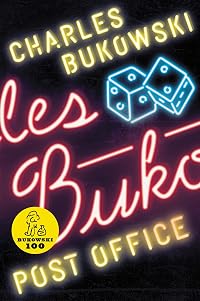
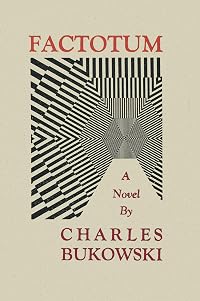



Member Reviews
I have a soft spot for Bukowski, have had one since my days in community college and the early days of my time at university. That being said, I wouldn't call him a "great" author with the likes of Shakespeare, Kafka, Joyce, but, in an odd way, I don't think he was ever "meant" to be one of those kinds of authors. And no one seemed more honest about this than Buk himself. He dedicated his last book "Pulp" "to bad writing" (or something to that effect) and on his gravestone itself are inscribed the words "Don't Try". This isn't to say that the man wasn't arrogant, and perhaps a bullshitter in the leagues of Mailer or Hemingway, far from it. I fell in love with the Romantic life he regularly depicted in his novels and poems not knowing show more (or not wanting to know) how much of it was true and how much of it might have been nonsense exaggeration about a class of people that life decided to lean on. It was Bukowski's world equally demarcated (or perhaps not) between searing honesty and bullshit boasting of a sad and angry man. But, that considered, it can be said that in a sense, you could call Bukowksi's oeuvre young boy's adventure literature...for men in their twenties wanting desperately to experience something beyond sheltered suburbia.
But Bukowksi had and still has something in his writing that many other (even ostensibly superior) writers lack. It's hard to put a label on what it is. Part of it is his incredible sense of place. He writes about Los Angeles in a way that no other writer, native to LA or not, has been able to. Under Buk's pen it's a city at once home and alienating, full of possibility and yet bereft of all hope of change or progress. It's less a city and more a confluence of shadows and lights, not much there, until there is. Added to this, was Buk's ability to delineate and describe despair in a way that was almost heroic. True, sometimes his writing smacked of overreaching, riding off into cliche every now and again (Hollywood is no exception) but overall Buk had a mastery of the dour and frustrating, the angst ridden and the despairing, in a way reminiscent of an almost messier and less transcendent Kafka.
But now on to the book itself. Hollywood was Bukowski's penultimate novel, written about the time when the film "Barfly" was being created (with Bukowski's penning the screenplay) essentially telling the story of Charles Bukowski. The story is pure Buk, lots of drinking, swearing, ribald jokes and generally wry observations about the human condition and the madness of artistry, any artistry.
The book isn't one of Buk's best, but it's still very good. Most of the characters are peripheral to "Hank" which makes sense given the character of both "the character" and the author writing him. However, the character "Sarah" (Henry's wife) gets the worst of this treatment as she seems less a character and more a female helper to Hank with little to no actual personality. But where the book scores big is with Bukowski's rendering of tone. I won't bullshit you and say that Bukowksi could "sense his end was near" but there's a relaxed tone of acceptance, humor, and a marked decrease in the fury and despair of the Bukowski of "Factotum" and "Post Office". The dirty old man has found something akin to peace, if not happiness.
So, read it, it's good, and goes down like a smooth shot. Hell, go see "Barfly" too, it's very 80's and Mickey Rourke is insanely over the top but much like Bukowski, he's good in such a way that even his fuck-ups are worth seeing, witnessing, and experiencing. show less
But Bukowksi had and still has something in his writing that many other (even ostensibly superior) writers lack. It's hard to put a label on what it is. Part of it is his incredible sense of place. He writes about Los Angeles in a way that no other writer, native to LA or not, has been able to. Under Buk's pen it's a city at once home and alienating, full of possibility and yet bereft of all hope of change or progress. It's less a city and more a confluence of shadows and lights, not much there, until there is. Added to this, was Buk's ability to delineate and describe despair in a way that was almost heroic. True, sometimes his writing smacked of overreaching, riding off into cliche every now and again (Hollywood is no exception) but overall Buk had a mastery of the dour and frustrating, the angst ridden and the despairing, in a way reminiscent of an almost messier and less transcendent Kafka.
But now on to the book itself. Hollywood was Bukowski's penultimate novel, written about the time when the film "Barfly" was being created (with Bukowski's penning the screenplay) essentially telling the story of Charles Bukowski. The story is pure Buk, lots of drinking, swearing, ribald jokes and generally wry observations about the human condition and the madness of artistry, any artistry.
The book isn't one of Buk's best, but it's still very good. Most of the characters are peripheral to "Hank" which makes sense given the character of both "the character" and the author writing him. However, the character "Sarah" (Henry's wife) gets the worst of this treatment as she seems less a character and more a female helper to Hank with little to no actual personality. But where the book scores big is with Bukowski's rendering of tone. I won't bullshit you and say that Bukowksi could "sense his end was near" but there's a relaxed tone of acceptance, humor, and a marked decrease in the fury and despair of the Bukowski of "Factotum" and "Post Office". The dirty old man has found something akin to peace, if not happiness.
So, read it, it's good, and goes down like a smooth shot. Hell, go see "Barfly" too, it's very 80's and Mickey Rourke is insanely over the top but much like Bukowski, he's good in such a way that even his fuck-ups are worth seeing, witnessing, and experiencing. show less
A good addition to the Charles Bukowski legend, Hollywood sees the author's avatar Henry Chinaski now finally successful and writing a screenplay about his life. This screenplay would be made into the movie Barfly starring Mickey Rourke and Faye Dunaway, and I recommend watching that film before reading this book as scenes from the book will make much more sense with this prior knowledge. When Bukowski criticises the bar scene where half a bottle of beer is left behind, I could recall the scene in my mind: I found it odd too when I watched it. You could probably still enjoy the book without watching the film, but Bukowski's opinions and criticisms of certain scenes and certain actors obviously make much more sense if you have seen them show more for yourself.
Unfortunately, the fact that Bukowski/Chinaski is now successful means he has lost a bit of his fire. He is rather too content: gone is the boozing (mostly) and the fighting and the womanising. This makes Hollywood seem rather tame in comparison to his previous novels; the angry cynicism which was so gratifying to read in the likes of Post Office has been replaced by a milder, more genial form of cynicism. The Chinaski of Hollywood still drinks, to be sure. But his wife watches his intake and won't let him eat red meat, among other things. And far from hating the world and everyone in it, this reformed Chinaski is friendlier and actually sometimes tries to keep conversations going. As fans and as human beings, we're happy that Bukowski found happiness and success and contentment towards the end of his life, but that wasn't why we were drawn to his writing in the first place. The writing is still as easy to read as ever - I breezed through it - but it doesn't burn into you the way the prose in Ham on Rye, Post Office and Factotum often could.
The book also offers some observations on the Hollywood movie-making process, but Bukowski doesn't rip into this as often or as hard as I anticipated. Sure, some portrayals are unflattering but I don't think any of the characters' real-life counterparts would cringe too much at this book. Actors are divas, producers are penny-pinching and show-business is a madhouse: who knew? And, of course, the more years pass since Hollywood was published, the less people care about how the likes of Rourke and Dunaway behaved in the late Eighties.
Nevertheless, as mentioned in the first line of my review there is value in the book when seen as an addition to the legends surrounding Charles Bukowski. The older, more successful Chinaski is concerned about selling out - he has a tax consultant, for Christ's sake - and pines for the days when he was young and impoverished. These are romanticised as the grand old starving days when I was writing the good stuff" (pg. 48). This is particularly marked as he is witnessing part of that past brought to life on a movie set, with actors playing the role of Chinaski and people from his past. Watching Rourke do a scene, Chinaski exclaims to himself: "Shit, it was the young Chinaski! It was me! I felt a tender aching within me. Youth, you son of a bitch, where did you go?" (pg. 158). Whilst Pulp was Bukowski's last novel (and a very enjoyable one, at that), it is Hollywood which is the coda to the Chinaski story. In my opinion, Bukowski provided a better sign-off to his life's work in his poetry (see the posthumous Betting on the Muse, for example) but, if you're set on sticking to his novels, Hollywood is a good place to end your journey. On page 159, Chinaski says of another poet: "He had it. He had it the way it was, whether it meant anything or not, he had it the way it was." That just about sums up Bukowski." show less
Unfortunately, the fact that Bukowski/Chinaski is now successful means he has lost a bit of his fire. He is rather too content: gone is the boozing (mostly) and the fighting and the womanising. This makes Hollywood seem rather tame in comparison to his previous novels; the angry cynicism which was so gratifying to read in the likes of Post Office has been replaced by a milder, more genial form of cynicism. The Chinaski of Hollywood still drinks, to be sure. But his wife watches his intake and won't let him eat red meat, among other things. And far from hating the world and everyone in it, this reformed Chinaski is friendlier and actually sometimes tries to keep conversations going. As fans and as human beings, we're happy that Bukowski found happiness and success and contentment towards the end of his life, but that wasn't why we were drawn to his writing in the first place. The writing is still as easy to read as ever - I breezed through it - but it doesn't burn into you the way the prose in Ham on Rye, Post Office and Factotum often could.
The book also offers some observations on the Hollywood movie-making process, but Bukowski doesn't rip into this as often or as hard as I anticipated. Sure, some portrayals are unflattering but I don't think any of the characters' real-life counterparts would cringe too much at this book. Actors are divas, producers are penny-pinching and show-business is a madhouse: who knew? And, of course, the more years pass since Hollywood was published, the less people care about how the likes of Rourke and Dunaway behaved in the late Eighties.
Nevertheless, as mentioned in the first line of my review there is value in the book when seen as an addition to the legends surrounding Charles Bukowski. The older, more successful Chinaski is concerned about selling out - he has a tax consultant, for Christ's sake - and pines for the days when he was young and impoverished. These are romanticised as the grand old starving days when I was writing the good stuff" (pg. 48). This is particularly marked as he is witnessing part of that past brought to life on a movie set, with actors playing the role of Chinaski and people from his past. Watching Rourke do a scene, Chinaski exclaims to himself: "Shit, it was the young Chinaski! It was me! I felt a tender aching within me. Youth, you son of a bitch, where did you go?" (pg. 158). Whilst Pulp was Bukowski's last novel (and a very enjoyable one, at that), it is Hollywood which is the coda to the Chinaski story. In my opinion, Bukowski provided a better sign-off to his life's work in his poetry (see the posthumous Betting on the Muse, for example) but, if you're set on sticking to his novels, Hollywood is a good place to end your journey. On page 159, Chinaski says of another poet: "He had it. He had it the way it was, whether it meant anything or not, he had it the way it was." That just about sums up Bukowski." show less
En bra bok, det tog några kapitel att vänja sig vid språket och komma in i boken. Kan vara kneppigt att hålla reda på vem som är vem , men i det stora hela så är det en bra bok, med intressanta människor , kompliserade människor som är dem jag vill läsa om.
I do admire Bukowski's sparse writing style; not a word is wasted but, for me, this book fails to live up to its blurb. The reverse of the paperback edition promises, "There are many scandalous books about life in Hollywood, but none as poetic and dangerous as this..." I did not find a great deal of either scandal or dangerousness in this work.
The book is another of those stories which are basically true, but the author has fictionalised it so that a). he may exaggerate the drama for amusement, and b). he may tell tales detrimental to the characters without the risk of a law suit. Bukowski plays a game with homophones so that we may join in with 'guess the real identity' of his victims. This is amusing, for a while, but does become a show more trifle tedious. Being generous to our scribe, it may be that the 'wackiness' of Hollywood was greeted with incredulity in 1989, when this was written, but today, money spent rashly and grand binges of booze and (gasp, shock, horror) other substances barely causes an eyelash to flutter.
This has turned into an undeservingly unkind review: the book isn't bad, it's just that it isn't particularly good either. show less
The book is another of those stories which are basically true, but the author has fictionalised it so that a). he may exaggerate the drama for amusement, and b). he may tell tales detrimental to the characters without the risk of a law suit. Bukowski plays a game with homophones so that we may join in with 'guess the real identity' of his victims. This is amusing, for a while, but does become a show more trifle tedious. Being generous to our scribe, it may be that the 'wackiness' of Hollywood was greeted with incredulity in 1989, when this was written, but today, money spent rashly and grand binges of booze and (gasp, shock, horror) other substances barely causes an eyelash to flutter.
This has turned into an undeservingly unkind review: the book isn't bad, it's just that it isn't particularly good either. show less
Hollywood is Charles Bukowski's fictional account of the making of the film "Barfly," based on his script. His alter ego, Henry Chinaski - rarely seen without a drink - rides the fim-making roller coaster, attending the filming and occasionally re-writing the script on the set to accomodate the actors egos. Real-life characters are represented - sometimes thinly disguised. The "noted German filmaker" Wenner Zergog is an example.
The deadpan humor throughout the book manages to both accentuate and humanize the foolishness characteristic of the film industry.
The deadpan humor throughout the book manages to both accentuate and humanize the foolishness characteristic of the film industry.
When I first read this I would've given it a few stars. This is in part because I was lead to believe that liking Bukowski would make me appear very cool and superior. I try not to do that any more when I read books, but the real reason I refuse to give this a good review is because my rather more recent awareness that Bukowski beats women means that I would like to boycott any culture that makes him seem valid!
Also his poetry legitimately sucks, guys.
Also his poetry legitimately sucks, guys.
While not the most ambitious Hollywood novel, it's wise in its way and definitely entertaining.
Members
- Recently Added By
Published Reviews
ThingScore 75
The basic motif of the novel consists of the endless wrangles and cons that characterize the making of a movie with a tiny budget, a movie that almost nobody wants to make and that almost nobody will pay to see. They couldn't have been any more operatic if the film had been a megastar superproduction like ''Cleopatra.''
The lower the stakes, the more frenzied the power struggles . . . and the show more more often the word ''genius'' is thrown around. Chinaski, the drinking-gambling-typing persona that runs through Mr. Bukowski's writing, refuses to be impressed by hyped-up art house deities such as Wenner Zergog and Jon-Luc Modard. Need I say, this is fiction disguised thinly enough for even non-cinephiles to see through the pseudonyms. show less
The lower the stakes, the more frenzied the power struggles . . . and the show more more often the word ''genius'' is thrown around. Chinaski, the drinking-gambling-typing persona that runs through Mr. Bukowski's writing, refuses to be impressed by hyped-up art house deities such as Wenner Zergog and Jon-Luc Modard. Need I say, this is fiction disguised thinly enough for even non-cinephiles to see through the pseudonyms. show less
added by SnootyBaronet
Author Information

546+ Works 52,939 Members
Charles Bukowski was born in Andernach, Germany, on August 16, 1920. He came to the United States with his parents when he was three years old and spent his early years in poverty. As a young man he was a transient, doing odd jobs. He lived most of his live in boarding houses in the Los Angeles area. He attended Los Angeles City College briefly. show more He worked for the United States Postal Service for about ten years. Bukowski was at home with street people and his work contains a brutal realism and graphic imagery. He began publishing short stories in the mid-1940s. Starting with Flower, Fist and Bestial Wail in 1959, he produced poetry collections almost once a year. His following had grown by the time his collection of poetry about down-and-outers titled It Catches My Heart in Its Hands appeared in 1963. His short story collections include Dirty Old Man and Ejaculations, Exhibitions and General Tales of Ordinary Madness. His novels, with an autobiographical character called Henry Chinaski, include Post Office and Factotum. Bukowski wrote the screenplay for the 1987 motion picture Barfly. He later wrote about the filming of Barfly in his novel, Hollywood. Bukowski died in San Pedro, California, on March 9, 1994. (Bowker Author Biography) show less
Some Editions
Common Knowledge
- Canonical title*
- Hollywood, Hollywood!
- Original title
- Hollywood
- Original publication date
- 1989
- People/Characters
- Henry Chinaski
- Important places
- Hollywood, Los Angeles, California, USA
- Dedication
- for Barbet Schroeder
- First words
- A couple of days later Pinchot phoned. He said he wanted to go ahead with the screenplay. We should come down and see him?
- Last words
- (Click to show. Warning: May contain spoilers.)And this is it.
- Canonical DDC/MDS
- 813.54
- Canonical LCC
- PS3552.U4
- Disambiguation notice
- Recorded with the same ISBN as a work called HOLLYWOOD.
*Some information comes from Common Knowledge in other languages. Click "Edit" for more information.
Classifications
Statistics
- Members
- 1,878
- Popularity
- 11,488
- Reviews
- 24
- Rating
- (3.65)
- Languages
- 18 — Czech, Danish, Dutch, English, Estonian, Finnish, French, German, Greek, Italian, Lithuanian, Polish, Portuguese, Romanian, Russian, Spanish, Swedish, Turkish
- Media
- Paper, Audiobook, Ebook
- ISBNs
- 49
- ASINs
- 13