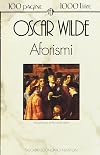
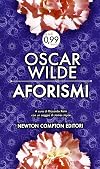
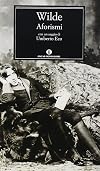
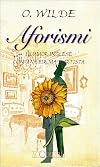
Aforismi
by Oscar Wilde 
On This Page
Description
Publie s en 1904, quatre ans apre s la mort de leur auteur, ces aphorismes sont l'exact reflet de la pense e et de l'esprit de Wilde. Feu d'artifice de mots d'esprit, ils disent tous les paradoxes d'un e crivain qui n'a rien perdu de son caracte re scandaleux. -4e me de couv.Tags
Recommendations
























Member Reviews
Il problema di questo libro è che è già finito. E questo nonostante mi sia sforzata di leggerlo lentamente, gustandomi ogni singolo aforisma.
Sì, perché non sono frasette buttate là, dette tanto per andare controcorrente. Anche nella brevità degli aforismi è evidente che Oscar Wilde non è mai banale, sciatto, superficiale. Ogni frase è perfettamente costruita e colpisce dritta nel segno del luogo comune e del comune sentire.
Leggendo un aforisma dopo l'altro non è difficile immaginare la morbosità e lo scandalo dei suoi interlocutori. E il piacere che queste reazioni dovevano suscitare in Oscar Wilde, la prova del suo insuperabile wit.
Sì, perché non sono frasette buttate là, dette tanto per andare controcorrente. Anche nella brevità degli aforismi è evidente che Oscar Wilde non è mai banale, sciatto, superficiale. Ogni frase è perfettamente costruita e colpisce dritta nel segno del luogo comune e del comune sentire.
Leggendo un aforisma dopo l'altro non è difficile immaginare la morbosità e lo scandalo dei suoi interlocutori. E il piacere che queste reazioni dovevano suscitare in Oscar Wilde, la prova del suo insuperabile wit.
Aug 1, 2023Italian
Aphorismes
Un homme de génie comme Oscar Wilde manque quelque peu de nos jours. Dans un monde où le cynisme domine avec de faux cyniques, cet esprit puissant aurait sans doute eut son lot de succès.
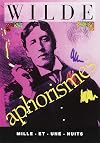
Ce petit livre de la collection Mille et une nuits est bien construit. Les aphorismes de Wilde sont de grande qualité. Quelques-unes célèbres sont passées à la postérité. Certaines sont un peu longues mais pleines de bon sens.
On appréciera les paradoxes, les contradictions, les effets de style et les sentences quelques fois définitives. Toute la force de ces aphorismes réside dans cet art à dire tout et son contraire.
On saluera le texte en fin d’ouvrage intitulé La vérité des masques qui situe historiquement ces show more aphorismes à leur auteur ainsi que les modifications portées dans la présente édition. On appréciera également la chronologie de la vie d’Oscar Wilde, souvent méconnue. show less
Un homme de génie comme Oscar Wilde manque quelque peu de nos jours. Dans un monde où le cynisme domine avec de faux cyniques, cet esprit puissant aurait sans doute eut son lot de succès.
Ce petit livre de la collection Mille et une nuits est bien construit. Les aphorismes de Wilde sont de grande qualité. Quelques-unes célèbres sont passées à la postérité. Certaines sont un peu longues mais pleines de bon sens.
On appréciera les paradoxes, les contradictions, les effets de style et les sentences quelques fois définitives. Toute la force de ces aphorismes réside dans cet art à dire tout et son contraire.
On saluera le texte en fin d’ouvrage intitulé La vérité des masques qui situe historiquement ces show more aphorismes à leur auteur ainsi que les modifications portées dans la présente édition. On appréciera également la chronologie de la vie d’Oscar Wilde, souvent méconnue. show less
Feb 5, 2017French
Ratings
Members
- Recently Added By
Author Information

1,793+ Works 121,621 Members
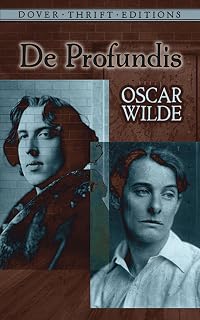
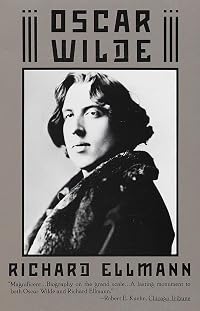
Flamboyant man-about-town, Oscar Wilde had a reputation that preceded him, especially in his early career. He was born to a middle-class Irish family (his father was a surgeon) and was trained as a scholarship boy at Trinity College, Dublin. He subsequently won a scholarship to Magdalen College, Oxford, where he was heavily influenced by John show more Ruskin and Walter Pater, whose aestheticism was taken to its radical extreme in Wilde's work. By 1879 he was already known as a wit and a dandy; soon after, in fact, he was satirized in Gilbert and Sullivan's Patience. Largely on the strength of his public persona, Wilde undertook a lecture tour to the United States in 1882, where he saw his play Vera open---unsuccessfully---in New York. His first published volume, Poems, which met with some degree of approbation, appeared at this time. In 1884 he married Constance Lloyd, the daughter of an Irish lawyer, and within two years they had two sons. During this period he wrote, among others, The Picture of Dorian Gray (1891), his only novel, which scandalized many readers and was widely denounced as immoral. Wilde simultaneously dismissed and encouraged such criticism with his statement in the preface, "There is no such thing as a moral or an immoral book. Books are well written or badly written. That is all." In 1891 Wilde published A House of Pomegranates, a collection of fantasy tales, and in 1892 gained commercial and critical success with his play, Lady Windermere's Fan He followed this comedy with A Woman of No Importance (1893), An Ideal Husband (1895), and his most famous play, The Importance of Being Earnest (1895). During this period he also wrote Salome, in French, but was unable to obtain a license for it in England. Performed in Paris in 1896, the play was translated and published in England in 1894 by Lord Alfred Douglas and was illustrated by Aubrey Beardsley. Lord Alfred was the son of the Marquess of Queensbury, who objected to his son's spending so much time with Wilde because of Wilde's flamboyant behavior and homosexual relationships. In 1895, after being publicly insulted by the marquess, Wilde brought an unsuccessful slander suit against the peer. The result of his inability to prove slander was his own trial on charges of sodomy, of which he was found guilty and sentenced to two years of hard labor. During his time in prison, he wrote a scathing rebuke to Lord Alfred, published in 1905 as De Profundis. In it he argues that his conduct was a result of his standing "in symbolic relations to the art and culture" of his time. After his release, Wilde left England for Paris, where he wrote what may be his most famous poem, The Ballad of Reading Gaol (1898), drawn from his prison experiences. Among his other notable writing is The Soul of Man under Socialism (1891), which argues for individualism and freedom of artistic expression. There has been a revived interest in Wilde's work; among the best recent volumes are Richard Ellmann's, Oscar Wilde and Regenia Gagnier's Idylls of the Marketplace , two works that vary widely in their critical assumptions and approach to Wilde but that offer rich insights into his complex character. (Bowker Author Biography) show less
Oscar Wilde has a Legacy Library. Legacy libraries are the personal libraries of famous readers, entered by LibraryThing members from the Legacy Libraries group.
Series
Belongs to Publisher Series
Common Knowledge
- Original title
- Aphorisms
- Original publication date
- 1904
- Original language*
- Inglese
*Some information comes from Common Knowledge in other languages. Click "Edit" for more information.
Classifications
Statistics
- Members
- 364
- Popularity
- 86,807
- Reviews
- 2
- Rating
- (3.97)
- Languages
- 7 — French, German, Italian, Multiple languages, Polish, Portuguese, Spanish
- Media
- Paper, Ebook
- ISBNs
- 39
- ASINs
- 9