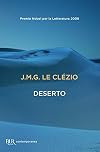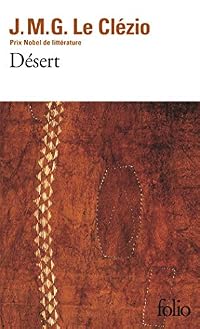
Desert
by Jean-Marie Gustave Le Clézio
On This Page
Description
After being driven from their land by French colonial soldiers in 1909, Nour and his people, "the blue men" must search for a haven out of the desert that will shelter them. Interspersed with the story of Nour is the contemporary story of Lalla, a descendent of the blue men, who lives in Morocco and tries to stay true to the blood of her ancestors while experiencing life as a modern immigrant.Tags
Recommendations





Member Reviews
Displacement, exile, refugee crossing, ethnic cleansing. J. M. G. Le Clézio's themes are heavy. They are the stuff of enduring human conflicts, the bane of civilization. Yet the register of his writing makes bearable the human failings and violence it seeks to redress. His prose register is poetry, but it is poetry lightened by silence and simplicity.
"There is no limit to the extent to which we can think ourselves into the being of another", says J. M. Coetzee's eponymous novelist in Elizabeth Costello; "There are no bounds to the sympathetic imagination." Le Clézio's sympathetic imagination in the novel Desert is bounded only by geography (Saharan desert, Morocco, France) and time (20th century). His treatment of the plight of the show more marginalized people and their culture crosses over from place to place, from one generation to the next. It crosses over from an individual to the collective. Hence, the gaze of a young boy is also the gaze of his tribe or clan: "His face was dark, sun-scorched, but his eyes shone and the light of his gaze was almost supernatural." The young boy is Nour, and his people is being persecuted out of the African desert. In the next paragraph, Le Clézio generalized the particular "light of his gaze":
They were the men and women of the sand, of the wind, of the light, of the night. They had appeared as if in a dream at the top of a dune, as if they were born of cloudless sky and carried the harshness of space in their limbs. They bore with them hunger, the thirst of bleeding lips, the flintlike silence of the glinting sun, the cold nights, the glow of the Milky Way, the moon; accompanying them were their huge shadows at sunset, the waves of virgin sand over which their splayed feet trod, the inaccessible horizon. More than anything, they bore the light of their gaze shining so brightly in the whites of their eyes. (my emphasis)
The poet Wislawa Szymborska expressed a similar journey across an inhospitable landscape. In her poem "Some People" (trans. Stanislaw Baranczak and Clare Cavanagh), the same perilous rhythm can be detected.
Some people flee some other people.
In some country under a sun
and some clouds.
They abandon something like all they’ve got,
sown fields, some chickens, dogs,
mirrors in which fire now preens.
Their shoulders bear pitchers and bundles.
The emptier they get, the heavier they grow.
A second narrative thread of Desert tells the story of Lalla, a descendant of Nour. Lalla's people no longer flee, but she chooses to escape her village. She runs away with a man when she was forced to marry another. The man she eloped with, "the Hartani", is a shepherd who lives like a hermit and doesn't communicate in the usual way.
He doesn't speak. That is to say, he doesn't speak the same language as humans. But Lalla hears his voice inside her ears, and in his language he says very beautiful things that stir her body inwardly, that make her shudder. Maybe he speaks with the faint sound of the wind that comes from the depths of space, or else with the silence between each gust of wind. Maybe he speaks with the words of light, words that explode in showers of sparks on the razor-edged rocks, with the words of sand, the words of pebbles that crumble into hard powder, and also the words of scorpions and snakes that leave tiny indistinct marks in the dust. He knows how to speak with all of those words, and his gaze leaps, swift as an animal, from one rock to another, shoots all the way out to the horizon in a single move, flies straight up into the sky, soaring higher than the birds. (The placement of the text of Lalla's sections in the novel are justified, as distinguished from Nour's, which are left-aligned.)
Le Clézio conveys the contradiction between silence and the power of words to express feelings and ideas. The Hartani seems to be representative of an old way of life, a simple life dependent on the natural elements, far from the priorities and demands of the city. The only way to speak with him is to look in his eyes.
She looks at him and reads the light in his black eyes, and he looks deep into her amber eyes; he doesn't only look at her face, but really deep down into her eyes, and it's as if he understands what she wants to say to him.
The novel idealizes communication beyond words, in a natural setting, as opposed to the sounds of modernity in a city. Lalla can derive from the gaze of the Hartani the "essence" of things, maybe even those beyond the capacity of words to express.
Now Lalla knows that words don't really count. It's only what you mean to say, deep down inside, like a secret, like a prayer: that's the only thing that counts. And the Hartani doesn't speak in any other way; he knows how to give and receive that kind of message. So many things are conveyed through silence. Lalla didn't know that either before meeting the Hartani. Other people expect only words, or acts, proof, but the Hartani, he looks at Lalla with his handsome metallic eyes, without saying anything, and it is through the light in his eyes that you hear what he's saying, what he's asking.
The descriptive function of words is not so much challenged as rejected. This passage, obviously of well chosen words, yet offers more than evocation of words. It is in the register of invocation ("like a secret, like a prayer") of a desert life, an elegy to a vanishing culture, to a threatened indigenous way of life.
The novel as a whole offers a way of seeing beyond the surface of things, beyond the superficiality of words. As a persecuted people flee the harsh distances of the desert ("bundles rocking on their backs, like strange insects after a storm", 181-182), their pitiful silence seems both prayer and protest. Their quiet dignity and martyrdom provide a contrast to the people of a European city (the city Lalla escaped to) who are at the mercy of "immobile giants". That city, Marseilles, is worded in void.
Lalla can feel the relentless dizziness of the void entering her, as if the wind blowing in the street was part of a long spiraling movement. Maybe the wind is going to tear the roofs off the sordid houses, smash in the doors and windows, knock down the rotten walls, heave all the cars into a pile of scrap metal. It's bound to happen, because there's too much hate, too much suffering… But the big building remains standing, stunting the men in its tall silhouette. They are the immobile giants, with bloody eyes, with cruel eyes, the giants who devour men and women. In their entrails, young women are thrown down on dirty old mattresses, and possessed in a few seconds by silent men with members as hot as pokers. Then they get dressed again and leave, and the cigarette – left burning on the edge of the table – hasn't had time to go out. Inside the devouring giants, old women lie under the weight of men who are crushing them, dirtying their yellow flesh. And so, in all of those women's wombs, the void is born, the intense and icy void that escapes from their bodies and blows like a wind along the streets and alleys, endlessly shooting out new spirals.
The image of monstrous buildings sexually leveling people under them – 180 degrees from the idylls of desert – reinforces the cruelty and devouring of small people by powerful men. In this dank city, Lalla's adventures are told in descriptive words, not sacrificing the things that ought to be said, the things that count. They are words of suffering and degradation. That is, until her transfiguration and acquisition of a new kind of power.
Desert is an imagistic novel. From one exile to another, it recounts the never-ending quest for the equality of races and the security of a home. Beyond words, beyond aesthetic values, compassion resides in its pages. show less
"There is no limit to the extent to which we can think ourselves into the being of another", says J. M. Coetzee's eponymous novelist in Elizabeth Costello; "There are no bounds to the sympathetic imagination." Le Clézio's sympathetic imagination in the novel Desert is bounded only by geography (Saharan desert, Morocco, France) and time (20th century). His treatment of the plight of the show more marginalized people and their culture crosses over from place to place, from one generation to the next. It crosses over from an individual to the collective. Hence, the gaze of a young boy is also the gaze of his tribe or clan: "His face was dark, sun-scorched, but his eyes shone and the light of his gaze was almost supernatural." The young boy is Nour, and his people is being persecuted out of the African desert. In the next paragraph, Le Clézio generalized the particular "light of his gaze":
They were the men and women of the sand, of the wind, of the light, of the night. They had appeared as if in a dream at the top of a dune, as if they were born of cloudless sky and carried the harshness of space in their limbs. They bore with them hunger, the thirst of bleeding lips, the flintlike silence of the glinting sun, the cold nights, the glow of the Milky Way, the moon; accompanying them were their huge shadows at sunset, the waves of virgin sand over which their splayed feet trod, the inaccessible horizon. More than anything, they bore the light of their gaze shining so brightly in the whites of their eyes. (my emphasis)
The poet Wislawa Szymborska expressed a similar journey across an inhospitable landscape. In her poem "Some People" (trans. Stanislaw Baranczak and Clare Cavanagh), the same perilous rhythm can be detected.
Some people flee some other people.
In some country under a sun
and some clouds.
They abandon something like all they’ve got,
sown fields, some chickens, dogs,
mirrors in which fire now preens.
Their shoulders bear pitchers and bundles.
The emptier they get, the heavier they grow.
A second narrative thread of Desert tells the story of Lalla, a descendant of Nour. Lalla's people no longer flee, but she chooses to escape her village. She runs away with a man when she was forced to marry another. The man she eloped with, "the Hartani", is a shepherd who lives like a hermit and doesn't communicate in the usual way.
He doesn't speak. That is to say, he doesn't speak the same language as humans. But Lalla hears his voice inside her ears, and in his language he says very beautiful things that stir her body inwardly, that make her shudder. Maybe he speaks with the faint sound of the wind that comes from the depths of space, or else with the silence between each gust of wind. Maybe he speaks with the words of light, words that explode in showers of sparks on the razor-edged rocks, with the words of sand, the words of pebbles that crumble into hard powder, and also the words of scorpions and snakes that leave tiny indistinct marks in the dust. He knows how to speak with all of those words, and his gaze leaps, swift as an animal, from one rock to another, shoots all the way out to the horizon in a single move, flies straight up into the sky, soaring higher than the birds. (The placement of the text of Lalla's sections in the novel are justified, as distinguished from Nour's, which are left-aligned.)
Le Clézio conveys the contradiction between silence and the power of words to express feelings and ideas. The Hartani seems to be representative of an old way of life, a simple life dependent on the natural elements, far from the priorities and demands of the city. The only way to speak with him is to look in his eyes.
She looks at him and reads the light in his black eyes, and he looks deep into her amber eyes; he doesn't only look at her face, but really deep down into her eyes, and it's as if he understands what she wants to say to him.
The novel idealizes communication beyond words, in a natural setting, as opposed to the sounds of modernity in a city. Lalla can derive from the gaze of the Hartani the "essence" of things, maybe even those beyond the capacity of words to express.
Now Lalla knows that words don't really count. It's only what you mean to say, deep down inside, like a secret, like a prayer: that's the only thing that counts. And the Hartani doesn't speak in any other way; he knows how to give and receive that kind of message. So many things are conveyed through silence. Lalla didn't know that either before meeting the Hartani. Other people expect only words, or acts, proof, but the Hartani, he looks at Lalla with his handsome metallic eyes, without saying anything, and it is through the light in his eyes that you hear what he's saying, what he's asking.
The descriptive function of words is not so much challenged as rejected. This passage, obviously of well chosen words, yet offers more than evocation of words. It is in the register of invocation ("like a secret, like a prayer") of a desert life, an elegy to a vanishing culture, to a threatened indigenous way of life.
The novel as a whole offers a way of seeing beyond the surface of things, beyond the superficiality of words. As a persecuted people flee the harsh distances of the desert ("bundles rocking on their backs, like strange insects after a storm", 181-182), their pitiful silence seems both prayer and protest. Their quiet dignity and martyrdom provide a contrast to the people of a European city (the city Lalla escaped to) who are at the mercy of "immobile giants". That city, Marseilles, is worded in void.
Lalla can feel the relentless dizziness of the void entering her, as if the wind blowing in the street was part of a long spiraling movement. Maybe the wind is going to tear the roofs off the sordid houses, smash in the doors and windows, knock down the rotten walls, heave all the cars into a pile of scrap metal. It's bound to happen, because there's too much hate, too much suffering… But the big building remains standing, stunting the men in its tall silhouette. They are the immobile giants, with bloody eyes, with cruel eyes, the giants who devour men and women. In their entrails, young women are thrown down on dirty old mattresses, and possessed in a few seconds by silent men with members as hot as pokers. Then they get dressed again and leave, and the cigarette – left burning on the edge of the table – hasn't had time to go out. Inside the devouring giants, old women lie under the weight of men who are crushing them, dirtying their yellow flesh. And so, in all of those women's wombs, the void is born, the intense and icy void that escapes from their bodies and blows like a wind along the streets and alleys, endlessly shooting out new spirals.
The image of monstrous buildings sexually leveling people under them – 180 degrees from the idylls of desert – reinforces the cruelty and devouring of small people by powerful men. In this dank city, Lalla's adventures are told in descriptive words, not sacrificing the things that ought to be said, the things that count. They are words of suffering and degradation. That is, until her transfiguration and acquisition of a new kind of power.
Desert is an imagistic novel. From one exile to another, it recounts the never-ending quest for the equality of races and the security of a home. Beyond words, beyond aesthetic values, compassion resides in its pages. show less
Published in 1980, Desert was not translated into English until 2009, after its author had won the Nobel Prize for Literature. This is a highly descriptive novel, immersing the reader in the heat, cold, brilliant light and starry darkness of the Sahara, the rugged rocks and dunes of the Moroccan coast. I have never been in the desert (if you don't count Las Vegas and Red Rock Canyon, which you can't, in this context) but I now feel as though I have escaped from it. Although there are two stories interlaced here, there is very little in the way of Story in Desert. It is almost exclusively about Place. In the first segment, set in the early 20th century, we meet Nour, a young boy of the Tuareg tribe of "Blue Men", Saharan nomads traveling show more in caravan searching for a new home after failing to resist the French Colonial takeover of their home territories. The contrapuntal segments are contemporary with the writing, and show us Lalla, a descendant of the Blue Men, an orphan living in a shanty town outside a coastal city, perhaps Tangier. Her days are often spent wandering into the hills and along the rocky coast, with no particular aim. Occasionally, she has visions of a Blue Man, with whom she feels a spiritual connection. She also connects, in a more earthly way, with a young man known as the Hartani, a mute shepherd. Lalla is as free as can be, until she begins to be pressured by her Aunt to marry an old man; she retreats to the hills with the Hartani, and eventually travels to France, where she survives as a hotel maid, and again spends her free time roaming, now through the streets, suburbs and environs of Marseille. The prose of Desert is often rhythmic, repetitive in a musical way, with many recurring metaphors and images. There is harsh beauty in it, as well as an homage to the traditional primitive way of life of the desert dwellers. It could have been a 5 star read for me, if only the characters had been a bit more multi-dimensional.
Review written in April 2014 show less
Review written in April 2014 show less
http://nwhyte.livejournal.com/2144107.html
When Le Clézio won the Nobel Prize for Literature a few years back, I was fascinated to discover that he had written a book set partly in the Western Sahara, which is indeed where his story starts and ends, following an uprising of then indigenous people against the Europeans of 1910-11, told from the viewpoint of a young boy close to but not in the events. But more than half of the book, interwoven with the sections set earlier, is the story of Lalla, set perhaps in the early 1950s, following her from a shanty-town near the coast, with her unspeaking herdsman lover, to Marseilles and back. It is Marseilles that turns out to be the real human desert, full of alienation for Lalla; Nour's desert show more is a vibrant human space, full of physical and cultural significance. It would be interesting to read some critiques of this from sources nearer the region, but I very much enjoyed Le Clézio's turning round the questions of who is alien, what is normal, where is the real desert. show less
When Le Clézio won the Nobel Prize for Literature a few years back, I was fascinated to discover that he had written a book set partly in the Western Sahara, which is indeed where his story starts and ends, following an uprising of then indigenous people against the Europeans of 1910-11, told from the viewpoint of a young boy close to but not in the events. But more than half of the book, interwoven with the sections set earlier, is the story of Lalla, set perhaps in the early 1950s, following her from a shanty-town near the coast, with her unspeaking herdsman lover, to Marseilles and back. It is Marseilles that turns out to be the real human desert, full of alienation for Lalla; Nour's desert show more is a vibrant human space, full of physical and cultural significance. It would be interesting to read some critiques of this from sources nearer the region, but I very much enjoyed Le Clézio's turning round the questions of who is alien, what is normal, where is the real desert. show less
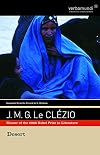
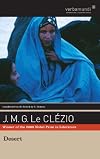
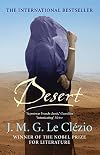
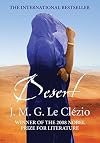
First the confession: I had never heard of Le Clezio until he won the Nobel in 2008, then when I bought the book a few months later, it was not the Noble prize that compelled me, but the picture on the cover of the verbamundi hardcover edition– an enigmatic woman with a blue veil. (the picture, by the way, is by photographer Dan Heller).
To be lead to this book by a picture is ironic, as the reading of Desert is so much akin of watching a painter drawing and coloring on a canvas. It also requires the same patience and attention. Readers who crave plot should be warned that this is probably not a book for you. Le Clezio is a master of description. The desert, a slum in Morocco and the streets of Marseille all comes alive, but their hues show more and smells and the people populating them take shape slowly and hazily. At times I had to force myself to read the pages and pages of description – the western reader in me wanting to jump the long repetitive paragraphs – but there was such great reward when I got to abandon myself into Le Clezio’s imaginary.
If I stay with the idea of painting with words, I would say that Le Clezio is an impressionist painter at that. There is not much definition in the images, and one should discard rationalization and let feelings/impressions guide the experience of reading this book.
His writing reminded me of, the also Nobel Prize winner, Kawabata. They share the same lyric quality, and write in a form beyond plot, where the character’s actions and their surrounding environment convey more than dialogue and story line. Yet, there is something that I want to call “magic realism” on LeClezio’s writing. I hate to say it because “magic realism” seems overused to me. It is perhaps a “magic realism” closer to Salman Rushdie than Garcia Marquez, but I cannot find other form of describing it.
I will attempt to read other books by Le Clezio, but I probably will wait a while. If Desert is a sample of how he writes, he is an author that demands a certain mood and commitment from his reader. He is not meant to be read in 20 minute allotments, while waiting for the kids’ dentist appointments or rushed before going to bed. I will plan for a summer weekend when I can read without interruptions for hours on end. I should be ready for it then... show less
To be lead to this book by a picture is ironic, as the reading of Desert is so much akin of watching a painter drawing and coloring on a canvas. It also requires the same patience and attention. Readers who crave plot should be warned that this is probably not a book for you. Le Clezio is a master of description. The desert, a slum in Morocco and the streets of Marseille all comes alive, but their hues show more and smells and the people populating them take shape slowly and hazily. At times I had to force myself to read the pages and pages of description – the western reader in me wanting to jump the long repetitive paragraphs – but there was such great reward when I got to abandon myself into Le Clezio’s imaginary.
If I stay with the idea of painting with words, I would say that Le Clezio is an impressionist painter at that. There is not much definition in the images, and one should discard rationalization and let feelings/impressions guide the experience of reading this book.
His writing reminded me of, the also Nobel Prize winner, Kawabata. They share the same lyric quality, and write in a form beyond plot, where the character’s actions and their surrounding environment convey more than dialogue and story line. Yet, there is something that I want to call “magic realism” on LeClezio’s writing. I hate to say it because “magic realism” seems overused to me. It is perhaps a “magic realism” closer to Salman Rushdie than Garcia Marquez, but I cannot find other form of describing it.
I will attempt to read other books by Le Clezio, but I probably will wait a while. If Desert is a sample of how he writes, he is an author that demands a certain mood and commitment from his reader. He is not meant to be read in 20 minute allotments, while waiting for the kids’ dentist appointments or rushed before going to bed. I will plan for a summer weekend when I can read without interruptions for hours on end. I should be ready for it then... show less
Two linked stories about tradition and progress and what we as a civilisation have come to sacrifice to get where we are.
Beginning of the twentieth century, Nour, one of the last of a disappearing tribe who have to start a migration through the desert to find their homeland.
Lalla, the descendant of that now disappeared tribe, who has to take her own journey to find what's lacking in her life.
Prose which should be read as poetry, through the senses. I think that if you try to read this novel in the traditional sense, you won't be very satisfied with the experience.
There's a plot to follow, but sometimes great important facts seem to be omitted whereas details such as the smell of the sand or the texture of some clothes or the warm and show more salty water of a particular beach are described for pages and pages.
You have to feel more than to read this novel.
It reminded me of Woolf's writing style, dense, subtle, elegant and poetic.
Not for everybody. show less
Beginning of the twentieth century, Nour, one of the last of a disappearing tribe who have to start a migration through the desert to find their homeland.
Lalla, the descendant of that now disappeared tribe, who has to take her own journey to find what's lacking in her life.
Prose which should be read as poetry, through the senses. I think that if you try to read this novel in the traditional sense, you won't be very satisfied with the experience.
There's a plot to follow, but sometimes great important facts seem to be omitted whereas details such as the smell of the sand or the texture of some clothes or the warm and show more salty water of a particular beach are described for pages and pages.
You have to feel more than to read this novel.
It reminded me of Woolf's writing style, dense, subtle, elegant and poetic.
Not for everybody. show less
Translation of the member review from the French reader:
Desert is for me one of the most beautiful books in any genre. I read it awhile ago and what I remember most today is not the story. What i remember is that it's a journey that resonated in me, it's the music and the poetry that flows from the writing, it's the mood and the emotion that emerges from it, the heat, the scents, the colors, the slowness. The impression of having entered into another world, and the desire to prolong this feeling as you softly savor each phrase.
"Désert est, pour moi, un des plus beaux livres, toutes catégories confondues.
Je l'ai lu il y a un certain temps et ce dont je me rappelle le plus aujourd'hui, ce n'est pas l'histoire. Ce dont je me rappelle, show more c'est un voyage qui m'a fait vibrer, c'est la musique et la poésie qui se dégagent de l'écriture, ce sont ces ambiances et l'émotion qui en découle, la chaleur, les odeurs, les couleurs, la lenteur... L'impression d'avoir pénétré un autre monde et l'envie de prolonger cette sensation en profitant, doucement, de chaque phrase. " show less
Desert is for me one of the most beautiful books in any genre. I read it awhile ago and what I remember most today is not the story. What i remember is that it's a journey that resonated in me, it's the music and the poetry that flows from the writing, it's the mood and the emotion that emerges from it, the heat, the scents, the colors, the slowness. The impression of having entered into another world, and the desire to prolong this feeling as you softly savor each phrase.
"Désert est, pour moi, un des plus beaux livres, toutes catégories confondues.
Je l'ai lu il y a un certain temps et ce dont je me rappelle le plus aujourd'hui, ce n'est pas l'histoire. Ce dont je me rappelle, show more c'est un voyage qui m'a fait vibrer, c'est la musique et la poésie qui se dégagent de l'écriture, ce sont ces ambiances et l'émotion qui en découle, la chaleur, les odeurs, les couleurs, la lenteur... L'impression d'avoir pénétré un autre monde et l'envie de prolonger cette sensation en profitant, doucement, de chaque phrase. " show less
Two parallel stories in the Western Sahara. Magnificent descriptions, profound depiction of the traditional against the invasive modern world. Two personal journeys full of humanity. I like this author.
Members
- Recently Added By
Published Reviews
ThingScore 50
The problem with "Desert" is not that its author is European or that he won the Nobel, but that it is a truly dreadful book, a dull and dimly plotted fable based in one of the West's oldest and most self-serving myths, that we are the locus of all corruption and that purity lies outside.
added by Shortride
“Desert” is a rich, sprawling, searching, poetic, provocative, broadly historic and demanding novel, which in all those ways displays the essence of Le Clézio. As a reflection on colonization and its legacy, it is painfully relevant after 30 years. Weaving together two stories that span the 20th century, Le Clézio tells of the last days of the Tuareg, the desert warriors known as the show more blue men, who are being driven from their ancestral lands in North Africa by the French colonial army and “the new order,” and in counterpoint, the travails of a later generation trapped in the projects and shantytowns of Tangier and Marseille. show less
added by kidzdoc
Lists

Best of French Literature
138 works; 27 members

Best African Books
126 works; 46 members

20th Century Literature
1,161 works; 55 members

Nobel Price Winners
222 works; 20 members

BBC World Book Club
261 works; 5 members
Author Information

118+ Works 6,276 Members
Jean-Marie Gustave Le Clézio, who was born in Nice, France on April 13, 1940, is usually identified as J. M. G. Le Clézio. After studying at the University of Bristol in England from 1958 to 1959, he finished his undergraduate degree at Institut d'etudes Litteraires in Nice. In 1964, he received a master's degree from the University of show more Aix-en-Provence with a thesis on Henri Michaux and wrote a doctoral thesis in 1983 on Mexico's early history for the University of Perpignan. He has taught at numerous universities throughout the world and has written around 30 books including novels, essays, and short stories. He received the Prix Renaudot Prize for his novel Le Procès-Verbal in 1963 and the Nobel Prize for Literature in 2008. (Bowker Author Biography) show less
Some Editions
Awards and Honors
Series
Belongs to Publisher Series
Common Knowledge
- Canonical title*
- Désert
- Original title
- Désert
- Original publication date
- 1980
- People/Characters
- Nour; Lalla
- Important places
- Marseille, Bouches-du-Rhône, Provence-Alpes-Côte d'Azur, France; Morocco; Sahara
- First words
- They appeared as if in a dream at the top of the dune, half hidden in the cloud of sand rising from their steps.
- Last words
- (Click to show. Warning: May contain spoilers.)They drifted away, as if in a dream, disappeared.
- Original language*
- Français
*Some information comes from Common Knowledge in other languages. Click "Edit" for more information.
Classifications
- Genres
- Fiction and Literature, General Fiction
- DDC/MDS
- 843.914 — Literature & rhetoric French & related literatures French fiction 1900- 20th Century 1945-1999
- LCC
- PQ2672 .E25 .D413 — Language and Literature French, Italian, Spanish and Portuguese literatures French literature Modern literature 1961-2000
- BISAC
Statistics
- Members
- 765
- Popularity
- 36,422
- Reviews
- 20
- Rating
- (3.69)
- Languages
- 13 — Czech, Danish, English, Estonian, Finnish, French, German, Italian, Japanese, Polish, Portuguese, Spanish, Swedish
- Media
- Paper, Ebook
- ISBNs
- 34
- ASINs
- 10