On This Page
Description
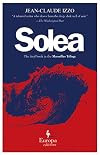
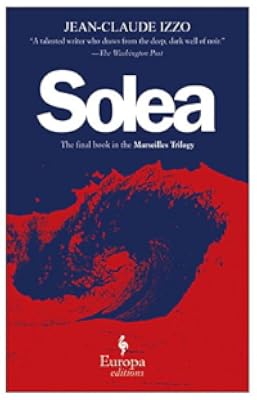
The final book in the Marseilles trilogy, following Chourmo, from "a talented writer who draws from the deep, dark well of noir ( The Washington Post ). Ex-cop, loner, Fabio Montale returns in this stunning conclusion to Jean-Claude Izzo's Marseilles trilogy. Italian Mafiosi are hunting journalist-activist Babette Bellini, and the body count is growing as they close in on their prey. In desperation, Bellini seeks help from her former lover, Montale. Before he has time to shake off his most show more recent hangover, Montale is receiving sinister phone calls from men with Italian accents who want him to find Bellini for them. Like a woman he can't leave, like strong liquor he can't refuse, Marseilles lures Montale back into its violent embrace. Solea is Izzo's heartfelt cry against the criminal forces corrupting his beloved city. It is his farewell to Marseilles and to its ideal protagonist, Fabio Montale. It concludes an unforgettable trilogy that epitomizes the aspirations and ideals of the Mediterranean noir movement. Praise for Izzo's Marseilles Trilogy "One of the masterpieces of modern noir." - The Washington Post "Izzo's ability to describe Marseilles and to make his readers feel the multiracial reality of that city so directly and authentically is fascinating." -Andrea Camilleri, New York Times -bestselling author of the Inspector Montalbano series "Sensationally readable... Full of fascinating characters." - Chicago Tribune "Terrific." - The New York Times "Like the best noir writers-and make no mistake, he is among the best-Izzo not only has a keen eye for detail... but also digs deep into what makes men weep." - Time Out New York show lessTags
Recommendations






Member Reviews
The final volume of Izzo's Marseilles Trilogy goes so far beyond typical noir that it defies labeling. For one thing, it takes on the pervading presence of evil and corruption in the whole world--not just in a town (as in Hammett's Red Harvest) or in the hearts of a few individuals, as in most noir novels, where the atmosphere can be pretty claustrophobic. Izzo achieves the same effect with Solea's cast of characters, most of whom are familiar from the first two volumes of the series, but the forces of evil have multiple layers--of most immediate concern, of course, being the heartless killers who are preying on Fabio Montale's friends in the pursuit of information about the mafia's infiltration into every aspect of western business and show more politics--the second layer. Obviously, don't jump in here. If you have read the first two books, you'll be compelled to read this one. Izzo was a fabulous writer, who weaves the sights and sounds and smells of Marseilles into almost every paragraph. In true noir fashion, the characters consume untold quantities of alcohol--pastis being the favorite of Montale--but they also partake of local food, described in loving detail. In the face of such evil, food and drink seem to be one way of salvaging a little joy out of a hard, sometimes hopeless life. The other way of course, is love, and that is a central part of this remarkable trilogy as well. No spoilers, but read the trilogy, and prepare to feel something in your gut you rarely get from literature. And then ponder that since Izzo died in 2000, things have only gotten worse. show less
Third and blackest of Izzo's Marseille novels. Fabio Montale is in an impossible position: a mafia killer is looking for Fabio's friend, the investigative journalist Babette, who has gone into hiding after finding out more than is good for her about money laundering systems and the political links of organised crime. The killer wants Fabio to lead him to Babette, and proposes to murder Fabio's friends one by one until he finds her. Meanwhile, Fabio's despair about the departure of his girlfriend Lole is only getting worse.
Not a cheerful, optimistic book, by any means, and the sunny passages in the earlier books about Mediterranean food and music have largely been replaced by excerpts from official reports and newspaper articles about show more the growth of organised crime in Europe. The message is essentially that if we don't confront the problem, it will destroy our society; but anyone who does try to do something about it had better be prepared to see their own life and everything they hold dear destroyed. I guess Izzo knew he was dying when he wrote this one. show less
Not a cheerful, optimistic book, by any means, and the sunny passages in the earlier books about Mediterranean food and music have largely been replaced by excerpts from official reports and newspaper articles about show more the growth of organised crime in Europe. The message is essentially that if we don't confront the problem, it will destroy our society; but anyone who does try to do something about it had better be prepared to see their own life and everything they hold dear destroyed. I guess Izzo knew he was dying when he wrote this one. show less
The third and final book in Izzo’s Marseilles Trilogy is a story shrouded in melancholy. Not because it is the last book, or because of how it all ends (Note: if you are looking for a happy ending, don’t read a hard-boiled crime novel). Izzo’s love for Marseilles pervades this story, even more so than in the earlier two books. The overall atmosphere is one of bitter sweet resignation, a eulogy for what has passed and a weeping for what has become (think lone saxophone player playing a sorrowful tune against the backdrop of a “fading to black” purple sky).
By book three, Izzo’s characters feel like family. I love Montale’s loner personality, his motherly neighbour Honorine and the bar owners Felix and Fonfon who make up show more Montale’s very small network of friends. What I also love is the array of iconic women that parade through Montale’s life. They are strong women, all prepared to face life head on and not just accept the crumbs that might be doled out to them. Of course, it is because of a woman that Montale finds himself being dragged against his will back into the bloodbath that is organized crime’s way of dealing with anyone who threatens to rock their boat so I like how it is another woman, Helene Pessayre, the most recent in a string of police captain who have tangled with Montale, who shares Montale’s dream of a Marseilles freed from the clenches of organized crime and corruption.
Overall, another solid hard-boiled crime novel and the perfect capstone to Izzo’s trilogy with some surprising themes about the importance of community and friendship. show less
By book three, Izzo’s characters feel like family. I love Montale’s loner personality, his motherly neighbour Honorine and the bar owners Felix and Fonfon who make up show more Montale’s very small network of friends. What I also love is the array of iconic women that parade through Montale’s life. They are strong women, all prepared to face life head on and not just accept the crumbs that might be doled out to them. Of course, it is because of a woman that Montale finds himself being dragged against his will back into the bloodbath that is organized crime’s way of dealing with anyone who threatens to rock their boat so I like how it is another woman, Helene Pessayre, the most recent in a string of police captain who have tangled with Montale, who shares Montale’s dream of a Marseilles freed from the clenches of organized crime and corruption.
Overall, another solid hard-boiled crime novel and the perfect capstone to Izzo’s trilogy with some surprising themes about the importance of community and friendship. show less
Solea is as Noir as they come, although I make that claim as one who reads only occasionally in the genre. Reportedly, despite pressure from Gallimard, his publisher, Izzo rejected the idea of continuing his Marseilles Trilogy beyond Solea (a Miles Davis tune appreciated by Fabio Montale, the existentially doomed protagonist / anti-hero of the series). In this final novel, Izzo dispenses with side plots to focus on the Mafia(there are, of course,still several relationships with beautiful & intriguing women, past & present, that preoccupy Fabio). This time, Izzo is not so much concerned with the truands who regularly engage in turf wars & s'entretuent (no satisfying English translation for this verb) & produce much collateral damage as show more he is with the Big Picture(there is, nevertheless, a cold-blooded throat-slitter this time around). At stake is his friend & former lover Babette's investigation into the Mafia's influence over & corruption of the financial and political systems in France, an influence that borders on complete takeover. The evidence that she has compiled is detailed in a series of computer disks that she sends to Fabio for safekeeping--the last of which, the black disk, goes so far as to name names & reveal bank account numbers. Naturally, Fabio and everyone close to him is at risk. It is safe to say that things don't turn out well & that Izzo ends his series in the most definitive manner. There is no possible sequel.
It occurred to me while reading Solea, that in our current global financial meltdown, little to no mention has been made of the role, if any, of organized crime, at least not in reference to the United States. I remember the President's Commission on Organized Crime back in the sixties, but like the War on Poverty, except for our obsession with Mexican drug cartels, we seem to have forgotten about more traditional crime syndicates, those which have integrated their operations with legitimate business (one wonders these days, if such a concept still makes any sense at all). To quote Babette (my translation): "As a consequence of tax evasion, the accumulation in tax havens of enormous capital reserves belonging to the largest corporations is also responsible for the growth of the budget deficits of most countries in the West." Considering the current debt crisis in the European Union & the budget deficit in the U.S., this statement in a piece of 1990s' genre fiction is all the more startling. At the end of the novel, Fabio discloses that he has instructed Cyril, a young hacker, to broadcast the contents of Babette's disks across the Internet. Written in the 1990s, this scenario seems now, post- Wikileaks, quite prescient.
True to genre & true to the character of Fabio Montale, there is excessive consumption of alcohol (one wonders how Fabio manages to function at all!) and cigarettes & much sleep-deprivation. There are fewer compensations and less consolation to be found here than in the previous novels of the trilogy, however. The sea and coast, the cuisine, the incomparable light, music & the city of Marseilles itself, finally, can't tip the scale to the side of Good. show less
It occurred to me while reading Solea, that in our current global financial meltdown, little to no mention has been made of the role, if any, of organized crime, at least not in reference to the United States. I remember the President's Commission on Organized Crime back in the sixties, but like the War on Poverty, except for our obsession with Mexican drug cartels, we seem to have forgotten about more traditional crime syndicates, those which have integrated their operations with legitimate business (one wonders these days, if such a concept still makes any sense at all). To quote Babette (my translation): "As a consequence of tax evasion, the accumulation in tax havens of enormous capital reserves belonging to the largest corporations is also responsible for the growth of the budget deficits of most countries in the West." Considering the current debt crisis in the European Union & the budget deficit in the U.S., this statement in a piece of 1990s' genre fiction is all the more startling. At the end of the novel, Fabio discloses that he has instructed Cyril, a young hacker, to broadcast the contents of Babette's disks across the Internet. Written in the 1990s, this scenario seems now, post- Wikileaks, quite prescient.
True to genre & true to the character of Fabio Montale, there is excessive consumption of alcohol (one wonders how Fabio manages to function at all!) and cigarettes & much sleep-deprivation. There are fewer compensations and less consolation to be found here than in the previous novels of the trilogy, however. The sea and coast, the cuisine, the incomparable light, music & the city of Marseilles itself, finally, can't tip the scale to the side of Good. show less
Probabilmente il più potente degli episodi che costituiscono la trilogia di Marsiglia.
Ma cosa avrebbe detto Izzo se avesse saputo che cosa è avvenuto di Mani Pulite, se avesse saputo che in Italia la mafia è più forte che mai?
Ma cosa avrebbe detto Izzo se avesse saputo che cosa è avvenuto di Mani Pulite, se avesse saputo che in Italia la mafia è più forte che mai?
A perfect book. Perfect for an old man in despair, regretting all, surrounded by death, by loss, by machines grinding his world to nothing. Perfect.
OK, maybe the newspaper article on the mafia was never ending, but a book pretty close to perfect.
Just the thing to give that cherry, hopeful neighbor, to knock him down so you two can brood and quietly kill a liquor bottle or two.
Just the thing to read before you die.
Whatabook
OK, maybe the newspaper article on the mafia was never ending, but a book pretty close to perfect.
Just the thing to give that cherry, hopeful neighbor, to knock him down so you two can brood and quietly kill a liquor bottle or two.
Just the thing to read before you die.
Whatabook
"Once you get to a certain age, you don't make friends anymore. But you still have buddies .... "
It's the narrator's voice that made this book an engaging read. The genre as excuse, you might say, for sociological, existential, and social commentary. But since Solea is in fact a mystery, the plot, and the stoking whodunit the reader's curiosity is important too; we have to be able to either unravel the puzzle or make a fair stab at it. In which regard the number of Izzo's characters cluttered the unfolding story.
Still, the protagonist's always intelligent observations held me throughout, even as I lost the various threads. And if you've ever been to Marseille and are as intrigued by that polyglot city as I am, you'll cut the author show more even more slack. show less
It's the narrator's voice that made this book an engaging read. The genre as excuse, you might say, for sociological, existential, and social commentary. But since Solea is in fact a mystery, the plot, and the stoking whodunit the reader's curiosity is important too; we have to be able to either unravel the puzzle or make a fair stab at it. In which regard the number of Izzo's characters cluttered the unfolding story.
Still, the protagonist's always intelligent observations held me throughout, even as I lost the various threads. And if you've ever been to Marseille and are as intrigued by that polyglot city as I am, you'll cut the author show more even more slack. show less
Members
- Recently Added By
Lists

Books Read in 2016
4,666 works; 197 members
Author Information

18+ Works 2,681 Members
Awards and Honors
Series

Belongs to Publisher Series
Work Relationships
Is contained in
Common Knowledge
- Canonical title*
- Solea
- Original title
- Solea
- Alternate titles*
- 1998
- Original publication date
- 1998-04
- People/Characters
- Fabio Montale
- Important places
- Marseille, Bouches-du-Rhône, Provence-Alpes-Côte d'Azur, France
- Related movies
- Fabio Montale (2001 | IMDb)
- First words
- Sa vie était là bas, à Marseille.
- Last words
- (Click to show. Warning: May contain spoilers.)Lole, tu veux pas tirer les rideaux sur nôtre vie? S'il te plaît, je suis fatigué.
Lole, s'il te plaît - Original language
- French
*Some information comes from Common Knowledge in other languages. Click "Edit" for more information.
Classifications
- Genres
- Fiction and Literature, General Fiction, Mystery
- DDC/MDS
- 843.914 — Literature & rhetoric French Literature French fiction 1900- 20th Century 1945-1999
- LCC
- PQ2669 .Z95 .S65 — Language and Literature French, Italian, Spanish and Portuguese literatures French literature Modern literature 1961-2000
- BISAC
Statistics
- Members
- 438
- Popularity
- 70,137
- Reviews
- 17
- Rating
- (3.98)
- Languages
- 10 — Catalan, Danish, Dutch, English, French, German, Greek, Italian, Polish, Spanish
- Media
- Paper, Audiobook, Ebook
- ISBNs
- 24
- ASINs
- 6