
The Best and the Brightest
by David Halberstam
On This Page
Description
David Halberstam’s masterpiece, the defining history of the making of the Vietnam tragedy, with a new Foreword by Senator John McCain."A rich, entertaining, and profound reading experience.”—The New York Times
Using portraits of America’ s flawed policy makers and accounts of the forces that drove them, The Best and the Brightest reckons magnificently with the most important abiding question of our country’ s recent history: Why did America become mired in Vietnam, and why did we show more lose? As the definitive single-volume answer to that question, this enthralling book has never been superseded. It is an American classic.
Praise for The Best and the Brightest
“The most comprehensive saga of how America became involved in Vietnam. . . . It is also the Iliad of the American empire and the Odyssey of this nation’s search for its idealistic soul. The Best and the Brightest is almost like watching an Alfred Hitchcock thriller.”—The Boston Globe
“Deeply moving . . . We cannot help but feel the compelling power of this narrative. . . . Dramatic and tragic, a chain of events overwhelming in their force, a distant war embodying illusions and myths, terror and violence, confusions and courage, blindness, pride, and arrogance.”—Los Angeles Times
“A fascinating tale of folly and self-deception . . . [An] absorbing, detailed, and devastatingly caustic tale of Washington in the days of the Caesars.”—The Washington Post Book World
“Seductively readable . . . It is a staggeringly ambitious undertaking that is fully matched by Halberstam’s performance. . . . This is in all ways an admirable and necessary book.”—Newsweek
“A story every American should read.”—St. Louis Post-Dispatch. show less
Tags
Recommendations












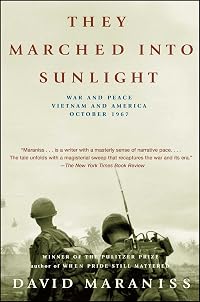

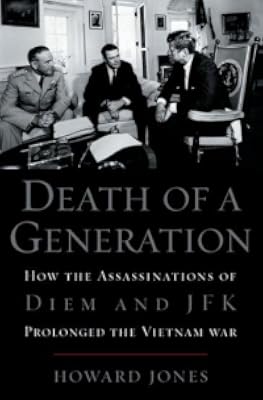
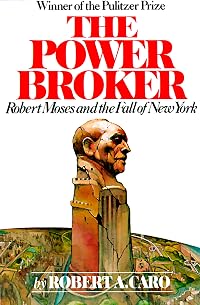
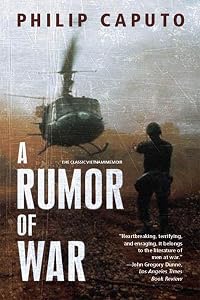



Member Recommendations
Member Reviews
This is one of the most impressive works of journalism I have ever read. It's a beast of a book - don't start reading this one unless you want to spend a lot of time with it.
Halberstam's classic is an inside look at the Kennedy and Johnson administrations steady escalation of American involvement in Vietnam. It examines a complex and fascinating question: how did two administrations full of the best and brightest individuals the nation have to offer lose control and caused one of the great tragedies in our nation's history? The answer is nuanced and complex, and Halberstam analyzes all elements of the issue: surprising lack of knowledge about Asia, militant anti-Communism, intra-governmental and intra-military rivalries, intolerance of show more dissent, various character flaws of both presidents in question and prominent members of the administration, and much, much more. The result is an incredibly smart and detailed book, and one that is not dry by any means; Halberstam is a gifted writer indeed.
This one is highly recommended to anyone with a serious interest in the Vietnam war. show less
Halberstam's classic is an inside look at the Kennedy and Johnson administrations steady escalation of American involvement in Vietnam. It examines a complex and fascinating question: how did two administrations full of the best and brightest individuals the nation have to offer lose control and caused one of the great tragedies in our nation's history? The answer is nuanced and complex, and Halberstam analyzes all elements of the issue: surprising lack of knowledge about Asia, militant anti-Communism, intra-governmental and intra-military rivalries, intolerance of show more dissent, various character flaws of both presidents in question and prominent members of the administration, and much, much more. The result is an incredibly smart and detailed book, and one that is not dry by any means; Halberstam is a gifted writer indeed.
This one is highly recommended to anyone with a serious interest in the Vietnam war. show less
This well written book covers the US decision-making on the Vietnam War from the 1940s through Nixon’s election. The focus is on the Kennedy team, which was then inherited by Johnson. It tells of the shift from the original, sound policy in the 1940s and 50s of avoiding a colonial land war in Asia to new policy objectives, lacking a basis in Vietnamese reality, focused on stopping the spread of communism and avoiding a repeat of the “who lost China” debate. In the process key policymakers over and over again ignored warnings from those who had a better grasp of the realities in Vietnam. Capsule biographies are provided on all of the key players at the moment in the narrative when they assume a prominent role. A natural break comes show more with Kennedy’s replacement by Johnson and the lost hope that Kennedy’s skepticism about Vietnam would have led him to disengage after the 1964 election. Despite having been written at the end of the 1960s, the analysis is fresh and I am sure holds up very well against more recent scholarship. The literary qualities of the work give it an atmosphere of a Greek tragedy for the personalities involved, many of whom despite their talents get ground up by the escalations of the war. The capsule biographies take on an almost stream of consciousness quality as Halberstam evokes the personalities of his characters in this terrible chapter in East Asian history. show less
The main question about World War 1 that Barbara Tuchmann's seminal The Guns of August was trying to answer was "How did this happen?" How did all these complacent European countries, many of whose leaders were related, with no clear reason to go to war, and with uncounted amounts of wealth in trade and prosperity at stake, end up sending millions of their youth to die in the mud over marginal amounts of land that they didn't even really want? Tuchmann identified a number of cognitive errors that clouded the minds of the people in charge: overconfidence in their own military prowess, fear of looking weak to domestic constituencies, excessive influence of war hawks in decision making, excessive bureaucratic infighting, the elevation of show more political considerations over military realities, disregard for negative feedback, and perhaps most crucially, a failure to understand how small moves could irrevocably commit nations to much larger future moves, with much greater consequences than originally anticipated. Being a well-read and perceptive intellectual, John F Kennedy was well aware of Tuchmann's insights, and, after being humbled by the failure of the Bay of Pigs invasion, successful used them to avert nuclear war during the Cuban Missile Crisis. However, in one of those little ironies of history, he was completely unable to avoid following a similar path of small but irreversible escalations in Vietnam, until the full-on war he had been trying to avoid eventually trapped his successors and millions of people in the senseless slaughter of the Vietnam War.
I think Halberstam's book is easily as perceptive, in broad terms, as Tuchmann's classic. Tuchmann is only cited once, briefly, but even though this book, written in 1972, had a much closer vantage point to its still-active subject than The Guns of August, and hence is closer to unusually detailed and eloquent journalism than a straight-up history, Halberstam observes and recounts all the same organizational pathologies that plagued the French General Staff and the Prussian High Command that were still present in the American political and military leadership. One thing above all that this book does, alluded to in its title, is shatter the illusion that the only thing you need to face big problems is to acquire smart people. There are endless sections chronicling the brilliance and acuity of people like Robert McNamara, who could revolutionize vast domains like the auto industry, but were unable to figure out how to get themselves out of the Vietnam trap or even to make anything close to progress in any direction. Even lesser characters, like the legions of assistant deputy sub-under-secretaries who seem to be pretty bright fellows, managed closely and carefully by a White House that rewarded and encouraged cleverness, spend vast quantities of their page time engaged in self-destructive internecine struggles about whether to report bad news and how much, while the country whose destiny they were trying to determine slowly slipped out of their grasp. Men who had gone to the best schools, who had racked up acclaimed careers in industry or finance or the military, who had smoothly ascended through the toughest jungles of the American elite, were unable to conjure a victory against one of the smallest, weakest, and poorest countries in the world.
The struggles of these dramatis personae are told through extended profiles, which are the major highlights of the book due to their length and detail. Halberstam delves deeply into the life stories of all-but-forgotten figures like Averell Harriman, Dean Rusk, or Dean Acheson to show, over and over again, the truth of Yeats' lines about how "The best lack all conviction, while the worst / Are full of passionate intensity". It's impossible to overstate the role that McCarthyism specifically, and anti-Communism generally, played in leading the US to the war. People who accurately reported or expressed pessimism about the escalation into war in bother the White House and the military were repeatedly and systematically shunted aside, transferred to worse jobs, or rendered helpless by accusations of being "soft on Communism". For the men whose careers had spanned even "successful" wars like Korea, the traumas of witch hunting made it impossible to back down, like poker players who through pride or fear simply can't fold and cut their losses. And so as the stakes kept getting raised, hawkishness became the only permissible philosophy in the Cabinet throughout both Kennedy's "team of rivals" management style and Johnson's "my way or the highway" style, the war simply got more and more intense with its own peculiar self-reinforcing logic, and each man found himself a prisoner of events beyond his control. All the major players had big incentives to escalate and act tough; no one's career was helped by caution and disagreement. In fairness to Kennedy, book clearly lays out the Truman and Eisenhower-era roots of America's involvement in Vietnam, but as he makes clear, only during the Kennedy era did the Vietnam "conflict", "brush fire", or "quagmire" really start to become a war that we couldn't back out of, despite how smart all of these guys were.
Of course, even to this day, it's somewhat of an open question of which President is most to "blame" for the Vietnam War, depending on which part you're talking about and how you define "blame". Truman, for his inaction when the French were trying to regain control of their colonial empire and he was too distracted with the Korean War? Eisenhower, for his belief that the fight against the Soviets and the Chinese was more important than the Vietnamese desire for self-determination, and who allowed McCarthyism to poison vital parts of the government? Kennedy, for his refusal to look weak on Communism after the debacle at the Bay of Pigs, the creation of the team who would oversee Vietnam's transformation into chaos, and for his timidity in taking a real stand one way or the other during crucial years of escalation? Johnson, who, unbriefed, unprepared, and unsure after Kennedy's assassination, publicly vowed that he wouldn't "lose" Vietnam the way that China had been "lost", and thought that if he just had a bit more time and money and men, he could make the issue go away with overwhelming force, salvaging his Great Society? Nixon, who, though his involvement came very late, still managed to sabotage the Paris peace negotiations with his "secret plan"? With the hindsight of 40 years after the book was written, it's clear that the problem went beyond any particular President, both because our goals were unclear, and because in a sense, the tools of government that each man used did not really belong to him. At one point, Vietnam genuinely was a tiny, unimportant country whose wishes could be safely ignored, but even with one of the greatest assemblies of talent the country had ever seen, the problem that they were trying to "solve" by propping up dictators, calculating meaningless body count statistics, and suppressing all dissent, was simply beyond their understanding.
Ho Chi Minh is frequently compared to George Washington; one wonders after reading this book if King George III had his own "best and brightest" ministers who advised analogous strategies like shelling Boston, propping up a puppet government in Georgia, rounding up colonists and settling them into "strategic plantations", or simply sending more and more redcoats. The profile of Lyndon Johnson in particular really brings home the weakness of the "imperial" style of government, as Arthur Schlesinger termed it, especially when not just Johnson but the country lost as the Great Society was upstaged by the war; Halberstam is nearly equal to Robert Caro in his ability to bring forth the drama in a man's soul and connect it to the larger currents of history. His account also prompts the modern reader to silently consider the many parallels to the way the Iraq War was promoted and managed, and its similar effects on the world. I don't know if all wars have their beginnings in the exact same kind of group stupidity recounted here, but if more governments read books like this, the world would certainly be a better place. I feel that this work, in some sense a Greek tragedy, is essential to understanding the Sixties, its war, and its place in our world. show less
I think Halberstam's book is easily as perceptive, in broad terms, as Tuchmann's classic. Tuchmann is only cited once, briefly, but even though this book, written in 1972, had a much closer vantage point to its still-active subject than The Guns of August, and hence is closer to unusually detailed and eloquent journalism than a straight-up history, Halberstam observes and recounts all the same organizational pathologies that plagued the French General Staff and the Prussian High Command that were still present in the American political and military leadership. One thing above all that this book does, alluded to in its title, is shatter the illusion that the only thing you need to face big problems is to acquire smart people. There are endless sections chronicling the brilliance and acuity of people like Robert McNamara, who could revolutionize vast domains like the auto industry, but were unable to figure out how to get themselves out of the Vietnam trap or even to make anything close to progress in any direction. Even lesser characters, like the legions of assistant deputy sub-under-secretaries who seem to be pretty bright fellows, managed closely and carefully by a White House that rewarded and encouraged cleverness, spend vast quantities of their page time engaged in self-destructive internecine struggles about whether to report bad news and how much, while the country whose destiny they were trying to determine slowly slipped out of their grasp. Men who had gone to the best schools, who had racked up acclaimed careers in industry or finance or the military, who had smoothly ascended through the toughest jungles of the American elite, were unable to conjure a victory against one of the smallest, weakest, and poorest countries in the world.
The struggles of these dramatis personae are told through extended profiles, which are the major highlights of the book due to their length and detail. Halberstam delves deeply into the life stories of all-but-forgotten figures like Averell Harriman, Dean Rusk, or Dean Acheson to show, over and over again, the truth of Yeats' lines about how "The best lack all conviction, while the worst / Are full of passionate intensity". It's impossible to overstate the role that McCarthyism specifically, and anti-Communism generally, played in leading the US to the war. People who accurately reported or expressed pessimism about the escalation into war in bother the White House and the military were repeatedly and systematically shunted aside, transferred to worse jobs, or rendered helpless by accusations of being "soft on Communism". For the men whose careers had spanned even "successful" wars like Korea, the traumas of witch hunting made it impossible to back down, like poker players who through pride or fear simply can't fold and cut their losses. And so as the stakes kept getting raised, hawkishness became the only permissible philosophy in the Cabinet throughout both Kennedy's "team of rivals" management style and Johnson's "my way or the highway" style, the war simply got more and more intense with its own peculiar self-reinforcing logic, and each man found himself a prisoner of events beyond his control. All the major players had big incentives to escalate and act tough; no one's career was helped by caution and disagreement. In fairness to Kennedy, book clearly lays out the Truman and Eisenhower-era roots of America's involvement in Vietnam, but as he makes clear, only during the Kennedy era did the Vietnam "conflict", "brush fire", or "quagmire" really start to become a war that we couldn't back out of, despite how smart all of these guys were.
Of course, even to this day, it's somewhat of an open question of which President is most to "blame" for the Vietnam War, depending on which part you're talking about and how you define "blame". Truman, for his inaction when the French were trying to regain control of their colonial empire and he was too distracted with the Korean War? Eisenhower, for his belief that the fight against the Soviets and the Chinese was more important than the Vietnamese desire for self-determination, and who allowed McCarthyism to poison vital parts of the government? Kennedy, for his refusal to look weak on Communism after the debacle at the Bay of Pigs, the creation of the team who would oversee Vietnam's transformation into chaos, and for his timidity in taking a real stand one way or the other during crucial years of escalation? Johnson, who, unbriefed, unprepared, and unsure after Kennedy's assassination, publicly vowed that he wouldn't "lose" Vietnam the way that China had been "lost", and thought that if he just had a bit more time and money and men, he could make the issue go away with overwhelming force, salvaging his Great Society? Nixon, who, though his involvement came very late, still managed to sabotage the Paris peace negotiations with his "secret plan"? With the hindsight of 40 years after the book was written, it's clear that the problem went beyond any particular President, both because our goals were unclear, and because in a sense, the tools of government that each man used did not really belong to him. At one point, Vietnam genuinely was a tiny, unimportant country whose wishes could be safely ignored, but even with one of the greatest assemblies of talent the country had ever seen, the problem that they were trying to "solve" by propping up dictators, calculating meaningless body count statistics, and suppressing all dissent, was simply beyond their understanding.
Ho Chi Minh is frequently compared to George Washington; one wonders after reading this book if King George III had his own "best and brightest" ministers who advised analogous strategies like shelling Boston, propping up a puppet government in Georgia, rounding up colonists and settling them into "strategic plantations", or simply sending more and more redcoats. The profile of Lyndon Johnson in particular really brings home the weakness of the "imperial" style of government, as Arthur Schlesinger termed it, especially when not just Johnson but the country lost as the Great Society was upstaged by the war; Halberstam is nearly equal to Robert Caro in his ability to bring forth the drama in a man's soul and connect it to the larger currents of history. His account also prompts the modern reader to silently consider the many parallels to the way the Iraq War was promoted and managed, and its similar effects on the world. I don't know if all wars have their beginnings in the exact same kind of group stupidity recounted here, but if more governments read books like this, the world would certainly be a better place. I feel that this work, in some sense a Greek tragedy, is essential to understanding the Sixties, its war, and its place in our world. show less
The Best and the Brightest is considered by many to be the definitive book explaining how the United States got involved in the Vietnam War and why we found it so difficult to extract ourselves once it became evident we were fighting a losing battle. Published in 1972, David Halberstam does a masterful job of introducing a lengthy list of key players on the American side, along with their past histories and motivations. While many of the people highlighted will not be familiar to a younger audience, for anyone who grew up in the 1960s, they are remembered all too well. His cast of characters include Presidents John F. Kennedy and Lyndon Johnson, Robert McNamara, and General William Westmoreland. But just as important, and maybe even show more more so, are the highly educated government officials who served under both presidents, referred to at the time as the country’s best and brightest.
A major driving factor leading to our involvement goes back to the Communists’ taking control of China in 1949, while the Democrats were in power in the U.S. This segued to the Republicans taking over the White House in the 1950s and the rise of Red Scare McCarthyism during the 1950s. After the Democrats regained power in 1960, they were determined not to be shackled with the blame should Vietnam follow China and go Communist as well. But just as important was the hubris of the government officials under Kennedy and LBJ. Despite a wealth of evidence suggesting otherwise, it was believed that, once we were involved militarily, victory was assured because of our superiority in weapons and manpower. What they failed to realize or admit was that the conflict had little to do with the spread of Communism and more to do with local Vietnamese nationalists seeking to reunite their country.
Clearly highlighted in the book is how we tiptoed, piecemeal, into the conflict, first with advisors, then with a steady influx of American soldiers. At each step along the way, it was thought that we could easily back out, not understanding that once our troops were on the ground, we’d stepped into a quagmire that would require continued escalation simply to save face. One would like to believe that the lessons from the Vietnam War would prevent our country from making similar mistakes in the future. Yet in reading this book today, the parallels with our recent involvement in Afghanistan are striking. While The Best and the Brightest, with its 688 pages in small type, is by no means an easy read, it is a study that remains just as relevant now as when it was first published. show less
A major driving factor leading to our involvement goes back to the Communists’ taking control of China in 1949, while the Democrats were in power in the U.S. This segued to the Republicans taking over the White House in the 1950s and the rise of Red Scare McCarthyism during the 1950s. After the Democrats regained power in 1960, they were determined not to be shackled with the blame should Vietnam follow China and go Communist as well. But just as important was the hubris of the government officials under Kennedy and LBJ. Despite a wealth of evidence suggesting otherwise, it was believed that, once we were involved militarily, victory was assured because of our superiority in weapons and manpower. What they failed to realize or admit was that the conflict had little to do with the spread of Communism and more to do with local Vietnamese nationalists seeking to reunite their country.
Clearly highlighted in the book is how we tiptoed, piecemeal, into the conflict, first with advisors, then with a steady influx of American soldiers. At each step along the way, it was thought that we could easily back out, not understanding that once our troops were on the ground, we’d stepped into a quagmire that would require continued escalation simply to save face. One would like to believe that the lessons from the Vietnam War would prevent our country from making similar mistakes in the future. Yet in reading this book today, the parallels with our recent involvement in Afghanistan are striking. While The Best and the Brightest, with its 688 pages in small type, is by no means an easy read, it is a study that remains just as relevant now as when it was first published. show less
I finished David Halberstam's The Best and The Brightest. A 5 star 800 page tome on the political decision-making and decision makers for the United States involvement in the Vietnam War.
Ho Chi Minh tried as early as World War I to gain recognition of Vietnamese independence, but likely had his best opportunity for recognition of Vietnamese Independence at the end of World War II through Franklin Roosevelt's anti-colonialism. Sadly, this recognition died with the death of Roosevelt.
David Halberstam's touches on big picture military moments, but the crux of the book deals with the decisions that led to a slide into deeper involvement in a French Colonial conflict that ultimately led the United States to be engaged in a full blown war. show more
The cast of decision makers includes 5 presidents, Harry Truman, Dwight Eisenhower, John Kennedy, Lyndon Johnson, and Richard Nixon. Other notable figures include presidential advisors, cabinet officials, ambassadors, and military leadership, including such notable individuals as Dean Acheson, John Foster Dulles, Dean Rusk, Bill and McGeorge Bundy, Walt Rostow, Robert McNamara, Robert Lovett, George Kennan, George Ball, Abe Fortas, Clark Clifford, Daniel Ellsberg, Henry Cabot Lodge, Maxwell Taylor. William Westmoreland, and Earl Wheeler Chairman of the Joint Chiefs of Staff.
The essence of Halberstam's work is that the United States slowly and incrementally found itself sliding from financially supporting the French to providing financial and arm support to the Vietnamese, to military advisers to ultimately a full scale military involvement including airstrikes and ground troops.
This slide was led largely by Lyndon Johnson who was trying to avoid escalation into war to promote The Great Society but at the same unwilling to allow U.S. prestige to be undermined and by Secretary of State Dean Rusk and Secretary of Defense Robert McNamara. Dean Rusk consistently deferred Department of State responsibility to Robert McNamara and the Department of Defense.
McNamara tried to support the military while being supplied with deceptively incomplete or false information from military advisers and later commanding General William Westmoreland to help with incremental growth of the war by understanding needed resources to win and overstating the accomplishments of pacification programs such as the strategic hamlet program and the success of bombing and U.S. ground forces and the effectiveness of ARVN. The misinformation also included the downplaying of the abilities and resources of North Vietnamese forces.
It's a sad story of various advisers working st odds with each other and ultimately those who provided accurate information being isolated by those who pushed a pro-war agenda.
It was a tough read but a great one. show less
Ho Chi Minh tried as early as World War I to gain recognition of Vietnamese independence, but likely had his best opportunity for recognition of Vietnamese Independence at the end of World War II through Franklin Roosevelt's anti-colonialism. Sadly, this recognition died with the death of Roosevelt.
David Halberstam's touches on big picture military moments, but the crux of the book deals with the decisions that led to a slide into deeper involvement in a French Colonial conflict that ultimately led the United States to be engaged in a full blown war. show more
The cast of decision makers includes 5 presidents, Harry Truman, Dwight Eisenhower, John Kennedy, Lyndon Johnson, and Richard Nixon. Other notable figures include presidential advisors, cabinet officials, ambassadors, and military leadership, including such notable individuals as Dean Acheson, John Foster Dulles, Dean Rusk, Bill and McGeorge Bundy, Walt Rostow, Robert McNamara, Robert Lovett, George Kennan, George Ball, Abe Fortas, Clark Clifford, Daniel Ellsberg, Henry Cabot Lodge, Maxwell Taylor. William Westmoreland, and Earl Wheeler Chairman of the Joint Chiefs of Staff.
The essence of Halberstam's work is that the United States slowly and incrementally found itself sliding from financially supporting the French to providing financial and arm support to the Vietnamese, to military advisers to ultimately a full scale military involvement including airstrikes and ground troops.
This slide was led largely by Lyndon Johnson who was trying to avoid escalation into war to promote The Great Society but at the same unwilling to allow U.S. prestige to be undermined and by Secretary of State Dean Rusk and Secretary of Defense Robert McNamara. Dean Rusk consistently deferred Department of State responsibility to Robert McNamara and the Department of Defense.
McNamara tried to support the military while being supplied with deceptively incomplete or false information from military advisers and later commanding General William Westmoreland to help with incremental growth of the war by understanding needed resources to win and overstating the accomplishments of pacification programs such as the strategic hamlet program and the success of bombing and U.S. ground forces and the effectiveness of ARVN. The misinformation also included the downplaying of the abilities and resources of North Vietnamese forces.
It's a sad story of various advisers working st odds with each other and ultimately those who provided accurate information being isolated by those who pushed a pro-war agenda.
It was a tough read but a great one. show less
"Contemporary history," Halberstam calls it. A surprisingly easy read -- I knocked it out in three days flat. Everyone knows what this one is about: how a group of policy makers in successive US governments lost their collective minds over a small Asian nation. I could not go more than three pages without thinking, "Can you believe we're going through the exact same shit again?" The similarities between the JFK/LBJ approach to Vietnam and Bush's adventures in Afganistan and Iraq are arresting. And depressing. It seems we really are doomed to repeat the mistakes of our ancestors.
Halberstam's classic work on the Vietnam War primarily focuses on the the men who staffed the Kennedy and Johnson administrations. Personalities and biographical criticism are central to Halberstam's thesis. He begins by covering the origins of the Cold War and then describes the Cold Warriors who grew out of that time, including Acheson, Rusk, Lodge, Maxwell Taylor, Mac Bundy, Rostow, and the generals who would come to command in Vietnam or serve on the Joint Chiefs of Staff. Included here are Harkins, Wheeler, and, of course, Westmoreland.
The focus of the work is Washington DC, with side trips to Honolulu and Saigon thrown in occasionally. But primarily the is a DC behind the scenes look at how America's commitment to Vietnam arose show more and developed throughout the 1960s.
What I came away with in this volume is that Vietnam could never have played out any differently than it did. No, that's not Halberstam's view. He is always throwing up "what-if" scenarios. But it is clear to me after having read this that the issue of China predetermined what would occur in Vietnam. With China "lost," no American statesman or general would ever want to be blamed for losing yet another country to Communism. It's to Halberstam's credit that he leaves the reader to this conclusion, although he never accepted it entirely himself.
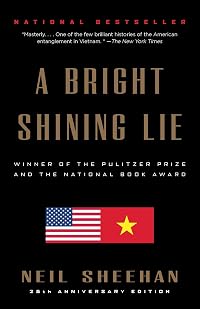
There are three classic volumes on the Vietnam War. And each one complements the others. Neil Sheehan's A Bright Shining Lie does an unsurpassed job of describing the action on the ground, the strategies, tactics, and politics that characterized the war in South Vietnam. Stanley Karnow's Vietnam: A History, meanwhile, provides a comprehensive look at Vietnam's history and the politics of the war in Vietnam. Finally, Halberstam's work supplies the motivations, context, and ideological understanding for how the war seeped into the Kennedy and Johnson administrations before ultimately overwhelming Johnson.
One final note. At times reading this book is frustrating. Halberstam not only indulges in run-on sentences but also seems to scatter parenthetical statements through every other paragraph. Some of his multi-sentence parentheticals are placed within sentences. Nonetheless, the gems of knowledge contained therein are worth the slight inconvenience of the writing style. Nobody studying the Vietnam War can be taken seriously unless they have read Halberstam, Karnow, and Sheehan. show less
The focus of the work is Washington DC, with side trips to Honolulu and Saigon thrown in occasionally. But primarily the is a DC behind the scenes look at how America's commitment to Vietnam arose show more and developed throughout the 1960s.
What I came away with in this volume is that Vietnam could never have played out any differently than it did. No, that's not Halberstam's view. He is always throwing up "what-if" scenarios. But it is clear to me after having read this that the issue of China predetermined what would occur in Vietnam. With China "lost," no American statesman or general would ever want to be blamed for losing yet another country to Communism. It's to Halberstam's credit that he leaves the reader to this conclusion, although he never accepted it entirely himself.
There are three classic volumes on the Vietnam War. And each one complements the others. Neil Sheehan's A Bright Shining Lie does an unsurpassed job of describing the action on the ground, the strategies, tactics, and politics that characterized the war in South Vietnam. Stanley Karnow's Vietnam: A History, meanwhile, provides a comprehensive look at Vietnam's history and the politics of the war in Vietnam. Finally, Halberstam's work supplies the motivations, context, and ideological understanding for how the war seeped into the Kennedy and Johnson administrations before ultimately overwhelming Johnson.
One final note. At times reading this book is frustrating. Halberstam not only indulges in run-on sentences but also seems to scatter parenthetical statements through every other paragraph. Some of his multi-sentence parentheticals are placed within sentences. Nonetheless, the gems of knowledge contained therein are worth the slight inconvenience of the writing style. Nobody studying the Vietnam War can be taken seriously unless they have read Halberstam, Karnow, and Sheehan. show less
Members
- Recently Added By
Lists

Política - Clásicos
164 works; 2 members

Obama Reads
181 works; 3 members

1960s
281 works; 16 members

Books referenced in David Weinberger's Too Big to Know
65 works; 2 members

Blue Pyramid 1,276 Best Books of All Time
1,248 works; 32 members

Books recommended by Barack Obama
295 works; 28 members

Mustich's 1000 Books to Read Before You Die: A Life Changing List
1,001 works; 19 members

THE WAR ROOM
813 works; 24 members

You Couldn't Pay Me to Read That (Take 2)
203 works; 86 members
Author Information

43+ Works 16,061 Members
David Halberstam was born on April 10, 1934 in New York City and later attended Harvard University. After graduating in 1955, Halberstam worked at a small daily newspaper until he attained a position at the Nashville Tennessean. Halberstam has written over 20 books including The Children, a written account of his coverage of the Civil Rights show more Movement; The Best and Brightest, which was a bestseller; and The Game and October, 1964, both detailing his fascination of sports. Halberstam also won a Pulitzer Prize for his reports on the Vietnam War while working for the New York Times. He was killed in a car crash on April 23, 2007 at the age of 73. (Bowker Author Biography) show less
Some Editions
Awards and Honors
Distinctions
Notable Lists
Series
Belongs to Publisher Series
Common Knowledge
- Canonical title
- The Best and the Brightest
- Original title
- The Best and the Brightest
- Original publication date
- 1972
- People/Characters
- Dean Acheson; George Ball; McGeorge Bundy; Lady Bird Johnson; Lyndon Baines Johnson; John F. Kennedy (show all 12); Robert S. McNamara; Matthew B. Ridgway; Dean Rusk; Adlai Stevenson II; Maxwell Taylor; William Westmoreland
- Important places*
- Vietnam
- Important events*
- Guerre du Vietnam (1959 | 1975)
- Dedication
- For Dorothy deSantillana
- First words
- A cold day in December.
- Last words
- (Click to show. Warning: May contain spoilers.)There was, Americans were finding, no light at the end of the tunnel, only greater darkness.
- Original language
- English
- Canonical DDC/MDS
- 973.922
- Canonical LCC
- E841.H25
*Some information comes from Common Knowledge in other languages. Click "Edit" for more information.
Classifications
- Genres
- History, General Nonfiction, Nonfiction, Politics and Government
- DDC/MDS
- 973.922 — History & geography History of North America United States 1901- Cold War, Vietnam War, Digital Age (1953-2001) Dwight D. Eisenhower, 2nd Term (1953-1961) Sputnik Crisis, Little Rock Crisis, National Aeronautics and Space Act
- LCC
- E841 .H25 — History of the United States United States Later twentieth century, 1961-2000 Kennedy's administration, 1961-November 22, 1963
- BISAC
Statistics
- Members
- 2,331
- Popularity
- 8,473
- Reviews
- 32
- Rating
- (4.21)
- Languages
- English, French, German, Italian
- Media
- Paper, Audiobook, Ebook
- ISBNs
- 16
- ASINs
- 22