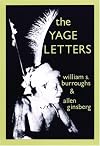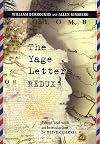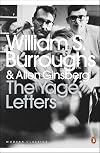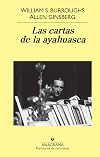
The Yage Letters
by William S. Burroughs, Allen Ginsberg
On This Page
Description
In January 1953, William S. Burroughs began an expedition into the jungles of South America to find yage, the fabled hallucinogen of the Amazon. From the notebooks he kept and the letters he wrote home to Allen Ginsberg, Burroughs composed a narrative of his adventures that later appeared as The Yage Letters. For this edition, Oliver Harris has gone back to the original manuscripts and untangled the history of the text, telling the fascinating story of its genesis and cultural importance. show more Also included in this edition are extensive materials, never before published, by both Burroughs and Ginsberg. William S. Burroughs is widely recognized as one of the most influential and innovative writers of the twentieth century. His books include Junky, Naked Lunch, and The Wild Boys. show lessTags
Recommendations









Member Reviews
Brief but beautifully evocative of both a time & place that have all but ceased to exist outside the imagination. Burroughs followed Rimbaud in his Boys' Own determination to be the white man who made one last desperate attempt to step outside the confines of his own stupid culture and *see*; unlike Rimbaud, Burroughs never stopped writing, and that might have been the gesture that saved him. The letters jump time as well as space toward the end, cutting from the nineteen-fifties up to near present day-- the language & concerns evolve as suddenly. As with 'The Letters Of...' and 'Interzone', 'The Yagé Letters' aren't for everyone, but they might be considered slightly more relevant to younger readers.
Some of the prose of William S. Burroughs defies classification, which is one of the strongest suggestions of its author's inventiveness and originality. For example, Exterminator! has long been regarded as a short story collection, as that is what it looks like, but is now considered to be an experimental novel. The Yage letters, both in its form, and the suggestive title, led critics believe that it consists of correspondence, although that view is hard to reconcile for the work as a whole. The first part of The Yage letters, i.e. "In search of yage (1953)" looks like an (edited) collection of letters, but the subsequent parts consist of prose fragments and poetry. These other fragments were not included in all previous editions, show more leading to the discussion as to whether they are or are not part of the work as a whole. Doubt has also been cast on the true nature of these parts, as some of it looks like poetry, but possibly should not be considered as such. There are also critics, who have suggested that The Yage letters is, in fact, a novel.
In The Yage Letters Burroughs records his travels visiting the Amazon rainforest and his search for yagé (ayahuasca), a plant which produces a drug with near-mythical hallucinogenic and some say telepathic qualities. The book also explores the way the Indians consumed and used this powerful drug. Along the way, Burroughs and Alan Ginsberg relate other stories, ideas and concepts, some of which Burroughs would later use in other novels.
The Yage letters. Redux, with the added subtitle "Redux" refers toy the new edition (2006), edited by Oliver Harris. It is a very well-documented edition, preceded by a long introduction by the editor. In this essay, Oliver Harris proposes that The Yage letters be seen as a travelogue. His conclusion is based on textual analysis and history of the manuscripts and writing process, which shows that, although some of the letters by Alan Ginsberg are authentic, much of the correspondence written by Burroughs is not, that is to say, they are written as letters, but were originally conceived of as prose, and were never sent. Out of 9,500 words in the manuscript only 320 came from authentic letters (p. xxxii). The Yage letters was in its origins not written in epistolary form.
Furthermore, the editor points out that Burroughs interest in Yage was not only driven by his obsession with drugs. As a graduate student at Harvard, Burroughs trained and an anthropologist, while he also, eclectically, studied Medicine during his time spent in Vienna. Burroughs also sought funding to investigate and describe the source and culture of the usage of Yage.
Particularly the first part of The Yage letters is very readable, and of considerable interest. It consists of travel writing into South American involving both anthropological and botanical descriptions. The travelogue shows William S. Burroughs as an excellent prose stylist. It has characteristics of an adventure story, and is profoundly personal. To some readers, a number of expletives may be disturbing, but such use of language was to be expected in Burroughs work, anyway. Surprisingly, the travelogue also mixes in some sensuous descriptions involving Burroughs interest in young men.
The long introduction by the editor of The Yage letters. Redux, Oliver Harris, is a jewel. It does not only introduce and describe the history of the work, but also provides an excellent description, updated for the latest literary criticism, of the circle of the Beat Generation, and the co-operation between William S. Burroughs and Alan Ginsberg on this work.
The Yage letters. Redux is by far the most readable and most beautiful text that I have read by Burroughs. show less
In The Yage Letters Burroughs records his travels visiting the Amazon rainforest and his search for yagé (ayahuasca), a plant which produces a drug with near-mythical hallucinogenic and some say telepathic qualities. The book also explores the way the Indians consumed and used this powerful drug. Along the way, Burroughs and Alan Ginsberg relate other stories, ideas and concepts, some of which Burroughs would later use in other novels.
The Yage letters. Redux, with the added subtitle "Redux" refers toy the new edition (2006), edited by Oliver Harris. It is a very well-documented edition, preceded by a long introduction by the editor. In this essay, Oliver Harris proposes that The Yage letters be seen as a travelogue. His conclusion is based on textual analysis and history of the manuscripts and writing process, which shows that, although some of the letters by Alan Ginsberg are authentic, much of the correspondence written by Burroughs is not, that is to say, they are written as letters, but were originally conceived of as prose, and were never sent. Out of 9,500 words in the manuscript only 320 came from authentic letters (p. xxxii). The Yage letters was in its origins not written in epistolary form.
Furthermore, the editor points out that Burroughs interest in Yage was not only driven by his obsession with drugs. As a graduate student at Harvard, Burroughs trained and an anthropologist, while he also, eclectically, studied Medicine during his time spent in Vienna. Burroughs also sought funding to investigate and describe the source and culture of the usage of Yage.
Particularly the first part of The Yage letters is very readable, and of considerable interest. It consists of travel writing into South American involving both anthropological and botanical descriptions. The travelogue shows William S. Burroughs as an excellent prose stylist. It has characteristics of an adventure story, and is profoundly personal. To some readers, a number of expletives may be disturbing, but such use of language was to be expected in Burroughs work, anyway. Surprisingly, the travelogue also mixes in some sensuous descriptions involving Burroughs interest in young men.
The long introduction by the editor of The Yage letters. Redux, Oliver Harris, is a jewel. It does not only introduce and describe the history of the work, but also provides an excellent description, updated for the latest literary criticism, of the circle of the Beat Generation, and the co-operation between William S. Burroughs and Alan Ginsberg on this work.
The Yage letters. Redux is by far the most readable and most beautiful text that I have read by Burroughs. show less
I read this epistolary memoir some years ago. When you get based the lonely hunter's complaints about discomforts and a lack of sex, two things emerge: a budding friendship with Allen Ginsberg and a search for a telepathic-hallucinogenic-mind-expanding drug called yage (ayahuasca; DMT is an active ingredient) which has a resonance with True Hallucinations.
The Yage Letters is a slim book consisting of correspondences between Burroughs and Ginsberg in 1953. Burroughs was traveling around South America (mostly Colombia, Ecuador, and Peru) in pursuit of Yage plant to make Ayahuasca which loosely translates as "Spirit Vine". It's a powerful hallucinogenic brew made from obscure Amazonian botanicals by indigenous witch doctors. The brew contains DMT (dimethyltryptamine) -- an extremely powerful hallucinogenic compound.
Burroughs describes S. American villages and towns vividly. He playfully recounts run-ins with the police and doesn’t for a moment hide his disgust for the S. American way of life. He paints a rather dismal picture of the region. Every village and town is "filthy", show more "pest-ridden", and full of "do-nothings and whores". One quote was telling, "They're too apathetic to be corrupt."
His descriptions of his Ayahuasca trips are fascinating. Through Ayahuasca he's able to glean some really insightful knowledge about the universe and more importantly himself. It basically tears down the false ideas people surround themselves with and forces one to look at the real "you" minus the ego, standing there stripped down to the core self with all its imperfections and potential.
The book is amusing, interesting, and cautionary for sure. Ginsberg relates his Ayahuasca experiences as well (years later) in his own poetic style. However, since the book is simply a collection of letters there really wasn't much substance to speak of save anecdotal stories and chance encounters. I never really got pulled in, but it was still fun. show less
Burroughs describes S. American villages and towns vividly. He playfully recounts run-ins with the police and doesn’t for a moment hide his disgust for the S. American way of life. He paints a rather dismal picture of the region. Every village and town is "filthy", show more "pest-ridden", and full of "do-nothings and whores". One quote was telling, "They're too apathetic to be corrupt."
His descriptions of his Ayahuasca trips are fascinating. Through Ayahuasca he's able to glean some really insightful knowledge about the universe and more importantly himself. It basically tears down the false ideas people surround themselves with and forces one to look at the real "you" minus the ego, standing there stripped down to the core self with all its imperfections and potential.
The book is amusing, interesting, and cautionary for sure. Ginsberg relates his Ayahuasca experiences as well (years later) in his own poetic style. However, since the book is simply a collection of letters there really wasn't much substance to speak of save anecdotal stories and chance encounters. I never really got pulled in, but it was still fun. show less
Burroughs' search for a telepathy-inducing drug is yet-another indicator of just how serious an explorer of expanded consciousness he was. This bk even includes Ginsberg's drawings of Yage-induced visions. An important bk up there w/ Artaud's "The Peyote Dance", the works of R. Gordon Wasson on mushrooms, & many other works of the same ilk.
Letters? Or a story turned into letters a decade later? What we do know is that Burroughs went to South America, made some important ethnobotanical discoveries, had sex, and wrote some words. Here we are, almost 60 years later and there still hasn't been a book like this one.
Ratings
Members
- Recently Added By
Talk Discussions
Past Discussions
1914: William S. Burroughs - The Yage Letters in Literary Centennials (August 2014)
Author Information

362+ Works 39,060 Members
William S. Burroughs was a primary figure of the Beat Generation who wrote in the postmodern paranoid fiction genre. Jack Kerouac called Burroughs the "greatest satirical writer since Jonathan Swift," while Norman Mailer declared him "the only American writer who may be conceivably possessed by genius." While he is best known for the novels Naked show more Lunch, Queer, and Junkie, he also collaborated with artists such as Laurie Anderson, Tom Waits, Nick Cave, Gus Van Sant, David Cronen-berg, and Sonic Youth to produce films, music, and performance pieces. show less

301+ Works 16,984 Members
Irwin Allen Ginsberg was born in Newark, New Jersey, the son of poet and teacher Louis Ginsberg. In 1948, he received a B.A. degree from Columbia University. Ginsberg began writing poetry while still in school and first gained wide public recognition in 1956 with the long poem Howl. Howl has had a stormy history. When it was first recited at show more poetry readings, audiences cheered wildly. It was published by Lawrence Ferlinghetti's City Lights Books and printed in England. Before the printed copies could be distributed, however they were seized by U.S. custom officials as obscene. After a famous court case in which the poem was found not to be obscene, the work sold rapidly and Ginsberg's reputation was assured. Regarded as the foremost port of the Beat generation (as group of rebellious writers who opposed conformity and sough intensity of experience), Ginsberg's work is concerned with many subjects of contemporary interest, including drugs, sexual confusion, the voluntary poverty of the artist and rebel, and rejection of society. He is a poet with a significant message, and his criticism of American society is part of a long tradition of American writers who have questioned their country's values. Ginsberg received numerous honors, including a Woodbury Poetry Prize, a National Institute of Arts and Letters Award, and a National Book Award for poetry. Ginsberg was a Pulitzer Prize finalist in 1995 for his book Cosmopolitan Greetings: Poems 1986-1992. Ever the Bohemian, he had numerous occupations throughout his lifetime including dishwasher, porter, book reviewer, and spot welder. He died in April 1997 of complications due to liver cancer. (Bowker Author Biography) show less
Some Editions
Awards and Honors
Notable Lists
Work Relationships
Is contained in
Common Knowledge
- Original title
- The Yage Letters
- Original publication date
- 1963
- People/Characters
- William S. Burroughs; Allen Ginsberg
- Important places
- Colombia; Perú; Ecuador
- First words
- Dear Allen, I stopped off here to have my piles out. Wouldn't do to go back among the Indians with piles I figured.
- Last words
- (Click to show. Warning: May contain spoilers.)Death rot on Panama photo where the awning flaps.
Classifications
Statistics
- Members
- 700
- Popularity
- 40,826
- Reviews
- 6
- Rating
- (3.57)
- Languages
- 9 — English, French, German, Italian, Japanese, Portuguese, Spanish, Swedish, Turkish
- Media
- Paper, Audiobook, Ebook
- ISBNs
- 24
- ASINs
- 12