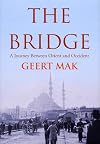
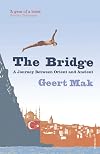
The Bridge: A Journey Between Orient and Occident
by Geert Mak
On This Page
Description
Istanbul’s Galata Bridge has spanned the Golden Horn since the sixth century AD, connecting the old city with the more Western districts to the north. But the bridge is a city in itself, peopled by merchants and petty thieves, tourists and fishermen, and at the same time a microcosmic reflection of Turkey as the link between Asia and Europe. Geert Mak introduces us to the woman who sells lottery tickets, the cigarette vendors, and the best pickpockets in Europe. He tells us about the pride show more of the cobbler and the tea-seller's homesickness. And he describes the role of honor in Turkish culture, the temptations of fundamentalism and violence, and the urge to survive, even in the face of despair. These stories of the bridge’s denizens are interwoven with vignettes illuminating moments in the history of Istanbul and Turkey and shedding light on Turkey’s relationship with Europe and the West, the Armenian question, the migration from the Turkish countryside to the city, and the demise of the Ottoman Empire. show lessTags
Recommendations
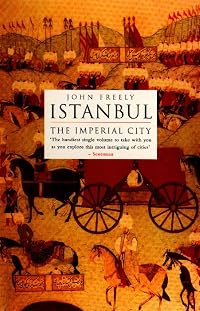


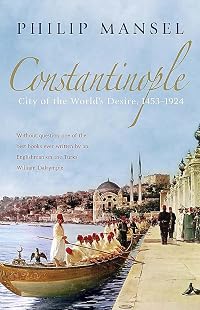

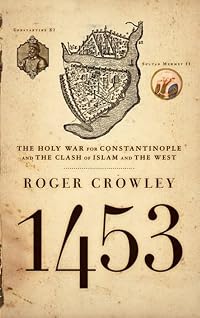

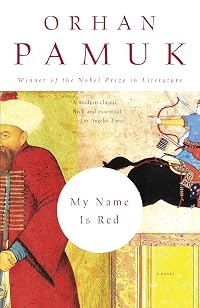















Member Recommendations
Member Reviews
Turkey received only a chapter in Mak's opus magnum "In Europe", as a stopover on the return journey from Russia and Ukraine. It is only fitting that Mak would correct this in a short travel report from Istanbul, the gateway between Asia and Europe. The Galata Bridge over the Golden Horn which connects the former power center of Eminönü (Topkapi Palace, Hagia Sophia and the Blue Mosque) to the formerly European commercial enclave of Galata. Nowadays, this singularly ugly bridge assembles a dedicated throng of fishers, gawking tourists and the seedy remnants of shopkeepers and peddlers.
Mak concentrates on the harsh but colorful lives of these marginal souls as they struggle to survive financially and to keep up with modernity. Mak show more succeeds in portraying Istanbul as a city of contrasts, under cultural assault from both the West and the uncivilized East. Many a village in Eastern Turkey is utterly dependent on the money sent back by the breadwinner in Istanbul, who, barely keeping up with their payments, already dream about emigrating to Europe. I like how he captures in a few words the spirit and situation of a life, e.g. a man complaining about not being invited to his daughter's wedding, before revealing that he had earlier wounded her mother with a gun, deliberating, if actually invited, whether he would have to complete the misdeed. Istanbul is, at the same time, a First World and a Third World city, both to be experienced in shockingly close proximity.
Mak's focus on Galata Bridge leads him down a too nostalgic alley (which quite suits him - In Europe also has this World of Yesterday flair). He misses both modern Turkey, present not that far away in Taksim Square, and the Asiatic part of Istanbul, as he never crosses the Bosphorus Strait. Overall, a quick read by a master storyteller about a rapidly fading aspect of a fascinating city, so close and so distant at the same time. show less
Mak concentrates on the harsh but colorful lives of these marginal souls as they struggle to survive financially and to keep up with modernity. Mak show more succeeds in portraying Istanbul as a city of contrasts, under cultural assault from both the West and the uncivilized East. Many a village in Eastern Turkey is utterly dependent on the money sent back by the breadwinner in Istanbul, who, barely keeping up with their payments, already dream about emigrating to Europe. I like how he captures in a few words the spirit and situation of a life, e.g. a man complaining about not being invited to his daughter's wedding, before revealing that he had earlier wounded her mother with a gun, deliberating, if actually invited, whether he would have to complete the misdeed. Istanbul is, at the same time, a First World and a Third World city, both to be experienced in shockingly close proximity.
Mak's focus on Galata Bridge leads him down a too nostalgic alley (which quite suits him - In Europe also has this World of Yesterday flair). He misses both modern Turkey, present not that far away in Taksim Square, and the Asiatic part of Istanbul, as he never crosses the Bosphorus Strait. Overall, a quick read by a master storyteller about a rapidly fading aspect of a fascinating city, so close and so distant at the same time. show less
It's hard to put this book in a category. It's part travelogue, history, journalism, essay,... It is the result of several months spent by Geert Mak, Dutch writer of non-fiction ( almost always mixing history and journalism) on the Galata Bridge in Istanbul. He tells of the history of the bridge, but also of the present day (mostly very poor) people working there, peddling their wares, trying to earn enough to have something to eat in the evenings and still have something left to send home. The Galata Bridge and Istanbul lie on the edge of Europe and Asia, where Christianity and Islam meet, and the writer also touches this aspect of life there - once again by giving us some very interesting historic facts, and by letting the people of show more the Bridge have their say.
I think this is an impressive little book, a book that reads like a novel but gives you very interesting and new glimpses of life "on the other side".” show less
I think this is an impressive little book, a book that reads like a novel but gives you very interesting and new glimpses of life "on the other side".” show less
De Brug was the 2007 Boekenweek gift, and it's written to the typical Boekenweek length of around 100 pages. Unusually, it was released simultaneously in both Dutch and Turkish versions.
Over the course of a year, Mak got to know some of the vendors, beggars, anglers and others who spend their working lives on Istanbul's Galata Bridge, the 1km long link over the Golden Horn. He tells their stories, sensitively but undramatically, and interweaves them with insights into the complicated history of the city and the way the bridge fits into that, dipping into the works of both Turkish and Western writers along the way. Amongst other things, he tries to analyse the reactions of the people he meets to the Danish cartoons scandal and the murder show more of Theo van Gogh, which happened during the course of his field-work. His conclusion is that it's all got more to do with notions of honour and self-respect than with directly religious feelings.
Not the definitive book on Istanbul, of course, and it doesn't claim to be, but a nice introduction that goes a bit further under the skins of the locals than you would be likely to get as a casual tourist. show less
Over the course of a year, Mak got to know some of the vendors, beggars, anglers and others who spend their working lives on Istanbul's Galata Bridge, the 1km long link over the Golden Horn. He tells their stories, sensitively but undramatically, and interweaves them with insights into the complicated history of the city and the way the bridge fits into that, dipping into the works of both Turkish and Western writers along the way. Amongst other things, he tries to analyse the reactions of the people he meets to the Danish cartoons scandal and the murder show more of Theo van Gogh, which happened during the course of his field-work. His conclusion is that it's all got more to do with notions of honour and self-respect than with directly religious feelings.
Not the definitive book on Istanbul, of course, and it doesn't claim to be, but a nice introduction that goes a bit further under the skins of the locals than you would be likely to get as a casual tourist. show less
The Dutch author Geert Mak has written several books about history and sociology of cities and rural communities. De brug is a portrait of the Galata bridge in Istanbul, describing the history of life and business of the people of Istanbul on the bridge.
The book is not very inspiring. The long literature list at the end of the book suggests that it was inspired more by reading than by actual experience of the place. It was published in March 2007, barely half a year after the Nobel Prize was awarded to the Turkish author Orhan Pamuk, whose work forms a much more authentic description of the city of Istanbul.
The book is not very inspiring. The long literature list at the end of the book suggests that it was inspired more by reading than by actual experience of the place. It was published in March 2007, barely half a year after the Nobel Prize was awarded to the Turkish author Orhan Pamuk, whose work forms a much more authentic description of the city of Istanbul.
It is amazing that such a small book can give such an insight. Turkey, and Istanbul in particular, is a metaphorical bridge between the the middle east and the west. It is in all our interests that the bridge does not collapse. Hopefully this book goes a small way to preventing that from occurring. It is a useful introduction to the writings of Orhan Pamuk. I can't wait to return to Istanbul.
A small book about the famous bridge in Istanbul. The book describes the daily life of the people that work (and live) on the bridge, and also the history of Istanbul and the bridge.
All in all an interesting book, but I just don't like Mak and his style of storytelling.
All in all an interesting book, but I just don't like Mak and his style of storytelling.
This book tells the story of a bridge in Istanbul. Not only of the bridge itself, but also of the people who try to make a living on it, one way or the other. One sells cigarettes, another books. There's a tea-seller. They all have in common, that they are very poor and all they have left is their pride.
The history of the town of Istanbul and partially of Turkey are mentioned too. The point of view is more or less of the people who tell their stories to the writer.
Poverty, revenge, struggle to survive, women's rights, it all passes. One theme more elaborated than the other.
I was not very impressed. To me it were stories, for some reason I found it hard to get into the book. I read it till the end, because I wanted to know if it would show more get better, but no.
The book didn't touch me, apart from the telling about the history of Turkey. That were nice elements, I would have liked more of that, instead of all the stories of people on the bridge. Then I would have known more about Turkey, a country we were thought almost nothing about.
I think that is a subject for further reading. show less
The history of the town of Istanbul and partially of Turkey are mentioned too. The point of view is more or less of the people who tell their stories to the writer.
Poverty, revenge, struggle to survive, women's rights, it all passes. One theme more elaborated than the other.
I was not very impressed. To me it were stories, for some reason I found it hard to get into the book. I read it till the end, because I wanted to know if it would show more get better, but no.
The book didn't touch me, apart from the telling about the history of Turkey. That were nice elements, I would have liked more of that, instead of all the stories of people on the bridge. Then I would have known more about Turkey, a country we were thought almost nothing about.
I think that is a subject for further reading. show less
Members
- Recently Added By
Lists

Books Read in 2018
4,360 works; 110 members
Author Information

Some Editions
Series
Belongs to Publisher Series
Boekenweekgeschenk (2007)
Common Knowledge
- Canonical title
- The Bridge: A Journey Between Orient and Occident
- Original title
- De brug
- Original publication date
- 2007-01-01
- Important places
- Istanbul, Turkey; Galata bridge, Istanbul, Turkey
- First words
- Op de brug gaat alles in miljoenen.
- Quotations*
- 'Op de brug wordt je geen vrienden.
Vanaf de brug kijk je toe.'
Sait Faik - Last words
- (Click to show. Warning: May contain spoilers.)In de schemer veranderde de regen langzaam in natte sneeuw, en daarna begonnen de vlokken te vallen, wit en statig, zelfs de vliegende zielen boven de Blauwe Moskee verdwenen uit het oog.
- Original language
- Dutch
*Some information comes from Common Knowledge in other languages. Click "Edit" for more information.
Classifications
- Genres
- Nonfiction, Travel, General Nonfiction
- DDC/MDS
- 949.618 — History & geography History of Europe Greece, Albania, Yugoslavia, Serbia, Romania, Bulgaria Turkey and the Balkans Turkish Thrace; Istanbul Istanbul
- LCC
- DR737 .M35 — History of Europe, Asia, Africa and Oceania Balkan Peninsula History of Balkan Peninsula Turkey Local history and description (European Turkey) Istanbul (Constantinople)
- BISAC
Statistics
- Members
- 658
- Popularity
- 43,732
- Reviews
- 15
- Rating
- (3.20)
- Languages
- 7 — Bosnian, Dutch, English, German, Greek, Polish, Turkish
- Media
- Paper, Ebook
- ISBNs
- 13
- ASINs
- 3