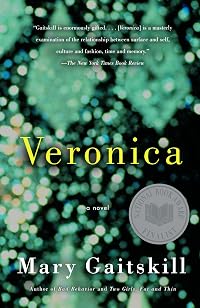
Veronica
by Mary Gaitskill
On This Page
Description
A finalist for the National Book Award and National Book Critics Circle Award, here is an evocative novel about female friendship in the glittering 1980s.Alison and Veronica meet amid the nocturnal glamour of 1980s New York: One is a young model stumbling away from the wreck of her career, the other an eccentric middle-aged office temp. Over the next twenty years their friendship will encompass narcissism and tenderness, exploitation and self-sacrifice, love and mortality. Moving seamlessly show more from present and past, casting a fierce yet compassionate eye on two eras and their fixations, the result is a work of timeless depth and moral power.
. show less
Tags
Recommendations









Member Recommendations
Member Reviews
Post 1
I picked up Mary Gaitskill's 2006 novel Veronica as part of my ongoing disgust project, and indeed it is a rich depository of fascinating uses of disgust. Yet I find I can't bear to write simply about the disgust in the book, without addressing its greater appeal. I consciously avoid pronouncements about the Canon, which books are Great and which merely Good, or anything of the kind—and yet, I am beset by a strong desire that Veronica be studied, written about, appreciated, revisited. It is not a book for everyone, and not an easy read, but it is a book that will be important to some. And although I haven't written fiction or even songs in years, Veronica is the kind of book I wish I could write: utterly unsentimental, yet show more deeply thoughtful and thought-provoking, harsh and even crass at times but finely crafted and never cynical to the point of hopelessness.
So this will be a discussion of those non-repulsive aspects of Veronica, to be followed in a few days by a discussion of Gaitskill's many and intriguing uses of disgust. This novel contains a cesspool, but I don't want to leave you with the impression that that's all it contains.
No indeed, there's so much more. The surface plot elements revolve around the narrator Alison, a former model and pretty-girl who has lost her looks and her health, and has washed up, sick and in pain, on the outskirts of Los Angeles. Now that she is ill and unattractive herself, she finds herself remembering a pivotal friendship—or at least, a friendship that has since become pivotal in her memory—from twenty years before, with a frumpy, provocative, and often obnoxious copy-editor named Veronica, who died in the early days of the HIV/AIDS epidemic.
But stop right there, because here are some things this novel is not "about." It is not "about" modeling, or the fashion industry, either to romanticize that world or to vilify it. The modeling world as Gaitskill portrays it is sleazy and destructive, sure, but not any more sleazy and destructive than Veronica's relationship with her boyfriend Duncan—and neither set of relationships is lacking in humanity, even faint appeal. Neither is the novel "about" HIV/AIDS, although it certainly evokes some of the terror and bigotry in the air as the first and second waves of infection were breaking. Veronica's setting, although in a sense specific—Gaitskill paints millennial Los Angeles and 1980s New York in visceral detail—doesn't come off as illustrating an exception, but instead as presenting a more universal picture. In other words, Alison is a sick and selfish person, not because she fell down the rabbit-hole of modeling and drug use, but because human beings are generally infirm and selfish, and despite this they go from day to day doing the best they can, occasionally making genuine yet flawed contact with other human beings.
As opposed to so many meteoric-rise-and-fall stories which deal in "if only"s (if only she hadn't gotten hooked, if only he hadn't been drinking before getting in the car, if only their families had realized in time), Gaitskill presents struggle, compromise, and disintegration as inevitable, while at the same time according her characters total free will. There is nothing pre-ordained about Alison's choices to move to Paris or New York, to quit modeling or start up again, to ask Veronica to the movies. She suffers (and occasionally triumphs, and often slogs) because of her choices, but based on the evidence of the characters around her, she would have faced a similar ratio of suffering and triumph if she had made the opposite choices, as well.
Take Alison's sister Sara, who is locked in an uncommunicative battle with her suburban setting and probable mental illness. Or Alison's father, who attempts to communicate his regrets via music to which nobody listens anymore. Or Veronica, who decides that her semi-abusive relationship is so much a part of herself that she doesn't stop sleeping with her partner even when she knows he has AIDS. All these characters, however glamorous they may or may not look from the outside, struggle with similar levels of alienation and distress, similar levels of discomfort with the world around them, and a similarly inevitable downward trajectory. Veronica is one of the least moralistic novels I've ever read. Only you can decide your own trajectory, it seems to say; but whatever trajectory you choose, it will be difficult; and whatever trajectory you choose, you will stumble and fall. This is the problem with Alison's father's refusal to feel compassion for the early AIDS sufferers based on the argument that "they had choices." Everyone makes choices, and everyone suffers for them; and since suffering implies no sin or judgment but only the inevitable process of living a life, our imperfect treatment of each other is all we have.
And indeed that treatment will be imperfect, even if we are doing our best. Alison's relationship with Veronica is hardly a feel-good, Sex and the City version of female friendship. Alison is often self-congratulatory, often resentful; she often spews platitudes at Veronica and tells her what to do rather than listening to her. Her attempts at communication and communion often fall flat. Veronica, in turn, is often extremely grating, and only gets more so as she becomes ill. Gaitskill has much to say here about privilege—in this case, the privilege of the beautiful and the healthy person, to whom the experiences of the ill or unattractive are invisible until she too is sick or ugly. Looking back, Alison can see her own contempt and dismissiveness, her belief that she was in some way fundamentally different from Veronica—all things which were invisible to her at the time.
In one way, of course, all this is a huge downer. In another way, it's oddly reassuring. Because Gaitskill doesn't conclude, based on the suspect motives and often-unsuccessful results of attempts at human connection, that they are not worth making. Rather, despite Alison's recognition of her own bad behavior, of her own suspect agenda and Veronica's own obnoxiousness, her relationship with Veronica becomes a pivotal, and legitimately redemptive, experience. Even though most of the time she does a poor job at being Veronica's friend (and at general person-hood), her efforts to connect with Veronica still end up making a huge difference to both women—especially Alison herself.
One of the concepts that struck me most forcibly in Veronica was this combination of the invisibility of the habitual or privileged, and the rapidity with which the outward forms of privilege (and who possesses privilege) can change. These two themes are addressed frequently in fiction, but I'm not sure how often I've seen them together. So often we see the entrenched privilege of race or sex that perpetuates itself from generation to generation, and there is certainly some of that here, in the form of homophobia and sexual exploitation of women. Yet there is also an acknowledgment of how slippery privilege can be; how it can be founded on trivialities and superficialities that we nonetheless mistake for core realities. Early on in the novel, Alison introduces the concept of a "style suit," while looking at a series of photographs taken by her friend John:
This is more than just an observation about the fickleness of fashion. It's an examination of the ease with which people who have lucked into a well-fitting style suit assume that the privilege and ease they enjoy inheres naturally in their person-hood, and that as a result there must be something fundamentally wrong with those who don't fit into the dominant suit. And as Alison remarks above, it's similarly easy to believe that the suit reflects the way things substantively are—and that when those superficial elements change, it means a sea-change in peoples' inner beings as well. Yet even when the style suit favors looseness and naturalness, that preference itself can be very strict, and if any one suit actually does happen to fit someone's innate personality, the next, equally-strong suit is almost guaranteed to squeeze and discomfit them, transforming them into an outsider and even an object of pity or repulsion in the eyes of those who subconsciously believe the world to have progressed in a meaningful way. Together with the idea of invisibility, the style suit and the effects of seeing difference play into Gaitskill's many uses of disgust.
More on Veronica in a few days; I'm far from done thinking and writing about this book. show less
I picked up Mary Gaitskill's 2006 novel Veronica as part of my ongoing disgust project, and indeed it is a rich depository of fascinating uses of disgust. Yet I find I can't bear to write simply about the disgust in the book, without addressing its greater appeal. I consciously avoid pronouncements about the Canon, which books are Great and which merely Good, or anything of the kind—and yet, I am beset by a strong desire that Veronica be studied, written about, appreciated, revisited. It is not a book for everyone, and not an easy read, but it is a book that will be important to some. And although I haven't written fiction or even songs in years, Veronica is the kind of book I wish I could write: utterly unsentimental, yet show more deeply thoughtful and thought-provoking, harsh and even crass at times but finely crafted and never cynical to the point of hopelessness.
So this will be a discussion of those non-repulsive aspects of Veronica, to be followed in a few days by a discussion of Gaitskill's many and intriguing uses of disgust. This novel contains a cesspool, but I don't want to leave you with the impression that that's all it contains.
No indeed, there's so much more. The surface plot elements revolve around the narrator Alison, a former model and pretty-girl who has lost her looks and her health, and has washed up, sick and in pain, on the outskirts of Los Angeles. Now that she is ill and unattractive herself, she finds herself remembering a pivotal friendship—or at least, a friendship that has since become pivotal in her memory—from twenty years before, with a frumpy, provocative, and often obnoxious copy-editor named Veronica, who died in the early days of the HIV/AIDS epidemic.
But stop right there, because here are some things this novel is not "about." It is not "about" modeling, or the fashion industry, either to romanticize that world or to vilify it. The modeling world as Gaitskill portrays it is sleazy and destructive, sure, but not any more sleazy and destructive than Veronica's relationship with her boyfriend Duncan—and neither set of relationships is lacking in humanity, even faint appeal. Neither is the novel "about" HIV/AIDS, although it certainly evokes some of the terror and bigotry in the air as the first and second waves of infection were breaking. Veronica's setting, although in a sense specific—Gaitskill paints millennial Los Angeles and 1980s New York in visceral detail—doesn't come off as illustrating an exception, but instead as presenting a more universal picture. In other words, Alison is a sick and selfish person, not because she fell down the rabbit-hole of modeling and drug use, but because human beings are generally infirm and selfish, and despite this they go from day to day doing the best they can, occasionally making genuine yet flawed contact with other human beings.
As opposed to so many meteoric-rise-and-fall stories which deal in "if only"s (if only she hadn't gotten hooked, if only he hadn't been drinking before getting in the car, if only their families had realized in time), Gaitskill presents struggle, compromise, and disintegration as inevitable, while at the same time according her characters total free will. There is nothing pre-ordained about Alison's choices to move to Paris or New York, to quit modeling or start up again, to ask Veronica to the movies. She suffers (and occasionally triumphs, and often slogs) because of her choices, but based on the evidence of the characters around her, she would have faced a similar ratio of suffering and triumph if she had made the opposite choices, as well.
Take Alison's sister Sara, who is locked in an uncommunicative battle with her suburban setting and probable mental illness. Or Alison's father, who attempts to communicate his regrets via music to which nobody listens anymore. Or Veronica, who decides that her semi-abusive relationship is so much a part of herself that she doesn't stop sleeping with her partner even when she knows he has AIDS. All these characters, however glamorous they may or may not look from the outside, struggle with similar levels of alienation and distress, similar levels of discomfort with the world around them, and a similarly inevitable downward trajectory. Veronica is one of the least moralistic novels I've ever read. Only you can decide your own trajectory, it seems to say; but whatever trajectory you choose, it will be difficult; and whatever trajectory you choose, you will stumble and fall. This is the problem with Alison's father's refusal to feel compassion for the early AIDS sufferers based on the argument that "they had choices." Everyone makes choices, and everyone suffers for them; and since suffering implies no sin or judgment but only the inevitable process of living a life, our imperfect treatment of each other is all we have.
And indeed that treatment will be imperfect, even if we are doing our best. Alison's relationship with Veronica is hardly a feel-good, Sex and the City version of female friendship. Alison is often self-congratulatory, often resentful; she often spews platitudes at Veronica and tells her what to do rather than listening to her. Her attempts at communication and communion often fall flat. Veronica, in turn, is often extremely grating, and only gets more so as she becomes ill. Gaitskill has much to say here about privilege—in this case, the privilege of the beautiful and the healthy person, to whom the experiences of the ill or unattractive are invisible until she too is sick or ugly. Looking back, Alison can see her own contempt and dismissiveness, her belief that she was in some way fundamentally different from Veronica—all things which were invisible to her at the time.
I said it with disdain—like I didn't have to be embarrassed or make up something nice, because Veronica was nobody—like why should I care if an ant could see up my dress? Except I didn't notice my disdain; it was habitual by then. She noticed it, though.
In one way, of course, all this is a huge downer. In another way, it's oddly reassuring. Because Gaitskill doesn't conclude, based on the suspect motives and often-unsuccessful results of attempts at human connection, that they are not worth making. Rather, despite Alison's recognition of her own bad behavior, of her own suspect agenda and Veronica's own obnoxiousness, her relationship with Veronica becomes a pivotal, and legitimately redemptive, experience. Even though most of the time she does a poor job at being Veronica's friend (and at general person-hood), her efforts to connect with Veronica still end up making a huge difference to both women—especially Alison herself.
One of the concepts that struck me most forcibly in Veronica was this combination of the invisibility of the habitual or privileged, and the rapidity with which the outward forms of privilege (and who possesses privilege) can change. These two themes are addressed frequently in fiction, but I'm not sure how often I've seen them together. So often we see the entrenched privilege of race or sex that perpetuates itself from generation to generation, and there is certainly some of that here, in the form of homophobia and sexual exploitation of women. Yet there is also an acknowledgment of how slippery privilege can be; how it can be founded on trivialities and superficialities that we nonetheless mistake for core realities. Early on in the novel, Alison introduces the concept of a "style suit," while looking at a series of photographs taken by her friend John:
Most of them don't have good bodies, but they are looking at the camera like they are happy to be naked, either just standing there or posing in the combination of relaxation and sexual nastiness that people had then. They all look like people whose time had given them a perfect style suit to wear: a set of postures and expressions that gave the right shape to what they had inside them, so that even naked, they felt clothed.
[...]
There is always a style suit, or suits. When I was young, I used to think these suits were just what people were. When styles changed dramatically—people going barefoot, men with long hair, women without bras—I thought the world had changed, that from then on everything would be different. It's understandable that I thought that; TV and newsmagazines acted like the world had changed, too. I was happy with it, but then five years later it changed again.
This is more than just an observation about the fickleness of fashion. It's an examination of the ease with which people who have lucked into a well-fitting style suit assume that the privilege and ease they enjoy inheres naturally in their person-hood, and that as a result there must be something fundamentally wrong with those who don't fit into the dominant suit. And as Alison remarks above, it's similarly easy to believe that the suit reflects the way things substantively are—and that when those superficial elements change, it means a sea-change in peoples' inner beings as well. Yet even when the style suit favors looseness and naturalness, that preference itself can be very strict, and if any one suit actually does happen to fit someone's innate personality, the next, equally-strong suit is almost guaranteed to squeeze and discomfit them, transforming them into an outsider and even an object of pity or repulsion in the eyes of those who subconsciously believe the world to have progressed in a meaningful way. Together with the idea of invisibility, the style suit and the effects of seeing difference play into Gaitskill's many uses of disgust.
More on Veronica in a few days; I'm far from done thinking and writing about this book. show less
The 80s were a peculiar time: AIDS and underage models and lots of cocaine. Allison is a beauty who discovers she can be a fashion model and leaves home to explore the heady life in Europe, to find her naivete tested and her money embezzled. Returning to the U.S., she takes typing work and meets Veronica, a quirky, older woman in the same establishment, and they become friends. The relationship between them, and Allison's coming to terms with her disillusionment, form the story.
Not everyone in my book group liked this book. In fact, I was in the minority, but I found it plausible and well-written, in some ways a good portrait of an unlikely friendship.
Not everyone in my book group liked this book. In fact, I was in the minority, but I found it plausible and well-written, in some ways a good portrait of an unlikely friendship.
I only read this book because I needed a book that started with the letter V for my alphabet challenge. The reviews on Amazon were extremely mixed, people seemed to really either love or hate this book. I can understand, as I definitely loved this book.
The story is told from the point of view of a woman in her 40s who was once very beautiful - a model in fact. She went through her teens and twenties traveling back and forth from Paris and San Francisco and had little to do with her middle class, Midwestern family. As she grew older she began to do drugs and engage in self destructive and abusive relationships. She soon learned how quickly her age and her lifestyle were catching up with her.
The main problem people on Amazon had with this show more book is that it's not told in any kind of linear way. It travels from present day, to 20 years ago, to 10 years ago and back to present day, sometimes in the span of a single page. Many people had trouble following it and I was a little concerned that I would as well, but I found it to flow beautifully. For me, the time jumping was the first successful attempt I've read at stream of consciousness writing.
In addition to the main character's story is the story of Veronica, a woman with AIDS, that the young protagonist befriends out of pity. In the parts of the books that are told when the MC is in her 40s, she's stunned by how she once looked upon Veronica, especially considering that they are now very similar people (though Veronica died 10+ years ago).
In summation, I found this book to be really interesting and to capture the fleetingness of youth very well, as well as the way that time can change the way we see ourselves and each other. I would recommend it to people who want a challenging read, as it does require your undivided attention. show less
The story is told from the point of view of a woman in her 40s who was once very beautiful - a model in fact. She went through her teens and twenties traveling back and forth from Paris and San Francisco and had little to do with her middle class, Midwestern family. As she grew older she began to do drugs and engage in self destructive and abusive relationships. She soon learned how quickly her age and her lifestyle were catching up with her.
The main problem people on Amazon had with this show more book is that it's not told in any kind of linear way. It travels from present day, to 20 years ago, to 10 years ago and back to present day, sometimes in the span of a single page. Many people had trouble following it and I was a little concerned that I would as well, but I found it to flow beautifully. For me, the time jumping was the first successful attempt I've read at stream of consciousness writing.
In addition to the main character's story is the story of Veronica, a woman with AIDS, that the young protagonist befriends out of pity. In the parts of the books that are told when the MC is in her 40s, she's stunned by how she once looked upon Veronica, especially considering that they are now very similar people (though Veronica died 10+ years ago).
In summation, I found this book to be really interesting and to capture the fleetingness of youth very well, as well as the way that time can change the way we see ourselves and each other. I would recommend it to people who want a challenging read, as it does require your undivided attention. show less
A painful and honest look at the subtle, complex, and conflicting thoughts and feelings that are involved in relationships. The protagonist, Alison, is not a very likeable person most times, but I could identify with her. An older and wiser Alison looks back on her past relationships with her father, mother, sisters, lovers, and above all, with her friend Veronica.
Sorrowful and engrossing, Gaitskill's prose winds inward, leaving the reader with the sense of an impending implosion. The novel takes place in one day, but through flashbacks it has the impact of reading a lifetime's worth of diaries. The main character, Alison, is sickly and aging. Through vivid memories, we learn how she went from international model to cleaning toilets for her friend. And we learn how she recognizes Veronica, a woman who died of AIDS and was someone she looked down on, was her closest friend. Superb! -Monica
I've read Veronica a few times, as I tend to do with books I enjoy. Gaitskill is undoubtedly a poet at heart, her prose full of spots that make a reader pause and reread. This is not a book that I recommend reading on the bus, on breaks, in fits and starts. It deserves attention, a characteristic rare of contemporary fiction. Gaitskill's writing is beautiful and, more importantly, brave, unabashed. She remains on of my favorite authors, not only for the depth of her prose but the unapologetic nature she exudes on every page. :)
I chose this book to read in one of my writing classes on a whim. The top story is about an ex-model in a downward spiral who has an enigmatic friend named Veronica. The bottom story is a metaphor for the superficial hype and true horror behind the glitz of Madison Avenue. Gaitskill manages some truly remarkable imagery and a keen perception into the gaping wound that fans call "celebrity." This is a heartbreaking and ultimately cathartic novel.
Members
- Recently Added By
Lists

Vulture's 100 Best Books of the 21st Century (So Far)
98 works; 9 members

Works by Authors I have Yet to Read
8 works; 1 member

hopes
34 works; 1 member

Most Depressing Books
69 works; 16 members

Anti-heroines in fiction
59 works; 9 members

Bull Tongue
319 works; 2 members

National Book Award Finalists - Fiction
377 works; 12 members

The Atlantic's The Great American Novel
136 works; 12 members

NYT 100 best books of 21st C
100 works; 31 members

.
184 works; 1 member
Author Information

29+ Works 5,259 Members
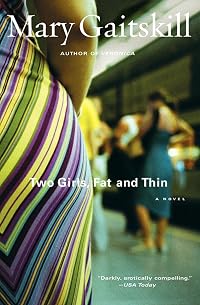
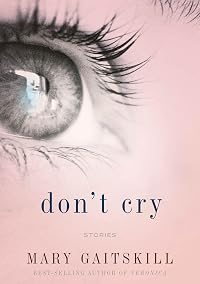
Mary Gaitskill was born in Lexington, Kentucky on November 11, 1954. She received a bachelor's degree from the University of Michigan. She is a novelist, essayist, and short story writer. Her novels include Veronica, The Mare, and Two Girls, Fat and Thin. Her collections of short stories include Bad Behavior, Because They Wanted To, and Don't Cry. show more (Bowker Author Biography) show less
Awards and Honors
Awards
Distinctions
Common Knowledge
- Original publication date
- 2005
- Important places
- New York, New York, USA
- Dedication
- For B.C. and R.D.
- First words
- When I was young, my mother read me a story about a wicked little girl.
- Quotations
- "I told them I loved them. Now I can't think why. Perhaps it was simply that , in each case, I was the woman and he was the man. And that was enough."
"I didn't realize how badly I had been hurt. I didn't realize that my habit of distance had become so unconscious and deep that I didn't know how to be with another person. I could only fix that person in my imagination and t... (show all)urn him this way and that, trying to feel him, until my mind was tired and raw." - Last words
- (Click to show. Warning: May contain spoilers.)I will be full of gratitude and joy.
Classifications
Statistics
- Members
- 1,312
- Popularity
- 18,489
- Reviews
- 30
- Rating
- (3.33)
- Languages
- 6 — Chinese, Dutch, English, French, Polish, Spanish
- Media
- Paper, Audiobook, Ebook
- ISBNs
- 17
- ASINs
- 4