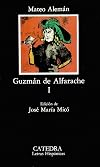
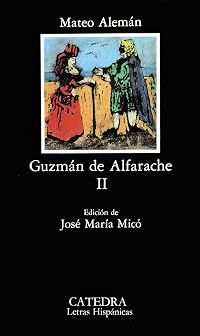
Guzmán de Alfarache
by Mateo Alemán
On This Page
Description
The 18th century was a wealth of knowledge, exploration and rapidly growing technology and expanding record-keeping made possible by advances in the printing press. In its determination to preserve the century of revolution, Gale initiated a revolution of its own: digitization of epic proportions to preserve these invaluable works in the largest archive of its kind. Now for the first time these high-quality digital copies of original 18th century manuscripts are available in print, making show more them highly accessible to libraries, undergraduate students, and independent scholars.Western literary study flows out of eighteenth-century works by Alexander Pope, Daniel Defoe, Henry Fielding, Frances Burney, Denis Diderot, Johann Gottfried Herder, Johann Wolfgang von Goethe, and others. Experience the birth of the modern novel, or compare the development of language using dictionaries and grammar discourses. ++++The below data was compiled from various identification fields in the bibliographic record of this title. This data is provided as an additional tool in helping to insure edition identification: ++++British LibraryT086543A translation of Mateo Aleman's 'Aventuras y vida de Guzman de Alfarache.'London: printed for Tho. Smith, 1730?]. 168p.; 12 show lessTags
Recommendations





































Member Recommendations
Member Reviews
Cervantes, stung, perchance, by the relish with which his Reading Public had received the fooleries of the man, more to their palates than the generosities of the master, in the sequel let his pen run riot, lost the harmony and the balance, and sacrificed a great idea to the taste of his contemporaries. We know that in the present day the Knight has fewer admirers than the Squire. Anticipating, what did actually happen to him -- as afterwards it did to his scarce inferior follower, the Author of "Guzman de Alfarache"-that some less knowing hand would prevent him by a spurious Second Part: and judging, that it would be easier for his competitor to out -- bid him in the comicalities, than in the romance, of his work, he abandoned his show more Knight, and has fairly set up the Squire for his Hero. --Elia, in "Barrenness of the Imaginative Faculty in the Productions of Modern Art." show less
Publicada en dos partes, en Madrid la primera, en 1599, y en Lisboa, en 1640, es esta obra, con el Quijote, la máxima expresión de la novela hispánica. Picaresca, ejemplar, plena de reflexiones sobre el honor, la moral , la riqueza. Un clásico imprescindible.
Jul 21, 2022Spanish
Colección Clásicos Castellanos nº 93
Tela editorial con gofrados y dorados en el lomo.
Buen estado
Tela editorial con gofrados y dorados en el lomo.
Buen estado
Sep 23, 2024Spanish
Colección Clásicos Castellanos nº 83
Tela editorial con gofrados y dorados en el lomo.
Buen estado
Tela editorial con gofrados y dorados en el lomo.
Buen estado
Sep 18, 2024Spanish
Colección Clásicos Castellanos nº 73
Tela editorial con gofrados y dorados en el lomo.
Buen estado
Tela editorial con gofrados y dorados en el lomo.
Buen estado
Sep 9, 2024Spanish
Colección Clásicos Castellanos nº 73, 83 y 90.
Tela editorial con gofrados y dorados en el lomo.
Procede del Servicio Nacional de Lectura.
Sello y tarjeta de préstamo de la Biblioteca Pública Municipal A. Busquets i Punset (Hospitalet)
Buen estado
Tela editorial con gofrados y dorados en el lomo.
Procede del Servicio Nacional de Lectura.
Sello y tarjeta de préstamo de la Biblioteca Pública Municipal A. Busquets i Punset (Hospitalet)
Buen estado
Jun 1, 2023Spanish
Ratings
Members
- Recently Added By
Lists

100 Books to Read in a Lifetime (That Are Older Than 200 Years)
415 works; 173 members

DigitalDreamDoor top 300
300 works; 4 members
Author Information

32+ Works 374 Members
Mateo Aleman spent much of his life in a kind of picaresque existence, going from the universities of Salamanca and Alcala, in Spain, to small government jobs to debtor's prison. It was perhaps in a Seville jail that he wrote the First Part of the Life of the Picaro Guzman de Alfarache, published in Madrid in 1599; the second part, written by an show more imitator, was published in Lisbon in 1604. Using a lower-class hero, his service to several masters, and portraits of diverse classes and characters, Aleman developed the picaresque genre by taking his character, Guzman, through adulthood, when he becomes a gambler, thief, and beggar. Thus Guzman contributes to the corruption of society rather than merely being its victim, as is Lazarillo. Guzman draws a bitter moral lesson from his experiences: Life is cruel, hunger is the rule, and honor cannot be preserved. (Bowker Author Biography) show less
Some Editions
Awards and Honors
Notable Lists
Series
Belongs to Publisher Series
Work Relationships
Is abridged in
Common Knowledge
- Canonical title*
- Guzmán de Alfarache
- Original language
- Spanish
*Some information comes from Common Knowledge in other languages. Click "Edit" for more information.
Classifications
Statistics
- Members
- 235
- Popularity
- 138,426
- Reviews
- 6
- Rating
- (4.00)
- Languages
- 6 — English, French, German, Italian, Russian, Spanish
- Media
- Paper, Ebook
- ISBNs
- 38
- ASINs
- 12