On This Page
Description
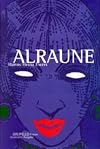
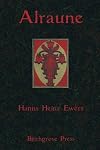
Illustrated English translation of Hanns Heinz Ewers' decadent novel, Alraune, the second volume in his Frank Braun trilogy: The Sorcerer's Apprentice, Alraune, and Vampire. Inspired by medieval beliefs in the occult properties of the mandrake root (alraune), which was thought to grow under gallows from the fallen semen of hanged men, an arrogant student, Frank Braun, persuades his vicious uncle, Jacob ten Brinken, to create a child through artificial insemination using sperm from a show more condemned man and a prostitute as the mother. The child, Alraune, grows into an extremely beautiful but thoroughly perverse young woman with a mysterious power to subject others and to bring riches and ruination. Alraune was first published in German in 1911. This Birchgrove Press edition is based on an English translation published by The John Day Company, New York, in 1929 that was illustrated by Mahlon Blaine. show lessTags
Recommendations


























Member Recommendations
Member Reviews
Sort of a Decadent version of the Frankenstein story. Somewhat ignored or even despised because of Ewers Nazi affiliation (the Nazi's later proscribed it).
Where Frankenstein's monster is a thing of ugliness Alraune is a thing of delicate beauty but who because of her Genesis ends up as sort of the ultimate femme fatale. She's the product of a hanged murderer's seed at the crossroads and a prostitute. It all has to do with folklore surrounding mandrake roots, something that crops up in other fairytales and folklore.
In a sense she doesn't deserve her reputation, it's kind of her fate, but she is still largely a negative/evil character that Ewers manages to effectively bathe in tragic sympathy. Her decadence as an adult actually merely show more reflects the pernicious nature of those around her; she's like a mirror for everyone else's sins. As a child she is simply a demon, but a somewhat helpless one. She never does anything per se but most people feel eerily compelled to do what she "suggests" with the same results. She's just bad news if she doesn't take a liking to you, and sometimes even if she does.
Her torrid love affair with her "cousin" Frank Braun, who actually came up with the "idea" of Alraune, is the climax of the narrative and their more than passionate love/hate relationship sets the stage for the endgame. She unwittingly becomes literally the blood sucking vampire of her nature even as she sleepwalks to her own fate.
Pretty good stuff. I really got into it and couldn't put it down eventually. Ewers was, on top of everything else, trying to be shocking for his time, there is nudity, fornication (although tame by today's standards), incest, necrophilia, murder, and all other sorts of Decadent fun. It comes off as pretty tame today, but in context would have been quite nasty. A brown paper wrapper sort of thing.
This edition has some fantastic historical illustrations that add nicely to that fin de siecle feel. show less
Where Frankenstein's monster is a thing of ugliness Alraune is a thing of delicate beauty but who because of her Genesis ends up as sort of the ultimate femme fatale. She's the product of a hanged murderer's seed at the crossroads and a prostitute. It all has to do with folklore surrounding mandrake roots, something that crops up in other fairytales and folklore.
In a sense she doesn't deserve her reputation, it's kind of her fate, but she is still largely a negative/evil character that Ewers manages to effectively bathe in tragic sympathy. Her decadence as an adult actually merely show more reflects the pernicious nature of those around her; she's like a mirror for everyone else's sins. As a child she is simply a demon, but a somewhat helpless one. She never does anything per se but most people feel eerily compelled to do what she "suggests" with the same results. She's just bad news if she doesn't take a liking to you, and sometimes even if she does.
Her torrid love affair with her "cousin" Frank Braun, who actually came up with the "idea" of Alraune, is the climax of the narrative and their more than passionate love/hate relationship sets the stage for the endgame. She unwittingly becomes literally the blood sucking vampire of her nature even as she sleepwalks to her own fate.
Pretty good stuff. I really got into it and couldn't put it down eventually. Ewers was, on top of everything else, trying to be shocking for his time, there is nudity, fornication (although tame by today's standards), incest, necrophilia, murder, and all other sorts of Decadent fun. It comes off as pretty tame today, but in context would have been quite nasty. A brown paper wrapper sort of thing.
This edition has some fantastic historical illustrations that add nicely to that fin de siecle feel. show less
Hanns Heinz Ewers is a bit of a German Aleister Crowley with a fixation on artificial insemination and cuckoo's-egg shit instead of Great Old Ones or sex magick or whatever (actually, there's a bit of sex magick). I like how this fills a gap between the Brothers Grimm and Fritz Lang (who knew that was a gap that even needed to be filled?), but the deep patina of misogyny and sweaty not-really-post-Christian squeamishness about women is more 1611 than 1911.
This review was written for LibraryThing Member Giveaways.
I got Alraune as a Member Giveaway and I am grateful for the opportunity to read it. I found the story fascinating and I can imagine it was very controversial in its time. It had the same dark, ominous feel as a Victorian fairy tale, yet there was still the rich tradition of German folklore present within the story.
While Alraune does not necessarily qualify as horror by modern standards, it certainly does by the standards of the time it was written in. The character of ten Brinken is thoroughly despicable and it was easy for me to envision such a man experimenting with and participating in the destruction of the lives of others for his own lascivious pleasure. As I read, I found myself drawn into Alraune's story and while I was show more horrified by her lack of compassion and her coldness, I also felt sympathy for her. She could not help be but what she was- the monstrous creation of a monster.
I found the ending a bit abrupt, but on further research I found that Alraune is actually the 2nd book in a series of three. The character of Frank Braun appears in all three. I enjoyed the dark fantasy feel of this novel and it made me wonder if authors like Charles de Lint have read and been influenced by Ewers work. I will definitely look into reading other works by Ewers.
As far as the translation goes (and not having read any other translations of this work), I think Mr. Bandel did a great job of presenting an entertaining and captivating story.
I loved the inclusion of the artwork by Mahlon Blaine. I was unsure how it would appear in the ebook but the images were displayed beautifully on my Kindle. His drawings added to both the darkness and allure of the story.
My only regret, is that my German is not good enough for me to read Ewers' work in the original German. show less
While Alraune does not necessarily qualify as horror by modern standards, it certainly does by the standards of the time it was written in. The character of ten Brinken is thoroughly despicable and it was easy for me to envision such a man experimenting with and participating in the destruction of the lives of others for his own lascivious pleasure. As I read, I found myself drawn into Alraune's story and while I was show more horrified by her lack of compassion and her coldness, I also felt sympathy for her. She could not help be but what she was- the monstrous creation of a monster.
I found the ending a bit abrupt, but on further research I found that Alraune is actually the 2nd book in a series of three. The character of Frank Braun appears in all three. I enjoyed the dark fantasy feel of this novel and it made me wonder if authors like Charles de Lint have read and been influenced by Ewers work. I will definitely look into reading other works by Ewers.
As far as the translation goes (and not having read any other translations of this work), I think Mr. Bandel did a great job of presenting an entertaining and captivating story.
I loved the inclusion of the artwork by Mahlon Blaine. I was unsure how it would appear in the ebook but the images were displayed beautifully on my Kindle. His drawings added to both the darkness and allure of the story.
My only regret, is that my German is not good enough for me to read Ewers' work in the original German. show less
This review was written for LibraryThing Member Giveaways.
This 19th century horror novel written by the German Hanns Heinz Ewers; an eccentric, bisexual, Nazi sympathizer, and acquaintance of Aleister Crowley. Here, we find a version of Crowley's concept of the magickal child if not Shelley's Frankenstein. A prostitute is inseminated with the seed of a hanged murderer as part of an alchemical experiment, and from this union springs the child Alraune, who grows from a haughty and mischievous child into an alluring nymph, bringing madness and death to all who fall under her sway.
Ewers is perhaps a lesser figure in the cannon of decadence and horror literature, these two often overlapping, though his work here is at the very least competent when compared to the likes of Poe, Huysmans, or even show more Baudelaire, considering the poetic resonance of Ewer's prose. This novel might be among the best examples of its kind if it weren't for the fact that the story stretches itself thin at times. Beyond that, whenever the focus of the narrative diverts from it's central character, the excitement drops from a roar to a whimper. However, both of these faults present themselves sparingly enough to not steal away too much of the charm.
You can tell that Joe Bandel paid very careful attention to the translation, no doubt close to the original even though I claim this in complete ignorance. The text is rife with song, and each passage holds the palpable taste of mystery and dread. Also, let us not forget the many beautiful illustrations that accompany the text, enhancing the experience of this story all the more. And so the child is born again, and we receive her bloody kisses! show less
Ewers is perhaps a lesser figure in the cannon of decadence and horror literature, these two often overlapping, though his work here is at the very least competent when compared to the likes of Poe, Huysmans, or even show more Baudelaire, considering the poetic resonance of Ewer's prose. This novel might be among the best examples of its kind if it weren't for the fact that the story stretches itself thin at times. Beyond that, whenever the focus of the narrative diverts from it's central character, the excitement drops from a roar to a whimper. However, both of these faults present themselves sparingly enough to not steal away too much of the charm.
You can tell that Joe Bandel paid very careful attention to the translation, no doubt close to the original even though I claim this in complete ignorance. The text is rife with song, and each passage holds the palpable taste of mystery and dread. Also, let us not forget the many beautiful illustrations that accompany the text, enhancing the experience of this story all the more. And so the child is born again, and we receive her bloody kisses! show less
When reviewing a translation, to me, it seems important to review no only the story, but the fluidity of the translated text, especially when it comes to public domain works, such as Alraune, in which more than one person has most likely translated it, and many more will probably do so before the heat death of the universe.
Alraune, by Hanns Heinz Ewers invokes the terrifying hybrid of science and lore, much like Lang’s and Harbou’s Metropolis. In fact, I believe that the original film adaptation of Alraune has quite a bit of overlapping actors, but this can probably be attributed to the size of the German film industry in the 1920s rather than the style or theme of the work in question.
Alraune, the book, follows the folkloric show more beliefs on mandrakes, or alraunes, as they’re called in German. Notably, on their origin, being the offspring of hanged criminals and Mother Earth, as well as their purpose: bringing an abundance of both wealth and misfortune to a household.
The primary character in this book, Jakob ten Brinken, a doctor of medicine, decides to try to create a human Alraune. In the end, he succeeds, bringing forth a girl who, if she didn’t influence the character of Damian Thorn (from The Omen), someone who was influence by her character did. Alraune is amoral, but tends to get into a lot of trouble, and tends to cause a bunch of people to die or suffer in her name. Yikes!
The book is a tragedy, and quite possibly a warning against tampering with nature.
The translation, however, is a tragedy in a different way. If you’ve ever taken non-English text and copied it wholesale into an automated translation engine, and then run Grammar/Spell-check against it, you’d get something with a similar readability as the translation I read. The translator (Joe E. Bandel), it seems, did not expend any effort in making the post-translated text actually flow as well as, I assume, the original German did to its readers. Further, typos abounded. More than once, people had something to “loose”, when in actuality, they were hoping not to lose it. As well, the very nonstandard “alright” appears throughout; a sure sign of an nonprofessional writer, or at least, a lack of copy editing (well, other than the loose/lose distinction).
If you are going to read Alraune, I strongly encourage, either (a) learning German and reading it in the original language, or (b) reading anybody else’s translation. show less
Alraune, by Hanns Heinz Ewers invokes the terrifying hybrid of science and lore, much like Lang’s and Harbou’s Metropolis. In fact, I believe that the original film adaptation of Alraune has quite a bit of overlapping actors, but this can probably be attributed to the size of the German film industry in the 1920s rather than the style or theme of the work in question.
Alraune, the book, follows the folkloric show more beliefs on mandrakes, or alraunes, as they’re called in German. Notably, on their origin, being the offspring of hanged criminals and Mother Earth, as well as their purpose: bringing an abundance of both wealth and misfortune to a household.
The primary character in this book, Jakob ten Brinken, a doctor of medicine, decides to try to create a human Alraune. In the end, he succeeds, bringing forth a girl who, if she didn’t influence the character of Damian Thorn (from The Omen), someone who was influence by her character did. Alraune is amoral, but tends to get into a lot of trouble, and tends to cause a bunch of people to die or suffer in her name. Yikes!
The book is a tragedy, and quite possibly a warning against tampering with nature.
The translation, however, is a tragedy in a different way. If you’ve ever taken non-English text and copied it wholesale into an automated translation engine, and then run Grammar/Spell-check against it, you’d get something with a similar readability as the translation I read. The translator (Joe E. Bandel), it seems, did not expend any effort in making the post-translated text actually flow as well as, I assume, the original German did to its readers. Further, typos abounded. More than once, people had something to “loose”, when in actuality, they were hoping not to lose it. As well, the very nonstandard “alright” appears throughout; a sure sign of an nonprofessional writer, or at least, a lack of copy editing (well, other than the loose/lose distinction).
If you are going to read Alraune, I strongly encourage, either (a) learning German and reading it in the original language, or (b) reading anybody else’s translation. show less
This review was written for LibraryThing Member Giveaways.
A femme fatale is created through a vile scientific experiment and through her short life tempts and ruins the men and women who love her. A fairly interesting look into Europe in its decadence just before World War I.
This was an e-book I was awarded in a Member Giveaway, in return for a review. Let me say first that I will not be opting for anymore e-book giveaways unless and until I get a Kindl, or some other reader, reading text from a lit screen is not comfortable for me.
I found the story to be evocative, intriguing and disturbing, a sort of hybrid Frankenstein/vampire tale, but the characters are without Shelley's soul-searching or introspection. This is unfortunate, as I would appreciate the insight into the mind of the author. Alruane is the biological product of experiment, and the focus of various events, some profitable, some fatal. The supernatural character of these events is suggested, but never confirmed; it is equally possible that show more they spring from the self-absorbed behavior of Alraune and her creator, or the individual failings of the victims, who circle her like a moth about a flame. The girl Alraune is of an androgynous sexual nature, and is occasionally referred to using masculine names or titles appropriate to her costume. The book was almost certainly pornographic in its time, implying pedophilia, male and female homosexuality, rape and incest, as well as heterosexual behavior. The reader is left to wonder about the source of Alraune’s nature, and whether she or her lover (and nominal cousin, Frank Braun, nephew of her creator) control their own fates, or are the victims of supernatural experiment. Indeed, even the result of her acts at the book's conclusion is left to the reader's imagination. The real issue at the heart of this book is where the source of the evil therein lies; a mandrake root, the girl Alraune, or the victims themselves.
I would like to see an earlier English translation of the book, as I got the impression that Mr. Bandel had tried to revise the dated nature of the original prose. On the whole, I would recommend this book to serious or curious students of the horror genre, or to collectors of period gothic literature. It may also appeal to some other classes of reader. (You know who you are.)
Nessus.
I almost forgot... one of the best parts of this book is the period illustrations! show less
I found the story to be evocative, intriguing and disturbing, a sort of hybrid Frankenstein/vampire tale, but the characters are without Shelley's soul-searching or introspection. This is unfortunate, as I would appreciate the insight into the mind of the author. Alruane is the biological product of experiment, and the focus of various events, some profitable, some fatal. The supernatural character of these events is suggested, but never confirmed; it is equally possible that show more they spring from the self-absorbed behavior of Alraune and her creator, or the individual failings of the victims, who circle her like a moth about a flame. The girl Alraune is of an androgynous sexual nature, and is occasionally referred to using masculine names or titles appropriate to her costume. The book was almost certainly pornographic in its time, implying pedophilia, male and female homosexuality, rape and incest, as well as heterosexual behavior. The reader is left to wonder about the source of Alraune’s nature, and whether she or her lover (and nominal cousin, Frank Braun, nephew of her creator) control their own fates, or are the victims of supernatural experiment. Indeed, even the result of her acts at the book's conclusion is left to the reader's imagination. The real issue at the heart of this book is where the source of the evil therein lies; a mandrake root, the girl Alraune, or the victims themselves.
I would like to see an earlier English translation of the book, as I got the impression that Mr. Bandel had tried to revise the dated nature of the original prose. On the whole, I would recommend this book to serious or curious students of the horror genre, or to collectors of period gothic literature. It may also appeal to some other classes of reader. (You know who you are.)
Nessus.
I almost forgot... one of the best parts of this book is the period illustrations! show less
This review was written for LibraryThing Member Giveaways.
Members
- Recently Added By
Lists

Lovecraft's 'Supernatural Horror in Literature' Reading List
216 works; 8 members
Jones & Newman: Best Horror Books Further Recommended Reading
577 works; 4 members
Author Information

Some Editions
Awards and Honors
Notable Lists
Series

Belongs to Publisher Series
Work Relationships
Has the adaptation
Common Knowledge
- Canonical title
- Alraune
- Original title
- Alraune: die Geschichte eines lebenden Wesens
- Original publication date
- 1911
- People/Characters*
- Alraune
- Related movies
- Alraune (1928 | IMDb); Alraune (1952 | IMDb)
- Original language*
- Duits
*Some information comes from Common Knowledge in other languages. Click "Edit" for more information.
Classifications
Statistics
- Members
- 251
- Popularity
- 129,901
- Reviews
- 23
- Rating
- (3.60)
- Languages
- 9 — Czech, Dutch, English, French, German, Hungarian, Polish, Spanish, Swedish
- Media
- Paper, Ebook
- ISBNs
- 26
- ASINs
- 11