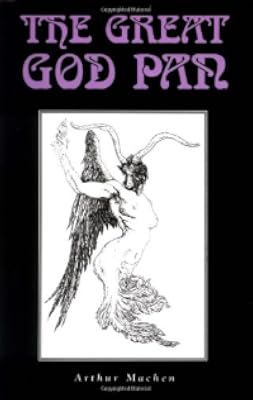
The Great God Pan
by Arthur Machen
On This Page
Description
If you consider yourself a fan of the horror genre, you need to add Arthur Machen's short novel The Great God Pan to your library. Cited by Stephen King and numerous other writers as one of the greatest horror stories ever published, this fantastical tale recounts the bizarre experiments conducted by mad scientist Dr. Raymond in an attempt to call forth a manifestation of the pagan god Pan. As is often the case, these unholy undertakings engender consequences that no one could have predicted..
Tags
Recommendations


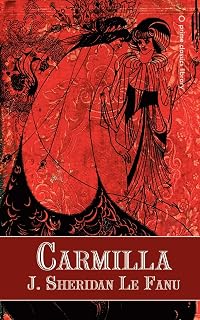
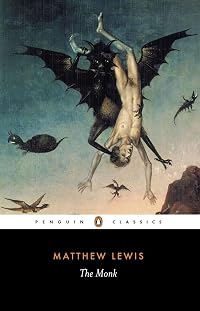

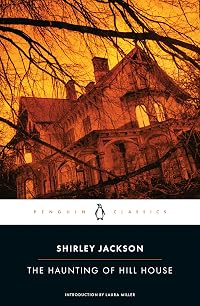

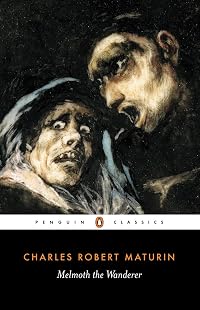
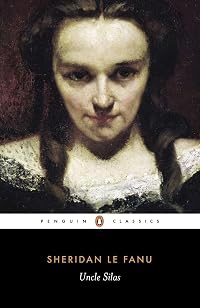

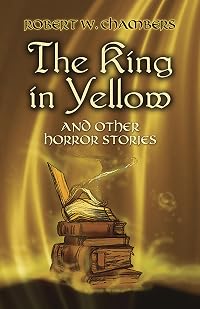


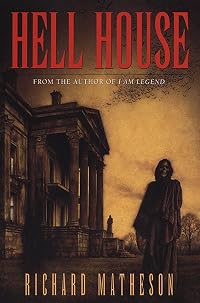
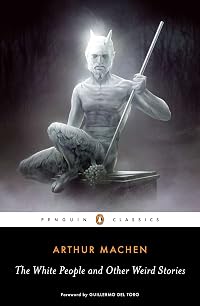
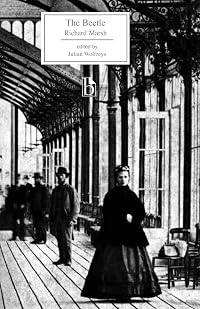
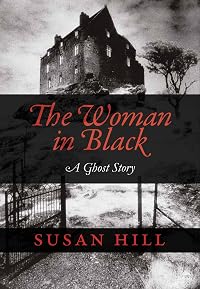
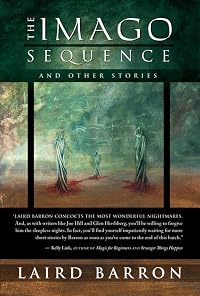
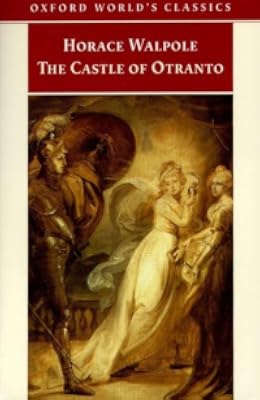
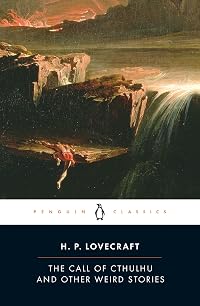



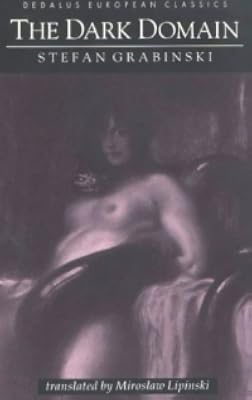
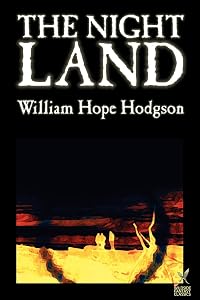
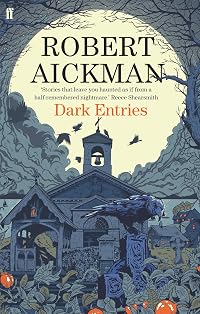

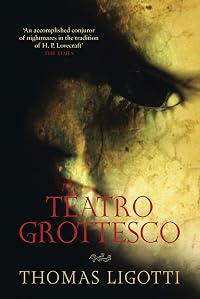

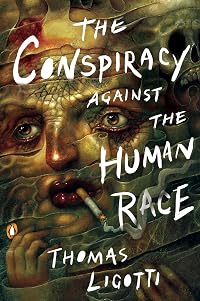


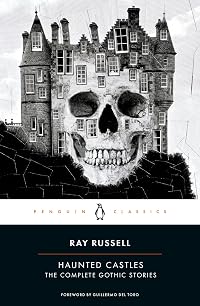
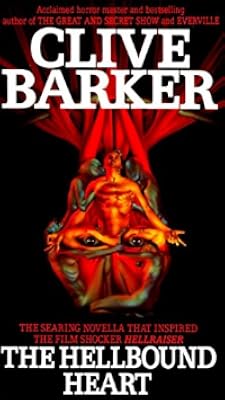


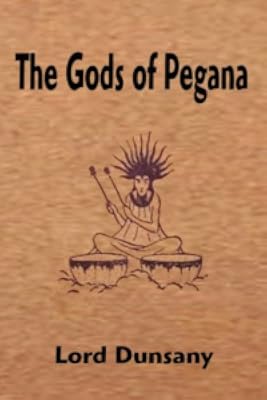

Member Recommendations
sturlington King says in the epigraph to Revival that this story has haunted him all his life.

Member Reviews
I'm not sure what I expected, but The Great God Pan is such an odd mix of things and I definitely haven't seen anything else quite like it from that period. Some of it is very Victorian in structure and attitude, in other ways it seems pretty far ahead of its time. I've seen it mentioned by many writers, particularly Stephen King and Peter Straub, and it's easy to see the influence on their work overall. It's kind of about a demonic femme fatale who does awful things and must be stopped (Straub's Ghost Story takes a lot from this), but it also suggests that the patriarchy had it coming and the male characters aren't righteous. There's a lot of hinting around and implication, sometimes for dated sexual taboo reasons but other times in a show more really evocative way—with a different tone than the type of "things too awful to describe" stuff that Lovecraft does, because Machen isn't trying to describe something totally alien and unrelated to life as we know it, but an aspect of life that's too intense for us to handle. When you do get a good look at weird things toward the end, the imagery is very wild and then the ending has a strangely peaceful contemplative feeling.
The earlier story "The Inmost Light" makes an interesting pairing with this, as that story takes a slightly similar idea of a highly unethical experiment, with a similar indirect narrative approach, and makes a reasonably vivid little horror vignette out of it but basically has nothing else to say once the penny has dropped and you know what happened. The Great God Pan does go through the motions of keeping the connection between the first scene and the mystery woman a secret until near the end, but it's not trying very hard (there are plenty of hints early on) and that's fine, because the impact of it isn't just about where the horror came from, but how it plays out in people's lives. show less
The earlier story "The Inmost Light" makes an interesting pairing with this, as that story takes a slightly similar idea of a highly unethical experiment, with a similar indirect narrative approach, and makes a reasonably vivid little horror vignette out of it but basically has nothing else to say once the penny has dropped and you know what happened. The Great God Pan does go through the motions of keeping the connection between the first scene and the mystery woman a secret until near the end, but it's not trying very hard (there are plenty of hints early on) and that's fine, because the impact of it isn't just about where the horror came from, but how it plays out in people's lives. show less
Stephen King has said that this is a horror story that has haunted him all his life. The influence on his novels and others (including H. P. Lovecraft) is undeniable, but despite all the apologists, it is hard to see this story as anything other than an expression of fear and othering of women, especially women who assert their independence. There are two female characters, neither of which gets to speak for herself. One is a meek victim who is violated without much sense of guilt or remorse; consider these words by the doctor who performs brain surgery on her without her consent, causing her to literally lose her mind: "As you know, I rescued Mary from the gutter, and from almost certain starvation, when she was a child; I think her show more life is mine, to use as I feel fit."
The other woman never actually appears on the page, but is only talked about. She victimizes men, with their consent, at least at first. She also terrifies every man in the piece, but she didn't particularly terrify me. Helen is a woman of independent means, who does what she wants when she wants, who indulges her own pleasures, and who cannot be controlled; therefore, she must be destroyed.
I often find that these Pan-inspired stories are seething with misogyny. Compare with Harvest Home. show less
The other woman never actually appears on the page, but is only talked about. She victimizes men, with their consent, at least at first. She also terrifies every man in the piece, but she didn't particularly terrify me. Helen is a woman of independent means, who does what she wants when she wants, who indulges her own pleasures, and who cannot be controlled; therefore, she must be destroyed.
I often find that these Pan-inspired stories are seething with misogyny. Compare with Harvest Home. show less
Arthur Machen created a minor masterpiece of decadent horror with 'The Great God Pan' in 1890 (expanded for publication in 1894). Its appeal lies in part in its construction. The narrative is only resolved by pulling together what appear to be a series of disconnected tales into a coherent whole.
The core of the tale is a woman who is the offspring of a demonic force (the chaotics of the Great God Pan) and a young woman who is the subject of a highly unethical scientific experiment by one of the 'gentlemen' of the story aimed at connecting with the occult underpinnings of reality.
Firmly set in the upper class of London society, the protagonists are leisured young gentlemen experimenting with experience and being brought low - in several show more cases to suicide - by the indirect influence of the pagan god of the chaotic (Pan) and directly by his avatar, Helen Vaughan.
The obvious comment is that the story is an expression of a misogynistic fear of women often found in symbolist and decadent art and literature at the end of the nineteenth century.
While reading it, I thought it might be a good subject for a feminist re-envisioning from the point of view of Helen, the villainess of the story. I understand that this was done by Rosanne Rabinowitz about five years ago.
This misogyny is undeniably present but more important is a much greater fear of the unstable nature of reality that predates Lovecraft and undoubtedly influenced him.
A cultural and sexual fear of unbridled female lust and depravity thus merges with uncertainty about what underlies the real to create a very disturbing story although it would be infinitely more disturbing to the late Victorians who read it than it is to us.
It is a tale of insidious and manipulative evil (though we are unlikely to share the assumptions behind the designation today) with a ground-breaking suggestion of gender fluidity in the resolution. Chaos is the breaking down of order and that includes sex and gender.
The implication throughout is that the order that needs to be preserved is a material one. It is the Great God Pan that exists lurking in the shadows and not the Christian God. Is this one of the first manifestations of dark materialism?
Machen pulls together late Victorian anxieties about reality, mental stability and sexuality with a conservative message ultimately derived from Faust that it is best for scientists to draw a red line in their investigations of the material world to avoid its penetration by chaos and evil.
Evil is eventually banished but not by scientific means. In fact this is the weak link in the book since it is not entirely clear how it is done so easily. Evil seems to be susceptible to social shame which strikes this reader as more implausible than that it exists as demonic reproduction.
The book has to be seen in its context - a revival of interest in paganism and in Pan as representative of a spirit that was extremely attractive to young libertarians chafing under the burden of a fairly rigid social structure.
Upper class homosexuals in particular constructed an ideology of paganism that referenced back their public school reading of the permissibility of forbidden ephebophiliac love in Hellenic literature that was otherwise generally admired as providing exemplars for virtue.
Pan is thus the necessary source of hidden evil creating the red line that was required in the reading of the Classics which were accounted essential to the self worth and virtue of the English upper class. Women too must not challenge the established order of things.
Whereas one worships God by going to Church (no longer deemed necessary by young urban aristocrats and intellectuals), one avoids being destroyed by Pan by not doing things (notably asking too many questions) rather than doing things.
It is quite definitely a classic of supernatural fiction and has the same narrative feel of tales such as 'Jekyll and Hyde' (1886) and 'Dorian Gray' (1890), also stories that tell of breaches in the natural order with dire consequences. Their popularity alone is instructive.
Late Victorians were experimenting with ideas of transgression without wanting actual transgressions to affect the structure on which they depended. We might call these novels attempts at confirming boundaries by exploring what lay behind them and then warning us off.
Both 'Jekyll and Hyde' and 'Great God Pan' are particularly about scientific boundary crossing - what might be regarded as going where only God has been. Darwin's 'Origin of Species' was only a third of a century past. Clearly Victorians remained nervous of what the death of God might mean.
Replacing the pre-Darwinian God with the pagan Pan as devil allowed late Victorians to have their cake and eat it. Science could replace God in terms of structuring the material world but could also be contrasted with the retention of evil as the place where men breached moral boundaries.
Although treated in cavalier terms in the story, the initial scientific experiment that sets the story in motion is morally suspect not only on the grounds of its attempt to look behind the veil of material reality but also in its treatment of a young woman, Mary, who is treated as an object.
Moral conservatism thus involves not only not asking too many questions but also showing due regard to persons as persons, especially those in a state of dependency. Very conservatively, English gentlemen are subtly reminded that their inferiors are not objects or slaves.
The story caused a lot of negative comment on publication as dissolute and degenerate. In fact, it is highly moral, a stuffed Victorian shirt covered in a great deal of lace. Its style appears a-moral but its content is quite the opposite. show less
The core of the tale is a woman who is the offspring of a demonic force (the chaotics of the Great God Pan) and a young woman who is the subject of a highly unethical scientific experiment by one of the 'gentlemen' of the story aimed at connecting with the occult underpinnings of reality.
Firmly set in the upper class of London society, the protagonists are leisured young gentlemen experimenting with experience and being brought low - in several show more cases to suicide - by the indirect influence of the pagan god of the chaotic (Pan) and directly by his avatar, Helen Vaughan.
The obvious comment is that the story is an expression of a misogynistic fear of women often found in symbolist and decadent art and literature at the end of the nineteenth century.
While reading it, I thought it might be a good subject for a feminist re-envisioning from the point of view of Helen, the villainess of the story. I understand that this was done by Rosanne Rabinowitz about five years ago.
This misogyny is undeniably present but more important is a much greater fear of the unstable nature of reality that predates Lovecraft and undoubtedly influenced him.
A cultural and sexual fear of unbridled female lust and depravity thus merges with uncertainty about what underlies the real to create a very disturbing story although it would be infinitely more disturbing to the late Victorians who read it than it is to us.
It is a tale of insidious and manipulative evil (though we are unlikely to share the assumptions behind the designation today) with a ground-breaking suggestion of gender fluidity in the resolution. Chaos is the breaking down of order and that includes sex and gender.
The implication throughout is that the order that needs to be preserved is a material one. It is the Great God Pan that exists lurking in the shadows and not the Christian God. Is this one of the first manifestations of dark materialism?
Machen pulls together late Victorian anxieties about reality, mental stability and sexuality with a conservative message ultimately derived from Faust that it is best for scientists to draw a red line in their investigations of the material world to avoid its penetration by chaos and evil.
Evil is eventually banished but not by scientific means. In fact this is the weak link in the book since it is not entirely clear how it is done so easily. Evil seems to be susceptible to social shame which strikes this reader as more implausible than that it exists as demonic reproduction.
The book has to be seen in its context - a revival of interest in paganism and in Pan as representative of a spirit that was extremely attractive to young libertarians chafing under the burden of a fairly rigid social structure.
Upper class homosexuals in particular constructed an ideology of paganism that referenced back their public school reading of the permissibility of forbidden ephebophiliac love in Hellenic literature that was otherwise generally admired as providing exemplars for virtue.
Pan is thus the necessary source of hidden evil creating the red line that was required in the reading of the Classics which were accounted essential to the self worth and virtue of the English upper class. Women too must not challenge the established order of things.
Whereas one worships God by going to Church (no longer deemed necessary by young urban aristocrats and intellectuals), one avoids being destroyed by Pan by not doing things (notably asking too many questions) rather than doing things.
It is quite definitely a classic of supernatural fiction and has the same narrative feel of tales such as 'Jekyll and Hyde' (1886) and 'Dorian Gray' (1890), also stories that tell of breaches in the natural order with dire consequences. Their popularity alone is instructive.
Late Victorians were experimenting with ideas of transgression without wanting actual transgressions to affect the structure on which they depended. We might call these novels attempts at confirming boundaries by exploring what lay behind them and then warning us off.
Both 'Jekyll and Hyde' and 'Great God Pan' are particularly about scientific boundary crossing - what might be regarded as going where only God has been. Darwin's 'Origin of Species' was only a third of a century past. Clearly Victorians remained nervous of what the death of God might mean.
Replacing the pre-Darwinian God with the pagan Pan as devil allowed late Victorians to have their cake and eat it. Science could replace God in terms of structuring the material world but could also be contrasted with the retention of evil as the place where men breached moral boundaries.
Although treated in cavalier terms in the story, the initial scientific experiment that sets the story in motion is morally suspect not only on the grounds of its attempt to look behind the veil of material reality but also in its treatment of a young woman, Mary, who is treated as an object.
Moral conservatism thus involves not only not asking too many questions but also showing due regard to persons as persons, especially those in a state of dependency. Very conservatively, English gentlemen are subtly reminded that their inferiors are not objects or slaves.
The story caused a lot of negative comment on publication as dissolute and degenerate. In fact, it is highly moral, a stuffed Victorian shirt covered in a great deal of lace. Its style appears a-moral but its content is quite the opposite. show less
A young woman named Mary -- a foundling picked up off the streets by one Dr. Raymond -- becomes the unwitting subject in an experiment to allow a human to see what many consider to be the "real world", a wondrous place in which nature and all manner of creatures live just beyond the veil of what humans normally see. Witnessed by Dr. Raymond and his colleague Mr. Clarke, Mary wakens from the experiment, her eyes appearing to focus on something beautiful and far away. But soon her expression changes to horror, and she collapses to the floor in a fit of madness.
Time passes and Mr. Clarke runs into a beggar who turns out to be an old chum. They walk together, and Clark learns of how his friend wound up in such dire circumstances. His friend show more tells him of his wife, a strange woman named Helen, who many claim to be beautiful and yet no one enjoys being in her presence. A sinister air hangs about her person and their home. She ruined him, he claims, and then disappeared. Clarke investigates further, and tales of madness and unexplained deaths surrounding a similar woman begin cropping up. Curious if she is somehow connected to the events with Mary, he questions Dr. Raymond about that night. The Doctor warns him to leave things be before something happens to him. Clarke, however, is determined to uncover the truth.
Perhaps not as horror-filled by today's standards, The Great God Pan still manages to evoke chills not by blood and gore, but by providing moods and glimpses of evil. It's as if you notice something's not quite right, something that you can't see or explain, but you can't pinpoint it. The story works on your mind, wreaking havoc with your fears and imagination until you can't escape. That unknown element is probably more terrifying than knowing that a vampire or a zombie or some familiar creature is lurking about.
"The Great God Pan" is quite an unnerving tale and has earned its place as a classic horror tale. If you've not read it, I recommend checking it out. show less
Time passes and Mr. Clarke runs into a beggar who turns out to be an old chum. They walk together, and Clark learns of how his friend wound up in such dire circumstances. His friend show more tells him of his wife, a strange woman named Helen, who many claim to be beautiful and yet no one enjoys being in her presence. A sinister air hangs about her person and their home. She ruined him, he claims, and then disappeared. Clarke investigates further, and tales of madness and unexplained deaths surrounding a similar woman begin cropping up. Curious if she is somehow connected to the events with Mary, he questions Dr. Raymond about that night. The Doctor warns him to leave things be before something happens to him. Clarke, however, is determined to uncover the truth.
Perhaps not as horror-filled by today's standards, The Great God Pan still manages to evoke chills not by blood and gore, but by providing moods and glimpses of evil. It's as if you notice something's not quite right, something that you can't see or explain, but you can't pinpoint it. The story works on your mind, wreaking havoc with your fears and imagination until you can't escape. That unknown element is probably more terrifying than knowing that a vampire or a zombie or some familiar creature is lurking about.
"The Great God Pan" is quite an unnerving tale and has earned its place as a classic horror tale. If you've not read it, I recommend checking it out. show less
Why did no one tell me of Arthur Machen before?
Granted, they may have tried, but I most certainly wasn't listening. I can possibly vaguely remember his name lumped in together with writers of "weird fiction" listed as inspirations of HP Lovecraft or other writers I enjoy. I probably jotted it down at some point and thought, "I'll have to look into that guy," and then never did.
If so, I regret that, but at least I found him now.
And if you're into body horror, Lovecraft, de-evolution, stories where visions make people go head-lollingly mad, David Cronenberg, female sexuality as monster, that one Stephen King story where the beer makes a guy into a blob, stories where unethical scientists make bad decisions, and disjointed narratives, this show more book is for you.
I'm moving on to his "The White People" now. show less
Granted, they may have tried, but I most certainly wasn't listening. I can possibly vaguely remember his name lumped in together with writers of "weird fiction" listed as inspirations of HP Lovecraft or other writers I enjoy. I probably jotted it down at some point and thought, "I'll have to look into that guy," and then never did.
If so, I regret that, but at least I found him now.
And if you're into body horror, Lovecraft, de-evolution, stories where visions make people go head-lollingly mad, David Cronenberg, female sexuality as monster, that one Stephen King story where the beer makes a guy into a blob, stories where unethical scientists make bad decisions, and disjointed narratives, this show more book is for you.
I'm moving on to his "The White People" now. show less
An effective example of its genre - early cosmic horror, locating the horrific in inexplicable natural phenomena, and achieving its effectiveness through a lack of description of the specific horrors - but of course just as problematic as Victorian fiction will always tend to be. I'm intrigued by the fact, though, that there is a reading of this book, completely coherent with the text, where all the horrible consequences come from the original violation of a woman's agency and bodily integrity.
"Consider the matter well, Raymond. It's a great responsibility. Something might go wrong; you would be a miserable man for the rest of your days."
"No, I think not, even if the worst happened. As you know, I rescued Mary from the gutter, and from almost certain starvation, when she was a child; I think her life is mine, to use as I feel fit. Come, it's getting late; we had better go in."
Dr. Raymond believes that 'a trifling rearrangement of certain cells' in the brain would allow anyone to see the Great God Pan but his foolhardy attempt to prove his theory ends in disaster, to the horror of his friend Mr. Clarke who was invited to watch the surgery. The rest of the story concerns Mr. Clarke's occult interests, which lead him to the show more intertwined stories of a strange young girl fostered by a farmer, a beautiful but somehow repulsive woman who married and ruined a friend of a friend, and of a series of suicides by rich young men with everything to live for.
The sort of horror story without any monsters, but where the sense of evil permeates everything. show less
"No, I think not, even if the worst happened. As you know, I rescued Mary from the gutter, and from almost certain starvation, when she was a child; I think her life is mine, to use as I feel fit. Come, it's getting late; we had better go in."
Dr. Raymond believes that 'a trifling rearrangement of certain cells' in the brain would allow anyone to see the Great God Pan but his foolhardy attempt to prove his theory ends in disaster, to the horror of his friend Mr. Clarke who was invited to watch the surgery. The rest of the story concerns Mr. Clarke's occult interests, which lead him to the show more intertwined stories of a strange young girl fostered by a farmer, a beautiful but somehow repulsive woman who married and ruined a friend of a friend, and of a series of suicides by rich young men with everything to live for.
The sort of horror story without any monsters, but where the sense of evil permeates everything. show less
Members
- Recently Added By
Lists

NPR Reader Poll: 100 Best Horror Novels and Stories
100 works; 20 members

Lovecraft's 'Supernatural Horror in Literature' Reading List
216 works; 8 members
Stephen King's Biggest Influences
46 works; 3 members

Books Read in 2016
4,666 works; 199 members

1890s
49 works; 6 members

For Further Reading: A List of 160 Novels from 15 Literatures
160 works; 4 members

Horror: Creature Features
70 works; 9 members

Kate & Cheyanne's Horror Extravaganza
144 works; 6 members

Favourite 19th century fiction
257 works; 61 members
Talk Discussions
Past Discussions
Reading Group #21 ('The Great God Pan') in Gothic Literature (March 2018)
THE DEEP ONES: "The Great God Pan" by Arthur Machen in The Weird Tradition (November 2014)
Author Information

238+ Works 6,623 Members
Some Editions
Awards and Honors
Series
Belongs to Publisher Series
Work Relationships
Is contained in
The Caerleon edition of the works of Arthur Machen. Volume 1: The Great God Pan; The Inmost Light; The Red Hand. by Arthur Machen
Arthur Machen Collection Volume 1 4 Books The Great God Pan, The Inmost Light, The Shining Pyramid, The Three Impostors. by Arthur Machen
Arthur Machen Horror Classics Collection: The Great God Pan, The Hill of Dreams, The Three Impostors, The Secret Glory, A Fragment of Life, The White People, The Inmost Light by Arthur Machen
The Strange World of Arthur Machen: The Three Imposters / The White People / The Great God Pan / The Inmost Light / The Red Hand / The Shining Pyramid by Arthur Machen
Is an expanded version of
Inspired
Has as a commentary on the text
Common Knowledge
- Canonical title
- The Great God Pan
- Original title
- The Great God Pan
- Original publication date
- 1894
- People/Characters
- Dr. Raymond; Clarke; Helen Vaughan; Mary; Mr. Villiers; Charles Herbert (show all 10); Arthur Meyrick; Sidney Crashaw; Rachel M.; Dr. Phillips
- Important places
- London, England, UK; Caermaen
- First words
- "I am glad you came, Clarke; very glad indeed. I was not sure you could spare the time."
- Quotations
- "As you know, I rescued Mary from the gutter, and from almost certain starvation, when she was a child; I think her life is mine, to use as I feel fit."
We know what happened to those who chanced to meet the Great God Pan, and those who are wise know that all symbols are symbols of something, not of nothing.
And I forgot, as I have just said, that when the house of life is thus thrown open, there may enter in that for which we have no name, and human flesh may become the veil of a horror one dare not express. - Last words
- (Click to show. Warning: May contain spoilers.)And now Helen is with her companions...
- Disambiguation notice
- The first "chapter" was originally a standalone short story (and is still sometimes anthologised as such), which was published in 1890. Machen then expanded the story to novella length, publishing it under the same title in 1... (show all)894. This LT Work is the novella
Classifications
Statistics
- Members
- 1,032
- Popularity
- 25,063
- Reviews
- 44
- Rating
- (3.55)
- Languages
- 9 — Czech, English, French, Greek, Italian, Polish, Portuguese, Spanish, Turkish
- Media
- Paper, Audiobook, Ebook
- ISBNs
- 124
- ASINs
- 40