On This Page
Description
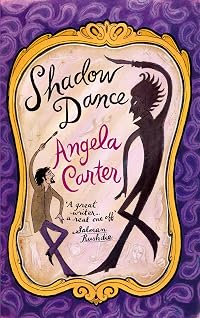
The scar drew her whole face sideways and even in profile, with the hideous thing turned away, her face was horribly lop-sided, skin, features and all, dragged away from the bone. She was a beautiful girl, a white and golden girl, like moonlight on daisies, a month ago.' And yet the men still hover around her, more out of curiosity than lust, and none more so than the wildly seductive, dangerous funny man, Honeybuzzard; lithe as a stick of liquorice, he is the demonic puppet master at the show more swirling centre of the tale. 'In a modern day horror story gleaming with perfect 1960's detail, she performs a double act, conjuring up just the right amount of unease and perversion beneath the idiosyncratic business of relatively ordinary lives' THE TIMES show lessTags
Recommendations



















Member Recommendations

Member Reviews
'Shadow Dance' (1966), while not perfect (the ending is perfunctory and inconclusive after a scene of 'grand guignol' horror), is a remarkable achievement by a mid-twenty-something woman writing in a pre-feminist literary environment.
The way that the book is 'sold' by the publishers is misleading. Perhaps to attract female readers who want Carter to be the feminist she undoubtedly became, the 'blurb' over-emphasises the rather shadowy and disturbed female character Ghislaine, both masochist and victim.
In fact the novel is not primarily about women at all but about a male relationship that comes across as a nastier and more vicious precursor of Withnail and I. We have a sociopathic narcissist in Honeybuzzard. His unstable, unpleasant and show more weak associate, Morris, narrates the tale.
Looked at critically there is not a great deal to the story, a tale rather of character and atmosphere. Carter in her first novel achieves a great deal in this regard. The characters are often halfway towards magical realism and yet they seem as if they are only an edge away from being real 1960s losers.
This is the atmosphere - one of British grubbiness and detritus inhabited by not very bright, manipulative, weak, unaware and nasty characters pottering along at the margins of British society with barely a serious moral sentiment to share amongst them.
Nor do we see the noble demonic evil of Milton's' Satan' but only the petty negativity towards life and wholeness that implies an English greyness and existential boredom amid the brightly coloured patina of sixties Britain. People are worse than unpleasant, they are unpleasant without purpose in being so.
The leading characters run an unprofitable 'antiques' (junk) shop filled with rubbish they hope to palm off on to American tourists. Carter builds her atmosphere on this with extended descriptions of an environment where you can feel the grime and dirt under your fingernails.
Visiting the shop in fiction, you want to wash your hands afterwards in reality. The whole book is imbued with this sense of the broken, the forgotten, the useless and of people too weak or stupid to do more than to float like weeds on the surface of it all. Things just happen to them.
Only Honeybuzzard appears to do things with some purpose and that purpose is classically psychopathic - the gratification of desires when and as they arise no matter how dark they may be. His 'charisma' is the charisma that appeals to the weak with one exception.
This fascinating exception is the character of Emily, a catholic working class girl who certainly takes risks with herself (if only in becoming attached to Honeybuzzard) but whose self-possession, discipline, will, basic strength and commitment to cleanliness stands out. She uses him.
The closing lines (no spoiler) contrast the amorality of the weak Morris (the sidekick) and the viscerally expressed moral core of Emily albeit in that perfunctory way that we think is insufficient in the light of everything that has gone before.
What is Carter doing here? To be honest, I was never quite sure. Testing her literary muscles perhaps with a sustained project that remains consistent throughout in style? Demonstrating her own sour view not of men but of humanity in general in apparently gilded sixties Britain?
Perhaps she is exorcising as a sixties young person the spirit of British grime and greyness of soul. Perhaps she wants to build a story that leads to an event that fails to elicit moral reaction in someone who should know better. Like much good art, there are ambiguities.
Perhaps in Emily she does have the seeds of a female ideal - a woman who is self-possessed and can switch love on and off as it suits her and who can take on and triumph over any challenge (at least by implication). And who does so through instinct rather than thought.
The other two female characters of note are very different. Ghislaine, a promiscuous manipulator who becomes masochistically obsessed with the Honeybuzzard who slashed her face, and the homebody, fundamentally nice but not too bright wife of Morris, Edna.
One might even interpret the two as satires on the whore and madonna (with Edna finally getting something better and Ghislaine, well, no spoilers there) and Emily as what a modern woman might actually be by synthesising aspects of both - sexuality and family.
Whether proto-feminist or not, Carter sets up the inability (because of a weak man) or lack of will to procreate against the actual and natural procreation of Emily. That is oddly conservative. The men are just man-babies incapable of responsibility or understanding.
One story line is of a man who marries happily (he thinks) to a woman who cannot speak English who commits suicide from a misunderstanding. This man though unprepossessing just wants a genuine love. It is interesting where he ends up in one of the few bits of final happiness (we assume).
But what comes across above all (apart from the griminess) is the unusual mix of realism and exaggeration which (there being no supernatural or magical elements) seem to provide a stepping stone to her later work. Morris' imaginings can already take us to the very edge of the surreal.
Carter is an excellent observer of lived detail - how cats behave, the complexities of the street, people in pubs, the insides of abandoned houses and how to traverse them - and then adds sufficient eccentricity and oddity to distance us from the reality and give us access to her cynical eye. show less
The way that the book is 'sold' by the publishers is misleading. Perhaps to attract female readers who want Carter to be the feminist she undoubtedly became, the 'blurb' over-emphasises the rather shadowy and disturbed female character Ghislaine, both masochist and victim.
In fact the novel is not primarily about women at all but about a male relationship that comes across as a nastier and more vicious precursor of Withnail and I. We have a sociopathic narcissist in Honeybuzzard. His unstable, unpleasant and show more weak associate, Morris, narrates the tale.
Looked at critically there is not a great deal to the story, a tale rather of character and atmosphere. Carter in her first novel achieves a great deal in this regard. The characters are often halfway towards magical realism and yet they seem as if they are only an edge away from being real 1960s losers.
This is the atmosphere - one of British grubbiness and detritus inhabited by not very bright, manipulative, weak, unaware and nasty characters pottering along at the margins of British society with barely a serious moral sentiment to share amongst them.
Nor do we see the noble demonic evil of Milton's' Satan' but only the petty negativity towards life and wholeness that implies an English greyness and existential boredom amid the brightly coloured patina of sixties Britain. People are worse than unpleasant, they are unpleasant without purpose in being so.
The leading characters run an unprofitable 'antiques' (junk) shop filled with rubbish they hope to palm off on to American tourists. Carter builds her atmosphere on this with extended descriptions of an environment where you can feel the grime and dirt under your fingernails.
Visiting the shop in fiction, you want to wash your hands afterwards in reality. The whole book is imbued with this sense of the broken, the forgotten, the useless and of people too weak or stupid to do more than to float like weeds on the surface of it all. Things just happen to them.
Only Honeybuzzard appears to do things with some purpose and that purpose is classically psychopathic - the gratification of desires when and as they arise no matter how dark they may be. His 'charisma' is the charisma that appeals to the weak with one exception.
This fascinating exception is the character of Emily, a catholic working class girl who certainly takes risks with herself (if only in becoming attached to Honeybuzzard) but whose self-possession, discipline, will, basic strength and commitment to cleanliness stands out. She uses him.
The closing lines (no spoiler) contrast the amorality of the weak Morris (the sidekick) and the viscerally expressed moral core of Emily albeit in that perfunctory way that we think is insufficient in the light of everything that has gone before.
What is Carter doing here? To be honest, I was never quite sure. Testing her literary muscles perhaps with a sustained project that remains consistent throughout in style? Demonstrating her own sour view not of men but of humanity in general in apparently gilded sixties Britain?
Perhaps she is exorcising as a sixties young person the spirit of British grime and greyness of soul. Perhaps she wants to build a story that leads to an event that fails to elicit moral reaction in someone who should know better. Like much good art, there are ambiguities.
Perhaps in Emily she does have the seeds of a female ideal - a woman who is self-possessed and can switch love on and off as it suits her and who can take on and triumph over any challenge (at least by implication). And who does so through instinct rather than thought.
The other two female characters of note are very different. Ghislaine, a promiscuous manipulator who becomes masochistically obsessed with the Honeybuzzard who slashed her face, and the homebody, fundamentally nice but not too bright wife of Morris, Edna.
One might even interpret the two as satires on the whore and madonna (with Edna finally getting something better and Ghislaine, well, no spoilers there) and Emily as what a modern woman might actually be by synthesising aspects of both - sexuality and family.
Whether proto-feminist or not, Carter sets up the inability (because of a weak man) or lack of will to procreate against the actual and natural procreation of Emily. That is oddly conservative. The men are just man-babies incapable of responsibility or understanding.
One story line is of a man who marries happily (he thinks) to a woman who cannot speak English who commits suicide from a misunderstanding. This man though unprepossessing just wants a genuine love. It is interesting where he ends up in one of the few bits of final happiness (we assume).
But what comes across above all (apart from the griminess) is the unusual mix of realism and exaggeration which (there being no supernatural or magical elements) seem to provide a stepping stone to her later work. Morris' imaginings can already take us to the very edge of the surreal.
Carter is an excellent observer of lived detail - how cats behave, the complexities of the street, people in pubs, the insides of abandoned houses and how to traverse them - and then adds sufficient eccentricity and oddity to distance us from the reality and give us access to her cynical eye. show less
This was Carter’s debut novel, and there’s effusive praise for it on the cover of my edition from Anthony Burgess. And having now read the book, Burgess’s comments don’t surprise me in the least. It’s just like a Burgess novel in many respects. The narrator Morris runs a junk shop with flighty none-too-legit Honeybuzzard (which I kept on wanting to read as Honeybadger), who is a bit of a knob. Rumour has it that the recent scar disfiguring Ghislaine’s face is Honeybuzzard’s handiwork, although he claims otherwise. Besides, Honeybuzzard now has Emily, who seems to be made of much sterner stuff. And, er, that’s about it. The prose is somewhat overwrought, and far too quick to reach for cliché, especially when Carter show more emphasises a point by adding on descriptive clause after descriptive clause. From what I remember of her later novels, she soon rid herself of the habit. Fortunately. But lines like “The lines of his ribs showed through the flesh like an elegant bird-cage where his trapped heart flapped its wings regularly, one, two, on the beat” should have been excised. And there are far too many mentions of rape too. Not a great novel, though Carter went on to write some great stuff. show less
This is an excellent first novel from one of my favorite authors. Deliciously dark, it hooked me right from the beginning. Though it ended too soon, I thoroughly enjoyed the read.
Ratings
Members
- Recently Added By
Author Information

100+ Works 25,383 Members
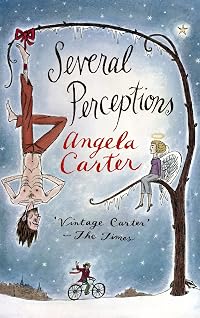
A powerful and disturbing writer, Angela Carter created haunting fiction about travelers surviving their passage through a disintegrating universe. Often based on myth or fairy tale-borrowed or invented for the occasion-her work evokes the most powerful aspects of sexuality and selfhood, of life and death, of apocalypse. Carter's most successful show more novels include The Magic Toyshop (1967), which received the John Llewellyn Rhys Prize and Several Perceptions (1968), winner of the Somerset Maugham Award. The Passion of New Eve (1977), a story of the end of the world and its possible new beginning with failed mankind replaced by a self-generating womankind. She translated many fairy tales and wrote several collections of short stories, including The Bloody Chamber (1979) which won the Cheltenham Festival of Literature Award and was the basis for the powerful movie A Company of Wolves. She worked as a journalist and as a professor at Brown and the University of Texas. She published two nonfiction books of interest: Nothing Sacred, selected writings, and The Sadeian Woman (1979). (Bowker Author Biography) show less
Some Editions
Series

Belongs to Publisher Series
Virago Modern Classics (442)
Work Relationships
Has as a student's study guide
Common Knowledge
- Canonical title
- Shadow Dance
- Original publication date
- 1966
Classifications
Statistics
- Members
- 272
- Popularity
- 118,808
- Reviews
- 4
- Rating
- (3.55)
- Languages
- English, French
- Media
- Paper, Ebook
- ISBNs
- 10
- ASINs
- 4