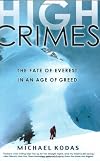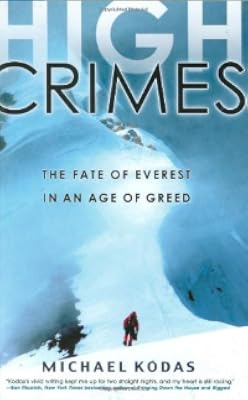
High Crimes: The Fate of Everest in an Age of Greed
by Michael Kodas
On This Page
Description
High Crimes is journalist Michael Kodas's gripping account of life on top of the world-where man is every bit as deadly as Mother Nature. In the years following the publication of Into Thin Air, much has changed on Mount Everest. Among all the books documenting the glorious adventures in mountains around the world, none details how the recent infusion of wealthy climbers is drawing crime to the highest place on the planet. The change is caused both by a tremendous boom in traffic, and a new show more class of parasitic and predatory adventurer. It's likely that Jon Krakauer would not recognize the camps that he visited on Mount Everest almost a decade ago. This book takes readers on a harrowing tour of the criminal underworld on the slopes of the world's most majestic mountain. High Crimes describes two major expeditions: the tragic story of Nils Antezana, a climber who died on Everest after he was abandoned by his guide; as well as the author's own story of his participation in the Connecticut Everest Expedition, guided by George Dijmarescu and his wife and climbing partner, Lhakpa Sherpa. Dijmarescu, who at first seemed well-intentioned and charming, turned increasingly hostile to his own wife, as well as to the author and the other women on the team. By the end of the expedition, the three women could not travel unaccompanied in base camp due to the threat of violence. Those that tried to stand against the violence and theft found that the worst of the intimidation had followed them home to Connecticut. Beatings, thefts, drugs, prostitution, coercion, threats, and abandonment on the highest slopes of Everest and other mountains have become the rule rather than the exception. Kodas describes many such experiences, and explores the larger issues these stories raise with thriller-like intensity. show lessTags
Recommendations

















Member Reviews
Ok. This book settles it for me. I am officially not going to climb Mount Everest. Not if someone is going to steal my food and gear while I'm trying to summit or sell me faulty oxygen canisters or threaten to abandon me if I don't pay more money. This book was an eye-opening look at the Wild West- style of atmosphere that is Everest climbing these days. Like many, I read Into Thin Air some years ago and was fascinated by the whole business how people end up at the top of the world's highest peak. The conditions are so extreme that the balance between helping others and keeping yourself alive (or achieving the summit experience you paid $60,000 for) makes for dramatic decisions. The concept that those who show up less-prepared or show more less-conditioned present a danger to others around them had not occurred to me and put a new twist on how those decisions are made. Of course, extreme adventures can also attract extreme personalities.
This book was fascinating but not the easiest to read. It tells the stories of two climbing groups approaching Everest from two sides of the mountain at the same time. It also bounces back and forth in time, which makes it more difficult to keep things sorted out. I'm glad I persevered and this will probably find more Everest books to read. show less
This book was fascinating but not the easiest to read. It tells the stories of two climbing groups approaching Everest from two sides of the mountain at the same time. It also bounces back and forth in time, which makes it more difficult to keep things sorted out. I'm glad I persevered and this will probably find more Everest books to read. show less
Kodas describes two expeditions: his own, and another expedition which resulted in the death of Dr Nils Antezana, one of the clients. Kodas explains how both expeditions fell apart due to the underhanded and selfish behaviour that takes place on the mountain. It makes for sobering reading. Thefts are common, even - or especially - from high camps during summit bids, effectively putting the lives of others at stake. Guides apparently need no qualifications and one even used another person’s summit photos as proof that he reached the top himself.
Kodas is a journalist and his style is clear, even when he is jumping between the two expeditions and their background stories. Unlike Graham Ratcliffe’s book ( show more target="_top">http://www.librarything.com/work/11061557/book/75212808), each section felt relevant and well-structured. Kodas isn’t trying to set any record straight; he is just telling his story and the story of Dr Antezana and his family. He comes across as more believable than Ratcliffe because he is not straining to convince the reader. Of course, it’s possible that Kodas’ trip was simply a one-off and most people do not have any problems of the kind he describes. However, I got the feeling that he was just the first to scratch that surface. Everest is a mountain that pushes us into demonstrating our bad qualities, as well as good.
Before I read this book, I had been tempted to try and get to Base Camp (I knew that I would never reach the summit), but Kodas’ book has put me off even that. If his aim was to get people to think about going to Everest before they decide to go, he has most definitely succeeded. show less
Kodas is a journalist and his style is clear, even when he is jumping between the two expeditions and their background stories. Unlike Graham Ratcliffe’s book ( show more target="_top">http://www.librarything.com/work/11061557/book/75212808), each section felt relevant and well-structured. Kodas isn’t trying to set any record straight; he is just telling his story and the story of Dr Antezana and his family. He comes across as more believable than Ratcliffe because he is not straining to convince the reader. Of course, it’s possible that Kodas’ trip was simply a one-off and most people do not have any problems of the kind he describes. However, I got the feeling that he was just the first to scratch that surface. Everest is a mountain that pushes us into demonstrating our bad qualities, as well as good.
Before I read this book, I had been tempted to try and get to Base Camp (I knew that I would never reach the summit), but Kodas’ book has put me off even that. If his aim was to get people to think about going to Everest before they decide to go, he has most definitely succeeded. show less
4.5 stars
Journalist Michael Kodas takes a look at how busy Everest is and the issues that have happened due to its popularity. Primarily, he is looking at the fraud and theft that happens there (plus more). The consequences of fraud and theft at Everest, though, versus anywhere else, can turn deadly.
Kodas climbed Everest in 2004 with a neighbour, George, their wives, and a few other people. Things turned sour very quickly. So, he describes his own experiences with that group, as well as recounting 69-year old Nils Antezana's death on Everest, at the same time as Kodas and his group were there, but Antezana, his guide and two Sherpas were climbing the other side of Everest.
Wow! This was very good. Kodas, being a journalist, is a good show more writer, and I just wanted to keep reading. I didn't want to put the book down. Nothing's going to live up to Into Thin Air for me, but this comes close. It does jump around in place and time; however, I was still able to follow. There are lots of people involved and lots of stories, but I think that actually helped me figure out time/place, as Kodas focused on the two main stories and added in a few others here and there, but always came back to the main stories. For anyone with an interest in Everest, this is definitely worth the read! show less
Journalist Michael Kodas takes a look at how busy Everest is and the issues that have happened due to its popularity. Primarily, he is looking at the fraud and theft that happens there (plus more). The consequences of fraud and theft at Everest, though, versus anywhere else, can turn deadly.
Kodas climbed Everest in 2004 with a neighbour, George, their wives, and a few other people. Things turned sour very quickly. So, he describes his own experiences with that group, as well as recounting 69-year old Nils Antezana's death on Everest, at the same time as Kodas and his group were there, but Antezana, his guide and two Sherpas were climbing the other side of Everest.
Wow! This was very good. Kodas, being a journalist, is a good show more writer, and I just wanted to keep reading. I didn't want to put the book down. Nothing's going to live up to Into Thin Air for me, but this comes close. It does jump around in place and time; however, I was still able to follow. There are lots of people involved and lots of stories, but I think that actually helped me figure out time/place, as Kodas focused on the two main stories and added in a few others here and there, but always came back to the main stories. For anyone with an interest in Everest, this is definitely worth the read! show less
In 2004, journalist Michael Kodas joined local mountain climbers from home on an expedition to Mount Everest. He anticipated an exhilarating and arduous adventure among a group of like-minded idealists that he could report to his readers back in Connecticut. But on the Himalayan mountain, he discovered thieves, prostitutes, con men, and blackmailers. There were people who would do anything for a quick buck, or a guarantee of reaching the top. And some of them were on his own team.
Thieves stole equipment on which the team's lives depended, Kodas's life was threatened by one of his teammates, and a climbing partner was beaten unconscious by another in Base Camp. He returned from the Himalaya disillusioned. But a plea for help from the show more daughter of a mountaineer who vanished on Everest on the very day that Kodas had retreated from his own disintegrating team prompted him to return to Everest and uncover an underworld that preys on unsuspecting climbers on major peaks around the world.
High Crimes is a shocking expose of the dark underside of Everest: people stepping over dying climbers on their way up; unscrupulous con men who sell faulty oxygen tanks that leave climbers without air when their lives depend on it; drugs and prostitution in Base Camp; and people all but murdered in the cutthroat race to get to the top. Illustrated with incredible photographs and written with thriller-like pacing, High Crimes is a gripping and fascinating story.
If summiting Everest is on your list of "100 Things to do Before I Die" you should read this compelling if somewhat disheartening look at the dark side of climbing the world's tallest mountain.
High Crimes explores the corruption of one of the purest places on earth, Mount Everest, and the author doesn’t pull any punches pointing the finger and naming names of those who indulge in dishonest and outright criminal behaviour putting others’ lives at risk….and worse.
The author compares Everest Base Camp to a Wild West boomtown… with no sheriff.
He is especially critical of the Everest peak baggers who pay thousands of dollars to unscrupulous commercial operators to be dragged to the top and back down again (if they are lucky), "climbers" who have as much business being on the mountain as I do.
The structure of the novel is a little distracting, as the author tells his own summit attempted with the wife beating climbing team from Hell and the heart-breaking story of Dr. Nils Antezana, both threads running through the book pulling it all together.
Fascinating stuff show less
Thieves stole equipment on which the team's lives depended, Kodas's life was threatened by one of his teammates, and a climbing partner was beaten unconscious by another in Base Camp. He returned from the Himalaya disillusioned. But a plea for help from the show more daughter of a mountaineer who vanished on Everest on the very day that Kodas had retreated from his own disintegrating team prompted him to return to Everest and uncover an underworld that preys on unsuspecting climbers on major peaks around the world.
High Crimes is a shocking expose of the dark underside of Everest: people stepping over dying climbers on their way up; unscrupulous con men who sell faulty oxygen tanks that leave climbers without air when their lives depend on it; drugs and prostitution in Base Camp; and people all but murdered in the cutthroat race to get to the top. Illustrated with incredible photographs and written with thriller-like pacing, High Crimes is a gripping and fascinating story.
If summiting Everest is on your list of "100 Things to do Before I Die" you should read this compelling if somewhat disheartening look at the dark side of climbing the world's tallest mountain.
High Crimes explores the corruption of one of the purest places on earth, Mount Everest, and the author doesn’t pull any punches pointing the finger and naming names of those who indulge in dishonest and outright criminal behaviour putting others’ lives at risk….and worse.
The author compares Everest Base Camp to a Wild West boomtown… with no sheriff.
He is especially critical of the Everest peak baggers who pay thousands of dollars to unscrupulous commercial operators to be dragged to the top and back down again (if they are lucky), "climbers" who have as much business being on the mountain as I do.
The structure of the novel is a little distracting, as the author tells his own summit attempted with the wife beating climbing team from Hell and the heart-breaking story of Dr. Nils Antezana, both threads running through the book pulling it all together.
Fascinating stuff show less
This book managed to squash any latent desire I had to take up high altitude mountaineering. In High Crimes, Michael Kodas tells us about his disastrous expedition on the north side of Everest, approaching from Tibet/China. He also intertwines his story with that of Gustavo Lisi and his disastrous climb up the south side of Everest, approaching from Nepal.
If you take a peak at my photos from my climb of Mout Rainier, you can see that I had the mountaineering bug for a while. In a complicated life, it great to have a simple mission on the mountain: go as high up the mountain as you can and get back safely. Having kids suppressed that mountaineering bug. An early lesson I learned was that the summit is not the ultimate goal. The ultimate show more goal is getting back home safely. The mountain will be there tomorrow for another try at the summit.
After reading this book, it sounds like many of the Everest climbers fail to realize their goal.
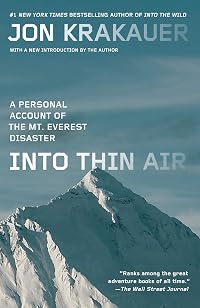
High Crimes acts as a continuation of Into Thin Air. Jon Krakauer told us how big money was making it easier to get you to the top. Climbers no longer had to go through a long apprenticeship climbing higher and higher peaks before tacking the highest mountain. Commercial operators were increasingly happy to help you to the top as long as you had the cash. Experience was not necessary. The commercial guides would supply it.
High Crimes paints a deteriorating picture of Everest where some guides do not even supply the necessary experience. In the Kodas expedition the group is under-prepared and fractious. In the Lisi expedition, he gets left for dead on the top of the mountain.
Kodas tell us of climbers shopping for the least expensive guides, guides inflating their experience, expeditions being under-supplied, theft and violence. Kodas tells of several expedition returning to their high camps, exhausted from their climbing, only to find their tents emptied of supplies by thieves from other expeditions.
Kodas tells us of under-trained climbers and guides that imperil not only themselves, but other expeditions on the mountain. Climbers take so long on the few technical aspects of the climb that dangerous bottlenecks form.
Kodas also paints a grim picture of base camp on the North Side of Everest. China has built around that reaches all the way to base camp. As a result there is wild west town that sprouts up during climbing season. His description reminds me of Deadwood, except with nylon tents.
It seems Everest has fallen to the greedy. It sounds like it is no longer a great climb. show less
If you take a peak at my photos from my climb of Mout Rainier, you can see that I had the mountaineering bug for a while. In a complicated life, it great to have a simple mission on the mountain: go as high up the mountain as you can and get back safely. Having kids suppressed that mountaineering bug. An early lesson I learned was that the summit is not the ultimate goal. The ultimate show more goal is getting back home safely. The mountain will be there tomorrow for another try at the summit.
After reading this book, it sounds like many of the Everest climbers fail to realize their goal.
High Crimes acts as a continuation of Into Thin Air. Jon Krakauer told us how big money was making it easier to get you to the top. Climbers no longer had to go through a long apprenticeship climbing higher and higher peaks before tacking the highest mountain. Commercial operators were increasingly happy to help you to the top as long as you had the cash. Experience was not necessary. The commercial guides would supply it.
High Crimes paints a deteriorating picture of Everest where some guides do not even supply the necessary experience. In the Kodas expedition the group is under-prepared and fractious. In the Lisi expedition, he gets left for dead on the top of the mountain.
Kodas tell us of climbers shopping for the least expensive guides, guides inflating their experience, expeditions being under-supplied, theft and violence. Kodas tells of several expedition returning to their high camps, exhausted from their climbing, only to find their tents emptied of supplies by thieves from other expeditions.
Kodas tells us of under-trained climbers and guides that imperil not only themselves, but other expeditions on the mountain. Climbers take so long on the few technical aspects of the climb that dangerous bottlenecks form.
Kodas also paints a grim picture of base camp on the North Side of Everest. China has built around that reaches all the way to base camp. As a result there is wild west town that sprouts up during climbing season. His description reminds me of Deadwood, except with nylon tents.
It seems Everest has fallen to the greedy. It sounds like it is no longer a great climb. show less
This was my first book about Everest and was quite illuminating--I would definitely recommend that anyone seriously considering climbing the mountain read this book first to know what to watch out for! Kodas relates all kinds of reprehensible human behavior taking place around the mountain, much of it tragically leading to the loss of human life: guides misrepresenting their level of experience, people selling faulty equipment, rampant theft even high up on the mountain, and even guides completely abandoning their clients in some of the most perilous conditions on Earth. Kodas himself was part of an expedition that went sour, but the book is at its best when he's relating stories he wasn't immediately involved in (the parts about his show more own story often feel uncomfortably like being involved in a personal feud in which not all the parties have a chance to defend themselves). This isn't a book to read if you're primarily interested in the beauty of Everest or want triumphant stories about human perseverance and accomplishment, but it was interesting throughout and has definitely made me want to learn more about Everest and mountaineering. show less
The author, a journalist, looks past the beauty and personal triumph stories that proliferate book shelves and the internet. Through his personal observation and in depth research and interviews, he exposes some harsh realities around Mount Everest expeditions. I was so appalled to read about people stealing essential supplies - like food and oxygen. Mr. kodas did an excellent job adding to the long list of reasons why i will never go to Everest.
That said, my 3 star rating reflects the choppiness of the presentation. The story is told from too many perspectives across time and location. .
That said, my 3 star rating reflects the choppiness of the presentation. The story is told from too many perspectives across time and location. .
Members
- Recently Added By
Author Information
3 Works 382 Members
Some Editions
Common Knowledge
- Important places
- Mount Everest / Sagarmatha; Himalayas; Khumbu Valley
- First words
- Prologue: Most of the world came to know David Sharp because of how desperately late he was. I got aquainted with him because he was on time.
- Blurbers
- Mezrich, Ben; Child, Greg
Classifications
- Genres
- Sports and Leisure, Nonfiction, General Nonfiction, Travel, Biography & Memoir
- DDC/MDS
- 796.522 — Arts & recreation Recreation, sports, and performing arts Athletic and outdoor sports and games Outdoor leisure Walking and exploring by kind of terrain Mountains, hills and rocks
- LCC
- GV200.19 .S63 .K63 — Geography, Anthropology and Recreation Recreation. Leisure Recreation. Leisure Outdoor life. Outdoor recreation Caving. Spelunking
- BISAC
Statistics
- Members
- 314
- Popularity
- 101,934
- Reviews
- 22
- Rating
- (3.68)
- Languages
- English, German
- Media
- Paper, Audiobook, Ebook
- ISBNs
- 12
- ASINs
- 6