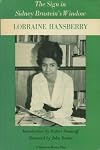
The Sign in Sidney Brustein's Window [three acts]
by Lorraine Hansberry
On This Page
Description
By the time of her death at age thirty-four, Lorraine Hansberry had created two electrifying masterpieces of the American theater. With A Raisin in the Sun she gave this country its most movingly authentic portrayal of black family life in the inner city. Barely five years later, with The Sign in Sidney Brustein's Window, Hansberry gave us an unforgettable portrait of a man struggling wit his individual fate in an age of racial and social injustice. These two plays remain milestones in the show more American theater, remarkable not only for their historical value but for their continual ability to engage the imagination and heart. With an Introduction by Robert Nemiroff. show lessTags
Recommendations













Member Reviews
Lorraine Hansberry’s second play, ‘The Sign in Sidney Brustein’s Window,’ is much less well known than her first, the absolutely fantastic ‘A Raisin in the Sun,’ but it shows flashes of the same brilliance. It centers on Sidney Brustein, a married man in New York who’s had one business fail at the play’s opening and then plunges himself into another, a politically progressive newspaper. With his marriage going a little stale, and characters around him who are either cynical, in denial, or beaten down by life, he wrestles with making a difference in the world, and the idea of getting away from it all to lead a more authentic and pure existence. Interestingly, it’s compared at one point to the difference between the show more Thoreau of ‘Civil Disobedience’ and the Thoreau of ‘Walden.’
I love how Hansberry filled the work with cultural and literary references, and how balanced she was in presenting ideas from a diverse character set, including a gay playwright and black communist. The play strikes a balanced tone and an enlightened wisdom about the complexity of living in the modern world, most notably, how it’s possible to continue to be an optimist in spite of it all. The arc the main character goes through leads to a lovely, powerful ending, one that still resonates today amidst our own troubled times. Where the play fell a little short for me was in its other subplots, which didn’t seem that well integrated. It felt a little messy, maybe because life is messy, but for the purposes of a performance, it could have done with a tighter story. It’s still worth seeking out, and a poignant reminder of just how tragic it was that Hansberry died far too young at 34, with so much ahead of her.
Quotes:
On apathy:
“You see! There it is, man! We are confronted with the great disease of the modern bourgeois intellectual: ostrich-ism. I’ve been watching it happen to this one; the great sad withdrawal from the affairs of men.”
On capitalism:
Iris: “I just don’t have it. They say if you really have it – you stick with it no matter what – and that – that you’ll do anything-“
Sidney: “That is one of the great romantic and cruel ideas of our civilization. A lot of people ‘have it’ and they just get trampled to death by the mob trying to get up the same mountain.”
On confronting the problems of the world:
“In the ancient times, the good men among my ancestors, when they heard of evil, strapped a sword to their loins and strode into the desert; and when they found it, they cut it down – or were cut down and bloodied the earth with purifying death. But how does one confront these nameless faceless vapors that are the evil of our time?”
On divorce:
“Of course I decided against it. A divorce? For what? Because a marriage was violated? Ha! We’ve got three boys and their father is devoted to them; I guess he’s devoted to all four of his boys. And what would I do? There was no rush years ago at home to marry Mavis Parodus; there was just Fred then. In this world there are two kinds of loneliness and it is given to each of us to pick. I picked.”
On nature:
“Coming here makes me believe that the planet is mine again. In the primeval sense. Man and earth and earth and man and all that. You know. That we have just been born, the earth and me, and are just starting out. There is no pollution, no hurt; just me and this ball of minerals and gasses suddenly shot together out of the cosmos.”
On optimism in creating change; I love this one:
Wally: “You really are a fool.”
Sidney: “Always have been. (His eyes find his wife’s) A fool who believes that death is waste and love is sweet and that the earth turns and men change every day and that rivers run and that people wanna be better than they are and that flowers smell good and that I hurt terribly today, and that hurt is desperation and desperation is – energy and energy can move things…” show less
I love how Hansberry filled the work with cultural and literary references, and how balanced she was in presenting ideas from a diverse character set, including a gay playwright and black communist. The play strikes a balanced tone and an enlightened wisdom about the complexity of living in the modern world, most notably, how it’s possible to continue to be an optimist in spite of it all. The arc the main character goes through leads to a lovely, powerful ending, one that still resonates today amidst our own troubled times. Where the play fell a little short for me was in its other subplots, which didn’t seem that well integrated. It felt a little messy, maybe because life is messy, but for the purposes of a performance, it could have done with a tighter story. It’s still worth seeking out, and a poignant reminder of just how tragic it was that Hansberry died far too young at 34, with so much ahead of her.
Quotes:
On apathy:
“You see! There it is, man! We are confronted with the great disease of the modern bourgeois intellectual: ostrich-ism. I’ve been watching it happen to this one; the great sad withdrawal from the affairs of men.”
On capitalism:
Iris: “I just don’t have it. They say if you really have it – you stick with it no matter what – and that – that you’ll do anything-“
Sidney: “That is one of the great romantic and cruel ideas of our civilization. A lot of people ‘have it’ and they just get trampled to death by the mob trying to get up the same mountain.”
On confronting the problems of the world:
“In the ancient times, the good men among my ancestors, when they heard of evil, strapped a sword to their loins and strode into the desert; and when they found it, they cut it down – or were cut down and bloodied the earth with purifying death. But how does one confront these nameless faceless vapors that are the evil of our time?”
On divorce:
“Of course I decided against it. A divorce? For what? Because a marriage was violated? Ha! We’ve got three boys and their father is devoted to them; I guess he’s devoted to all four of his boys. And what would I do? There was no rush years ago at home to marry Mavis Parodus; there was just Fred then. In this world there are two kinds of loneliness and it is given to each of us to pick. I picked.”
On nature:
“Coming here makes me believe that the planet is mine again. In the primeval sense. Man and earth and earth and man and all that. You know. That we have just been born, the earth and me, and are just starting out. There is no pollution, no hurt; just me and this ball of minerals and gasses suddenly shot together out of the cosmos.”
On optimism in creating change; I love this one:
Wally: “You really are a fool.”
Sidney: “Always have been. (His eyes find his wife’s) A fool who believes that death is waste and love is sweet and that the earth turns and men change every day and that rivers run and that people wanna be better than they are and that flowers smell good and that I hurt terribly today, and that hurt is desperation and desperation is – energy and energy can move things…” show less
Memorable passages, but largely incoherent as a play. Hansberry surrounds the Brusteins, whose disintegrating marriage is dramatised with some subtlety, with a supporting cast of clichés: the black ex-Communist, the gay modernist playwright, the uptown, uptight older sister, the hooker with a heart of gold, the sell-out politician. Lots of discussion about Daddy issues and other mid-century obsessions. I note that subsequent revival was extensively revised, from three acts to two.
Ratings
Members
- Recently Added By
Lists

My Play Collection
769 works; 3 members

Plays I Saw / 2025
37 works; 1 member
Author Information

20+ Works 8,147 Members
American playwright Lorraine Hansberry was born on May 19, 1930 in Chicago. After attending the University of Wisconsin for two years and then studying painting in Chicago and Mexico, Hansberry moved to New York in 1950. There she held a number of odd jobs to make ends meet while trying to establish her writing career. Hansberry wrote her first show more play A Raisin in the Sun in 1959. The first drama by a black woman to be produced on Broadway. A Raisin in the Sun tells the story of a working-class black family in Chicago. The production won the New York Drama Critics' Circle Award, and in 1961, the film version, starring Sidney Poitier and Ruby Dee, received a special award at the Cannes Film Festival. Hansberry's next play, The Sign in Sidney Brustein's Window, a drama set in Greenwich Village, had a short run on Broadway in 1964. Hansberry's promising career was tragically cut short by her premature death on January 12, 1965. She was 34 years old. The plays To Be Young, Gifted and Black and Les Blancs were adapted from Hansberry's early writings by her ex-husband Robert Nemiroff. Both plays were produced off-Broadway, in 1969 and 1970 respectively. (Bowker Author Biography) show less
Awards and Honors
Work Relationships
Common Knowledge
- Canonical title
- The Sign in Sidney Brustein's Window [three acts]
- Original publication date
- 1964
- Disambiguation notice
- Do not combine with the The Sign in Sidney Brustein's Window: A Drama in Two Acts which is a revised stage version of the original three-act play.
Classifications
Statistics
- Members
- 41
- Popularity
- 716,745
- Reviews
- 2
- Rating
- (3.25)
- Languages
- English
- Media
- Paper, Audiobook, Ebook
- ISBNs
- 2
- ASINs
- 7