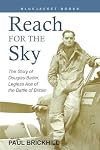
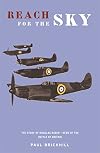
Reach for the Sky
by Paul Brickhill
On This Page
Description
The bestselling story of Britain's most courageous and most famous flyer, the Second World War hero Sir Douglas Bader. In 1931, at the age of 21, Douglas Bader was the golden boy of the RAF. Excelling in everything he did he represented the Royal Air Force in aerobatics displays, played rugby for Harlequins, and was tipped to be the next England fly half. But one afternoon in December all his ambitions came to an abrupt end when he crashed his plane doing a particularly difficult and illegal show more aerobatic trick. His injuries were so bad that surgeons were forced to amputate both his legs to save his life. Douglas Bader did not fly again until the outbreak of the Second World War, when his undoubted skill in the air was enough to convince a desperate air force to give him his own squadron. The rest of his story is the stuff of legend. Flying Hurricanes in the Battle of Britain he led his squadron to kill after kill, keeping them all going with his unstoppable banter. Shot down in occupied France, his German captors had to confiscate his tin legs in order to stop him trying to escape. Bader faced it all, disability, leadership and capture, with the same charm, charisma and determination that was an inspiration to all around him. show lessTags
Recommendations















Member Reviews
Douglas Bader has a modern reputation for having been too uncritically lionized, but he was at heart simply a border collie on stilts: workaholic, stubborn, brave, fiercely focused, and intense up close. If you've got four dozen sheep—or Messerschmidts—to chase down, he's a godsend and a ball of joy. But for the sake of everyone's sanity, you'd better let him chase those sheep or as an exasperated Keith Park learned, he'll eat your furniture and never stop barking. (Far too much psychological complexity is ascribed to Bader when in all cases, the phrase "border collie" will do.)
This book paints a straightforward portrait of a young prodigy whose talent initially outstripped his maturity to his very great cost, who assumed all the show more charm of an ingrown toenail when he wasn't allowed into the thick of any fight, who maintained his sanity and sense of direction in the face of terrible loss and ordeals, who was lucky to live during the brief time in history when he could make the most of his gifts with few to no limitations based on his disability, and who, with his wife, negotiated an awkward and unwanted transition into celebrity that neither of them asked for nor anticipated, turning it into something positive for many thousands of people desperate for reassurance that losing a limb didn't mean losing their dreams.
And this book is no hagiography. Bader's various flying cock-ups are described in detail. Neither does Brickhill draw back from describing how Bader consciously used what is today called "emotional intelligence" both to inspire loyalty and obedience as well as to drive his enemies up the wall, and how his bloody-minded refusal to cut himself any slack at all—referred to by Brickhill as "the little demon"—could be both a constructive and destructive force for himself and those around him. I dare anyone to read of Bader's time in a succession of German prison camps without thinking of O. Henry's "The Ransom of Red Chief" at least once. The Allies could have blackmailed an unconditional surrender out of Germany just by threatening to not take him back.
Therefore to me, this seems like a balanced portrait. I don't think an author can refer to a significant chunk of his subject's psychology as "the little demon" and be fairly accused of writing a hagiography. Furthermore, toward the end of the book, Brickhill also states that, in contrast to concerns that he must have been difficult to cope with in close quarters, Bader and his wife seemed a happy and devoted couple. Had those concerns not been extant even at the time, Brickhill would not have felt the need to address them. (Nevertheless, that woman must have had the patience of a saint; like most respectable Englishwomen of the time, she was said to be fond of dogs and horses, and I confess thinking that might have made it easier for her to deal with her hyperactive, not entirely domesticated husband.)
In fairness however, I'm an American, and the vast majority of people in the US have never heard of Douglas Bader. Thus I was not under an impression since childhood that he was a flawless boys-own hero. I first encountered him as a middle-aged adult and already understood that "Behold My Rizz" is the baseline personality for any fighter ace. I was then pleasantly surprised to learn his personality was greatly moderated by a generous, reassuring side that he put to good use in uplifting others. (And in retrospect, the work he did to uplift others in need was also part of Bader's border collie mentality: both chasing "enemy" sheep and guarding its own flock with equal ferocity.) A British reader's impression of Bader is more likely to have gone in the other direction.
Nevertheless, whether your opinion of him rose or fell to reach moderation, Bader was a fearless, talented man who repeatedly risked his life to defend the world against Nazism and who, after the war, sacrificed a good amount of his personal life to bring hope to people who badly needed it. The only thing that keeps this from being a five-star book is that it is a mid-life biography, as opposed to a late-life autobiography. Three more decades of life awaited Bader, and their absence here is frustrating. Thankfully, Percy Belgrave Lucas's late-life biography of him "Flying Colours" fills that gap. show less
This book paints a straightforward portrait of a young prodigy whose talent initially outstripped his maturity to his very great cost, who assumed all the show more charm of an ingrown toenail when he wasn't allowed into the thick of any fight, who maintained his sanity and sense of direction in the face of terrible loss and ordeals, who was lucky to live during the brief time in history when he could make the most of his gifts with few to no limitations based on his disability, and who, with his wife, negotiated an awkward and unwanted transition into celebrity that neither of them asked for nor anticipated, turning it into something positive for many thousands of people desperate for reassurance that losing a limb didn't mean losing their dreams.
And this book is no hagiography. Bader's various flying cock-ups are described in detail. Neither does Brickhill draw back from describing how Bader consciously used what is today called "emotional intelligence" both to inspire loyalty and obedience as well as to drive his enemies up the wall, and how his bloody-minded refusal to cut himself any slack at all—referred to by Brickhill as "the little demon"—could be both a constructive and destructive force for himself and those around him. I dare anyone to read of Bader's time in a succession of German prison camps without thinking of O. Henry's "The Ransom of Red Chief" at least once. The Allies could have blackmailed an unconditional surrender out of Germany just by threatening to not take him back.
Therefore to me, this seems like a balanced portrait. I don't think an author can refer to a significant chunk of his subject's psychology as "the little demon" and be fairly accused of writing a hagiography. Furthermore, toward the end of the book, Brickhill also states that, in contrast to concerns that he must have been difficult to cope with in close quarters, Bader and his wife seemed a happy and devoted couple. Had those concerns not been extant even at the time, Brickhill would not have felt the need to address them. (Nevertheless, that woman must have had the patience of a saint; like most respectable Englishwomen of the time, she was said to be fond of dogs and horses, and I confess thinking that might have made it easier for her to deal with her hyperactive, not entirely domesticated husband.)
In fairness however, I'm an American, and the vast majority of people in the US have never heard of Douglas Bader. Thus I was not under an impression since childhood that he was a flawless boys-own hero. I first encountered him as a middle-aged adult and already understood that "Behold My Rizz" is the baseline personality for any fighter ace. I was then pleasantly surprised to learn his personality was greatly moderated by a generous, reassuring side that he put to good use in uplifting others. (And in retrospect, the work he did to uplift others in need was also part of Bader's border collie mentality: both chasing "enemy" sheep and guarding its own flock with equal ferocity.) A British reader's impression of Bader is more likely to have gone in the other direction.
Nevertheless, whether your opinion of him rose or fell to reach moderation, Bader was a fearless, talented man who repeatedly risked his life to defend the world against Nazism and who, after the war, sacrificed a good amount of his personal life to bring hope to people who badly needed it. The only thing that keeps this from being a five-star book is that it is a mid-life biography, as opposed to a late-life autobiography. Three more decades of life awaited Bader, and their absence here is frustrating. Thankfully, Percy Belgrave Lucas's late-life biography of him "Flying Colours" fills that gap. show less
Each time I read this book I am overwhelmed by the Boy's Own enthusiasm that pervaded my early youth. But this reading was different. I picked up on numerous philosophical perspectives resembling Stoicism, confirmed by the quote from Hamlet at the end of the work: "there is nothing either good or bad, but thinking makes it so". There is so much of the history of the Battle of Britain that I did not know at the time of my earlier readings. With a better understanding of Leigh-Mallory's "big wing" theory, and Bader's part in it, made very interesting reading. Not that all agree with either the success of the theory or indeed the truthfulness of its successes in practice (see Tom Neil's comments here. Regardless, Bader's story is written show more in captivating style by Brickhall and still manages to excite this poor, brain-washed Colonial time and again. show less
A past co-worker who was an Aviation Historian and retired Navy Pilot recommended this book. I hunted at the local used book store because it was out of print.
Amazing story and character of a WWII ace with no legs, yes I said no legs. Well written and great story. Your just going to have to read it for your self to find out more.
Amazing story and character of a WWII ace with no legs, yes I said no legs. Well written and great story. Your just going to have to read it for your self to find out more.
After watching the movie years ago with my dad (it was one of our favourites and we watched it whenever it was showing), I really wanted to read the book. After much searching, I found it on line.
A remarkable story about a remarkable English WW 2 RAF pilot who refused to be put down or aside after a tragic accident left him without legs. An inspirational and real figure, just a normal man who refused to sit by.
A remarkable story about a remarkable English WW 2 RAF pilot who refused to be put down or aside after a tragic accident left him without legs. An inspirational and real figure, just a normal man who refused to sit by.
What a story. He had great timing in some ways, terrible in others. It's probably best that someone let him fly fighter planes so he didn't turn his frustrated energies into something destructive.
Douglas Bader did not let loosing one leg, and then another, stop him from flying a fight plane. Reading in between the lines one gets the feeling that he was not always a nice fellow. But certainly he had a very good sense of humour. A great biography written by Paul Brickhill, an Australian.
Good biography on Douglas Bader, a fighter pilot in WW II who lost both legs and still kept flying.
Members
- Recently Added By
Lists

THE WAR ROOM
813 works; 24 members

Books recommended in the history category on FiveBooks.com
329 works; 4 members
Author Information

15+ Works 2,760 Members
Awards and Honors
Distinctions
Series
Belongs to Publisher Series
Work Relationships
Is contained in
Has the adaptation
Common Knowledge
- Canonical title
- Reach for the Sky
- Original title
- Reach for the Sky
- Original publication date
- 1954
- People/Characters
- Douglas Bader
- Important events
- World War II; Battle of Britain; Dunkirk Evacuation
- Related movies
- Reach for the Sky (1956 | IMDb)
- Dedication
- To Thelma
- First words
- In 1909 the doctor warned Jessie Bader during her second pregnancy that the baby might not be born alive and that it would be risky for her to go ahead with it, but, rather imperiously, she resisted any interference.
- Last words
- (Click to show. Warning: May contain spoilers.)"There's nothing either good or bad but thinking makes it so."
Classifications
- Genres
- Biography & Memoir, Nonfiction, History
- DDC/MDS
- 940.54211 — History & geography History of Europe History of Europe 1918- Military history of World War II Campaigns and battles by theatre European theatre
- LCC
- D786 .B716 — History of Europe, Asia, Africa and Oceania History (General) World War II (1939-1945)
- BISAC
Statistics
- Members
- 626
- Popularity
- 46,249
- Reviews
- 10
- Rating
- (3.93)
- Languages
- Dutch, English, Finnish, French
- Media
- Paper, Audiobook, Ebook
- ISBNs
- 19
- UPCs
- 1
- ASINs
- 36