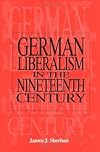
German liberalism in the nineteenth century
by James J. Sheehan
On This Page
Description
Liberalism is an attempt to both understand and change the world, an ideology and a movement, a set of ideas and a set of institutions. Liberal ideas began in Western Europe, but eventually spread throughout the world. This book examines liberal ideas and institutions in Germany from the end of the eighteenth to the beginning of the twentieth century. Drawing on a wide range of primary and secondary sources, German Liberalism in the Nineteenth Century provides a comprehensive picture of the show more movement on both the national and local levels. The book's central thesis is that the distinctive features of German liberalism must be understood in terms of the development of the German state and society. Sheehan argues that in the middle decades of the nineteenth century liberalism had the advantage of being the first political movement in Germany. It was able to mobilize and direct a broad variety of groups that wanted to change the status quo. After the formation of a united German nation state, however, liberals faced an increasingly dynamic and diverse set of opponents, who were better able to take advantage of the democratic suffrage introduced by Bismarck in 1867. Although liberals remained important in some states and many municipal governments, by 1914 they were pushed to the fringes of national politics. Sheehan concludes his account of liberalism's rise and fall with some reflections on the movement's place in German history and its significance for the disastrous collapse of democratic institutions in 1933. show lessTags
Recommendations







































Member Reviews
Sheehan has little sympathy for the outlook that ideas matter which really hamstrings his attempt to write history of the attempt to implement an idea in the political arena. For him political movements are the outgrowth of social and economic realities and he may even be right that that's what politics should be but he is writing about a group of people who did think their ideas did matter. It is impossible to understand such a movement if from the start you dismiss what they believed as a mere cover for social and economic interests. He is also dismissive of biographical history yet he quotes liberal leaders. Unless you know who they are those quotes are meaningless so essential he is relying on his readers having read plenty of the show more biographical histories he despises. The result is a dry tedious book. show less
Members
- Recently Added By
Author Information
11 Works 382 Members
James J. Sheehan is Dickason Professor in the Humanities at Stanford University.
Common Knowledge
- Original title
- German Liberalism in the Nineteenth Century
- Important places
- Germany
- Original language
- English
Classifications
- Genres
- Nonfiction, History, Politics and Government, General Nonfiction
- DDC/MDS
- 320.5 — Society, government, & culture Political science Types of Government Political ideologies
- LCC
- DD204 .S53 — History of Europe, Asia, Africa and Oceania Germany History of Germany History By period Modern, 1519- 19th-20th centuries
- BISAC
Statistics
- Members
- 23
- Popularity
- 1,150,774
- Reviews
- 1
- Rating
- (0.50)
- Languages
- English, German
- Media
- Paper
- ISBNs
- 8