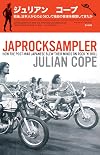
Japrocksampler: How the Post-War Japanese Blew Their Minds on Rock 'n' Roll
by Julian Cope
On This Page
Description
This book is a comprehensive guide to the top 50 albums in the genres of hard rock, proto-metal, psychedelic free rock, theatrical music, choral and orchestral works, experimental percussion, improvised ambient, progressive rock, and pure guitar music. Organized by preference, it provides a detailed analysis and historical context for each album, offering readers insights into the music's significance and impact. The author, Julian Cope, aims to educate and guide music enthusiasts through show more these influential works. The book serves as both a reference guide and an exploration of the artists and albums that shaped these genres. show lessTags
Recommendations







































Member Recommendations

Member Reviews
Worth it for the chapter on Group Sounds and the general overall grasp on the scene he has. Caveat is that the closer he gets to the heavy psych stuff, the more he slips into unintelligible Cope-isms.
Written by a true enthusiast of 'out there' rock 'n' roll, Julian Cope, singer, musician, antiquarian, shamanic pagan and champion of all things weird, psychedelic and noisy, takes a close look at the Japanese underground music scene of the 60's and 70's.
As an example of Cope's prose style here is a description of one such musical beast:
"Imagine a high-school band playing the bass-heavy stentorian outro of Television's 'Marquee Moon' title track in 25-minute bursts, while a Blue Cheer-informed (Leigh Stephens period, natch) be-shaded guitar moron with waist-length black hair unloads over the track the kind of pent-up white-noise sonic fury that entirely buries said backing track under an avalanche of mung. Imagine that, from time to show more time, that same skinny moron temporarily interrupts his invasion-of-Manchuria guitar techniques in order to bring focus to the chords of this so-called song via a series of charmingly unpleasant croons, hiccups, yelps and whooping sub-sub-Buddy Hollyisms in an Alan Vega stylee. Next, imagine a second song just as long as the first that takes its form and sound from the same Ur-spring whence the first was drawn, but which is propelled by a curiously catchy soul-standard bass riff lifted directly from Little Peggy March's 1963 hit single 'I Will Follow Him' '"
If this leaves you completely bemused or thinking Cope is slagging of the rock group in question (Les Rallizes Denudes) then this is not-not the book for you! show less
As an example of Cope's prose style here is a description of one such musical beast:
"Imagine a high-school band playing the bass-heavy stentorian outro of Television's 'Marquee Moon' title track in 25-minute bursts, while a Blue Cheer-informed (Leigh Stephens period, natch) be-shaded guitar moron with waist-length black hair unloads over the track the kind of pent-up white-noise sonic fury that entirely buries said backing track under an avalanche of mung. Imagine that, from time to show more time, that same skinny moron temporarily interrupts his invasion-of-Manchuria guitar techniques in order to bring focus to the chords of this so-called song via a series of charmingly unpleasant croons, hiccups, yelps and whooping sub-sub-Buddy Hollyisms in an Alan Vega stylee. Next, imagine a second song just as long as the first that takes its form and sound from the same Ur-spring whence the first was drawn, but which is propelled by a curiously catchy soul-standard bass riff lifted directly from Little Peggy March's 1963 hit single 'I Will Follow Him' '"
If this leaves you completely bemused or thinking Cope is slagging of the rock group in question (Les Rallizes Denudes) then this is not-not the book for you! show less
Interesting exploration of Japanese post war political, economic, and social history as context for the cross-pollination of Japanese and Western experimental music via jazz, rock and pop. Cope's tastes take priority, naturally, and the focus is on experimental and psychedelic music, with Japanese rock and pop almost dismissed as being superficial and slavishly copyist. He's kinder about jazz, particularly in the creative collaborations between German and Japanese composers, and I'm now aware of more Japanese and German jazz musicians from the 60s and 70s than I was before. Clearly a subject Cope is passionate about, the only niggles I have are with the poor spelling/subbing and the repetition of stories that involve multiple bands in show more each of those bands' biographies. show less
A wonderful, enthusiastic freak out of a book which is an excellent way to start expanding your musical horizons, eastwards.
Very interesting look at 60s/ 70s Japanese psych/ heavy rock rock scene. Also touches on jazz, underground theater, experimental music, social unrest etc.
Ratings
Members
- Recently Added By
Lists

Bull Tongue
319 works; 2 members

Music
45 works; 1 member
Author Information

57+ Works 1,157 Members
Classifications
- Genres
- Music, Nonfiction, History
- DDC/MDS
- 781.660952 — Arts & recreation Music General principles and musical forms Traditions of music Rock (Rock 'n' roll) History, geographic treatment, biography Asia
- LCC
- ML340 .C67 — Music Literature on music Literature on music History and criticism By region or country
- BISAC
Statistics
- Members
- 200
- Popularity
- 163,670
- Reviews
- 5
- Rating
- (3.94)
- Languages
- 5 — English, French, Italian, Japanese, Spanish
- Media
- Paper, Ebook
- ISBNs
- 8
- ASINs
- 2