On This Page
Description
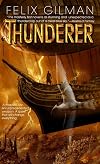
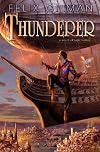
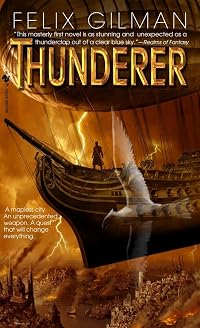
Fantasy. Fiction. HTML:"Gilman takes his readers on a journey through a world of deep and wondrous impossibilities where marvels lurk around every corner. His infinite city and the lives of its people quickly become an irresistible compulsion-- I imagine an evening where Dickens, Miyazaki, and Jules Verne sat down to dream up a metropolis and its wrangling multitudes. Thunderer will leave you wide eyed, breathless and hoping for more.". "Memorably inventive, with intriguing characters ... show more impressive.". "Gilman is far above average for a first novelist.". HTML:In this breathtaking debut novel by Felix Gilman, one man embarks on a thrilling and treacherous quest for his people's lost god--in an elaborate Dickensian city that is either blessed ...or haunted.Arjun arrives in Ararat just as a magnificent winged creature swoops and sails over the city. For it is the day of the return of that long-awaited, unpredictable mystical creature: the great Bird. But does it come for good or ill? And in the service of what god? Whatever its purpose, for one inhabitant the Bird sparks a long-dormant idea: to map the mapless city and liberate its masses with the power of knowledge.
As the creature soars across the land, shifting topography, changing the course of the river, and redrawing the territories of the city's avian life, crowds cheer and guns salute in a mix of science and worship. Then comes the time for the Bird's power to be trapped--within the hull of a floating warship called Thunderer, an astounding and unprecedented weapon. The ship is now a living temple to the Bird, a gift to be used, allegedly, in the interests of all of Ararat.
Hurtled into this convulsing world is Arjun, an innocent who will unwittingly unleash a dark power beyond his imagining--and become entangled in a dangerous underground movement that will forever transform Ararat. As havoc overtakes the streets, Arjun dares to test the city's moving boundaries. In this city of gods, he has come to search among them, not to hide.
A tour de force of the imagination, and a brilliant tale of rebellion, Thunderer heralds the arrival of a truly gifted fantasy writer who has created a tale as rich, wondrous, and captivating as the world in which it is set.
From the Hardcover edition.. show less
Tags
Recommendations







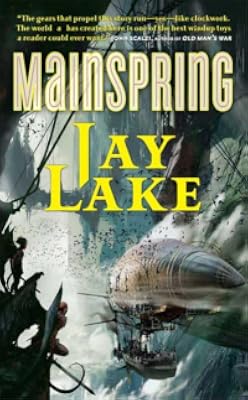
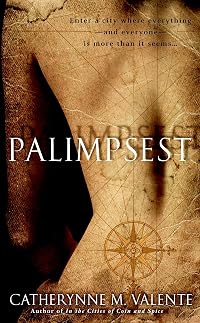
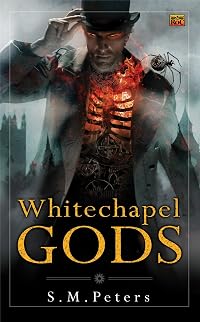
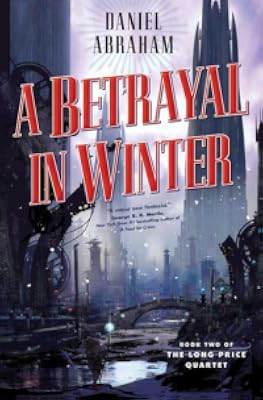









Member Recommendations

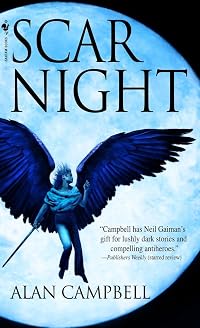
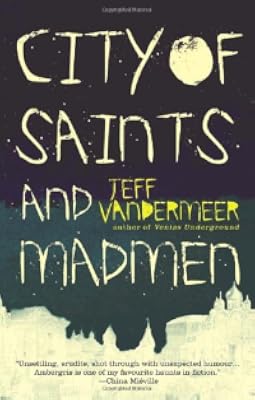
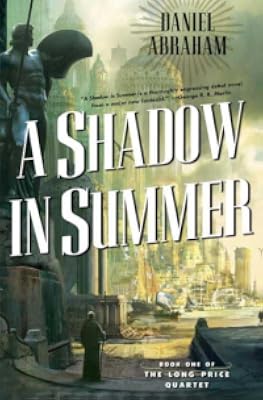
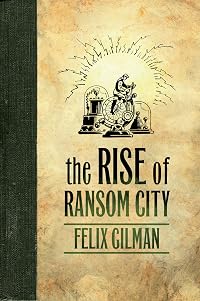
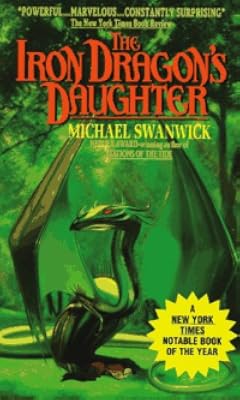
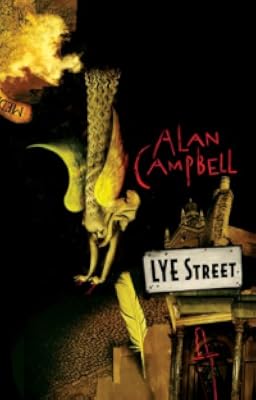
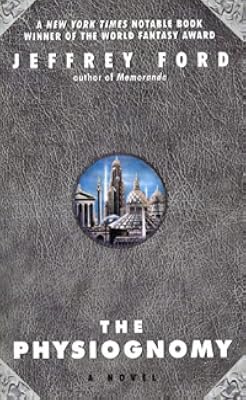
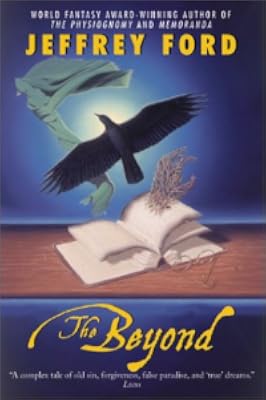
Sakerfalcon Strange goings-on in mysterious, labyrinthine cities. Both books share similar strengths and weaknesses.
Member Reviews
Felix Gilman is threatening to kill a kitten at the end of the week unless at least four people write to say good things about his book. Fortunately, his book, Thunderer, is very good indeed, and I'm happy to help save the kitten's life.
Gilman's debut novel is set in the city of Ararat -- a name well-chosen for a place where gods are manifest. Not just a god, but many, many gods, gods evil and gods benign, gods appearing once in an eon and constantly present, gods changing the shape of the city and gods changing the shape of a life. The city itself is the real subject of the book, as I find to be the case with most New Weird fiction, a place of never-ending fascination.
But perhaps the description of a city alone cannot be a tale. Gilman show more does not leave us without plot, though there are times in the novel when it seems he'd like to endlessly explore the byways of the city without returning to his characters, who are often less interesting. Arjun is a young priest of the Voice, a god who has left its rural congregation; Arjun's theory is that the city has called to the god, who has become lost there. He has come to Ararat to seek the god. In the course of his search, Arjun incurs the wrath of another god, the interest of a group of philosophers, and, ultimately, some secrets left largely unexplored here -- perhaps the subject of a sequel?
A parallel plot involves Jack, a boy trapped in a particularly brutal workhouse until a god and his own cleverness work his release. His freedom fires his blood with a wish for the freedom of others, and he begins a crusade that threatens to swallow the city. When he joins forces with Arjun and the philosophers to rescue their leaders, Ararat itself seems to tremble on its foundations.
I'm hoping for more books set in this universe, because Ararat is too wonderful a place to be contained in a single book. This book explored a very small portion of the city, little of its politics, and almost nothing at all of the great mountain at its border. For a city with an endless supply of gods, few made a sustained appearance here, and I want to know more of them. Perhaps Gilman has succeeded best at an author's most difficult trick: causing the reader to cry, "More, more!" I am very eager to see more from his pen. show less
Gilman's debut novel is set in the city of Ararat -- a name well-chosen for a place where gods are manifest. Not just a god, but many, many gods, gods evil and gods benign, gods appearing once in an eon and constantly present, gods changing the shape of the city and gods changing the shape of a life. The city itself is the real subject of the book, as I find to be the case with most New Weird fiction, a place of never-ending fascination.
But perhaps the description of a city alone cannot be a tale. Gilman show more does not leave us without plot, though there are times in the novel when it seems he'd like to endlessly explore the byways of the city without returning to his characters, who are often less interesting. Arjun is a young priest of the Voice, a god who has left its rural congregation; Arjun's theory is that the city has called to the god, who has become lost there. He has come to Ararat to seek the god. In the course of his search, Arjun incurs the wrath of another god, the interest of a group of philosophers, and, ultimately, some secrets left largely unexplored here -- perhaps the subject of a sequel?
A parallel plot involves Jack, a boy trapped in a particularly brutal workhouse until a god and his own cleverness work his release. His freedom fires his blood with a wish for the freedom of others, and he begins a crusade that threatens to swallow the city. When he joins forces with Arjun and the philosophers to rescue their leaders, Ararat itself seems to tremble on its foundations.
I'm hoping for more books set in this universe, because Ararat is too wonderful a place to be contained in a single book. This book explored a very small portion of the city, little of its politics, and almost nothing at all of the great mountain at its border. For a city with an endless supply of gods, few made a sustained appearance here, and I want to know more of them. Perhaps Gilman has succeeded best at an author's most difficult trick: causing the reader to cry, "More, more!" I am very eager to see more from his pen. show less
If it hadn’t already been appropriated by novels about punk-rock elves and brazen private eyes that have sex with werewolves then “Urban Fantasy” would be a perfect designation for Felix Gilman’s debut novel _Thunderer_. Of course this type of story isn’t new. Writers have been examining the rot and corruption (as well as the fascination and glory) they see at the heart of our urban civilization at least since the days of Rome, the great archetype of the City in western culture. The conflict between the mob and the establishment seems to have been present from the beginning, a continual war and contention for rulership of the people and places that make up our urban centres. This isn’t new in the realm of genre fantasy show more either, from Brian Aldiss’ [b:The Malacia Tapestry|973545|The Malacia Tapestry|Brian W. Aldiss|http://photo.goodreads.com/books/1230934987s/973545.jpg|958441], to more recent works by the likes of Mieville and VanderMeer, the city and its constant dance between progress and corruption have been a favourite subject. I was already a fan of Gilman’s prior to reading this, but _Thunderer_ really impressed me given that it was the first novel he had published. His writing style, as I noted in my review of [b:The Half-Made World|8198773|The Half-Made World|Felix Gilman|http://photo.goodreads.com/books/1312035395s/8198773.jpg|13045676], is very fluid. It goes beyond mere ‘transparency’, but isn’t showy or laboured either; it easily carries the reader along with his tale and makes a high page count seem to fly by in no time at all. I imagine that no matter how large a book of his was it would never be plodding.
Gilman’s tale in this book mainly centres on three characters: Arjun, the chorister and semi-scholar from a far-flung mountain monastery searching for his lost god and hoping that it can be found in the god-haunted confines of the archetypal city of Ararat; Arlandes, soldier and captain of the forces of the Countess (one of the many civil authorities vying for power and glory in the great city) who has suffered a tragic loss and become a symbol by turns both beloved and hated by the citizenry; and Jack Silk, a young boy who manages to escape from his imprisonment in a workhouse with the help of one of the city’s gods and who is granted an ambiguous gift by its passing. All three of these characters are somehow connected to the figure of Doctor Holbach, a man who could be considered scientist, wizard and priest in equal measure. Holbach is, like Arlandes, a member of the Countess’ court and ultimately is the creator of the great flying ship the Thunderer which becomes a symbol for all that is both right and wrong with the city. He is also the centre of the Atlas, a project that has been driven underground by the powers that be, but which continues to gather to itself the many discontented artists, scientists and intelligentsia of Ararat in the monumental effort to map out the city in its entirety. This is a prospect that is not as simple as it might seem on the surface, for Ararat is a city infested by gods (though some might call them haunts or demons) and the gods shape the city through their interaction with it, moulding and changing the landscape according to their whim. As one character notes: “The gods are the city. The city is us.” Yet the Atlas-makers persist in their hopes of creating the Grand Unified Theory of Ararat; a theory that might let them control and shape the many wild forces that control and shape their world. This is, of course, anathema and heresy to the political and religious powers that be, though even they are unaware of the real danger that such researches into the nature of the gods and the city might bring about in the wrong hands.
One could really argue, however, that the true main character of _Thunderer_ is Ararat itself. It is the greatest of all possible cities, it *is* all possible cities. Its sheer size encompasses more than simply space, but time and meaning as well. It is the ever-changing City that seems to exist in all dimensions and none, that crosses through all times and encompasses all of what we mean when we say the word: City. The city itself is not medieval or renaissance, Victorian or modern, but it seems to have aspects of all of these, growing and changing in a way that has little or nothing to do with linear progress.
The plot itself, however, revolves around the three protagonists already mentioned and their interactions with the City and each other. The opening of the book, and the catalyst for the action of the novel, is ultimately centred on the arrival of one of Ararat’s long-absent gods, the Bird, whose appearance heralds both the rise of Jack Silk and the creation of the titular Thunderer, a great flying warship that, through Hollbach’s magical science (or scientific magic), has also harnessed some of the Bird’s power. Arjun is on a quest to find the lost and gentle god of his people, known only as the Voice. It is a god of song and quiet harmony that would seem out of place with many of the gods he encounters in Ararat; the City’s gods are strong and uncompromising, gods of power, control, death and rebirth and Arjun soon becomes lost in the tangled streets these gods create, hoping against hope to find his lost purpose. Jack becomes a folk-hero, a child granted powers by the god of speed, freedom and flight and becomes a wild Peter Pan (there is even a neat homage to Peter Pan vs. the Pirates), gathering to himself all of the lost children of Ararat, breaking them out of prisons and workhouses and fighting the temporal and religious powers that sent them there. Both Jack and Arjun are touched directly by the gods of the City, one in power and joy, the other in choking darkness and despair. They become fey and strange to those around them, obsessed with their own altered perceptions and often viewed as mad. They have been changed by their experiences and can no longer comfortably live a life of normalcy for they stand outside of the range of normal human understanding, though many try to share vicariously in their god-touched experience. Arlandes is touched by a god too, though not in the direct metaphysical way that Jack and Arjun are. He is plunged into despair and anger by loss, through a seemingly unintentional sacrifice to the same god that granted Jack his great abilities during the process that created the great engine of destruction that shall become his emblem: the Thunderer. In following all of these characters, and the gods that empower them and their City, the story examines the birth of legends, the ways they change and, ultimately, how they die.
The ambiguity of the characters Gilman has created is refreshing. Is Jack a revolutionary messiah, bringing freedom and justice to the oppressed, or is he a vicious, deluded child living out a boy’s violent fantasies in the name of his god and only ostensibly for the people? Is Arlandes the tragic and romantic hero of the great ship which protects the people, or is he a violent and angry thug doling out retribution against the world? Is Arjun an enlightened and peaceful seeker of the truth, or a deluded weakling looking for something outside of himself to fill up his life? The answer, in all cases, seems to be both. Ultimately as each of the characters fulfills the role the City seems to have selected for them things begin to unexpectedly change, and even spin out of control, for it is not only the Atlas-makers that are trying to learn the secrets of the City. It appears there are others with arcane knowledge that they use for less selfless purposes and we soon find that the gods and their ways are not to be tampered with. It was always known to its inhabitants that Ararat had a cycle of life and death, good and bad, and things always turned on this eternal wheel. The gods would inevitably change the City, but these changes were somewhat understood, at least at a gut level, by the people of the City, but what happens when someone dares to change the nature of the gods themselves? It is this danger that proves to be the ultimate conflict into which the characters find themselves drawn. The conclusion of the novel is somewhat open-ended, but I still found it to be satisfying and since there is a sequel I look forward to further following the winding streets of Ararat.
Dan: I definitely recommend it. show less
Gilman’s tale in this book mainly centres on three characters: Arjun, the chorister and semi-scholar from a far-flung mountain monastery searching for his lost god and hoping that it can be found in the god-haunted confines of the archetypal city of Ararat; Arlandes, soldier and captain of the forces of the Countess (one of the many civil authorities vying for power and glory in the great city) who has suffered a tragic loss and become a symbol by turns both beloved and hated by the citizenry; and Jack Silk, a young boy who manages to escape from his imprisonment in a workhouse with the help of one of the city’s gods and who is granted an ambiguous gift by its passing. All three of these characters are somehow connected to the figure of Doctor Holbach, a man who could be considered scientist, wizard and priest in equal measure. Holbach is, like Arlandes, a member of the Countess’ court and ultimately is the creator of the great flying ship the Thunderer which becomes a symbol for all that is both right and wrong with the city. He is also the centre of the Atlas, a project that has been driven underground by the powers that be, but which continues to gather to itself the many discontented artists, scientists and intelligentsia of Ararat in the monumental effort to map out the city in its entirety. This is a prospect that is not as simple as it might seem on the surface, for Ararat is a city infested by gods (though some might call them haunts or demons) and the gods shape the city through their interaction with it, moulding and changing the landscape according to their whim. As one character notes: “The gods are the city. The city is us.” Yet the Atlas-makers persist in their hopes of creating the Grand Unified Theory of Ararat; a theory that might let them control and shape the many wild forces that control and shape their world. This is, of course, anathema and heresy to the political and religious powers that be, though even they are unaware of the real danger that such researches into the nature of the gods and the city might bring about in the wrong hands.
One could really argue, however, that the true main character of _Thunderer_ is Ararat itself. It is the greatest of all possible cities, it *is* all possible cities. Its sheer size encompasses more than simply space, but time and meaning as well. It is the ever-changing City that seems to exist in all dimensions and none, that crosses through all times and encompasses all of what we mean when we say the word: City. The city itself is not medieval or renaissance, Victorian or modern, but it seems to have aspects of all of these, growing and changing in a way that has little or nothing to do with linear progress.
The plot itself, however, revolves around the three protagonists already mentioned and their interactions with the City and each other. The opening of the book, and the catalyst for the action of the novel, is ultimately centred on the arrival of one of Ararat’s long-absent gods, the Bird, whose appearance heralds both the rise of Jack Silk and the creation of the titular Thunderer, a great flying warship that, through Hollbach’s magical science (or scientific magic), has also harnessed some of the Bird’s power. Arjun is on a quest to find the lost and gentle god of his people, known only as the Voice. It is a god of song and quiet harmony that would seem out of place with many of the gods he encounters in Ararat; the City’s gods are strong and uncompromising, gods of power, control, death and rebirth and Arjun soon becomes lost in the tangled streets these gods create, hoping against hope to find his lost purpose. Jack becomes a folk-hero, a child granted powers by the god of speed, freedom and flight and becomes a wild Peter Pan (there is even a neat homage to Peter Pan vs. the Pirates), gathering to himself all of the lost children of Ararat, breaking them out of prisons and workhouses and fighting the temporal and religious powers that sent them there. Both Jack and Arjun are touched directly by the gods of the City, one in power and joy, the other in choking darkness and despair. They become fey and strange to those around them, obsessed with their own altered perceptions and often viewed as mad. They have been changed by their experiences and can no longer comfortably live a life of normalcy for they stand outside of the range of normal human understanding, though many try to share vicariously in their god-touched experience. Arlandes is touched by a god too, though not in the direct metaphysical way that Jack and Arjun are. He is plunged into despair and anger by loss, through a seemingly unintentional sacrifice to the same god that granted Jack his great abilities during the process that created the great engine of destruction that shall become his emblem: the Thunderer. In following all of these characters, and the gods that empower them and their City, the story examines the birth of legends, the ways they change and, ultimately, how they die.
The ambiguity of the characters Gilman has created is refreshing. Is Jack a revolutionary messiah, bringing freedom and justice to the oppressed, or is he a vicious, deluded child living out a boy’s violent fantasies in the name of his god and only ostensibly for the people? Is Arlandes the tragic and romantic hero of the great ship which protects the people, or is he a violent and angry thug doling out retribution against the world? Is Arjun an enlightened and peaceful seeker of the truth, or a deluded weakling looking for something outside of himself to fill up his life? The answer, in all cases, seems to be both. Ultimately as each of the characters fulfills the role the City seems to have selected for them things begin to unexpectedly change, and even spin out of control, for it is not only the Atlas-makers that are trying to learn the secrets of the City. It appears there are others with arcane knowledge that they use for less selfless purposes and we soon find that the gods and their ways are not to be tampered with. It was always known to its inhabitants that Ararat had a cycle of life and death, good and bad, and things always turned on this eternal wheel. The gods would inevitably change the City, but these changes were somewhat understood, at least at a gut level, by the people of the City, but what happens when someone dares to change the nature of the gods themselves? It is this danger that proves to be the ultimate conflict into which the characters find themselves drawn. The conclusion of the novel is somewhat open-ended, but I still found it to be satisfying and since there is a sequel I look forward to further following the winding streets of Ararat.
Dan: I definitely recommend it. show less
Gods roaming the earth, interacting with humanity and generally being a nuisance has been a fantasy staple since Greek mythology. Annoying humans became their favorite sporting pastime. Giving the gods a physical form gave us something relatable, something to blame. Gods suddenly become responsible for all the good or ill that befalls someone. And we understand this, ascribing their actions as the cause of our misfortunes.
Your herd of cows died? Blame the god of animal husbandry. There’s a drought. Blame the god of weather. There’s a bite missing out of your Burrito Supreme. Smell the dog’s breath first. Failing that, blame the god of Taco Bell for its cruel and wanton punishments.
For us, science has redefined ordinary causes. show more It’s nonsensical for us to curse the god of lumber because we can’t find the slab of wood we’re looking for at Home Depot. But what would have happened if science in its infancy during the Renaissance had been forced to reconcile itself with the physical manifestations of gods. How does the scientific method stack up when you’re trying to measure godhood? How do you measure the immeasurable?
In Felix Gilman’s remarkable and wildly imaginative debut Thunderer, the Renaissance is re-imagined as a burgeoning scientific method must contend with measuring the immeasurable, in this case, the city of Ararat. Gods roam Ararat, a city so vast that its borders seem non-existent and so mysterious and ever-changing that the city itself appears divine. It’s polytheism meets reality television. Real World: Ararat—Deity Edition.
Unlike the gods of yore though, Ararat’s deities seemingly have no awareness of humanity. Gods don’t interfere with people, but people attempt to interfere with the gods.
One day, a mystical entity known as the great Bird returns to Ararat, its arrival accurately predicted by the scientist Holbach. Holbach uses the Bird’s mysterious presence as an opportunity to launch his airship, Thunderer. He envisions the airship as instrumental in his quest to attain knowledge about the city. The ship will be able to travel high above the city, providing the vantage point necessary for finally mapping the unmapped Ararat. Unfortunately others have a more sinister purpose in mind for the ship.
In another part of the city, the Bird’s return has allowed young Jack to escape from the workhouse he’s imprisoned in. Once free, Jack joins a gang of street urchins who steal in order to survive. Soon he discovers that his encounter with the Bird has left him with a special gift, and new purpose in his life.
Arjun arrives in Ararat on the day of the great Bird’s return. He has traveled far to reach Ararat, across the Peaceful Sea from Gad. A trained choirman, Arjun left the Choristry in Gad to search for their missing god called the Voice. So where better to search for a missing god than a city brimming with gods. And like a man rummaging through a deity Lost and Found, Arjun searches Ararat for any trace of the Choristry’s missing Voice.
Thunderer is richly imagined, detailed and incredibly nuanced. It’s unpredictable and fiercely intelligent, tackling issues like the purview of knowledge and the limits of science and the corruption of both faith and science for personal gain. Gilman is an undeniable imaginative juggernaut. Ararat is astonishingly memorable and multifaceted, a living, breathing entity, a sinuous chameleon always squirming in the background. Grabbing hold of it is like grabbing water. The city is the novel’s richest and most intriguing character, and also the most mysterious.
Every page of the book holds some new insight or direction, often left completely unexplored by Gilman. I found myself more intellectually engaged by Thunderer than emotionally charged. I felt the story more with my head than with my heart. The characters while intriguing felt sterile, like interesting specimens in a Petri dish. Only Jack overcame this flatness, his passion fiery and evident.
The majority of the novel is written from either the point-of-view of Jack or Arjun. Not surprisingly, I found Jack’s narrative much more engaging. There were moments in which I was intrigued by Arjun’s plotline, but these were quickly followed by times in which I completely lost interest. There’s an oddness to Arjun that I found off-putting, leading to my inability to really get into the character’s head. No matter how hard I tried, there was a point where Arjun remained foreign to me.
While Gilman packs tons of intriguing ideas into Thunderer, I would have liked a deeper treatment of them. This may be a rare case where there are too many aspects to the story, and less would have been more. I felt that Gilman could have written a novel that just concentrated on Jack or Arjun and possibly had a more engaging piece. Still that said Thunderer is an incredibly auspicious debut.
Last Word:
Beautifully written, Thunderer is like an espresso shot—one part imagination and one part smarts—filled with more clever ideas per page than most books have in total. Felix Gilman establishes himself as a rising talent. show less
Your herd of cows died? Blame the god of animal husbandry. There’s a drought. Blame the god of weather. There’s a bite missing out of your Burrito Supreme. Smell the dog’s breath first. Failing that, blame the god of Taco Bell for its cruel and wanton punishments.
For us, science has redefined ordinary causes. show more It’s nonsensical for us to curse the god of lumber because we can’t find the slab of wood we’re looking for at Home Depot. But what would have happened if science in its infancy during the Renaissance had been forced to reconcile itself with the physical manifestations of gods. How does the scientific method stack up when you’re trying to measure godhood? How do you measure the immeasurable?
In Felix Gilman’s remarkable and wildly imaginative debut Thunderer, the Renaissance is re-imagined as a burgeoning scientific method must contend with measuring the immeasurable, in this case, the city of Ararat. Gods roam Ararat, a city so vast that its borders seem non-existent and so mysterious and ever-changing that the city itself appears divine. It’s polytheism meets reality television. Real World: Ararat—Deity Edition.
Unlike the gods of yore though, Ararat’s deities seemingly have no awareness of humanity. Gods don’t interfere with people, but people attempt to interfere with the gods.
One day, a mystical entity known as the great Bird returns to Ararat, its arrival accurately predicted by the scientist Holbach. Holbach uses the Bird’s mysterious presence as an opportunity to launch his airship, Thunderer. He envisions the airship as instrumental in his quest to attain knowledge about the city. The ship will be able to travel high above the city, providing the vantage point necessary for finally mapping the unmapped Ararat. Unfortunately others have a more sinister purpose in mind for the ship.
In another part of the city, the Bird’s return has allowed young Jack to escape from the workhouse he’s imprisoned in. Once free, Jack joins a gang of street urchins who steal in order to survive. Soon he discovers that his encounter with the Bird has left him with a special gift, and new purpose in his life.
Arjun arrives in Ararat on the day of the great Bird’s return. He has traveled far to reach Ararat, across the Peaceful Sea from Gad. A trained choirman, Arjun left the Choristry in Gad to search for their missing god called the Voice. So where better to search for a missing god than a city brimming with gods. And like a man rummaging through a deity Lost and Found, Arjun searches Ararat for any trace of the Choristry’s missing Voice.
Thunderer is richly imagined, detailed and incredibly nuanced. It’s unpredictable and fiercely intelligent, tackling issues like the purview of knowledge and the limits of science and the corruption of both faith and science for personal gain. Gilman is an undeniable imaginative juggernaut. Ararat is astonishingly memorable and multifaceted, a living, breathing entity, a sinuous chameleon always squirming in the background. Grabbing hold of it is like grabbing water. The city is the novel’s richest and most intriguing character, and also the most mysterious.
Every page of the book holds some new insight or direction, often left completely unexplored by Gilman. I found myself more intellectually engaged by Thunderer than emotionally charged. I felt the story more with my head than with my heart. The characters while intriguing felt sterile, like interesting specimens in a Petri dish. Only Jack overcame this flatness, his passion fiery and evident.
The majority of the novel is written from either the point-of-view of Jack or Arjun. Not surprisingly, I found Jack’s narrative much more engaging. There were moments in which I was intrigued by Arjun’s plotline, but these were quickly followed by times in which I completely lost interest. There’s an oddness to Arjun that I found off-putting, leading to my inability to really get into the character’s head. No matter how hard I tried, there was a point where Arjun remained foreign to me.
While Gilman packs tons of intriguing ideas into Thunderer, I would have liked a deeper treatment of them. This may be a rare case where there are too many aspects to the story, and less would have been more. I felt that Gilman could have written a novel that just concentrated on Jack or Arjun and possibly had a more engaging piece. Still that said Thunderer is an incredibly auspicious debut.
Last Word:
Beautifully written, Thunderer is like an espresso shot—one part imagination and one part smarts—filled with more clever ideas per page than most books have in total. Felix Gilman establishes himself as a rising talent. show less
This book is a delight, and the author is both a good storyteller and a good writer. I found the characters to have both depth and charm (they actually learn and grow and change during the course of their travels), and the plot is creatively based upon what happens to the these characters as they seek to find, follow, trap, defy, profit from, or divine the patterns of the many gods within the seemingly infinite city of Ararat. This city is vividly written and fascinating. The gods of Ararat regularly remake its streets in the wake of their passing, and the citizens who believe in these gods (and who among them would dare NOT believe, when their presence is so frequently seen and felt) range from the blasé to the devout to the show more fanatical. The characters contend with forces greater than themselves, yet they have their own skills and wisdom to draw upon as they make their stand.
The secondary characters also have depth, and skills, and flaws of their own to wrestle with, and as you read you will be certain that even though not every detail has revealed to you, the author, at least, knows everything about both his gods and his mortals, making both the setting and the story of his novel very believable and wonderfully exciting. show less
The secondary characters also have depth, and skills, and flaws of their own to wrestle with, and as you read you will be certain that even though not every detail has revealed to you, the author, at least, knows everything about both his gods and his mortals, making both the setting and the story of his novel very believable and wonderfully exciting. show less
I really liked this book but I admit that I am sucker for fantasy that is dark and twisted. Not as good as Mieville, or as dark, but along the same lines. A city that never stays the same. A dark corrupted god that stalks its' citizens. In the center one man in search of his lost god stalked by another. It had a few first novel problems but nothing that ruined the story for me. I can't wait to read the next one but I will. I think I will save it for my cruise.
Thunderer was a bit slow to start, but the concept was great - an infinite city, capricious and seemingly unlimited minor gods, a steampunk-ish time period - and by the end, the pace had accelerated enough to keep me up til 2am to finish it.
I'm not totally satisfied with the ending, mind you - it was a little abrupt, and a little pat - but there were enough neat things throughout the book that I'm happy with it overall. Definitely an impressive first novel.
I'm not totally satisfied with the ending, mind you - it was a little abrupt, and a little pat - but there were enough neat things throughout the book that I'm happy with it overall. Definitely an impressive first novel.
Felix Gilman unbeknowingly become one of my favourite authors at this point in time and Thunderer was the first novel I read. I later picked up The Half-Made World completely by accident and didn't realise it was the same author until halfway through!
It was an odd little novel, and quite the slow-burner. It may well have been in danger of not making it to the end, but there was enough there to keep me going. But when the main character starts exploring the city towards the end, I found the story really took flight (excuse the pun) and I wish there had of been more of that. That part really filled me with wonder.
It's been a while since I read this now, and most of the details have since fled. I guess a re-read is in order!
It was an odd little novel, and quite the slow-burner. It may well have been in danger of not making it to the end, but there was enough there to keep me going. But when the main character starts exploring the city towards the end, I found the story really took flight (excuse the pun) and I wish there had of been more of that. That part really filled me with wonder.
It's been a while since I read this now, and most of the details have since fled. I guess a re-read is in order!
Members
- Recently Added By
Published Reviews
ThingScore 50
The narrative jumps around a bit in both books, especially at the beginnings. Felix Gilman's imaginative writing often leaves a lyrical waxy buildup that could have been tempered by his cast of dozens of creatively flamboyant or frightening characters. Unfortunately, most of them are so driven by their own particular obsessions that they come off as rather flat. Gilman may have tried to cram show more too much into these novels. There's a lot of "weird for weirdness' sake", and too many of the plot threads and Big Secrets have predictable resolutions. Felix Gilman has a great deal of vision, and hopefully we will see better and more focused work from him in the future. show less
added by PhoenixTerran
Lists

Jean's Sci Fi/Fantasy Reading list
189 works; 12 members

New Weird Fiction
69 works; 12 members
Author Information

7+ Works 1,793 Members

Felix Gilman is a LibraryThing Author, an author who lists their personal library on LibraryThing.
Some Editions
Awards and Honors
Awards
Distinctions
Series

Common Knowledge
- Canonical title
- Thunderer
- Original publication date
- 2007-12-26
- People/Characters
- Arjun; Jack Silk; Captain Arlandes; Countess Ilona
- Important places
- Ararat (fictitious city); Thunderer (airship)
- Dedication
- To Sarah
- First words
- He came to the city at the end of summer, over the sea; leaning out over the boat's plain prow, scanning the horizon, nervously telling beads of scale and bone through his thin fingers.
- Last words
- (Click to show. Warning: May contain spoilers.)Alone again at last, as he had been when he came into the city, and ready to begin, he turned left, and then left again, down a steep golden hill, spiraling always inward.
- Publisher's editor
- Ulman, Juliet
- Blurbers
- Buckell, Tobias S.
Classifications
Statistics
- Members
- 388
- Popularity
- 80,579
- Reviews
- 12
- Rating
- (3.73)
- Languages
- English, French, Polish
- Media
- Paper, Ebook
- ISBNs
- 5
- ASINs
- 2