On This Page
Description
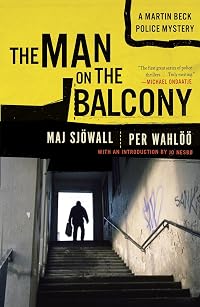
Someone is killing young girls in the once peaceful parks of Stockholm—killing them after "having his way" with them. The people of Stockholm are tense and fearful. Police Superintendent Martin Beck has two witnesses: a cold-blooded mugger who won't say much and a three-year-old boy who can't say much. The dedicated work of the police force seems to be leading nowhere, and with each passing day, the likelihood of another murder grows. But then Beck remembers someone—or something—he show more overheard...A quietly relentless thriller, The Man on the Balcony juxtaposes the most inhuman of crimes with the humanity of the men who must solve it—their perseverance, frustration, and horror—resulting in a police procedural that is as moving and credible as it is enthralling.
. show less
Tags
Recommendations





































Member Reviews
This is the third in the series, and the first where we really get to see what Sjöwall and Wahlöö can do with the police procedural format. Martin Beck and his team are under pressure to catch the murderer of two little girls before he can strike again, but they don't have anything to go on except the slow, methodical process of sifting through every possible connection. There is in fact a huge shortcut to solving the case that the authors have dangled in front of the reader and the detectives early in the book, but quite typically no-one has time to follow this up until much later in the story, when the detectives are already getting close to the solution the hard way.
As usual, the authors have a message for us about the failings show more of modern (Swedish) society, which can dump individuals and leave them so far alienated that they commit such horrible crimes, but a lot of the point of the book also seems to be in the vivid contrast between the drama of the crimes and the plodding routine of solving them. show less
As usual, the authors have a message for us about the failings show more of modern (Swedish) society, which can dump individuals and leave them so far alienated that they commit such horrible crimes, but a lot of the point of the book also seems to be in the vivid contrast between the drama of the crimes and the plodding routine of solving them. show less
A serial murderer's latest crime has two unreliable witnesses, a three-year-old boy and a professional mugger. There are no other clues. The newspapers have the city's residents convinced a child killer hides behind every park bush. Will Detective Martin Beck find a way to catch the killer before he can strike again?
Of course he will. That's not really the point anyway. Not with a police procedural like those pioneered by Swedish writers Maj Sjowall and Per Wahloo. Thomas at My Porch, who is not a fan of detective stories, recently described them as a little too rat-a-tat-tat from one plot point to another. I know just what he means, I agree completely, and that's why I love them. There's comfort in knowing the detective will solve the show more crime by novel's end, even if a the killer does find a few more victims in the meantime. By novel's end, we'll know all there is to know and justice will be served, or at least some the law will be enforced. This is part of what makes detective novels escapist reading.
What makes detective novels literature is the window into societal concerns that they can provide. The Man on the Balcony was written in 1968, a time when cultural revolution was in the air, even in Sweden. Sexuality is suddenly everywhere you turn. Old norms are being cast aside. Is there still a place in society for innocence?
When we meet the killer, the man on the balcony, in the opening pages, he is watching a young girl leave her apartment building and enter a nearby park. He is looking for innocent girls and the right opportunity. Meantime, Detective Martin Beck is facing a word without innocence. Just a few more pages into the novel Martin Beck is confronted by a girl on the street.
He turned to look at the person who had accosted him. A girl in her early teens was standing beside him; she had lank fair hair and was wearing a short batik dress She was barefoot and dirty and looked the same age as his own daughter. In her cupped right hand she was holding a strip of four photographs, which she let him catch a glimpse of.
It was easy to trace these pictures. The girl had gone into one of the automatic photo machines, knelt on the stool, pulled her dress up to her armpits and fed her coins into the slot.
The curtains of these photo cubicles had been shortened to knee height, but it didn't seem to have helped much. He glanced at the pictures; young girls these days developed earlier than they used to, he thought. And the little slobs never thought of wearing anything underneath either. All the same, the photos had not come out very well.
"Twenty-five kroner?" the child said hopefully.
This girl is just a few years older than the killer's victims are, but there is no trace of childhood innocence in her. The city's residents will decry the murders that follow, will seek to protect the innocent girls in their neighborhood parks, but this girl a few years older but in need of just as much protection, will be left to find her own way in the world. Not even Martin Beck will come to her rescue. She's just a little slob who can't even take a good picture.
Maj Sjowall and Per Wahloo, on the other hand, by placing this little scene in front of their larger story, have brought her to their readers attention in a way that is not at all comforting. While Martin Beck will stop the serial killer, someone else will have to find a way to help the girl willing to sell herself for a few kroner. She's the same age a Martin Beck's daughter, maybe the same age as the reader's too. While more rareified literature engages in soul searching and navel gazing, the police procedural stays firmly planted on the street. The reader seeks escape into a formulaic plot that will end with a crime solved, a criminal arrested, but our hopes have been undermined by a society that steals innocence even from the young who escape the killers hiding behind park bushes. Not even Martin Beck can protect them. show less
Of course he will. That's not really the point anyway. Not with a police procedural like those pioneered by Swedish writers Maj Sjowall and Per Wahloo. Thomas at My Porch, who is not a fan of detective stories, recently described them as a little too rat-a-tat-tat from one plot point to another. I know just what he means, I agree completely, and that's why I love them. There's comfort in knowing the detective will solve the show more crime by novel's end, even if a the killer does find a few more victims in the meantime. By novel's end, we'll know all there is to know and justice will be served, or at least some the law will be enforced. This is part of what makes detective novels escapist reading.
What makes detective novels literature is the window into societal concerns that they can provide. The Man on the Balcony was written in 1968, a time when cultural revolution was in the air, even in Sweden. Sexuality is suddenly everywhere you turn. Old norms are being cast aside. Is there still a place in society for innocence?
When we meet the killer, the man on the balcony, in the opening pages, he is watching a young girl leave her apartment building and enter a nearby park. He is looking for innocent girls and the right opportunity. Meantime, Detective Martin Beck is facing a word without innocence. Just a few more pages into the novel Martin Beck is confronted by a girl on the street.
He turned to look at the person who had accosted him. A girl in her early teens was standing beside him; she had lank fair hair and was wearing a short batik dress She was barefoot and dirty and looked the same age as his own daughter. In her cupped right hand she was holding a strip of four photographs, which she let him catch a glimpse of.
It was easy to trace these pictures. The girl had gone into one of the automatic photo machines, knelt on the stool, pulled her dress up to her armpits and fed her coins into the slot.
The curtains of these photo cubicles had been shortened to knee height, but it didn't seem to have helped much. He glanced at the pictures; young girls these days developed earlier than they used to, he thought. And the little slobs never thought of wearing anything underneath either. All the same, the photos had not come out very well.
"Twenty-five kroner?" the child said hopefully.
This girl is just a few years older than the killer's victims are, but there is no trace of childhood innocence in her. The city's residents will decry the murders that follow, will seek to protect the innocent girls in their neighborhood parks, but this girl a few years older but in need of just as much protection, will be left to find her own way in the world. Not even Martin Beck will come to her rescue. She's just a little slob who can't even take a good picture.
Maj Sjowall and Per Wahloo, on the other hand, by placing this little scene in front of their larger story, have brought her to their readers attention in a way that is not at all comforting. While Martin Beck will stop the serial killer, someone else will have to find a way to help the girl willing to sell herself for a few kroner. She's the same age a Martin Beck's daughter, maybe the same age as the reader's too. While more rareified literature engages in soul searching and navel gazing, the police procedural stays firmly planted on the street. The reader seeks escape into a formulaic plot that will end with a crime solved, a criminal arrested, but our hopes have been undermined by a society that steals innocence even from the young who escape the killers hiding behind park bushes. Not even Martin Beck can protect them. show less
In a novel called "The Man on the Balcony", the first scene we see is a man smoking on a balcony, with his eye lingering on the neighborhood children.
Then a child is found dead and molested. Stockholm is paralyzed by fear when another body is found and the police, led by Martin Beck (now promoted) tries to find the man that had turned the parks of the city into a nightmare in 1967. Technically there are two of them - a mugger and the killer - because long before the first child was found, another man had started hitting and robbing people in the same parks.
The reader knows that the killer is that man we saw in the start but we have no idea who he is. And even though the police knows about him, they ignore him - because the timing of show more the report was just wrong. It will take an almost forgotten memory and a coincidence to put him back into the frame and to find him.
The novel is undoubtedly a crime one but it is also a depiction of the city and its people. Reading it 50 years later, it is a glimpse in a world that does not exist anymore. And that makes it an even better story. show less
Then a child is found dead and molested. Stockholm is paralyzed by fear when another body is found and the police, led by Martin Beck (now promoted) tries to find the man that had turned the parks of the city into a nightmare in 1967. Technically there are two of them - a mugger and the killer - because long before the first child was found, another man had started hitting and robbing people in the same parks.
The reader knows that the killer is that man we saw in the start but we have no idea who he is. And even though the police knows about him, they ignore him - because the timing of show more the report was just wrong. It will take an almost forgotten memory and a coincidence to put him back into the frame and to find him.
The novel is undoubtedly a crime one but it is also a depiction of the city and its people. Reading it 50 years later, it is a glimpse in a world that does not exist anymore. And that makes it an even better story. show less
Compelling. Gets into the nitty gritty of people's lives, Stockholm's housing shortage forcing folks to sleep outdoors, and how nosy neighbors are the best neighbors. Describes how Beck, Kollberg and the many other officers and detectives continue to slog through the scantest of clues, and the barest of leads; put up with too many 'minor' criminals to get pieces of information to find the one illusive man terrorizing families especially in neighborhoods around parks.
Good read.
Good read.
Yes, Virginia, there was Scandinavian crime fiction before Stieg Larsson!
It's so hard to believe that this book was written nearly 50 years ago. #3 in the Martin Beck Series, The Man on the Balcony is intelligent, well written and a great read in the realm of Scandinavian Crime Fiction. Long before Larsson's Millenium Trilogy brought Scandivanian crime fiction to the bestseller lists, Sjowall and Wahloo were already writing one of the most awesome crime series I've ever read.
here's the review:
According to author Jo Nesbø, who wrote the introduction to this edition of the novel, Man on the Balcony found its inspiration in an actual case that occurred in Stockholm in 1963. At that time, two little girls were sexually abused and then show more murdered by someone who lured them away from the park where they were playing. Man on the Balcony imagines a similar case which its authors deliver into the hands of Martin Beck and other detectives of the Stockholm police.
As the story opens, a man is sitting on his balcony as the sun comes up one June day. There he smokes cigarettes, drinks coffee, and watches. He looks at the roofs of other buildings and observes the street below him, and as the city begins to awaken, he watches traffic, pedestrians, cyclists, and a man walking his dog -- nothing out of the ordinary really. The action then switches to the police station, where Martin Beck and his colleagues are discussing the latest in a series of serious muggings that have been taking place in the city parks. But the worst is yet to come -- in one of these parks, two "seedy figures" looking for coins in the grass take a break, open a bottle to share, and come upon the body of a young girl hidden beneath a bush. It is only the first of what will become a series of murders, and Beck (who is always referred to as "Martin Beck" throughout the novel) and the other detectives now find themselves in a race against time before the killer strikes again.
This book is a police procedural, but that particular label isn't the best description for this series. There's much more at work here than the police getting the case, looking for clues and solving it. The policemen, while they do their jobs well, can at times be rather introspective about the state of crime and crime solving. For example, Detective Inspector Lennart Kollberg, one of the detectives working on the killings,
thought too of the swift gangsterization of this society, which in the last resort must be a product of himself and of the other people who lived in it and had a share in its creation. He thought of the rapid technical expansion that the police force had undergone merely during the last year; despite this, crime always seemed to be one step ahead. He thought of the new investigation methods and the computers, which could mean that this particular criminal might be caught within a few hours, and also what little consolation these excellent technical inventions had to offer the women he had just left, for example. Or himself. Or the set-faced men who had now gathered around the little body in the bushes between the rocks and the red piling.
Sjowall and Wahloo also draw attention to the social climate of the times in Stockholm and Sweden, reflecting not just on what occurs within police precinct walls but throughout the city as well. For many readers, the commentary on Sweden of the late 60s might not be a drawing point, but it adds a sense of the realism regarding the society in which these fictional crimes occur. This is a hallmark of the other books in the series as well, in which the authors "use the crime novel as a scalpel cutting open the belly of the ideological pauperized and morally debatable so-called welfare state of the bourgeois type." But going beyond the social criticism, Man On the Balcony is a realistic novel where the characters behave in a realistic fashion. Take the main character, Martin Beck, for example. Now a superintendent, he still suffers from insomnia, still has problems with his wife and still has trouble making sense of society, but is not nearly as angst ridden as some of the more modern Scandinavian detectives. He doesn't always agree with his colleagues about the way they're handling either of the cases, but he cares about them and he loves his work. He also knows how to work the system when he needs to. There is a wonderful section in this novel where Beck interviews a three year-old witness that actually made me laugh, but it could only have been Beck that pulled it off.
Man on the Balcony is such a good novel that the time spent reading it just flies by. There's an incredible sense of sophistication in the writing, the sense of place and time is very well established, and it's an intelligent read. The length of the book might be short, but it doesn't need to be any longer -- everything that's needed to make this novel work is already there, especially in the characterizations. I can definitely recommend it to readers of Scandinavian crime fiction, to readers who may have read one or two other books in the Martin Beck series and aren't sure about the rest, and to readers of crime fiction in general. show less
It's so hard to believe that this book was written nearly 50 years ago. #3 in the Martin Beck Series, The Man on the Balcony is intelligent, well written and a great read in the realm of Scandinavian Crime Fiction. Long before Larsson's Millenium Trilogy brought Scandivanian crime fiction to the bestseller lists, Sjowall and Wahloo were already writing one of the most awesome crime series I've ever read.
here's the review:
According to author Jo Nesbø, who wrote the introduction to this edition of the novel, Man on the Balcony found its inspiration in an actual case that occurred in Stockholm in 1963. At that time, two little girls were sexually abused and then show more murdered by someone who lured them away from the park where they were playing. Man on the Balcony imagines a similar case which its authors deliver into the hands of Martin Beck and other detectives of the Stockholm police.
As the story opens, a man is sitting on his balcony as the sun comes up one June day. There he smokes cigarettes, drinks coffee, and watches. He looks at the roofs of other buildings and observes the street below him, and as the city begins to awaken, he watches traffic, pedestrians, cyclists, and a man walking his dog -- nothing out of the ordinary really. The action then switches to the police station, where Martin Beck and his colleagues are discussing the latest in a series of serious muggings that have been taking place in the city parks. But the worst is yet to come -- in one of these parks, two "seedy figures" looking for coins in the grass take a break, open a bottle to share, and come upon the body of a young girl hidden beneath a bush. It is only the first of what will become a series of murders, and Beck (who is always referred to as "Martin Beck" throughout the novel) and the other detectives now find themselves in a race against time before the killer strikes again.
This book is a police procedural, but that particular label isn't the best description for this series. There's much more at work here than the police getting the case, looking for clues and solving it. The policemen, while they do their jobs well, can at times be rather introspective about the state of crime and crime solving. For example, Detective Inspector Lennart Kollberg, one of the detectives working on the killings,
thought too of the swift gangsterization of this society, which in the last resort must be a product of himself and of the other people who lived in it and had a share in its creation. He thought of the rapid technical expansion that the police force had undergone merely during the last year; despite this, crime always seemed to be one step ahead. He thought of the new investigation methods and the computers, which could mean that this particular criminal might be caught within a few hours, and also what little consolation these excellent technical inventions had to offer the women he had just left, for example. Or himself. Or the set-faced men who had now gathered around the little body in the bushes between the rocks and the red piling.
Sjowall and Wahloo also draw attention to the social climate of the times in Stockholm and Sweden, reflecting not just on what occurs within police precinct walls but throughout the city as well. For many readers, the commentary on Sweden of the late 60s might not be a drawing point, but it adds a sense of the realism regarding the society in which these fictional crimes occur. This is a hallmark of the other books in the series as well, in which the authors "use the crime novel as a scalpel cutting open the belly of the ideological pauperized and morally debatable so-called welfare state of the bourgeois type." But going beyond the social criticism, Man On the Balcony is a realistic novel where the characters behave in a realistic fashion. Take the main character, Martin Beck, for example. Now a superintendent, he still suffers from insomnia, still has problems with his wife and still has trouble making sense of society, but is not nearly as angst ridden as some of the more modern Scandinavian detectives. He doesn't always agree with his colleagues about the way they're handling either of the cases, but he cares about them and he loves his work. He also knows how to work the system when he needs to. There is a wonderful section in this novel where Beck interviews a three year-old witness that actually made me laugh, but it could only have been Beck that pulled it off.
Man on the Balcony is such a good novel that the time spent reading it just flies by. There's an incredible sense of sophistication in the writing, the sense of place and time is very well established, and it's an intelligent read. The length of the book might be short, but it doesn't need to be any longer -- everything that's needed to make this novel work is already there, especially in the characterizations. I can definitely recommend it to readers of Scandinavian crime fiction, to readers who may have read one or two other books in the Martin Beck series and aren't sure about the rest, and to readers of crime fiction in general. show less
Pretty much a downer all the way through as it concerns the rape/murders of young girls. Martin Beck is less the focus of this one, and the plotting--which doesn't exactly seem to be the authors' strength--is weaker in this one. What is stronger is the social commentary, which for the first time in the series takes center stage. There is too much telling here rather than showing, but it is still an effective--and affecting--mystery.
Martin Beck, a Stockholm police superintendent, leads the investigation of what appears to be a serial killer of children. Fear has gripped the city and the pressure to make an arrest grows every day. Eventually two witnesses are identified, one a mugger who was at work in the park where the murder took place and the other a mute th4ree year old.
First published in 1968, this police procedural continues to be compelling and relevant, the writing spare and clean. In most mysteries an investigation boils down to one or two investigators. One of the things I like about this book is that almost the entire police force is engaged in gathering information, one of the most important pieces coming from a lowly young policeman overhearing a show more conversation in a bakery.
I'm looking forward to the fourth in the series, they get better and better. show less
First published in 1968, this police procedural continues to be compelling and relevant, the writing spare and clean. In most mysteries an investigation boils down to one or two investigators. One of the things I like about this book is that almost the entire police force is engaged in gathering information, one of the most important pieces coming from a lowly young policeman overhearing a show more conversation in a bakery.
I'm looking forward to the fourth in the series, they get better and better. show less
Members
- Recently Added By
Lists

Scandinavian Crime Fiction
224 works; 37 members

Scandicrime
17 works; 8 members

Reading List - Scandinavian Fiction
134 works; 3 members

Books mentioned in Julian Symons’ Bloody Murder
438 works; 6 members

Books Read in 2016
4,666 works; 199 members
Scandinavian Crime
90 works; 3 members

Books Read in 2020
4,379 works; 123 members

Books Read in 2021
5,361 works; 114 members
Author Information

74+ Works 14,651 Members
Writer and journalist Maj Sjöwall was born in Sweden in 1935. She was a reporter and art director at several newspapers and magazines. From 1959 to 1961, she was an editor with the publishing house Wahlström and Widstrad. She met Per Wahlöö in 1961 and they married the following year. Together they wrote all ten novels in the Martin Beck show more Police Mystery series from 1965 to 1975. In 1971, The Laughing Policeman (a translation of Den Skrattande Polisen) won an Edgar Award for Best Novel. (Bowker Author Biography) show less

Writer and journalist Per Wahlöö was born in Sweden on August 5, 1926. He graduated from the University of Lund in 1946 and found work covering criminal and social issues for numerous newspapers and magazines. He also wrote a number of television and radio plays and was managing editor for several magazines. His first book, Himmelsgeten, was show more published in 1956 and numerous novels followed. He also wrote all ten novels in the Martin Beck Police Mystery series with his wife Maj Sjöwall. In 1971, The Laughing Policeman (a translation of Den Skrattande Polisen) won an Edgar Award for Best Novel. He died from cancer on June 22, 1975. (Bowker Author Biography) show less
Some Editions
Series

Belongs to Publisher Series
Work Relationships
Is contained in
Common Knowledge
- Canonical title
- The Man on the Balcony
- Original title
- Mannen på balkongen
- Alternate titles*
- El maníaco
- Original publication date
- 1967; 1968 (English translation) (English translation)
- People/Characters
- Martin Beck; Sten Lennart Kollberg; Einar Rönn; Gunvald Larsson; Frederik Melander; Evald Hammar (show all 8); Karl Kristiansson; Kurt Kvant
- Important places
- Stockholm, Sweden; Sweden
- First words
- At a quarter to three the sun rose.
- Last words
- (Click to show. Warning: May contain spoilers.)'Yes' Kolberg replied . 'For this time.'
- Original language
- Swedish
*Some information comes from Common Knowledge in other languages. Click "Edit" for more information.
Classifications
- Genres
- Fiction and Literature, Mystery
- DDC/MDS
- 839.7374 — Literature & rhetoric German & related literatures Other Germanic literatures Swedish literature Swedish fiction 1900-1999 1945-1999
- LCC
- PT9876.29 .J63 .M2713 — Language and Literature German, Dutch and Scandinavian literatures Swedish literature Individual authors or works 1961-2000
- BISAC
Statistics
- Members
- 1,444
- Popularity
- 16,369
- Reviews
- 42
- Rating
- (3.84)
- Languages
- 20 — Catalan, Czech, Danish, Dutch, English, Finnish, French, German, Icelandic, Italian, Japanese, Norwegian (Bokmål), Norwegian, Polish, Russian, Spanish, Swedish, Turkish, Portuguese (Portugal), Chinese, traditional
- Media
- Paper, Audiobook, Ebook
- ISBNs
- 87
- ASINs
- 20