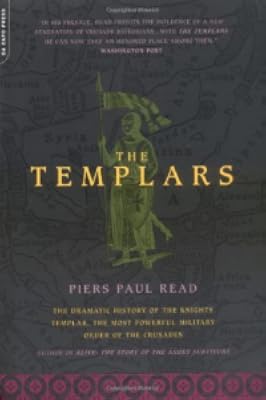
The Templars
by Piers Paul Read
On This Page
Description
The internationally bestselling author of Alive explores the rise, the catastrophic fall, and the far-reaching legacy of Knights of the Temple of Solomon. "This is an engrossing and beautifully written work of popular history that unfolds like a well-structured crime novel." - Booklist In 1099, the city of Jerusalem, a possession of the Islamic Caliphate for over four-hundred years, fell to an army of European knights intent on restoring the Cross to the Holy Lands. From the ranks of these show more holy warriors emerged an order of monks trained in both scripture and the military arts, an order that would protect and administer Christendom's prized conquest for almost a century: the Knights of the Temple of Solomon, or the Templars. In this articulate and engaging history, Piers Paul Read explores the rise, the catastrophic fall, and the far-reaching legacy of these knights who took, and briefly held, the most bitterly contested citadel in the monotheistic West. Drawing on the most recent scholarship, and writing with authority and candor, Read chronicles the history of the blood-splattered monks who still infiltrate modernity in literature, as the inspiration for secret societies, and in the backyard fantasies of any child with access to a stick and a garbage can lid. More than armed holy men, the Templars also represented the first uniformed standing army in the Western world. Sustaining their military order required vast sums of money, and, to that end, a powerful multinational corporation formed. The prosperity that European financiers enjoyed, from the efficient management of Levantine possessions and from pioneering developments in the field of international banking, would help jump-start Europe's long-slumbering Dark Age economy. In 1307, the French king, Philip IV, expropriated Templar lands, unleashing a wave of repression that would crest five years later. After Templar leaders broke down and confessed, under torture, to blasphemy, heresy, and sodomy, Pope Clement V suppressed the Order in 1312. Was it guilty as charged? And what relevance has the story to our own times? In this remarkable history, Piers Paul Read explores the Crusades and the individual biographies of the many colorful characters that fought them. show lessTags
Recommendations
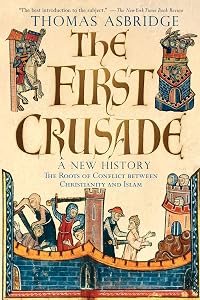
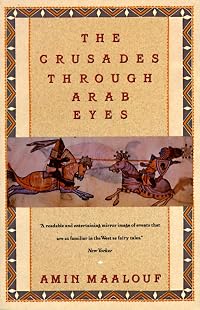
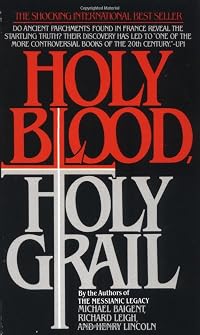
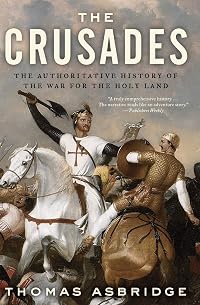















Member Recommendations


kkunker For a brief novel style overview Read is good. For a more academic in-depth study go with Barber.
Member Reviews
Oh, my what an informative book. It packs so much detail into its pages, and explains the history of the Templars from the earliest days of Christianity (how did hermits come to be, then evolve into monks, anyway?) and their creation as a Christian answer to the invasions by the Seljuk Turks into Western Europe. I do agree that it is quite disjointed in much of its historicity and continuity, and it was not until I sat down to write out notes for a talk that I was giving on the history of the Knights Templar that I was able to puzzle out the timeline and personae of this book.
Read gives the names and the histories of all of the Popes who were involved with the Templars, a very, very helpful thing for those not steeped in Western show more European or Catholic history. He also gives a concise background on the individuals who were involved with funding the Knight's Templar, as in this passage, p. 91: In 1104 Count Hugh of Champagne came to the Holy Land with a retinue of knights. From Troyes on the upper reaches of the River Seine he ruled a large and rich principality that had formed part of the West Frankish kingdom left by Charles the Bald. Hugh was pious and unhappily married--unsure whether or not he was really the father of his eldest son. Among his vassals was a knight called Hugh of Payns. Payns, a few miles downstream from Troyes on the Seine, was probably his birthplace; . . . In 1108, Count Hugh returned to Europe but was back in Jerusalem in 1114. Whether or not Hugh of Payns had accompanied him on his first pilgrimage, or came to the Holy Land only now, he seems to have remained there when Count Hugh again returned to Europe." What I got out of this quote was that there were 2 Hughs (Count Hugh AND Hugh de Payns/Payens), that the upper Seine was a notable place in the history of the Knights Templar, and what various people's movements were in that very important time. As a myth debunker, Read shows that there was much activity that went on in that section of the upper Seine simply because of gifts of lands and one's birthplace, not because of any mysterious or transcendental "stuff." Those parts of Champagne and Burgundy are close to where Bernard de Clairvaux established his famous Abbey on land donated by Count Hugh, and Read gives the necessary family tree to establish ties between the Abbeys of Cluny, Citeaux, and Clairvaux. The establishment of the history of St. Bernard and his abbey is necessary to show how the Knights Templar received his endorsement in their early years.
Sadly, Read spends a lot of time on the Knights Templar during the Crusades, and not much on what they did throughout the rest of Western Europe with the banking system, acquisition of lands, etc. Yes, it does touch on those, especially when the Templars are arrested, but not to the extent that it examines the history of the Crusades.
The insight it gives into the trials of the Templars is another noteworthy section. Read discusses the age of the Templars at the time of their arrest as older, retired fighters who were probably content to tend their lands after the fall of Acre and Jerusalem. Fighting men who had seen too much is a theme throughout history. He also shows how the Templar treasure, that famed, mythical treasure so written about by way too many pseudo-scholars, was spent by Philip and his cohorts in the years after the Templar trials to pay for, well, legal expenses. And that there was no time for the Templars to load their ships and escape once the word for the arrests went out. That all makes for interesting fiction, but it should never be confused with fact and history.
It does jump around, though, so sitting down and reading it from cover to cover is not a realistic scenario. But I was so very pleased to at last read something that was so well-researched and gave true history to a mis-represented group. As I said during the talk I gave, the Knights Templar were probably much closer to their portrayal in the movie "Kingdom of Heaven" than they were to true mystic Christians." show less
Read gives the names and the histories of all of the Popes who were involved with the Templars, a very, very helpful thing for those not steeped in Western show more European or Catholic history. He also gives a concise background on the individuals who were involved with funding the Knight's Templar, as in this passage, p. 91: In 1104 Count Hugh of Champagne came to the Holy Land with a retinue of knights. From Troyes on the upper reaches of the River Seine he ruled a large and rich principality that had formed part of the West Frankish kingdom left by Charles the Bald. Hugh was pious and unhappily married--unsure whether or not he was really the father of his eldest son. Among his vassals was a knight called Hugh of Payns. Payns, a few miles downstream from Troyes on the Seine, was probably his birthplace; . . . In 1108, Count Hugh returned to Europe but was back in Jerusalem in 1114. Whether or not Hugh of Payns had accompanied him on his first pilgrimage, or came to the Holy Land only now, he seems to have remained there when Count Hugh again returned to Europe." What I got out of this quote was that there were 2 Hughs (Count Hugh AND Hugh de Payns/Payens), that the upper Seine was a notable place in the history of the Knights Templar, and what various people's movements were in that very important time. As a myth debunker, Read shows that there was much activity that went on in that section of the upper Seine simply because of gifts of lands and one's birthplace, not because of any mysterious or transcendental "stuff." Those parts of Champagne and Burgundy are close to where Bernard de Clairvaux established his famous Abbey on land donated by Count Hugh, and Read gives the necessary family tree to establish ties between the Abbeys of Cluny, Citeaux, and Clairvaux. The establishment of the history of St. Bernard and his abbey is necessary to show how the Knights Templar received his endorsement in their early years.
Sadly, Read spends a lot of time on the Knights Templar during the Crusades, and not much on what they did throughout the rest of Western Europe with the banking system, acquisition of lands, etc. Yes, it does touch on those, especially when the Templars are arrested, but not to the extent that it examines the history of the Crusades.
The insight it gives into the trials of the Templars is another noteworthy section. Read discusses the age of the Templars at the time of their arrest as older, retired fighters who were probably content to tend their lands after the fall of Acre and Jerusalem. Fighting men who had seen too much is a theme throughout history. He also shows how the Templar treasure, that famed, mythical treasure so written about by way too many pseudo-scholars, was spent by Philip and his cohorts in the years after the Templar trials to pay for, well, legal expenses. And that there was no time for the Templars to load their ships and escape once the word for the arrests went out. That all makes for interesting fiction, but it should never be confused with fact and history.
It does jump around, though, so sitting down and reading it from cover to cover is not a realistic scenario. But I was so very pleased to at last read something that was so well-researched and gave true history to a mis-represented group. As I said during the talk I gave, the Knights Templar were probably much closer to their portrayal in the movie "Kingdom of Heaven" than they were to true mystic Christians." show less
I suspect this book was published to capitalize on the Da Vinci Code success, but was in the works for awhile. This book is rich in details, explaining the history and the Knight Templars. And pretty much everything you know about them is wrong.
First, they were organized to protect Christian Pilgrims on their way to Jerusalem from slavers, pirates, and the Islamic Caliphate. Their loyalty was to the Pope, not to any state or king. As their power grew, they turned into a military force that warred with the Caliphate, also interested in the area. Sometimes it was the Caliphate who initiated the violence, other times, it was the Christians. At the end, an initiate that was kicked out, claimed that the Templers were actually in league with show more the Devil, including holding Satanic Masses. It started a witch hunt, and nations that were upset about having to support the Templars, used this as an excuse to take away Templar property, lock up Templars (even the old and elderly) and generally take control from the Pope.
This book is dense. Lots of names, every chapter lasts around 25 years or so. As a result, it can be difficult to follow the narrative. There is so much to time to cover, that the individual details tend to blur together. This is a book I can only read a few pages at time, and it took me most of the year to do it. However, the result was worth reading. The real history of the Knight Templars is so much better than the mythology.
Some interesting points from this book:
Free Masonry was associated with the Knight Templars. But, in this book, they were only mentioned a handful of times, and that was in conjunction with building castles and fortresses.
On Homosexuality - at different times, the Church had different views on what was homosexual activities. A monk wrote in a letter about 100 years before the founding of the Knight Templars: "Of course if you get a bunch of men together, they are going to do certain acts". Also, at the time, only one act counted as sex, and it was only between a man and women.
On Judaism - I never realized why Islam is against Jews. Its the same reason as Christians are - At the time, Muslims considered Jews to be a cousin tribe - so rejection of Mohammad is a bit of a slap in the face to the family.
On Christian Kingdoms - Europe has actually set up a Christian Kingdom in Jerusalem and manage to hold it for a a few hundred years - something I did not know. show less
First, they were organized to protect Christian Pilgrims on their way to Jerusalem from slavers, pirates, and the Islamic Caliphate. Their loyalty was to the Pope, not to any state or king. As their power grew, they turned into a military force that warred with the Caliphate, also interested in the area. Sometimes it was the Caliphate who initiated the violence, other times, it was the Christians. At the end, an initiate that was kicked out, claimed that the Templers were actually in league with show more the Devil, including holding Satanic Masses. It started a witch hunt, and nations that were upset about having to support the Templars, used this as an excuse to take away Templar property, lock up Templars (even the old and elderly) and generally take control from the Pope.
This book is dense. Lots of names, every chapter lasts around 25 years or so. As a result, it can be difficult to follow the narrative. There is so much to time to cover, that the individual details tend to blur together. This is a book I can only read a few pages at time, and it took me most of the year to do it. However, the result was worth reading. The real history of the Knight Templars is so much better than the mythology.
Some interesting points from this book:
Free Masonry was associated with the Knight Templars. But, in this book, they were only mentioned a handful of times, and that was in conjunction with building castles and fortresses.
On Homosexuality - at different times, the Church had different views on what was homosexual activities. A monk wrote in a letter about 100 years before the founding of the Knight Templars: "Of course if you get a bunch of men together, they are going to do certain acts". Also, at the time, only one act counted as sex, and it was only between a man and women.
On Judaism - I never realized why Islam is against Jews. Its the same reason as Christians are - At the time, Muslims considered Jews to be a cousin tribe - so rejection of Mohammad is a bit of a slap in the face to the family.
On Christian Kingdoms - Europe has actually set up a Christian Kingdom in Jerusalem and manage to hold it for a a few hundred years - something I did not know. show less
More a history of the Crusades than the Templars, I found. Quite a long windup at the beginning, some Templar material mixed in with a general history of the Crusades in the middle, and a bit more Templar-focused in the final chapters. But I thought Read might have done quite a bit more with the order itself than he did, so this was something of a disappointment in that regard.
Overwritten unless you need a FULL background of the Crusades. However, If you already understand the Crusades, but if it’s been awhile, it might be a good refresher. Well written and lively but not overly scholarly.
Read is definitely on the side of the Order but points out it’s flaws and shortcomings. He is also sympathetic to the Crusaders as a check against Islam gaining a foothold in Western Europe. Still he doesn’t whitewash either sides’ deficiencies. He just doesn’t like Islam much and presents his argument however biased it might be. The last chapter might even be seen to be prophetic given it was written in 1999.
He debunks most of the latter day myths (freemasonry, etc.)
Good bibliography, decent notes and index.
Read is definitely on the side of the Order but points out it’s flaws and shortcomings. He is also sympathetic to the Crusaders as a check against Islam gaining a foothold in Western Europe. Still he doesn’t whitewash either sides’ deficiencies. He just doesn’t like Islam much and presents his argument however biased it might be. The last chapter might even be seen to be prophetic given it was written in 1999.
He debunks most of the latter day myths (freemasonry, etc.)
Good bibliography, decent notes and index.
This book is popular fiction, which the author clearly states in the preface. That being said, the book read like a general overview of the Crusades, with occasional references to the Templars thrown in. The first section provided a good overview of the three Abrahamic faiths and the reason why the Temple was so important. Read is a novelist and the style of this book was like a novel; he's not an academic historian and it would not be fair to compare him to them. The book was readable and kept a pretty decent pace, but some of his statements seemed quite contradictory to things I've read in other books. In conclusion, a good overview of religious backgrounds for the Crusades, and of the key events of the Crusades, but it seemed rather show more lacking on the Templars themselves. show less
Three stars because PPR is a good craftsman, not because I fully endorse his ideas. This book has potted Histories of Christianity and Islam, is short on Outremer & Extramadura, and then good stuff on the trials and the Holy Grail sillies.
I gave this book only two stars because it was not the book I thought it was going to be. After reading the title and description I was basically expecting a biography on the The Templars. Instead what I got was a history of the crusades. It was overly detailed at times and I felt that the author sometimes jumped around on the time line so I was very confused in parts. Overall it was an interesting but if you are wanting to learn more about the Templars, this is not the book to read.
Members
- Recently Added By
Lists

Chronological 2015
39 works; 1 member
Author Information

29+ Works 5,699 Members
Some Editions
Common Knowledge
- Canonical title
- The Templars
- Original title
- The Templars
- Original publication date
- 1999
- People/Characters
- Hugh de Payens; Jacques de Molay (Grand Master of the Knights Templar); Richard I, King of England (Coeur de Lion, Lionheart)
- Important places
- Jerusalem
- Important events
- Crusades (1100-1290); Battle of Hattin (1187)
Classifications
- Genres
- History, Nonfiction, Religion & Spirituality, General Nonfiction
- DDC/MDS
- 271.7913 — Religion History of Christianity Religious congregations and orders in church history Lesser Roman orders Other lesser Roman orders Military Orders Knights Templar
- LCC
- CR4743 .R4 — Auxiliary Sciences of History Heraldry Heraldry Chivalry and knighthood (Orders, decorations, etc.) Orders, etc.
- BISAC
Statistics
- Members
- 1,526
- Popularity
- 15,110
- Reviews
- 17
- Rating
- (3.45)
- Languages
- 10 — Czech, English, German, Hungarian, Italian, Polish, Portuguese, Spanish, Swedish, Turkish
- Media
- Paper, Ebook
- ISBNs
- 31
- ASINs
- 15