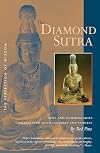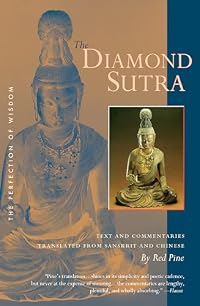
The Diamond Sutra
by Red Pine
On This Page
Description
Zen Buddhism is often said to be a practice of mind-to-mind transmission without reliance on texts --in fact, some great teachers forbid their students to read or write. But Buddhism has also inspired some of the greatest philosophical writings of any religion, and two such works lie at the center of Zen: The Heart Sutra, which monks recite all over the world, and The Diamond Sutra, said to contain answers to all questions of delusion and dualism. This is the Buddhist teaching on the show more perfection of wisdom and cuts through all obstacles on the path of practice. As Red Pine explains: The Diamond Sutra may look like a book, but it's really the body of the Buddha. It's also your body, my body, all possible bodies. But it's a body with nothing inside and nothing outside. It doesn't exist in space or time. Nor is it a construct of the mind. It's no mind. And yet because it's no mind, it has room for compassion. This book is the offering of no mind, born of compassion for all suffering beings. Of all the sutras that teach this teaching, this is the diamond. show lessTags
Recommendations







Member Reviews
I didn't really dig this translation, finding it a bit dense; much too wordy for modern sensibilities. I especially found all the variations in the honorifics for the Buddha (Arhan, Bhagavan, Sugata) confusing. Red Pine's translation is probably very authentic and in keeping with the Sanskrit or whatever language he translated from, but reading it produced the same reaction in me as if I were trying to read the King James Bible.
Red Pine has done a thorough job of collating texts among Sanskrit, Chinese, and Tibetan versions, but this work is not the primary virtue of his work. The translation is very readable, and the notes and commentaries thorough, useful, and interesting.
My therapist called this "The Buddhist book", and so it is. A central Buddhist thread which has engendered more than, by one count, more than 20,000 commentaries, as a Zen Buddhist this just might be your one material possession!
long, dry, and more academic than his Heart Sutra book
long, dry, and more academic than his Heart Sutra book
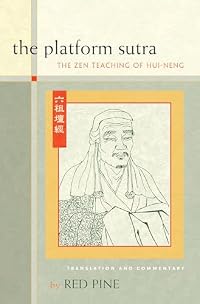
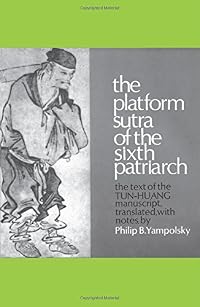
The "Platform Sutra" records the teachings of Hui-neng, the Sixth Patriarch, who is revered as one of the two great figures in the founding of Ch'an (Zen) Buddhism. This translation is the definitive English version of the eighth-century Ch'an classic.
Phillip B. Yampolsky has based his translation on the Tun-huang manuscript, the earliest extant version of the work. A critical edition of the Chinese text is given at the end of the volume.
Dr. Yampolsky also furnishes a lengthy and detailed historical introduction which contains much information hitherto unavailable even to scholars, and provides the context essential to an understanding of Hui-neng's work. He gives an account of the history and legends of Ch'an Buddhism, with particular show more attention to the traditions associated with Hui-neng, quoting or summarizing the most important narratives. He then discusses the various texts of the "Platform Sutra," and analyzes its contents. show less
Phillip B. Yampolsky has based his translation on the Tun-huang manuscript, the earliest extant version of the work. A critical edition of the Chinese text is given at the end of the volume.
Dr. Yampolsky also furnishes a lengthy and detailed historical introduction which contains much information hitherto unavailable even to scholars, and provides the context essential to an understanding of Hui-neng's work. He gives an account of the history and legends of Ch'an Buddhism, with particular show more attention to the traditions associated with Hui-neng, quoting or summarizing the most important narratives. He then discusses the various texts of the "Platform Sutra," and analyzes its contents. show less
MAHAYANA
Members
- Recently Added By
Lists

End of Your Life Book Club
134 works; 4 members
Author Information

30+ Works 2,348 Members
Red Pine (the pen name of Bill Porter) is an acclaimed translator and interpreter of Chinese and Sanskrit texts, primarily Buddhist, including poetry and sutras. Previous works he has translated into English include The Platform Sutra, The Heart Sutra, The Diamond Sutra, Lao-tzu's Taoteching, Guide to Capturing a Plum Blossom, The Zen Works of show more Stonehouse, and The Collected Songs of Cold Mountain. He is also the author of Road to Heaven: Encounters with Chinese Hermits and Zen Baggage: A Pilgrimage to China. He has lived in Taiwan and Hong Kong, and has traveled extensively in China, visiting Zen temples and the graves of poets, and seeking out hermits. He lives in Port Townsend, Washington. show less
Some Editions
Series
Belongs to Publisher Series
Common Knowledge
- People/Characters
- Gautama Buddha; Subhūti
- Canonical DDC/MDS
- 294.38
Classifications
Statistics
- Members
- 500
- Popularity
- 59,988
- Reviews
- 12
- Rating
- (4.06)
- Languages
- Chinese, Czech, English, Japanese
- Media
- Paper, Ebook
- ISBNs
- 25
- ASINs
- 1