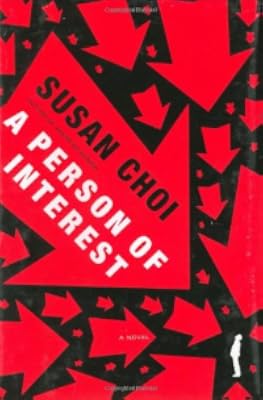
A Person of Interest
by Susan Choi
On This Page
Description
Wrongfully implicated when a mail bomb claims the life of a beloved computer scientist, math professor Lee receives a threatening letter that compels him to confront key events in his life, an exercise that inadvertently renders him all the more suspicious.Tags
Recommendations











Member Recommendations
Member Reviews
This is not a crime novel so much as a novel about the crimes we ourselves commit throughout our lives, our partial amnesia to them, and our chance to redeem ourselves. In prose that is not afraid to be precise and evocative, Choi engages us as detectives of the human heart, specifically that of Lee, the "person of interest" hounded by both his memories and the paparazzi when he becomes central to the unraveling of a mystery. The killer, reminiscent of the unibomber, is unknown, and Choi has us suspecting everyone from Lee himself to everyone in his past. Yet since the story is mainly told through Lee, we come to know him and realize that he is a "person of interest" because he resembles us, our sins of omission, our arrogance, our show more loneliness, our paranoia, our scaled-down dreams and tentative longings. An elderly Asian math professor is an unlikely candidate to win our hearts, but he does, slowly but surely. The undercurrent of racism in the way Lee is treated as a criminal by the media and his social circle is clear but understated, allowing us to realize with outrage that Lee has had to battle this discrimination ever since fleeing for his life from the Communist takeover of his country while still a young man. I love this book; could not put it down; and want to seek out everything I can by Susan Choi. Hers is a fine talent: a clear and lyrical prose style combined with an ability to plot that maintains suspense while drawing us in. Little details exquisitely drawn, from Lee's suburban hermitage of a home to the isolated mountain retreats of madmen are fresh and telling, psychological landscapes I won't soon forget. Her portrayal sof the crazy love of a mother for her infant, of a father for a toddler, of one outcast for another, are the stuff of great literature. Yet, again, this is a page turner worthy to stand beside the best crime fiction. I have never been more thrilled by a thriller than this one, and I hope to see Choi continue to grow as a writer because I plan to become one of her most avid readers. Come to this book without preconceptions: You will not be disappointed, and you will be moved. show less
From the very first page of A Person of Interest, it is obvious that Susan Choi is an author who loves writing sentences, and also one who is exceedingly good at it. Nearly every sentence of this midsize novel is a miniature work of art, a winding path of coordinate and subordinate clauses, so masterfully paced and punctuated that the reader rarely, if ever, gets lost. Choi's vocabulary is precise and erudite, and her observations entertaining and psychologically acute. The artistry simply spills over every paragraph of every page.
Now, I am a reader who loves reading good sentences, and this made the book a joy for me to read. Furthermore, I am a reader who likes stories about academics. (What can I say, it's a soft spot. As an academic show more myself, there's a certain thrill of escapism I get from such fictions; this, no doubt, was a big part of why I fell in love with White Noise, and On Beauty, and Stoner, for instance.) In addition, I have a soft spot for mysteries and crime fiction of whatever stripe. So, A Person of Interest, a beautifully written whodunnit starring an aging professor, should be shoo-in for me, right?
Somehow, no. Despite all its merits, the novel just didn't do it for me in the end. Though I was definitely hooked well through the first half of the book, I felt that Choi fumbled things in the second. The main problem was what I'd diagnose as a lack of vision: A Person of Interest just can't seem to decide what it wants itself to be, and thus ends up not having much of substance to say. Though it touches on themes of loss and memory and family and racism, none of these elements ever really come together in a meaningful way. The characters (and especially, the novel's protagonist) are well developed enough, but are not (ironically) particularly interesting, or sufficiently relatable. In other respects, the novel seems like it just wants to be a straightforward mystery; but as a mystery, it is generally limp: predictable, and when not predictable, outlandish.
So, in the end, I feel strangely split between deeply enjoying the book as a piece of writing on the one hand, and feeling deeply disappointed by the book as a piece of fiction on the other. I will definitely be seeking out Choi's other work in the future, but I do not think I will ever return to A Person of Interest, and I will be hoping that her other books not fall prey to the same problems. show less
Now, I am a reader who loves reading good sentences, and this made the book a joy for me to read. Furthermore, I am a reader who likes stories about academics. (What can I say, it's a soft spot. As an academic show more myself, there's a certain thrill of escapism I get from such fictions; this, no doubt, was a big part of why I fell in love with White Noise, and On Beauty, and Stoner, for instance.) In addition, I have a soft spot for mysteries and crime fiction of whatever stripe. So, A Person of Interest, a beautifully written whodunnit starring an aging professor, should be shoo-in for me, right?
Somehow, no. Despite all its merits, the novel just didn't do it for me in the end. Though I was definitely hooked well through the first half of the book, I felt that Choi fumbled things in the second. The main problem was what I'd diagnose as a lack of vision: A Person of Interest just can't seem to decide what it wants itself to be, and thus ends up not having much of substance to say. Though it touches on themes of loss and memory and family and racism, none of these elements ever really come together in a meaningful way. The characters (and especially, the novel's protagonist) are well developed enough, but are not (ironically) particularly interesting, or sufficiently relatable. In other respects, the novel seems like it just wants to be a straightforward mystery; but as a mystery, it is generally limp: predictable, and when not predictable, outlandish.
So, in the end, I feel strangely split between deeply enjoying the book as a piece of writing on the one hand, and feeling deeply disappointed by the book as a piece of fiction on the other. I will definitely be seeking out Choi's other work in the future, but I do not think I will ever return to A Person of Interest, and I will be hoping that her other books not fall prey to the same problems. show less
Dr. Lee is a tenured professor of mathematics at a university in the midwest who gets caught up in a bombing (reminiscent of the Unabomber) when the popular professor in the office next to his gets blown up. The fun begins when Lee's natural reticence, combined with his fierce determination to preserve his right to privacy, and a deeper inability to examine most parts of his past, draws the attention of the FBI investigators. Things go from bad to worse as Lee, traumatized by his experiences in his youth of the violent communist takeover of his (unspecified) country, responds in ways that bring him close to being a suspect. His personal life too is a shambles, two failed marriages, an estranged child and these come into play as well. [A show more Person of Interest] is not a perfect novel, but it is solid enough for me to be glad I finally picked it up and read it. ***1/2 show less
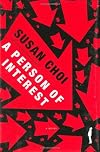
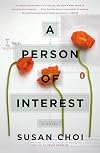
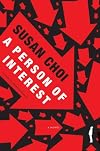
This tour de force by Pultizer-nominee Choi is an amazing exploration of one man's psyche and how his unlikable persona makes him an FBI person of interest in a bombing case, similar to the Unabomber. A deeply felt, carefully drawn portrait of the deep inner workings of Lee's mind and how the mind works to justify itself for past deeds and present weaknesses in pride, shame, and his isolation and yearning. Add to that a compelling plot to discover the source of a letter bomb that kills Lee's neighboring-office professor, and the mysteries of failure and accountability that Lee explores about his past sole love to Aileen, and the child they bore together, who has disappeared, the book is complex, hugely detailed in the nuances that show more accompany human fear, separateness, suspicion, yearning, revenge, and ultimately redemption. Choi writes with a vast and avid vocabulary rich in variety and description, and her inner examinations of thought and feeling, emotions and sensations, are equal to Philip Roth's, but with more sensitivity and less onanism. It's difficult to establish deep sympathy and empathy with such a difficult character as Lee, but Choi's razor-sharp eye brings about compassion along with the dislike. Quite a feat, and quite a book. Beautifully structured, brilliantly written, exhaustively explored such that every word had importance and meaning. Unfortunate jacket art, however. show less
Susan Choi's newest novel, "A Person of Interest," is a complex thriller that rises above the usual standards for the genre. Professor Lee, an Asian-born mathematics professor at an undistinguished university, has lived an increasingly quiet and isolated life after the exodus of his second wife and the estrangement of his only child. His days are spent teaching calculus to indifferent undergraduates, worrying about how he is "coming off" to others (he wraps his empty beer and wine bottles in newspaper and carries them to the trash bin in cover of darkness so that his neighbors will see no evil/hear no evil), and nursing a festering resentment of Professor Hendley (middle-aged "hipster"), whose neighboring office is under constant show more barrage by starstruck undergraduates while Lee's office threshold gathers dust.
Lee's sedate existence is shattered when a mail bomb explodes in Hendley's office, killing Hendley and turning campus life on its head. Lee becomes increasingly agitated as he attempts to reconcile his self-contained private nature with the need to appear acceptably grief-ridden in the face of the tragedy (Lee skips out of Hendley's memorial service, and recoils at the sanctimonious orgy of tears, grief counseling, and cancelled exams that follow -- how well could the undergraduates have known Hendley, anyway?)
In the midst of the Hendley aftermath, Lee receives a "mail bomb" of a different sort altogether. It so happens that Lee poached his first wife, Aileen, from a fellow graduate student named Lewis Gaither decades ago -- a graduate student who subsequently disappeared and hasn't been heard from since. A letter addressed to Lee sets his head spinning with long-buried feelings of rivalry, regret, and guilt. His roiled state of mind doesn't help him when two FBI agents arrive at his doorstep to interview him about the bombing, and he slowly realizes that his sweaty efforts to "appear normal" have backfired -- he's obviously a suspect.
Choi weaves themes of estrangement and loneliness throughout her novel. Lee's daughter, Esther, has moved to the Rockies where she spends her days in isolation on the edge of a mountain cliff, patiently feeding abandoned eaglets with meat chunks delivered through a plastic tube. Aileen decamps from her marriage to Lewis when she realizes that their union is, at best, a sham of "togetherness." Her subsequent marriage to Lee is detached from the get-go; only their daughter Esther prevents her from fleeing earlier than she does. Lewis Gaither, an intensely religious man, recovers from Eileen's departure by marrying a fellow parishioner named Ruth, and their subsequent lives are spent wandering from one misbegotten mission outpost to another like fundamentalist nomads. Their itinerant travel has a negative effect on their young son, Mark, who is further isolated by the fact that he doesn't share their religious convictions.
Choi is at her best when she explores the inner workings of characters who are self-aware of their "otherness." Lee is ambivalent about his solitude -- he isn't upset about living alone, but he worries whether the neighbors might feel sorry for him; he is torn between feelings of resentment and relief when students don't visit his office; he is at once pleased and irritated when Gaither invites him to a church social. All of these feelings are intensified by Lee's status as an immigrant who will always remain, at least in his own mind, a "foreigner." "[Lee] had felt that his place in the world was unsteady and worthless, a perch best abandoned and, more than that, not even his." Choi's portrayal of"the immigrant's sense of hopeless illegitimacy and impending exposure" speaks to the occasional alienated (and sometimes paranoid) introvert in all of us.
I've not given away any "spoilers" here. The book's plot line is filled with twists, turns, and a bang-up ending. If you don't read it for its thriller appeal or psychological depth, read it for the prose, which is wonderful:
"The cherry trees had exploded like fireworks and left their pink litter all over the ground."
"She was aware of the need to frame an objection that was calm, logical, but she felt herself flailing around in her mental closet, knocking things off the shelf."
I highly recommend that you read this book. show less
Lee's sedate existence is shattered when a mail bomb explodes in Hendley's office, killing Hendley and turning campus life on its head. Lee becomes increasingly agitated as he attempts to reconcile his self-contained private nature with the need to appear acceptably grief-ridden in the face of the tragedy (Lee skips out of Hendley's memorial service, and recoils at the sanctimonious orgy of tears, grief counseling, and cancelled exams that follow -- how well could the undergraduates have known Hendley, anyway?)
In the midst of the Hendley aftermath, Lee receives a "mail bomb" of a different sort altogether. It so happens that Lee poached his first wife, Aileen, from a fellow graduate student named Lewis Gaither decades ago -- a graduate student who subsequently disappeared and hasn't been heard from since. A letter addressed to Lee sets his head spinning with long-buried feelings of rivalry, regret, and guilt. His roiled state of mind doesn't help him when two FBI agents arrive at his doorstep to interview him about the bombing, and he slowly realizes that his sweaty efforts to "appear normal" have backfired -- he's obviously a suspect.
Choi weaves themes of estrangement and loneliness throughout her novel. Lee's daughter, Esther, has moved to the Rockies where she spends her days in isolation on the edge of a mountain cliff, patiently feeding abandoned eaglets with meat chunks delivered through a plastic tube. Aileen decamps from her marriage to Lewis when she realizes that their union is, at best, a sham of "togetherness." Her subsequent marriage to Lee is detached from the get-go; only their daughter Esther prevents her from fleeing earlier than she does. Lewis Gaither, an intensely religious man, recovers from Eileen's departure by marrying a fellow parishioner named Ruth, and their subsequent lives are spent wandering from one misbegotten mission outpost to another like fundamentalist nomads. Their itinerant travel has a negative effect on their young son, Mark, who is further isolated by the fact that he doesn't share their religious convictions.
Choi is at her best when she explores the inner workings of characters who are self-aware of their "otherness." Lee is ambivalent about his solitude -- he isn't upset about living alone, but he worries whether the neighbors might feel sorry for him; he is torn between feelings of resentment and relief when students don't visit his office; he is at once pleased and irritated when Gaither invites him to a church social. All of these feelings are intensified by Lee's status as an immigrant who will always remain, at least in his own mind, a "foreigner." "[Lee] had felt that his place in the world was unsteady and worthless, a perch best abandoned and, more than that, not even his." Choi's portrayal of"the immigrant's sense of hopeless illegitimacy and impending exposure" speaks to the occasional alienated (and sometimes paranoid) introvert in all of us.
I've not given away any "spoilers" here. The book's plot line is filled with twists, turns, and a bang-up ending. If you don't read it for its thriller appeal or psychological depth, read it for the prose, which is wonderful:
"The cherry trees had exploded like fireworks and left their pink litter all over the ground."
"She was aware of the need to frame an objection that was calm, logical, but she felt herself flailing around in her mental closet, knocking things off the shelf."
I highly recommend that you read this book. show less
This is a rather odd book. It is beautifully written and is a fairly good read but it is a strange mixture. It is rather philosophical with the main character, a sixty-something college mathematics professor, reexamining his life, reconsidering assumptions, errors, failures and all of the factors that make up a human life. It also touches on prejudice against foreigners and people of color in America. At the same time, it is a crime novel. Had it been less schizophrenic I would have enjoyed it more.
I listened to this book on CD and thoroughly enjoyed it. It's a good story that keeps the reader concerned about the main character, and there are unexpected turns. A math professor and his family and friends provide the basis for events that spiral out of control when a crime happens, with plenty of complexities along the way.
A purely personal note: the book bogged down momentarily in seemingly unnecessary minute details sometimes. While those provide more vivid pictures in the mind, many of them didn't matter one whit to the story. It's the artistry of the author, so it's hard to lower the rating on a good story and good writing for such a thing.
A good read all around.
A purely personal note: the book bogged down momentarily in seemingly unnecessary minute details sometimes. While those provide more vivid pictures in the mind, many of them didn't matter one whit to the story. It's the artistry of the author, so it's hard to lower the rating on a good story and good writing for such a thing.
A good read all around.
Members
- Recently Added By
Lists

Pen/Faulkner Winners and Finalists
178 works; 9 members

Books To Get From The Library
115 works; 5 members

The Hermenautic Bookshelf
111 works; 7 members
Author Information

9+ Works 4,010 Members
Awards and Honors
Series
Belongs to Publisher Series
Aufbau Taschenbuch (2603)
Common Knowledge
- Canonical title
- A Person of Interest
- Original title
- A Person of Interest
- Original publication date
- 2008
- First words*
- Erst durch den Anschlag wurde Lee bewusst, wie gross seine Abneigung Hendley gegenüber gewesen war: ein tief verborgener, grauenhafter Gedankengang, der binnen Sekunden durch die Gewalt der Explosion freigelegt wurde.
- Last words*
- (Click to show. Warning: May contain spoilers.)"Da ist sie", sagte Lee und winkte triumphierend zurück.
*Some information comes from Common Knowledge in other languages. Click "Edit" for more information.
Classifications
Statistics
- Members
- 402
- Popularity
- 77,275
- Reviews
- 15
- Rating
- (3.51)
- Languages
- English, German
- Media
- Paper, Audiobook, Ebook
- ISBNs
- 18
- ASINs
- 6