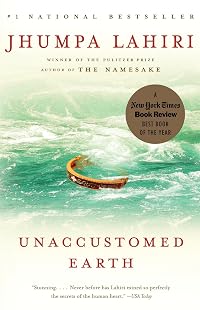
Unaccustomed Earth
by Jhumpa Lahiri
On This Page
Description
From the internationally best-selling, Pulitzer Prize-winning author, a superbly crafted new work of fiction: eight stories--longer and more emotionally complex than any she has yet written--that take us from Cambridge and Seattle to India and Thailand as they enter the lives of sisters and brothers, fathers and mothers, daughters and sons, friends and lovers. In the stunning title story, Ruma, a young mother in a new city, is visited by her father, who carefully tends the earth of her show more garden, where he and his grandson form a special bond. But he's harboring a secret from his daughter, a love affair he's keeping all to himself. In "A choice of accommodations," a husband's attempt to turn an old friend's wedding into a romantic getaway weekend with his wife takes a dark, revealing turn as the party lasts deep into the night. In "Only goodness," a sister eager to give her younger brother the perfect childhood she never had is overwhelmed by guilt, anguish, and anger when his alcoholism threatens her family. And in "Hema and Kaushik," a trio of linked stories--a luminous, intensely compelling elegy of life, death, love, and fate--we follow the lives of a girl and boy who, one winter, share a house in Massachusetts. They travel from innocence to experience on separate, sometimes painful paths, until destiny brings them together again years later in Rome. show lessTags
Recommendations










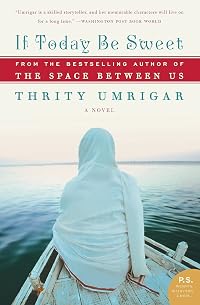
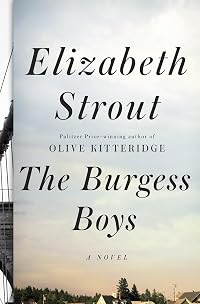
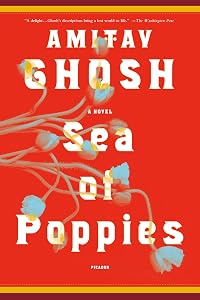
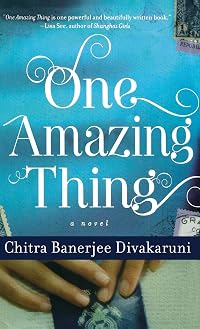




Member Recommendations

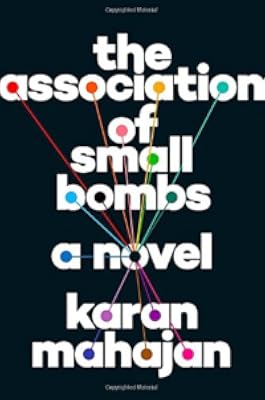
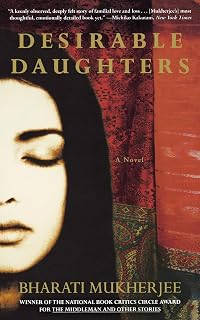
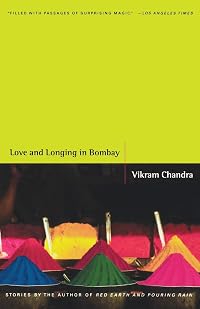
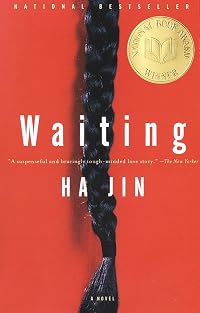
Inesdelreves Un incidente sin importancia desencadena una verdadera hecatombe en el seno de la familia. Una novela sobre la importancia del lugar que cada cual ocupa en el mundo
20

ShortStoryLover Murray's style of writing in this collection of short stories is similarly subtle to Jhumpa Lahiri's in her short story collections. Several of his stories feature Indian-Americans, and two are set in India.
20
Member Reviews
This is an excellent collection of interconnected short stories. All of them explore the experience of first- and second-generation immigrants from India, not only their awareness of being different from their American friends and neighbors, but also the problems that are common to people of all ethnic backgrounds.The characters and plots are always compelling in Lahiri's works, but in this collection I was struck by the beauty with which each story ended. There may not have been a neat "solution," but I always felt that each one ended in just the right place. That is so often not the case, as we may be left wanting more information or the ending may feel rushed and contrived. Just another reason why I so admire Jhumpa Lahiri's work.
I often struggle with short story collection, wanting to like them more than I actually do. I am happy to report that Unaccustomed Earth broke the mold. I found each and every one of Lahiri's stories compelling, populated with characters split between cultures, the children of Bengali parents who carve out their identities in places that aren't exactly foreign and aren't exactly home - Seattle or New England or Rome.
Just picking up the book again reminds me of Ruma welcoming her father to stay at her new house in Seattle, for the first time without her mother, and agonizing over whether she should invite him to live out his days with her and her family. There's Sang who daily fields phone calls from Bengali suitors wishing to marry her show more but who is in love with a philandering Egyptian professor. Usha is captivated by a friend of her parents' who became like family when he sought out his Bengali roots in Boston but who broke her mother's heart when he married an American girl and embraced a new culture. Finally, the collection finishes with a few interlinked stories of Hema and Kaushik, whose parents' friendship brings them into each other's orbits only occasionally during their childhoods in Massachusetts and who are surprised to find a home in each other as adults in Rome, a place that is hardly home to either.
In Unaccustomed Earth, while the characters themselves may still be striving to carve out a place for themselves between generations, readers are treated to fully realized people whose lives and struggles are distilled into only a few powerful pages that leave a lasting impact. show less
Just picking up the book again reminds me of Ruma welcoming her father to stay at her new house in Seattle, for the first time without her mother, and agonizing over whether she should invite him to live out his days with her and her family. There's Sang who daily fields phone calls from Bengali suitors wishing to marry her show more but who is in love with a philandering Egyptian professor. Usha is captivated by a friend of her parents' who became like family when he sought out his Bengali roots in Boston but who broke her mother's heart when he married an American girl and embraced a new culture. Finally, the collection finishes with a few interlinked stories of Hema and Kaushik, whose parents' friendship brings them into each other's orbits only occasionally during their childhoods in Massachusetts and who are surprised to find a home in each other as adults in Rome, a place that is hardly home to either.
In Unaccustomed Earth, while the characters themselves may still be striving to carve out a place for themselves between generations, readers are treated to fully realized people whose lives and struggles are distilled into only a few powerful pages that leave a lasting impact. show less
Jhumpa Lahiri's first collection of short stories, Interpreter of Maladies, won the Pulitzer Prize. After writing a full-length novel (The Namesake), Lahiri has returned with a second short story collection. Unaccustomed Earth is comprised of 5 short stories and a novella. And it is absolutely fabulous.
Most of the stories are set in the US, and the Indian immigrant characters are often in relationship with white Americans. Each one had strong emotional impact. The title story was one of the most moving. In it, an Indian widower visits his adult daughter, who lives in Seattle. He chooses not to tell her that he has found a new partner, and she is afraid he plans to move in with her and her young family. The man's love for his small show more grandson is very touching; his love for her is demonstrated indirectly through a garden he creates during his visit. Through small day-to-day acts, he shows his daughter a side of him that was not visible while she was growing up.
The novella, Hema and Kaushik, takes place over three separate time periods and follows an Indian immigrant boy and girl from the time they meet as children, through young adulthood, and into middle age. Lahiri is expert at conveying the loss and emptiness deep within each character, and building the reader's commitment to these characters in a very short number of pages.
I intentionally apprpoached this work one story at a time, reading during my lunch hour and savoring each story over the next 24 hours. When the novella -- and the entire book -- came to an end, all I could do was take a very deep breath and marvel at Lahiri's talent. Unaccustomed Earth is the most delicious fiction I have read in a very long time; a must-read. show less
Most of the stories are set in the US, and the Indian immigrant characters are often in relationship with white Americans. Each one had strong emotional impact. The title story was one of the most moving. In it, an Indian widower visits his adult daughter, who lives in Seattle. He chooses not to tell her that he has found a new partner, and she is afraid he plans to move in with her and her young family. The man's love for his small show more grandson is very touching; his love for her is demonstrated indirectly through a garden he creates during his visit. Through small day-to-day acts, he shows his daughter a side of him that was not visible while she was growing up.
The novella, Hema and Kaushik, takes place over three separate time periods and follows an Indian immigrant boy and girl from the time they meet as children, through young adulthood, and into middle age. Lahiri is expert at conveying the loss and emptiness deep within each character, and building the reader's commitment to these characters in a very short number of pages.
I intentionally apprpoached this work one story at a time, reading during my lunch hour and savoring each story over the next 24 hours. When the novella -- and the entire book -- came to an end, all I could do was take a very deep breath and marvel at Lahiri's talent. Unaccustomed Earth is the most delicious fiction I have read in a very long time; a must-read. show less
Lahiri depicts the restraint of her characters perfectly and reveals to us the private desires that cause conflict with the traditions and expectations of Indian cultural and societal norms. But, by doing so, she redefines love and the inevitability of the sorrow it sometimes carries.
She is a queen of dichotomy. Though her characters have inner strength that persist and drive them further into their stories, their strength is also what makes them the victims of their own helplessness.
From Ruma’s father in his inability to share with his daughter, the acknowledgement of his feelings for another woman after the death of his wife. To Ruma, herself, who is unable to recover from her mother’s death, only to cope by denying herself a show more successful career and a rich relationship with her husband and son. The restraint in the relationship between “Baba” and Ruma contain within its silences and tension, a depth of love and feeling that can only be understood by grief, denial, and the need to protect those you love.
The story of Pranab Chakraborty and Boudi and their unrequited love that evolved within the boundaries of family friendship, compatibility, and all that is lacking in the current marriage to another is a tight-lipped, repressed, and torturous story of one who carries the burden of secret love, while the other remains oblivious to his lover’s personal sacrifice and loss.
The story of Amit and Megan shares the reality of a marriage that has reached its low season dented by babies and the monotony of routine. It also shows how people from the past can resurrect old feelings, yet reassure us that passion can still spring up from the loyalty and trust found in married love.
The story of Sudha and Rahul speak of weakened family ties due to the powerful stronghold of addiction and the loss of relationship and trust that can occur when someone is held by the compulsion of a vice and old stereotypes.
In the story of Sang, Paul, Farsouk, and Deidre, there is truth in the tangles of love, desire, and manipulation. It shows us of the compulsions we have against our better judgement and the inability to see clearly when we feel we are in love.
Lastly, the story of Hema and Kaushik is a small novella that shares with us two opposing lives, which are drawn to each other by family ties and later by circumstance and/or fate. The drama of their passion and love, though restrained by the reality of other entanglements, seem inevitable and, yet, also seem inevitable to suffer a sad demise.
Overall, I found the book, “Unaccustomed Earth” to be filled with good stories, though desolate and bleak. I was inspired by love, but disappointed by the failings of sometimes the characters or the outcome.
Still, after reading the book, I yearned for the stories to continue; for the characters to continue on in their vignettes, if not to provide a glimpse to a more resilient hope of something better for the characters themselves, but also an affirmation that love and lovers actually do “conquer all.”
Compared to Lahiri’s other works, this collection is darker and more sombre in its tone. Your heart will break, but insist in some way that this is the way it must be so. show less
She is a queen of dichotomy. Though her characters have inner strength that persist and drive them further into their stories, their strength is also what makes them the victims of their own helplessness.
From Ruma’s father in his inability to share with his daughter, the acknowledgement of his feelings for another woman after the death of his wife. To Ruma, herself, who is unable to recover from her mother’s death, only to cope by denying herself a show more successful career and a rich relationship with her husband and son. The restraint in the relationship between “Baba” and Ruma contain within its silences and tension, a depth of love and feeling that can only be understood by grief, denial, and the need to protect those you love.
The story of Pranab Chakraborty and Boudi and their unrequited love that evolved within the boundaries of family friendship, compatibility, and all that is lacking in the current marriage to another is a tight-lipped, repressed, and torturous story of one who carries the burden of secret love, while the other remains oblivious to his lover’s personal sacrifice and loss.
The story of Amit and Megan shares the reality of a marriage that has reached its low season dented by babies and the monotony of routine. It also shows how people from the past can resurrect old feelings, yet reassure us that passion can still spring up from the loyalty and trust found in married love.
The story of Sudha and Rahul speak of weakened family ties due to the powerful stronghold of addiction and the loss of relationship and trust that can occur when someone is held by the compulsion of a vice and old stereotypes.
In the story of Sang, Paul, Farsouk, and Deidre, there is truth in the tangles of love, desire, and manipulation. It shows us of the compulsions we have against our better judgement and the inability to see clearly when we feel we are in love.
Lastly, the story of Hema and Kaushik is a small novella that shares with us two opposing lives, which are drawn to each other by family ties and later by circumstance and/or fate. The drama of their passion and love, though restrained by the reality of other entanglements, seem inevitable and, yet, also seem inevitable to suffer a sad demise.
Overall, I found the book, “Unaccustomed Earth” to be filled with good stories, though desolate and bleak. I was inspired by love, but disappointed by the failings of sometimes the characters or the outcome.
Still, after reading the book, I yearned for the stories to continue; for the characters to continue on in their vignettes, if not to provide a glimpse to a more resilient hope of something better for the characters themselves, but also an affirmation that love and lovers actually do “conquer all.”
Compared to Lahiri’s other works, this collection is darker and more sombre in its tone. Your heart will break, but insist in some way that this is the way it must be so. show less
Again, Lahiri has captured the struggles, big and small, obvious and subtle, of the immigrant experience in her short stories. Her prose and way of exposing the mundane as the rich minefield of human relationships, along with that very concise yet broad prose, complements the nuances demanded by the short story form. The repetition of the Oxbridge-Ivy educated children of immigrants rejecting the traditions their parents stood for may grate on some readers, while others may find the latter half of the collection weak on the theme of immigrant experiences: the characters are so Westernised and experience the same marriage or alcoholism problems that their "immigrant"ness seem almost unnecessary, and maybe that is the point.
Aside: was the show more author's father a micro/biologist or something because that seems to be THE job for the fathers of her characters. show less
Aside: was the show more author's father a micro/biologist or something because that seems to be THE job for the fathers of her characters. show less
There has already been a plethora of praise heaped on Jhumpa Lahiri's fiction, and rightly so. I suspect that even years from now she will be recognized as the writer who most eloquently depicted the India-to-America immigrant experience. And the stories in her third book, UNACCUSTOMED EARTH, continue to document that phenomenon. Her emigrant characters ring true as fully realized human beings trying their best to make lives in a new and strange culture. And the first generation children of those people are equally challenged, torn between being faithful to the Indian traditions their parents try to instill in them and the desire to become fully American.
My only problem with this book - and I should emphasize that it is MY problem - is show more that the characters from the eight stories herein began to run together and I found myself paging back and forth trying to figure out if I'd seen this character in a previous piece. And indeed, in the second part of the book, the viewpoints do shift between Hema and Kaushik, whose paths in life intersect periodically. I think perhaps the obvious answer to MY problem would have been to simply slow down and take some timeouts between stories. Which posed another problem: I couldn't wait to see what the next story would bring.
But what the hell. Lahiri is simply a story teller of the first order, i.e. damn good. I'm looking forward now to reading her first book of stories, the one that got her the Pulitzer, and also the new novel, THE LOWLAND. This book? Highly recommended. show less
My only problem with this book - and I should emphasize that it is MY problem - is show more that the characters from the eight stories herein began to run together and I found myself paging back and forth trying to figure out if I'd seen this character in a previous piece. And indeed, in the second part of the book, the viewpoints do shift between Hema and Kaushik, whose paths in life intersect periodically. I think perhaps the obvious answer to MY problem would have been to simply slow down and take some timeouts between stories. Which posed another problem: I couldn't wait to see what the next story would bring.
But what the hell. Lahiri is simply a story teller of the first order, i.e. damn good. I'm looking forward now to reading her first book of stories, the one that got her the Pulitzer, and also the new novel, THE LOWLAND. This book? Highly recommended. show less
I kept running into Jhumpa Lahiri's books here on LibraryThing. With the release of The Lowlands, there have been discussions about whether she's a better short story writer than a novelist and I would like to have an opinion! So the only reasonable thing to do was to read something by her and Unaccustomed Earth was close at hand.
Set primarily in Cambridge, Massachusetts, [Unaccustomed Earth] is a collection of short stories dealing primarily with the experience of being a second generation Indian immigrant, with parents who still prefer traditional foods, are still deeply rooted in Indian culture and who spend their vacations back in India. The children float between the world of their parents and American culture, which adds a layer show more of complexity to the ordinary struggle to become an adult and to find a purpose and a place in the world.
Lahiri writes with subtlety and understanding. I especially liked the series of stories alternating between two characters who are tangentially connected by the friendship between their parents.
As to whether Lahiri is a better short story writer or novelist; I'm still unqualified to have an opinion. Her short stories are awfully good, however. show less
Set primarily in Cambridge, Massachusetts, [Unaccustomed Earth] is a collection of short stories dealing primarily with the experience of being a second generation Indian immigrant, with parents who still prefer traditional foods, are still deeply rooted in Indian culture and who spend their vacations back in India. The children float between the world of their parents and American culture, which adds a layer show more of complexity to the ordinary struggle to become an adult and to find a purpose and a place in the world.
Lahiri writes with subtlety and understanding. I especially liked the series of stories alternating between two characters who are tangentially connected by the friendship between their parents.
As to whether Lahiri is a better short story writer or novelist; I'm still unqualified to have an opinion. Her short stories are awfully good, however. show less
Members
- Recently Added By
Published Reviews
ThingScore 75
There is much cultural news in these precisely observed studies of modern-day Bengali-Americans — many of them Ivy-league strivers ensconced in prosperous suburbs who can’t quite overcome the tug of traditions nurtured in Calcutta. With quiet artistry and tender sympathy, Lahiri creates an impressive range of vivid characters — young and old, male and female, self-knowing and show more self-deluding — in engrossing stories that replenish the classic themes of domestic realism: loneliness, estrangement and family discord. show less
added by aksanil
Lists

Best of World Literature
435 works; 52 members

Favorite Short Fiction
228 works; 99 members

Top Five Books of 2017
757 works; 231 members

40 Books to Read Before You’re 40
40 works; 4 members

One Book, Many Authors
441 works; 40 members

Most Popular Books Tagged India
36 works; 5 members

Five star books
1,767 works; 110 members

2008-2012 Notable Books for Adults
127 works; 10 members

Books To Get From The Library
115 works; 5 members

Overdue Podcast
806 works; 9 members

Indian Diaspora
42 works; 2 members

Asia
178 works; 7 members

End of Your Life Book Club
134 works; 4 members

BBC World Book Club
265 works; 5 members
Author Information

59+ Works 39,457 Members
Jhumpa Lahiri was born in London, England on July 11, 1967. She received a B.A. in English literature from Barnard College in 1989, and a M.A. in English, a M.A. in Creative Writing, a M.A. in Comparative Studies in Literature and the Arts, and a Ph.D. in Renaissance Studies from Boston University. Lahiri taught creative writing at Boston show more University and the Rhode Island School of Design. Her debut work, Interpreter of Maladies, won the Pulitzer Prize for fiction in 2000. She has also won the PEN/Hemmingway Award, an O. Henry Award, The New Yorker's best debut of the year award, and an Addison Metcalf award. Her other works include The Namesake, which was made into a movie in 2007, Unaccustomed Earth, and The Lowland, which won 2015 DSC Prize for South Asian Literature. (Bowker Author Biography) show less
Some Editions
Awards and Honors
Awards
Distinctions
Notable Lists
Series
Belongs to Publisher Series
Work Relationships
Is contained in
Contains
Has as a student's study guide
Common Knowledge
- Canonical title*
- Tuore maa
- Original title
- Unaccustomed Earth
- Alternate titles*
- Solo bontà
- Original publication date
- 2008-04-01
- People/Characters
- Hema; Kaushik; Ruma
- Epigraph
- "Human nature will not flourish, any more than a potato, if it be planted and replanted, for too long a series of generations, in the same worn-out soil. My children have had other birthplaces, and, so far as their fortunes m... (show all)ay be within my control, shall strike their roots into unaccustomed earth."
Nathaniel Hawthorne, The Customs House - Dedication
- For my parents and for my sister
Vintage 2009 edition: For Octavio, for Noor - First words
- After her mother's death, Ruma's father retired from the pharmaceutical company where he had worked for many decades and began traveling in Europe, a continent he'd never seen.
- Quotations
- …I gathered from my parents’ talk that it was regarded as a wavering, a weakness. “They should have known its impossible to go back,” they said to their friends, condemning your parents for having failed at both ends... (show all). We had stuck it out as immigrants while you had fled; had we been the ones to go back to India, my parents seemed to suggest, we would have stuck it out there as well.
- Last words
- (Click to show. Warning: May contain spoilers.)We had been careful, and you had left nothing behind.
*Some information comes from Common Knowledge in other languages. Click "Edit" for more information.
Classifications
Statistics
- Members
- 6,078
- Popularity
- 2,080
- Reviews
- 207
- Rating
- (4.12)
- Languages
- 14 — Catalan, Chinese, Dutch, English, Finnish, French, German, Hungarian, Italian, Japanese, Norwegian (Bokmål), Portuguese, Spanish, Swedish
- Media
- Paper, Audiobook, Ebook
- ISBNs
- 47
- ASINs
- 24