
Interpreter of Maladies
by Jhumpa Lahiri
On This Page
Description
With a new foreword by Domenico Starnone, this stunning debut collection flawlessly charts the emotional journeys of characters seeking love beyond the barriers of nations and generations. With accomplished precision and gentle eloquence, Jhumpa Lahiri traces the crosscurrents set in motion when immigrants, expatriates, and their children arrive, quite literally, at a cultural divide. A blackout forces a young Indian American couple to make confessions that unravel their tattered domestic show more peace. An Indian American girl recognizes her cultural identity during a Halloween celebration while the Pakastani civil war rages on television in the background. A latchkey kid with a single working mother finds affinity with a woman from Calcutta. In the title story, an interpreter guides an American family through the India of their ancestors and hears an astonishing confession. Imbued with the sensual details of Indian culture, these stories speak with passion and wisdom to everyone who has ever felt like a foreigner. Like the interpreter of the title story, Lahiri translates between the strict traditions of her ancestors and a baffling new world. show lessTags
Recommendations









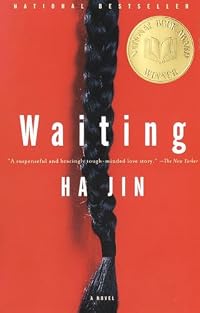




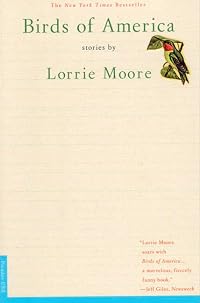





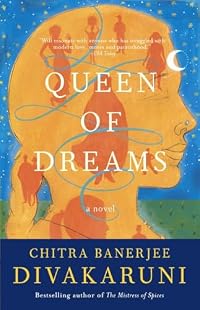

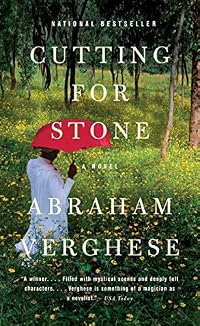











Member Recommendations






Member Reviews
This short story collection was Lahiri's very first publication and she won an armful of awards for it, which is logical because if you were to try and imagine the Platonic archetype of a "New Yorker short story" any one of these would do just fine, and indeed several of them were first published there. They're flawlessly written, with complex characterization, engrossing narratives, and emotional nuances in that literary fiction way where at the end of each one you're satisfied but thoughtful, not exactly happy but spiritually enriched somehow - "stories that make you go hmm". Most of them are set in the US, with the remainder taking place in India, and they all deal with some aspect of "the Bengali Indian/Indian-American experience", show more which generally seems to mean either dealing with culture shock or relationship issues or both. Not a perfect set of stories, since there is a total absence of joy here, but I came away respecting Lahiri's decision to concentrate on the melancholy aspects of the seam between cultures and the gap between expectations and reality, even if some more humor would have improved several of them. Often when I didn't enjoy some aspects of the stories I revised my understanding on rereading, because for the most part they're deeply written, and the restraint and economy of her style is key to the concepts she's trying to convey even if they come off as strange or unpleasurable at first.
- "A Temporary Matter". A couple has been failing to properly deal with the emotional fallout of the stillbirth of their child, until utility work on their house forces them to confront each other. There's an infamous adage that dealing with death is what separates a true "serious writer" from the amateur; by that criterion this story is as serious as it gets, but it's so sad in both its subject and its ending that you understand why most people treat reading as an escape and not a serious matter. I get that both staying in and leaving from a dead relationship are depressing, but man.
- "When Mr. Pirzada Came to Dine". A young Bengali Indian-American girl's family takes a Bangladeshi man under their wing while his family back home is threatened by the Bangladeshi war of independence. This is a solid commentary on how how remote and irrelevant affairs in the home country can seem to second-generation immigrants, neatly illustrated in reverse as well via the Bangladeshi man's puzzlement over Americanisms like Halloween customs.
- "Interpreter of Maladies". An Indian tour guide fields the questions and life experiences of a particularly ill-matched Indian-American couple and their children. Having just returned from a trip to Bangladesh myself I really sympathize with the poor tour guide's discomfort at the haplessness of tourists, but the unredeemed and unleavened contemptibility of the family in this story doesn't leave you with a good feeling about humanity. There's a whiff of commentary on how debauched Indian-Americans can be when they've lost touch with their heritage, but on further reflection I don't think Lahiri was trying to make a statement in that way, it seems more likely that these are just individually miserable people and not culturally miserable people. To interpret is also to translate, and so the tour guide's unease with these people is in the end perfectly relatable, as is his refusal to absolve the wife of her willful sins.
- "A Real Durwan". An old woman who was possibly once rich acts as a janitor/guardian for a Calcutta housing estate, as new wealth threatens to change the relationship between her and the rest of the building's residents. This is one of those "writing as formal justification for itself" stories that I find hard to criticize but also hard to respond to emotionally. The protagonist's plot arc is unhappy but not really sad, since the fact that the other residents don't believe her stories is the only bit of characterization she's given, so when she's used as the scapegoat for the building's misfortune it comes off as more of as writerly effort - the cycle of her personal falls from grace recapitulated in the community - than a genuinely moving narrative.
- "Sexy". A woman becomes a mistress to a rich banker, which is fun until it isn't, as the real ambivalence of being a side chick sinks in. Despite this story using some heavy-handed tricks - the parallels in the romantic travails of the protagonist's coworker's cousin are a bit too unsubtle, the whole scene with the cousin's overly precocious son she's babysitting is just bizarre - I liked how well it illustrated the paradoxically irresistible appeal of unsustainable affairs, how liberating making mistakes can be, and even though the arcs of passion inevitably return back down to earth, that descent doesn't have to be wrenching or awful but part of life.
- "Mrs. Sen's". A homesick elderly Indian woman who is having major issues adjusting to certain aspects of American life babysits a young white American boy whose single mother is trying to get her life in order. I guess you could say the theme of this story is "maturity", as all the main characters have some adjustment to do, but for some reason I found the title character's frustration with staples of the American experience like driving a car poignant, even if it's objectively pretty childish to refuse to learn how to drive. Assimilation has costs as well as benefits, and at a certain age I think you have the right to take a pass on certain ways of fitting in. I did mourn somewhat that the slapstick potential of some scenes were unrealized, but perhaps that would have undermined the characters.
- "This Blessed House". An uptight traditionalist man newly married to a free-spirited Americanized woman is really not happy with her delighted irony about the Christian religious paraphernalia they keep finding left over from the previous owners in the house they've just bought. Odd couples are a classic sitcom premise, and the New World vs Old World elements give this story the promise of a pilot episode, even if Lahiri scrupulously avoids any hint of comedy in the husband's attempts to cope with the wacky Manic Pixie Dream Girl aspects of the woman he's married after only 4 months of knowing her. Of course in real life this sort of marriage is almost instantly doomed, so as the story ends with the husband staring into the future thinking "oh boy, this is my life now", you're not exactly pulling for them to stay together.
- "The Treatment of Bibi Haldar". An epileptic Indian peasant girl deals with the bafflement and scorn of her community as she attempts to find love despite her condition. Yet another one of these stories that is formally flawless but emotionally unengaging because there's not a lot of dramatic action around the central problem. It actually feels like an over-literal interpretation or bad translation of a fairy tale with all of the magic and wonder stripped out, so instead of wicked stepsisters and helpful talking animal friends you just have this poor girl living in a shack desperately trying to get laid, waiting for a prince and having seizures once in a while. Disney is unlikely to option this one though.
- "The Third and Final Continent". An Indian immigrant to the US via London boards in the room of an incredibly old woman's house and deals with her being incredibly old until he can move out and bring his wife, who he barely knows, to America to begin their life together. That sounds really boring, but this was my favorite story. It's written as a first-person journal, so the stiff diction matches the stiffness of the main character's personality and therefore the lack of emotion in his life complements Lahiri's disengaged style rather than reveals it. Plus this story focuses on beginnings instead the sadness that permeates most of the other ones, so you're really pulling for the main character as he calmly deals with the loneliness of being isolated in a strange country without much money. show less
- "A Temporary Matter". A couple has been failing to properly deal with the emotional fallout of the stillbirth of their child, until utility work on their house forces them to confront each other. There's an infamous adage that dealing with death is what separates a true "serious writer" from the amateur; by that criterion this story is as serious as it gets, but it's so sad in both its subject and its ending that you understand why most people treat reading as an escape and not a serious matter. I get that both staying in and leaving from a dead relationship are depressing, but man.
- "When Mr. Pirzada Came to Dine". A young Bengali Indian-American girl's family takes a Bangladeshi man under their wing while his family back home is threatened by the Bangladeshi war of independence. This is a solid commentary on how how remote and irrelevant affairs in the home country can seem to second-generation immigrants, neatly illustrated in reverse as well via the Bangladeshi man's puzzlement over Americanisms like Halloween customs.
- "Interpreter of Maladies". An Indian tour guide fields the questions and life experiences of a particularly ill-matched Indian-American couple and their children. Having just returned from a trip to Bangladesh myself I really sympathize with the poor tour guide's discomfort at the haplessness of tourists, but the unredeemed and unleavened contemptibility of the family in this story doesn't leave you with a good feeling about humanity. There's a whiff of commentary on how debauched Indian-Americans can be when they've lost touch with their heritage, but on further reflection I don't think Lahiri was trying to make a statement in that way, it seems more likely that these are just individually miserable people and not culturally miserable people. To interpret is also to translate, and so the tour guide's unease with these people is in the end perfectly relatable, as is his refusal to absolve the wife of her willful sins.
- "A Real Durwan". An old woman who was possibly once rich acts as a janitor/guardian for a Calcutta housing estate, as new wealth threatens to change the relationship between her and the rest of the building's residents. This is one of those "writing as formal justification for itself" stories that I find hard to criticize but also hard to respond to emotionally. The protagonist's plot arc is unhappy but not really sad, since the fact that the other residents don't believe her stories is the only bit of characterization she's given, so when she's used as the scapegoat for the building's misfortune it comes off as more of as writerly effort - the cycle of her personal falls from grace recapitulated in the community - than a genuinely moving narrative.
- "Sexy". A woman becomes a mistress to a rich banker, which is fun until it isn't, as the real ambivalence of being a side chick sinks in. Despite this story using some heavy-handed tricks - the parallels in the romantic travails of the protagonist's coworker's cousin are a bit too unsubtle, the whole scene with the cousin's overly precocious son she's babysitting is just bizarre - I liked how well it illustrated the paradoxically irresistible appeal of unsustainable affairs, how liberating making mistakes can be, and even though the arcs of passion inevitably return back down to earth, that descent doesn't have to be wrenching or awful but part of life.
- "Mrs. Sen's". A homesick elderly Indian woman who is having major issues adjusting to certain aspects of American life babysits a young white American boy whose single mother is trying to get her life in order. I guess you could say the theme of this story is "maturity", as all the main characters have some adjustment to do, but for some reason I found the title character's frustration with staples of the American experience like driving a car poignant, even if it's objectively pretty childish to refuse to learn how to drive. Assimilation has costs as well as benefits, and at a certain age I think you have the right to take a pass on certain ways of fitting in. I did mourn somewhat that the slapstick potential of some scenes were unrealized, but perhaps that would have undermined the characters.
- "This Blessed House". An uptight traditionalist man newly married to a free-spirited Americanized woman is really not happy with her delighted irony about the Christian religious paraphernalia they keep finding left over from the previous owners in the house they've just bought. Odd couples are a classic sitcom premise, and the New World vs Old World elements give this story the promise of a pilot episode, even if Lahiri scrupulously avoids any hint of comedy in the husband's attempts to cope with the wacky Manic Pixie Dream Girl aspects of the woman he's married after only 4 months of knowing her. Of course in real life this sort of marriage is almost instantly doomed, so as the story ends with the husband staring into the future thinking "oh boy, this is my life now", you're not exactly pulling for them to stay together.
- "The Treatment of Bibi Haldar". An epileptic Indian peasant girl deals with the bafflement and scorn of her community as she attempts to find love despite her condition. Yet another one of these stories that is formally flawless but emotionally unengaging because there's not a lot of dramatic action around the central problem. It actually feels like an over-literal interpretation or bad translation of a fairy tale with all of the magic and wonder stripped out, so instead of wicked stepsisters and helpful talking animal friends you just have this poor girl living in a shack desperately trying to get laid, waiting for a prince and having seizures once in a while. Disney is unlikely to option this one though.
- "The Third and Final Continent". An Indian immigrant to the US via London boards in the room of an incredibly old woman's house and deals with her being incredibly old until he can move out and bring his wife, who he barely knows, to America to begin their life together. That sounds really boring, but this was my favorite story. It's written as a first-person journal, so the stiff diction matches the stiffness of the main character's personality and therefore the lack of emotion in his life complements Lahiri's disengaged style rather than reveals it. Plus this story focuses on beginnings instead the sadness that permeates most of the other ones, so you're really pulling for the main character as he calmly deals with the loneliness of being isolated in a strange country without much money. show less
This book deserves all the accolades. The stories are smart, poignant and short. Each one leaves you pondering the human condition. Many of them focus on the cross-cultural, and new immigrant aspects of our increasingly global society, the disconnects along with the underlying message that we all have the same hopes and dreams no matter our culture of origin. My favorite story was the last one, The Third and Final Continent, about a young Indian immigrant to Cambridge MA, where he bonds, absurdly, with an elderly woman who rents rooms to “Harvard and Tech” students only. She’s a tough old bird and you imagine she couldn’t possibly begin to understand or relate to this new immigrant, who is struggling with his own awkwardness in show more adapting to life in America. But the story proves otherwise. Jhumpa Lahiri is a natural talent at taking minimal words and conveying maximum emotions, in an understated, yet direct fashion. A beautiful book. MAT show less
As I noted at the beginning of the year, I am going to re-read one book that I remember as a favorite each month this year. Jhumpa Lahiri's Interpreter of Maladies was my first re-read. It held up well. I first read this book when I was in graduate school (2001 or so). I didn't remember many details, but I did remember being impressed with Lahiri's style. Since this book, I've read everything that Lahiri has written and consider her one of my favorite authors.
After the re-read, I still think that Lahiri is a master of short stories. Each detail is well chosen. Each phrase is thick with meaning. Consider these two short sentences about a couple whose relationship is struggling: "He refilled the wine in her glass. She thanked him." There show more is a lot of meaning in the terseness of that second sentence. Or this sentence, about a young man who is entering an arranged marriage: "I flew first to Calcutta, to attend my wedding, and a week later I flew to Boston, to begin my new job." The word "attend" makes the man seem like a guest at his wedding. The fact that the wedding doesn't even get its own sentence is significant too. These are the rewards that you get from a close reading of Lahiri's stories.
Another thing that is noteworthy about Lahiri's stories is that she doesn't shy away from big themes - creating a life in a foreign country, falling in love, becoming strangers, searching for companionship and support. There are themes woven in and out of these stories, and I think that the title of the collection is a clue to one of them. There is a story in the collection that is titled "Interpreter of Maladies" as well. In that story, Mr. Kapasi works as a tour guide on the weekends, but during the week, he is an interpreter for a doctor. He literally is an interpreter of maladies. But I think that we could also see Lahiri as an interpreter of maladies, making sense of losing a child, observing a war, having an affair, and being shut out by others. Each story encapsulates the maladies of everyday life.
However, I'm not sure that this book will end up on my desert island list or my all-time favorites list when all is said and done, and this may be because Lahiri is too good at what she does. She lays human nature bare, and it isn't always pretty. She doesn't have much sympathy for her characters, and as a result, some of them weren't very likeable. She is an interpreter of maladies, and while I appreciate her ability to play that role, I felt sad for many of the characters. This is the kind of book that I appreciate greatly, but that was sometimes difficult to read. I think this may be why I like Lahiri's short stories better than her novels. I was ready to leave the desperation of these characters behind after 25 pages. But that's also why Lahiri is one of my favorite authors. Anyway who can have that impact with a few well-chosen words deserves respect. show less
After the re-read, I still think that Lahiri is a master of short stories. Each detail is well chosen. Each phrase is thick with meaning. Consider these two short sentences about a couple whose relationship is struggling: "He refilled the wine in her glass. She thanked him." There show more is a lot of meaning in the terseness of that second sentence. Or this sentence, about a young man who is entering an arranged marriage: "I flew first to Calcutta, to attend my wedding, and a week later I flew to Boston, to begin my new job." The word "attend" makes the man seem like a guest at his wedding. The fact that the wedding doesn't even get its own sentence is significant too. These are the rewards that you get from a close reading of Lahiri's stories.
Another thing that is noteworthy about Lahiri's stories is that she doesn't shy away from big themes - creating a life in a foreign country, falling in love, becoming strangers, searching for companionship and support. There are themes woven in and out of these stories, and I think that the title of the collection is a clue to one of them. There is a story in the collection that is titled "Interpreter of Maladies" as well. In that story, Mr. Kapasi works as a tour guide on the weekends, but during the week, he is an interpreter for a doctor. He literally is an interpreter of maladies. But I think that we could also see Lahiri as an interpreter of maladies, making sense of losing a child, observing a war, having an affair, and being shut out by others. Each story encapsulates the maladies of everyday life.
However, I'm not sure that this book will end up on my desert island list or my all-time favorites list when all is said and done, and this may be because Lahiri is too good at what she does. She lays human nature bare, and it isn't always pretty. She doesn't have much sympathy for her characters, and as a result, some of them weren't very likeable. She is an interpreter of maladies, and while I appreciate her ability to play that role, I felt sad for many of the characters. This is the kind of book that I appreciate greatly, but that was sometimes difficult to read. I think this may be why I like Lahiri's short stories better than her novels. I was ready to leave the desperation of these characters behind after 25 pages. But that's also why Lahiri is one of my favorite authors. Anyway who can have that impact with a few well-chosen words deserves respect. show less
Sadness drips from from the stories in Jumpa Lahiri's collection, [Interpreter of Maladies]. The melancholy in the people of the stories is vicous, sticking in your mind long after laying the book down. Much of the grief and malaise flows from secrets held close in the heart, reluctantly shared. When they are given voice, it is with the hope of finding a respite or a refuge, as if in naming a pain aloud will dampen its sting. Lahiri, though, does not offer such a simple resolution, for in most cases the telling of a secret seems only to spread the pain or to isolate a growing divide. These divides amongst Lahiri's characters originate in differences in race, religion, culture, and personality and are not easily bridged, not even in show more sharing their pain. The stories are not devoid of hope, it's just that the hope the Lahiri offers flows from within.
Lahiri is a beautiful writer, able to translate an enormous amount of emotion quickly and concisely, making her short stories feel longer than they read. Perhaps the only reason I didn't rate this collection a full five bones was because I wanted to spend more time in the worlds she created with each successive story.
4 1/2 bones!!!!! show less
Lahiri is a beautiful writer, able to translate an enormous amount of emotion quickly and concisely, making her short stories feel longer than they read. Perhaps the only reason I didn't rate this collection a full five bones was because I wanted to spend more time in the worlds she created with each successive story.
4 1/2 bones!!!!! show less
Such a beautiful collection of short stories, one of the best I've ever read. These stories showed me the true potential of realist fiction in a way that I forgot was possible. Reading these stories, I am struck that Jhumpa Lahiri knows how to write a perfect short story in its "traditional" form you know? I don't know if "traditional" is exactly the word, but basically we always have this idea of the short story as a really tight, coiled spring of a story that is slow-burning, grounded, & filled with quiet complexity of humans. This is difficult!! Really difficult to do!! Which is why I think some find it easier to turn to speculative short fiction for example (some: me, lol).
The first story, "A Temporary Matter", was PERFECT as a show more story if I was teaching a class on writing it would be absolutely mandatory reading. She is so ridiculously skilled down to the level of the sentence. Every single sentence carried so much meaning & revealed so much about the character or setting or history. I was so taken in by how she would describe how a character was taking off their shoes with one hand and looking at envelopes with the other. She describes their dressing, their little movements, their anxieties and it really tunnelled you deeply into each character that when they moved or did something further into the story, you didn't need any speech from them, or any description from the author to confirm how they were feeling or how significant it was. And if they did speak, there's a feeling that a little explosion has been set off in the story. Even something simple like "our baby was a boy", or "could I drive all the way to Calcutta? How long would that take, Eliot?"
The stories I liked most were A Temporary Matter, Interpreter of Maladies, Sexy, and Mrs Sen's. Glad I own this book and can always turn to it. show less
The first story, "A Temporary Matter", was PERFECT as a show more story if I was teaching a class on writing it would be absolutely mandatory reading. She is so ridiculously skilled down to the level of the sentence. Every single sentence carried so much meaning & revealed so much about the character or setting or history. I was so taken in by how she would describe how a character was taking off their shoes with one hand and looking at envelopes with the other. She describes their dressing, their little movements, their anxieties and it really tunnelled you deeply into each character that when they moved or did something further into the story, you didn't need any speech from them, or any description from the author to confirm how they were feeling or how significant it was. And if they did speak, there's a feeling that a little explosion has been set off in the story. Even something simple like "our baby was a boy", or "could I drive all the way to Calcutta? How long would that take, Eliot?"
The stories I liked most were A Temporary Matter, Interpreter of Maladies, Sexy, and Mrs Sen's. Glad I own this book and can always turn to it. show less
A solidão é a chave para entender esses contos de Jhumpa Lahiri. O tema é recorrente e numa forma muito mais profunda que a simples solidão de estar só, mas aquela solidão inerente da individualidade. A solidão de nos sabermos únicos e estarmos sós em nós mesmos. Também a solidão de estar longe de sua terra natal, a solidão de ser incompreendido, a solidão da carência de afeto, a solidão da velhice, e de se dar conta de sonhos irrealizados, de desejos frustrados, e da existência previsível. Estar só é como uma jornada individual, impossível de ser compartilhada, comunicada ou sentida. Surgem aqui e ali as testemunhas desse cair em si, que mesmo sem entender totalmente o que passa fazem a ponte com o leitor. A show more escritora não precisa recorrer a finais mirabolantes ou surpreendentes, não quer causar espanto ou fúria, apenas nos deixar uma sensação de delicadeza, saudade, leve tristeza, e uma dorzinha no coração que afaga nossa empatia e abraça nossa própria solidão. show less
A common flaw of short stories is their tendency to overcompensate their brevity by weighing down every phrase and action with meaning and subtext, a flaw which was largely sidestepped by this understated collection. The collection interprets a range of maladies which can be described under an umbrella term as the "immigrant experience". More precisely, it explores what it means to be isolated - all the different forms of isolations - by purposely placing its characters in a state of disassociation from their surroundings and community. For example, in the first story, the isolation from the outside community caused by the blackouts shone a light on the palpable isolation between the grieving couple, creating an intimate - or isolated - show more space where they could obliquely share their anguish.
Throughout the collection, this interplay between the different types of isolations manages to feel subtle and not overdone. The language is simple, the subtext subtle but clear, the culture evocative - not necessarily Indian, it could have been any culture -, the catalystic situation natural, the people everyday. Mrs Croft alone raises the novel to exceptional heights: splendid! show less
Throughout the collection, this interplay between the different types of isolations manages to feel subtle and not overdone. The language is simple, the subtext subtle but clear, the culture evocative - not necessarily Indian, it could have been any culture -, the catalystic situation natural, the people everyday. Mrs Croft alone raises the novel to exceptional heights: splendid! show less
Members
- Recently Added By
Published Reviews
ThingScore 75
In this accomplished collection of stories, Jhumpa Lahiri traces the lives of people on two continents -- North America and India -- and in doing so announces herself as a wonderfully distinctive new voice. Indeed, Ms. Lahiri's prose is so eloquent and assured that the reader easily forgets that ''Interpreter of Maladies'' is a young writer's first book.
added by jlelliott
Lists

Pulitzer Prize Winners for Fiction
102 works; 54 members

Recommend the 20 best books you've read in the last five years
2,168 works; 606 members

Best Contemporary Literary Fiction (Around the Last 30 Years)
388 works; 124 members

Best of World Literature
431 works; 51 members

All Things India
95 works; 21 members

Favorite Short Fiction
228 works; 99 members

Top Five Books of 2013
1,562 works; 721 members

Short Story Collections and Anthologies
260 works; 42 members

The Immigrant's Stories
74 works; 19 members

Top Five Books of 2017
757 works; 230 members

100 books to read in a lifetime
102 works; 37 members

20th Century Literature
1,161 works; 55 members

Pulitzer Prize-Winning Books
42 works; 9 members

Literature by People of Color
81 works; 9 members

50 Books from the Past 50 Years
50 works; 8 members

Female Author
1,235 works; 67 members

Expand Your Reading Demographics!
47 works; 14 members
100 New Classics
101 works; 13 members
LibraryThingers' 1001 Books You Must Read Before You Die
442 works; 30 members
Top Five Books of 2018
802 works; 265 members

Most Popular Books Tagged India
36 works; 5 members

Phi Beta Kappa reading list
260 works; 8 members

Books Read in 2014
2,342 works; 86 members

1990s
309 works; 17 members

Five star books
1,755 works; 108 members

Elena Ferrante's 40 favourite books by female authors
40 works; 10 members

Asia
178 works; 7 members

Contemporary Fiction
109 works; 7 members

End of Your Life Book Club
134 works; 4 members

Stories featuring characters who are mathematicians
42 works; 5 members

Books Read in 2017
4,249 works; 129 members

Most Depressing Books
69 works; 16 members

Powell's 50 Books for 50 Years
50 works; 4 members

Unread books
1,063 works; 83 members

Books Read in 2015
3,299 works; 129 members

BingoDOG 2015 Challenge
49 works; 3 members

Indian Diaspora
42 works; 2 members

Reading Globally
136 works; 16 members

American Lit for Eng 11 Research Project
368 works; 6 members

Authors from the United States
245 works; 3 members
Books I read in high school
52 works; 1 member

Short Story and Novella Collections
47 works; 6 members

Mustich's 1000 Books to Read Before You Die: A Life Changing List
1,001 works; 18 members
Recommended Reading : 600 Classics Reviewed, Editors of Salem Press, 2015
634 works; 6 members

Books recommended in the history category on FiveBooks.com
329 works; 4 members
Talk Discussions
Past Discussions
Interpreter of Maladies: Introduce yourself! in One LibraryThing, One Book (March 2017)
Author Information

59+ Works 39,483 Members
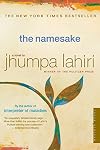
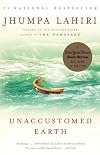
Jhumpa Lahiri was born in London, England on July 11, 1967. She received a B.A. in English literature from Barnard College in 1989, and a M.A. in English, a M.A. in Creative Writing, a M.A. in Comparative Studies in Literature and the Arts, and a Ph.D. in Renaissance Studies from Boston University. Lahiri taught creative writing at Boston show more University and the Rhode Island School of Design. Her debut work, Interpreter of Maladies, won the Pulitzer Prize for fiction in 2000. She has also won the PEN/Hemmingway Award, an O. Henry Award, The New Yorker's best debut of the year award, and an Addison Metcalf award. Her other works include The Namesake, which was made into a movie in 2007, Unaccustomed Earth, and The Lowland, which won 2015 DSC Prize for South Asian Literature. (Bowker Author Biography) show less
Some Editions
Awards and Honors
Awards
Distinctions
Series
Belongs to Publisher Series
Work Relationships
Is contained in
Has as a student's study guide
Common Knowledge
- Canonical title
- Interpreter of Maladies
- Original title
- Interpreter of Maladies
- Original publication date
- 1999
- People/Characters
- Mr. Pirzada; Mrs. Sen; Twinkle; Bibi Haldar; Mr. Kapasi; Eliot (show all 16); Miranda; Shoba; Shukamar; Mrs. Das; Mr. Das; Boori Ma; Sanjeev; Dev; Mr. Sen; Mrs. Croft
- Important places
- Boston, Massachusetts, USA; Hartford, Connecticut, USA; Kolkata, India; Dhaka, Bangladesh
- Important events
- Bangladesh War of Independence (1971)
- Dedication
- For my parents and for my sister
For my parents and for my sister - First words
- The notice informed them that it was a temporary matter: for five days their electricity would be cut off for one hour, beginning at eight P.M.
- Quotations
- While the astronauts, heroes forever, spent mere hours on the moon, I have remained in this new world for nearly thirty years. I know that my achievement is quite ordinary. I am not the only man to seek his fortune far from h... (show all)ome, and I am certainly not the first. Still, there are times I am bewildered by each mile I have traveled, each meal I have eaten, each person I have known, each room in which I have slept. As ordinary as it all appears, there are times when it is beyond my imagination.
As stunned as I was, I knew what I had to say. With no hesitation at all, I cried out, "Splendid!"
In fact, the only thing that appeared three-dimensional about Boori Ma was her voice: brittle with sorrows, as tart as curds, and shrill enough to grate meat from a coconut.
He wondered if Mr. and Mrs. Das were a bad match, just as he and his wife were. Perhaps they, too, had little in common apart from three children and a decade of their lives. The signs he recognized from his own marriage were... (show all) there--the bickering, the indifference, the protracted silences.
In its own way this correspondence would fulfill his dream, of serving as an interpreter between nations. - Last words
- (Click to show. Warning: May contain spoilers.)Still, there are times I am bewildered by each mile I have traveled, each meal I have eaten, each person I have known, each room in which I have slept. As ordinary as it all appears, there are times when it is beyond my imagination.
- Blurbers
- Tan, Amy
- Original language
- English
Classifications
Statistics
- Members
- 13,244
- Popularity
- 585
- Reviews
- 282
- Rating
- (4.09)
- Languages
- 21 — Bengali, Catalan, Chinese, Czech, Danish, Dutch, English, Estonian, Finnish, French, German, Greek, Indonesian, Italian, Japanese, Multiple languages, Norwegian (Bokmål), Romanian, Spanish, Swedish, Portuguese (Portugal)
- Media
- Paper, Audiobook, Ebook
- ISBNs
- 65
- UPCs
- 3
- ASINs
- 42