On This Page
Description
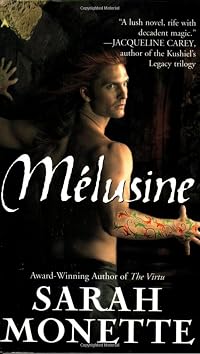
From an award-winning author, the first book in the spellbinding series, the Doctrine of Labyrinths Welcome to Melusine, a city as wondrous as it is corrupt. Within its walls lies a stronghold of power and magic, a shining setting for the brilliant Felix Harrowgate. A well-respected wizard and darling of the court, Felix harbors sordid secrets from his peers in the aristocracy: a dark past in which a sadistic wizard enslaved him body and mind, even as he schooled Felix in how to walk among show more noblemen as if he were one of them. An abuser Felix believes himself free of, until a return to his former master's lair leads to his harrowing fall from grace. Broken, lost, Felix finds an unlikely accomplice in Mildmay the Fox. Trained to be an assassin, surviving as a thief, Mildmay knows what it is to be hunted. When fate brings the weakened wizard and the wanted killer together, they escape Melusine, traveling through strange lands where they encounter peculiar magic and powerful demons. A world where shocking secrets will be laid bare-dark truths that will bind them together forever. Contains mature themes. show lessTags
Recommendations





































Member Recommendations


Member Reviews
It took me a while to decide whether I loved this book or just rather liked it. It instantly struck a chord with me; the worldbuilding is wonderful, the characters are well-drawn and Monette does some amazing things with voice and tone. And yet, it seemed to be taking a long time for much to happen. I was never bored - to the contrary, I found the whole thing just fascinating - but I began to worry that it would never really come together. That all these enthralling tangents would be as random as they seemed, instead of the puzzle pieces I hoped they would be.
Then the two main characters finally came together, and there wasn't a doubt left in my mind. I absolutely loved this gorgeous, sprawling, utterly absorbing book.
As I mentioned show more above, Monette has a wonderful grasp of voice. The story bounces back and forth between two first person perspectives, and the two voices are so distinct that one can instantly tell whose POV is in play. The narrative also lets the reader see just who these two characters are; it illuminates them by showing us how they view and describe the world around them.
The many little stories and sidetrips work wonderfully to create a complex, multi-layered story. Each piece contributes to a gradual build-up that draws the reader in and leaves her wanting more. I was hard-pressed to put this down over the last hundred and fifty pages or so. It reminded me very strongly of authors like Ellen Kushner and Sandra Gulland, who develop absorbing and unconventional plots by layering piece upon piece. Monette does much the same, and to great effect.
All in all, it was a fantastic read. The style definitely isn't for everyone, but I highly recommend that you at least give it a try. I rushed straight out to buy the next one, and I almost never do that.
(An update: I wrote a longer, more involved review after I finished my second reading. It's available on my blog, Stella Matutina). show less
Then the two main characters finally came together, and there wasn't a doubt left in my mind. I absolutely loved this gorgeous, sprawling, utterly absorbing book.
As I mentioned show more above, Monette has a wonderful grasp of voice. The story bounces back and forth between two first person perspectives, and the two voices are so distinct that one can instantly tell whose POV is in play. The narrative also lets the reader see just who these two characters are; it illuminates them by showing us how they view and describe the world around them.
The many little stories and sidetrips work wonderfully to create a complex, multi-layered story. Each piece contributes to a gradual build-up that draws the reader in and leaves her wanting more. I was hard-pressed to put this down over the last hundred and fifty pages or so. It reminded me very strongly of authors like Ellen Kushner and Sandra Gulland, who develop absorbing and unconventional plots by layering piece upon piece. Monette does much the same, and to great effect.
All in all, it was a fantastic read. The style definitely isn't for everyone, but I highly recommend that you at least give it a try. I rushed straight out to buy the next one, and I almost never do that.
(An update: I wrote a longer, more involved review after I finished my second reading. It's available on my blog, Stella Matutina). show less
Sarah Monette writes with great style - with strength and vigour and rhythm. She builds strong voices for her two first-person narrators and has some just plain delightful lines and exchanges. The details, and especially her similes and metaphors, are sprinkled like the perfect spice. (The one that sticks in my head is about the character's patience ripping asunder like a rotten cloth.) And the first-person descriptions of Felix's madness were very well done indeed.
None of which changes the fact that I found this book severely lacking in the plotting department.
Let me be honest: I am extremely demanding about plotting. I want it tight, and I want it all to mean something, and I want everything to feed into a big ball of OMG-finale. show more This book was, in that respect, just plain not for me. (Your mileage may vary.) We basically just follow along with our two narrators (Felix and Mildmay) as their lives happen - admittedly, through some pretty tumultuous happenings, that bring them together (eventually) and take them on a journey. But it's mostly about the character development - there is no villain, not really, and the supporting characters come into and fall away from their lives in a way that is entirely realistic and just plain not narratively satisfying to me.
I mean, I have no idea why we even have the entirety of Mildmay's story for the first third of the book, except that that is the only thing that kept me reading the book while I was rolling my eyes at Felix's amazing epic melodrama. (Dude freaks the fuck out on the first page of his narration, carries on with "my life is over" gothic melodrama for forty pages or so, then goes insane for the next hundred pages. It's wonderfully written but not particularly sympathy-inducing.)
I understand there are another three books to follow this one, but since I am left with absolutely no burning questions about Felix and Mildmay, and no real loose ends to the "plot", I don't think I'll be picking them up. show less
None of which changes the fact that I found this book severely lacking in the plotting department.
Let me be honest: I am extremely demanding about plotting. I want it tight, and I want it all to mean something, and I want everything to feed into a big ball of OMG-finale. show more This book was, in that respect, just plain not for me. (Your mileage may vary.) We basically just follow along with our two narrators (Felix and Mildmay) as their lives happen - admittedly, through some pretty tumultuous happenings, that bring them together (eventually) and take them on a journey. But it's mostly about the character development - there is no villain, not really, and the supporting characters come into and fall away from their lives in a way that is entirely realistic and just plain not narratively satisfying to me.
I mean, I have no idea why we even have the entirety of Mildmay's story for the first third of the book, except that that is the only thing that kept me reading the book while I was rolling my eyes at Felix's amazing epic melodrama. (Dude freaks the fuck out on the first page of his narration, carries on with "my life is over" gothic melodrama for forty pages or so, then goes insane for the next hundred pages. It's wonderfully written but not particularly sympathy-inducing.)
I understand there are another three books to follow this one, but since I am left with absolutely no burning questions about Felix and Mildmay, and no real loose ends to the "plot", I don't think I'll be picking them up. show less
Sarah Monette's world is so real, you feel enveloped inside its magic and mystery. This book sets up an adventure that is harrowing, heart-wrenching, and often, really painful. Her lead characters - master wizard Felix Harrowgate and Mildmay the fox - spend the series of 4 books trying to come to grip with their tortured past. Felix's half-brother Mildmay, suffers in silence as he is dragged from one dangerous escapade to the next, while Felix endures both physical and emotional blows. I totally fell in love with these rogues, and although these book are of course fantasy, the emotional content is visceral. If you enjoy characters that are flawed and unapologetic, this book starts a deeply satisfying adventure.
This is a very dark book - and as a rule I don't do dark books, but the writing and characters are so fabulous that I was actively angry when I had to put it down to do something else, like work. It has been a long time since Ive been so sucked into a book; it was almost frightening. I tend to be a character-driven reader, and this book is highly character-driven. Fair warning though - none of the main characters are happy, and most of them have tortured pasts that continue to haunt them. Vividly. (See the "dark book" note above.) The use of language is incredible, and you just get carried along to the end, fascinated and often horrified, aching to find out what happens to everyone. Highly recommended.
This book hooked me in four pages. The reason is two-fold:
1. Mildmay's very distinctive character voice, and
2. Felix's life explodes in his face on pages 5-8.
Sarah Monette teaches us that there is no need to spend the time setting up a wall that you're just going to knock down as soon as possible. She relies on the reader to know the wall is there in a few concise clues - thus trusting our intelligence - and gives us what we're there to see. The downfall of the status quo happens quickly and brutally, and one of the characters spends the rest of the book paying the price.
The book has a strange duality in my mind - Felix's actions (and the actions of others with regard to him) drive the plot, but it is Mildmay who is the window by which show more we see this world. Oh, one can certainly argue that Felix gives us a perspective on how the upper crust lives while Mildmay is out in the trenches, and that is in some sense true. But we all know how the upper crust lives - we've read those books time and time again. It is Mildmay who shows us Mélusine proper - from her walls to the Arcane, from the Sim and the cade-skiffs to the Boneprince. He is the voice of reason and knowledge, and his is the perspective that we are forced to rely on for the real story.
The one thing that surprised me was how long Felix & Mildmay went before meeting. And I was indescribably pleased to see how the author did not dance around the point of their meeting - she brought them together, demonstrated the Plot Point, and moved on to the characters and overarching story.
You can pretty well tell that Monette is out to tell a long story. She sets up some fabulous things in this book, and she's not shy about it, either. The world-building is, of course, most necessary, but then there's her homage to Moria will crop up again, as will the rival magical schools, as will, I hope, some of the problems Mildmay encounters early on in the story.
But what this story really runs on is the bonds she forges between her protagonists as soon as they meet. I was a bit puzzled, at first, to note how close Mildmay would stick to this flash hocus he picked up without quite intending to, but it completely fits with the sheer charisma Felix has. Likewise, Mildmay exerts his own magnetic pull, no matter what he thinks on the matter.
The Roman and Greek nomenclature, the calendrical systems (a full explanation of which can be found on the website), and, oh I think I love her so very much for the Morskaiakrov! It's not just the vessel, but the description of her crew that gets me. show less
1. Mildmay's very distinctive character voice, and
2. Felix's life explodes in his face on pages 5-8.
Sarah Monette teaches us that there is no need to spend the time setting up a wall that you're just going to knock down as soon as possible. She relies on the reader to know the wall is there in a few concise clues - thus trusting our intelligence - and gives us what we're there to see. The downfall of the status quo happens quickly and brutally, and one of the characters spends the rest of the book paying the price.
The book has a strange duality in my mind - Felix's actions (and the actions of others with regard to him) drive the plot, but it is Mildmay who is the window by which show more we see this world. Oh, one can certainly argue that Felix gives us a perspective on how the upper crust lives while Mildmay is out in the trenches, and that is in some sense true. But we all know how the upper crust lives - we've read those books time and time again. It is Mildmay who shows us Mélusine proper - from her walls to the Arcane, from the Sim and the cade-skiffs to the Boneprince. He is the voice of reason and knowledge, and his is the perspective that we are forced to rely on for the real story.
The one thing that surprised me was how long Felix & Mildmay went before meeting. And I was indescribably pleased to see how the author did not dance around the point of their meeting - she brought them together, demonstrated the Plot Point, and moved on to the characters and overarching story.
You can pretty well tell that Monette is out to tell a long story. She sets up some fabulous things in this book, and she's not shy about it, either. The world-building is, of course, most necessary, but then there's her homage to Moria will crop up again, as will the rival magical schools, as will, I hope, some of the problems Mildmay encounters early on in the story.
But what this story really runs on is the bonds she forges between her protagonists as soon as they meet. I was a bit puzzled, at first, to note how close Mildmay would stick to this flash hocus he picked up without quite intending to, but it completely fits with the sheer charisma Felix has. Likewise, Mildmay exerts his own magnetic pull, no matter what he thinks on the matter.
The Roman and Greek nomenclature, the calendrical systems (a full explanation of which can be found on the website), and, oh I think I love her so very much for the Morskaiakrov! It's not just the vessel, but the description of her crew that gets me. show less
The first book in Sarah Monette's Doctrine of Labyrinths series, Melusine drops the reader into the middle of a 17th-ish-century Europe-esque fantasy world where those who can wield magic hold political and social power. The story follows two denizens of the city of Melusine--Felix, a wizard with a secret past, and ex-street urchin and thief Mildmay--and switches between their points of view. Within the space of a few pages, both Felix and Mildmay become entangled in the political and magical struggles of the city through seemingly minor missteps of their own which end up utterly altering their lives.
The details of the world Monette has built are rich, fascinating, and immersive, and much of what makes this such a great read comes from show more her ability to wrap the reader up in those details. However, striking the balance between over- and under-explaining in world-building is tricksy, and Monette may have erred a bit on the side of under-explaining here. I really felt dropped into this world, and the lack of any sense of big picture for the world in which the story takes place made the read a little claustrophobic. That effect may have worked well in telling the story, but I think a little bit more catching the reader up wouldn't have gone amiss (the calendar and counting systems still elude me, even after I looked up the author's own explanation of them on her website). Most of the filling-in and figuring-out I had to do while reading added to the experience and helped form the layers of the fantasy world, but some of it was just distracting.
But I was completely caught up in the story throughout, and the novel manages to avoid dragging in the middle (a frequent failure, I find, of fantasy novels). I was also equally invested in both Felix's and Mildmay's stories and points of view, which attests to Monette's ability to create interesting characters and keep the overall story moving despite working with parallel narrative lines. Melusine deals with some dark, dark stuff (abusive mind-games, rape, murder, torture, violence--it hits the hurt/comfort trope hard, mostly on the hurt end of things, at least in this entry in the series), but does so compellingly and without becoming depressing or squicky (for me--YMMV, of course). While the book does not end on a cliff-hanger, it does leave all kinds of plot threads and emotional arcs tantalizingly dangling, and I'm looking forward to getting my paws on the next book. show less
The details of the world Monette has built are rich, fascinating, and immersive, and much of what makes this such a great read comes from show more her ability to wrap the reader up in those details. However, striking the balance between over- and under-explaining in world-building is tricksy, and Monette may have erred a bit on the side of under-explaining here. I really felt dropped into this world, and the lack of any sense of big picture for the world in which the story takes place made the read a little claustrophobic. That effect may have worked well in telling the story, but I think a little bit more catching the reader up wouldn't have gone amiss (the calendar and counting systems still elude me, even after I looked up the author's own explanation of them on her website). Most of the filling-in and figuring-out I had to do while reading added to the experience and helped form the layers of the fantasy world, but some of it was just distracting.
But I was completely caught up in the story throughout, and the novel manages to avoid dragging in the middle (a frequent failure, I find, of fantasy novels). I was also equally invested in both Felix's and Mildmay's stories and points of view, which attests to Monette's ability to create interesting characters and keep the overall story moving despite working with parallel narrative lines. Melusine deals with some dark, dark stuff (abusive mind-games, rape, murder, torture, violence--it hits the hurt/comfort trope hard, mostly on the hurt end of things, at least in this entry in the series), but does so compellingly and without becoming depressing or squicky (for me--YMMV, of course). While the book does not end on a cliff-hanger, it does leave all kinds of plot threads and emotional arcs tantalizingly dangling, and I'm looking forward to getting my paws on the next book. show less
This is a WONDERFUL book. I went into it expecting M/M and it's not... really? I definitely understand why my library labeled it under the science fiction/fantasy/science fantasy section. It's sort of a cross of high fantasy and a dash of dark fantasy, mixed with comedy, plenty of angst, and some M/M elements.
The series is heart-wrenching. A lot of bad things have happened and do happen to the two protagonists. There's also a bit of sweet - a very touching moments - and some humor. It's by no means as funny as, say, one of Steven Brust's "Vlad Taltos" books or T.J. Klune's "Tales From Verania", but it does have some great sarcasm and humor.
I love Felix, but it took some time for me to come around to Mildmay. Once I did, though, ah, I show more adore them both. Usually in books like this, the characters interact or at least their stories cross paths closer than like... the last third of the book, as seems to be the case here. Since I expected this to be M/M, I was surprised to see actually the two characters aren't romancing each other. It's more like two overlapping fantasy novellas that finally cross at that last third. It's a bit of a weird way to write a book, particularly given how powerfully different the two storylines are. Felix is very focused on trauma, torture, a very bad healthcare and justice system, and dealing with mental illness. Mildmay is a thief trying to survive in a world slowly going mad. I can see how that contrast might turn people off. I enjoyed Felix's sections far more than Mildmay's for some time. But the writing is just so good and the worldbuilding so well crafted and the character development is wonderful. That last third where the stories finally interact is also so very, very good.
The world is polished and complex - but not overly so - in a way that not many high fantasy authors can pull off without writing tomes longer than the entire "Harry Potter" series, so that Monette did so in a relatively short novel is quite impressive. It reminds me a lot of Steven Brust's Dragaera books - both writers write complexity that you're not overwhelmed by. Maybe for a couple pages as you adjust, but then you learn to trust that the author will get around to telling you in time.
A few scenes stand out as particularly touching, including one reunion between Felix and another character, and a truly heartbreaking scene Felix has with Gideon by the tower. I've been where Felix was with that mindset in the latter scene and it was so well-written here. If only we all had Gideons like that for those moments. The build-up was excellent, as well. And Mildmay and Felix's relationship is beautifully written. Their interactions are the best. The only character I'm curious about is Vida - she kind of falls off the map without explanation - which is extra confusing because another female character whose name starts with 'V' takes the spotlight - and I'm worried she died off-screen, which sucks. I liked her.
It's really sad that this series is basically out of print. I'm glad my library had copies but it was hard to get some of my own. Looking forward to book 2! show less
The series is heart-wrenching. A lot of bad things have happened and do happen to the two protagonists. There's also a bit of sweet - a very touching moments - and some humor. It's by no means as funny as, say, one of Steven Brust's "Vlad Taltos" books or T.J. Klune's "Tales From Verania", but it does have some great sarcasm and humor.
I love Felix, but it took some time for me to come around to Mildmay. Once I did, though, ah, I show more adore them both. Usually in books like this, the characters interact or at least their stories cross paths closer than like... the last third of the book, as seems to be the case here. Since I expected this to be M/M, I was surprised to see actually the two characters aren't romancing each other. It's more like two overlapping fantasy novellas that finally cross at that last third. It's a bit of a weird way to write a book, particularly given how powerfully different the two storylines are. Felix is very focused on trauma, torture, a very bad healthcare and justice system, and dealing with mental illness. Mildmay is a thief trying to survive in a world slowly going mad. I can see how that contrast might turn people off. I enjoyed Felix's sections far more than Mildmay's for some time. But the writing is just so good and the worldbuilding so well crafted and the character development is wonderful. That last third where the stories finally interact is also so very, very good.
The world is polished and complex - but not overly so - in a way that not many high fantasy authors can pull off without writing tomes longer than the entire "Harry Potter" series, so that Monette did so in a relatively short novel is quite impressive. It reminds me a lot of Steven Brust's Dragaera books - both writers write complexity that you're not overwhelmed by. Maybe for a couple pages as you adjust, but then you learn to trust that the author will get around to telling you in time.
A few scenes stand out as particularly touching, including one reunion between Felix and another character, and a truly heartbreaking scene Felix has with Gideon by the tower. I've been where Felix was with that mindset in the latter scene and it was so well-written here. If only we all had Gideons like that for those moments. The build-up was excellent, as well. And Mildmay and Felix's relationship is beautifully written. Their interactions are the best. The only character I'm curious about is Vida - she kind of falls off the map without explanation - which is extra confusing because another female character whose name starts with 'V' takes the spotlight - and I'm worried she died off-screen, which sucks. I liked her.
It's really sad that this series is basically out of print. I'm glad my library had copies but it was hard to get some of my own. Looking forward to book 2! show less
Members
- Recently Added By
Lists

Best Fantasy Novels
821 works; 357 members

Books discovered on LibraryThing
256 works; 35 members

infjsarah's wishlist
408 works; 2 members

al.vick-series
381 works; 2 members
Author Information

65+ Works 12,707 Members

Sarah Monette is a LibraryThing Author, an author who lists their personal library on LibraryThing.
Some Editions
Awards and Honors
Awards
Distinctions
Notable Lists
Series

Common Knowledge
- Canonical title
- Mélusine
- Original title
- Mélusine
- Original publication date
- 2005-08
- People/Characters
- Felix Harrowgate; Mildmay the Fox; Mavortian von Heber; Malkar Gennadion
- Important places
- Melusine; The Mirador; The Lower City; Gardens of Nephele
- Dedication
- For A.L.M.
- First words
- This is the worst story I know about hocuses. And it’s true.
- Last words
- (Click to show. Warning: May contain spoilers.)I heard him say, or maybe I just dreamed it, "Sleep well, little brother."
- Blurbers
- Carey, Jacqueline; Vinge, Joan D.; Dart-Thornton, Cecilia; Walton, Jo
Classifications
Statistics
- Members
- 1,445
- Popularity
- 16,332
- Reviews
- 63
- Rating
- (3.97)
- Languages
- English
- Media
- Paper, Ebook
- ISBNs
- 5
- ASINs
- 3