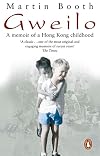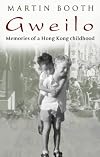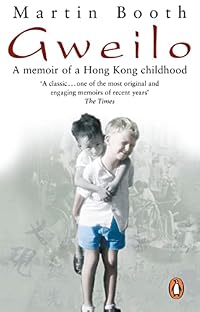
Gweilo: Memories of a Hong Kong Childhood
by Martin Booth
On This Page
Description
At seven years old, Martin Booth found himself with all of Hong Kong at his feet. His father was posted there in 1952, and this memoir is his telling of that youth, a time when he had access to the corners of a colony normally closed to a "Gweilo," a "pale fellow" like him.His experiences were colorful and vast. Befriending rickshaw coolies and local stallholders, he learned Cantonese, sampled delicacies such as boiled water beetles and one-hundred-year-old eggs, and participated in vibrant show more festivals. He even entered the forbidden Kowloon Walled City, wandered into a secret lair of Triads, and visited an opium den.From the plink-plonk man with his dancing monkey to the Queen of Kowloon (a crazed tramp who may have been a Romanov), Martin Booth saw it all---but his memoir illustrates the deeper challenges he faced in his warring parents: a broad-minded mother who embraced all things Chinese and a bigoted father who was enraged by his family's interest in "going native."Martin Booth's compelling memoir, the last book he completed before dying, glows with infectious curiosity and humor and is an intimate representation of the now extinct time and place of his growing up. show lessTags
Recommendations






Member Reviews
Beautifully written, highly memorable, Gweilo is an evocative account of a young boy’s eventful stay in Hong Kong during the 1950s.
7-year-old Martin and his parents leave England behind as they set sail for far-off Hong Kong where his father is about to start a new job. The month-long journey sets the tone for the family dynamics that will swirl like a tempest around young Martin.
Narrow-minded and fearful of the exotic, Martin’s father is the polar opposite to Martin’s mother. Poised, articulate, and with a steely streak of determination that belies her frail exterior, she stands up to her husband and imbues in her son a sense of adventure and discovery as well as respect for different cultures. She herself falls headlong in show more love with the colony almost as soon as she arrives. While she makes friends among both the expatriate and local residents, Martin ventures forth, with her blessing, to partake of the exotic glories of 50’s Hong Kong street life.
It is impossible not to feel tenderly towards this young narrator. Streetwise and savvy, he roamed the streets of Kowloon and the hills of Hong Kong on his own, something that would be unthinkable nowadays.
His adventures and discoveries among the locals are many and delightful, and the reader experiences the delight almost first-hand, as the sights, sounds and smells of the growing colony are evoked in vivid, dynamic prose. The people (the locals, his parents, himself) are masterfully recreated, so that we seem to know them, on occasion, better than they do themselves. There are also flashes of humour, some arising from a young boy’s mischief, some from his very innocence.
Not only does Gweilo recount the events of a few short years in the life of Martin Booth, it also serves as an enchanting record of a Hong Kong that no longer exists.
As a memoir of a few years out of a young boy’s life, Gweilo is not only sharply-observed, it is recounted with zest, with a passion for life, with a deep and abiding curiosity that only a spunky, street-wise and adventurous 8-year-old could possess. As a re-telling of a childhood lived to the fullest, Gweilo must rank as one of the most engaging ever told.
Critics have voiced their doubts regarding what appears to be total recall of day-to-day minutiae. The author himself has this to say: “Once I had set out upon the task, the past began to unfold—perhaps it is better to say unravel—before me…..forever repeating itself in the recesses of my mind, like films in wartime cartoon cinemas, showing over and over again as if on an endless loop.” With the help of a scrapbook and photographic albums compiled by his mother, he was able to re-create the years of his childhood.
Written after he was diagnosed with a virulent form of brain tumour, and at the behest of his children who begged him to recount for them his childhood, Gweilo is part of the author’s literary legacy— he succumbed to the cancer soon after Gweilo was completed.
I often dream of my own childhood in Hong Kong. Lately, I could almost swear that, out of the corner of my dreamsake’s eye, I catch a glimpse of a small, spunky, tow-headed boy sauntering along the alleyways, stopping for a thousand-year egg at a dai-pai-dong, exchanging pleasantries with the stall-holders, sipping a Coke through a straw in the sub-tropical heat. But when I try to stroke his fair head for luck, he’s gone like a will-o’-the-wisp. show less
7-year-old Martin and his parents leave England behind as they set sail for far-off Hong Kong where his father is about to start a new job. The month-long journey sets the tone for the family dynamics that will swirl like a tempest around young Martin.
Narrow-minded and fearful of the exotic, Martin’s father is the polar opposite to Martin’s mother. Poised, articulate, and with a steely streak of determination that belies her frail exterior, she stands up to her husband and imbues in her son a sense of adventure and discovery as well as respect for different cultures. She herself falls headlong in show more love with the colony almost as soon as she arrives. While she makes friends among both the expatriate and local residents, Martin ventures forth, with her blessing, to partake of the exotic glories of 50’s Hong Kong street life.
It is impossible not to feel tenderly towards this young narrator. Streetwise and savvy, he roamed the streets of Kowloon and the hills of Hong Kong on his own, something that would be unthinkable nowadays.
His adventures and discoveries among the locals are many and delightful, and the reader experiences the delight almost first-hand, as the sights, sounds and smells of the growing colony are evoked in vivid, dynamic prose. The people (the locals, his parents, himself) are masterfully recreated, so that we seem to know them, on occasion, better than they do themselves. There are also flashes of humour, some arising from a young boy’s mischief, some from his very innocence.
Not only does Gweilo recount the events of a few short years in the life of Martin Booth, it also serves as an enchanting record of a Hong Kong that no longer exists.
As a memoir of a few years out of a young boy’s life, Gweilo is not only sharply-observed, it is recounted with zest, with a passion for life, with a deep and abiding curiosity that only a spunky, street-wise and adventurous 8-year-old could possess. As a re-telling of a childhood lived to the fullest, Gweilo must rank as one of the most engaging ever told.
Critics have voiced their doubts regarding what appears to be total recall of day-to-day minutiae. The author himself has this to say: “Once I had set out upon the task, the past began to unfold—perhaps it is better to say unravel—before me…..forever repeating itself in the recesses of my mind, like films in wartime cartoon cinemas, showing over and over again as if on an endless loop.” With the help of a scrapbook and photographic albums compiled by his mother, he was able to re-create the years of his childhood.
Written after he was diagnosed with a virulent form of brain tumour, and at the behest of his children who begged him to recount for them his childhood, Gweilo is part of the author’s literary legacy— he succumbed to the cancer soon after Gweilo was completed.
I often dream of my own childhood in Hong Kong. Lately, I could almost swear that, out of the corner of my dreamsake’s eye, I catch a glimpse of a small, spunky, tow-headed boy sauntering along the alleyways, stopping for a thousand-year egg at a dai-pai-dong, exchanging pleasantries with the stall-holders, sipping a Coke through a straw in the sub-tropical heat. But when I try to stroke his fair head for luck, he’s gone like a will-o’-the-wisp. show less
Less interesting as a personal memoir than as a record of an expat child's life in post-WWII Hong Kong. Booth explores widely.
> The proliferation of mosquitoes demanded we sleep under mosquito nets: the bungalow was above the Wong Nei Chong valley, an infamously malarial area in the early days of the colony. One could pick up the high-pitched whine of these minuscule insect fighter bombers approaching only to hear it abruptly halt when they hit the netting. This would then agitate as a gecko ran down the muslin to consume the insect, returning to the top of the net to await the next one. My mother wondered aloud that if evolution moved any faster, geckoes would soon learn to weave webs as spiders did.
> Apart from the tailors' window show more displays of lengths of cloth and suits hanging off mannequins, every shop window was a glittering tableau of expensive watches, men's and women's jewellery, pens, cameras, lenses and binoculars. I knew I could not just walk into one of these shops so I worked the obvious ploy, waiting until a tourist couple entered and tagging along camouflaged as their child
> In the end someone fitted a shorter cord to the telephone so that, when he flung it, it reached the extent of its flex and fell harmlessly on to the carpet. The Chinese staff called him mok tau (blockhead) and worse. They often used these names to his face but as he spoke no Cantonese, they were safe. I once heard a clerk call him gai lun jai (chicken penis boy): the clerk must have assumed that, as I was my father's son, I spoke no Cantonese either.
> My father's left hand struck quicker than a cobra. Grabbing me by the back of the neck, he forced me to bend over, then, with all his might, he hit me four times in quick succession on the buttocks. I did not cry: I would not give him the satisfaction. 'Now get into bloody bed.' He was grinding his teeth with rage. It was from that moment that I hated my father, truly abhorred him with a loathing that deepened as time went by and was to sour the rest of both our lives.
> The low buildings, most well over a century old, looked out across a valley of rice paddies, banyan, paper bark and lychee trees. Behind every house or farmstead was a stand of huge yellow, green-striped bamboos, some of the stems as thick as my thigh. These, I discovered, had been deliberately planted in times past to attract snakes. When I first heard it, this information astounded me. I asked if the snakes were there to be caught for the pot, but was told that the occupants of the houses were farmers who stored their rice in the settlement. And rats ate rice. And snakes ate rats.
> The tram company paid for the damage. They also accepted liability for the next two, identical accidents. On the fourth, they sued for remuneration of income lost due to delayed services. They did not win the case. As a result, however, my father – like my mother before him – was the cause of a change in the law. It was henceforth illegal to stop a vehicle on the tram lines. show less
> The proliferation of mosquitoes demanded we sleep under mosquito nets: the bungalow was above the Wong Nei Chong valley, an infamously malarial area in the early days of the colony. One could pick up the high-pitched whine of these minuscule insect fighter bombers approaching only to hear it abruptly halt when they hit the netting. This would then agitate as a gecko ran down the muslin to consume the insect, returning to the top of the net to await the next one. My mother wondered aloud that if evolution moved any faster, geckoes would soon learn to weave webs as spiders did.
> Apart from the tailors' window show more displays of lengths of cloth and suits hanging off mannequins, every shop window was a glittering tableau of expensive watches, men's and women's jewellery, pens, cameras, lenses and binoculars. I knew I could not just walk into one of these shops so I worked the obvious ploy, waiting until a tourist couple entered and tagging along camouflaged as their child
> In the end someone fitted a shorter cord to the telephone so that, when he flung it, it reached the extent of its flex and fell harmlessly on to the carpet. The Chinese staff called him mok tau (blockhead) and worse. They often used these names to his face but as he spoke no Cantonese, they were safe. I once heard a clerk call him gai lun jai (chicken penis boy): the clerk must have assumed that, as I was my father's son, I spoke no Cantonese either.
> My father's left hand struck quicker than a cobra. Grabbing me by the back of the neck, he forced me to bend over, then, with all his might, he hit me four times in quick succession on the buttocks. I did not cry: I would not give him the satisfaction. 'Now get into bloody bed.' He was grinding his teeth with rage. It was from that moment that I hated my father, truly abhorred him with a loathing that deepened as time went by and was to sour the rest of both our lives.
> The low buildings, most well over a century old, looked out across a valley of rice paddies, banyan, paper bark and lychee trees. Behind every house or farmstead was a stand of huge yellow, green-striped bamboos, some of the stems as thick as my thigh. These, I discovered, had been deliberately planted in times past to attract snakes. When I first heard it, this information astounded me. I asked if the snakes were there to be caught for the pot, but was told that the occupants of the houses were farmers who stored their rice in the settlement. And rats ate rice. And snakes ate rats.
> The tram company paid for the damage. They also accepted liability for the next two, identical accidents. On the fourth, they sued for remuneration of income lost due to delayed services. They did not win the case. As a result, however, my father – like my mother before him – was the cause of a change in the law. It was henceforth illegal to stop a vehicle on the tram lines. show less
Loved this biography of a childhood spent in Hong Kong in the 1950s. Booth's writing is excellent, his memories are sharp and he avoids easy nostalgia. I loved his vivid portrayal of Hong Kong. So much is still here to be experienced, but sadly, not the beloved Russian cake shop.
English author Martin Booth wrote this personal memoir recounting 3 years of his childhood, age 7 to 10, in Hong Kong in the early 1950s, written just before he recently died of brain cancer. He dedicated the book to his own children, as a way to pass on the story of his life. It reads like a novel - one incredible adventure after the next of a boy of 7 let loose on the streets of Hong Kong in the wild years after WWII. It also details the breakdown of the marriage of his mother and father. This is a real treasure trove, a look at the world through the new eyes of a child, but guided by the wise perspective of an older author. I feel like I have traveled and lived in Hong Kong - the sites, sounds, smells - the culture, food, weather, show more animals, people - all brilliantly alive and real. I also have a better sense of the Chinese and what it means to be Chinese, and a desire to learn more. I only wish Martin had written a memoir of his entire life! show less
I enjoyed Martin Booth's memoir recounting the heart of his childhood as an expat brat in 1950s Hong Kong. It's evocative and detailed, and as an expatriate living in Hong Kong myself, it's an essential read.
But I don't share the complete delight with the book that many others do, for a couple of reasons. First, I acknowledge that a degree of 'novelizing', i.e. making stuff up, is allowable in a memoir. But there are long stretches of Gweilo I found essentially unbelievable, e.g. the bit when a Triad bigwig takes the eight-year-old blonde Booth on long guided tours of the opium dens and whorehouses in the Kowloon walled city.
Second, I was wearied by Booth's rabid attacks on his father's character and habits. Fine, I'm more than willing show more to believe his father was a jerk. But a couple of incidents would have established this sufficiently. Booth is unwilling to let his antipathy toward his father rest, both poisoning the delight of his other recollections, and undermining the believability of his characterizations. That is, I find it hard to believe his father really was the ogre depicted here, and that his mother (who wears a halo throughout) could really have been such a paragon.
These criticisms aside, I still strongly recommend this window into a vivid and eventful time and place. show less
But I don't share the complete delight with the book that many others do, for a couple of reasons. First, I acknowledge that a degree of 'novelizing', i.e. making stuff up, is allowable in a memoir. But there are long stretches of Gweilo I found essentially unbelievable, e.g. the bit when a Triad bigwig takes the eight-year-old blonde Booth on long guided tours of the opium dens and whorehouses in the Kowloon walled city.
Second, I was wearied by Booth's rabid attacks on his father's character and habits. Fine, I'm more than willing show more to believe his father was a jerk. But a couple of incidents would have established this sufficiently. Booth is unwilling to let his antipathy toward his father rest, both poisoning the delight of his other recollections, and undermining the believability of his characterizations. That is, I find it hard to believe his father really was the ogre depicted here, and that his mother (who wears a halo throughout) could really have been such a paragon.
These criticisms aside, I still strongly recommend this window into a vivid and eventful time and place. show less
Gweilo means 'White Man" in Cantonese. This is the memoir of a young British boy named Mah-Tin who spent some of his formative years in the post-WWII colony of Hong Kong in the 1950s when he was 8 -10 years of age. Martin was precocious and observant. His unbounded curiousity lead him into areas of Hong Kong where foreigners weren't usually welcomed. He experienced the contrast of cultures on his daily escapes from his upscale apartment to squatter's shanties, opium dens, and the seamier side streets where prostitutes and unscrupulous merchants accepted him because of the good luck that his golden hair brought them.
This was a time when children had more freedom, especially in Martin's case where his parents were so intent on their show more bickering that he was largely ignored. I didn't enjoy that part of the story, although it was his reality and he thought nothing of the fact that his mother was blatantly turning him against his father with the constant belittling and nasty comments. He made the most of a situation that allowed him free rein in a land that he loved.
If you have an interest in learning about this area in a bygone time, I recommend this book with its simple but detailed look at Hong Kong before it became a cosmopolitan city. show less
This was a time when children had more freedom, especially in Martin's case where his parents were so intent on their show more bickering that he was largely ignored. I didn't enjoy that part of the story, although it was his reality and he thought nothing of the fact that his mother was blatantly turning him against his father with the constant belittling and nasty comments. He made the most of a situation that allowed him free rein in a land that he loved.
If you have an interest in learning about this area in a bygone time, I recommend this book with its simple but detailed look at Hong Kong before it became a cosmopolitan city. show less
Autobiography of an English boy of aged 7 - 9 growing up in Hong Kong in the 50s. Exploring on his own (infamous Kowloon walled city; wild bits of The Peak etc), and also the contrast in the way his parents adapted to the life of expats, and their new "home". His father was a mean-spirited man with chips on his shoulder and a drink problem, but in describing all his mother's little asides to him (Martin) about his father, it actually makes her look vindictive and underhand - probably the opposite of his intention.
In my formative years, I was at boarding school (in England), where my best friend was an expat from Hong Kong, and there were many Hong Kong Chinese girls as well. I was captivated by everything I heard about HK, and longed to show more go. I first went between school and university to stay with my friend and her family, and it exceeded everything I'd hoped for. Part of the appeal of this was learning a little of what her childhood might have been like were she ten years older. show less
In my formative years, I was at boarding school (in England), where my best friend was an expat from Hong Kong, and there were many Hong Kong Chinese girls as well. I was captivated by everything I heard about HK, and longed to show more go. I first went between school and university to stay with my friend and her family, and it exceeded everything I'd hoped for. Part of the appeal of this was learning a little of what her childhood might have been like were she ten years older. show less
Members
- Recently Added By
Author Information

47+ Works 2,804 Members
Martin Booth (September 7, 1944-February 12, 2004) was a prolific British novelist and poet. He also worked as a teacher and screenwriter, and was the founder of the Sceptre Press. Booth died after an 18-month struggle with cancer in 2004. (Bowker Author Biography)
Awards and Honors
Work Relationships
Common Knowledge
- Canonical title
- Gweilo: Memories of a Hong Kong Childhood
- Original title
- Gweilo: Memories of a Hong Kong Childhood
- Alternate titles
- Golden Boy: Memories of a Hong Kong Childhood
- Original publication date
- 2005
- People/Characters
- Martin Booth
- Important places
- Hong Kong; Kowloon; Victoria Peak; Mong Kok
- Dedication
- for Helen, Alex and Emma, with love and in memory of my mother, Joyce, a true China Hand
- First words
- Fifty feet below, my grandparents stood side by side.
- Last words
- (Click to show. Warning: May contain spoilers.)Four years later, exactly as my mother had predicted, my father was a colonial civil servant and we were back. For good.
Classifications
- Genre
- Biography & Memoir
- DDC/MDS
- 828.91409 — Literature & rhetoric English & Old English literatures English miscellaneous writings English miscellaneous writings 1900- English miscellaneous writings 1900-1999 English miscellaneous writings 1945-1999 Individual authors
- LCC
- PR6052 .O63 .Z464 — Language and Literature English English Literature 1961-2000
- BISAC
Statistics
- Members
- 331
- Popularity
- 95,477
- Reviews
- 16
- Rating
- (3.98)
- Languages
- English
- Media
- Paper, Audiobook, Ebook
- ISBNs
- 7
- UPCs
- 1
- ASINs
- 6