On This Page
Description
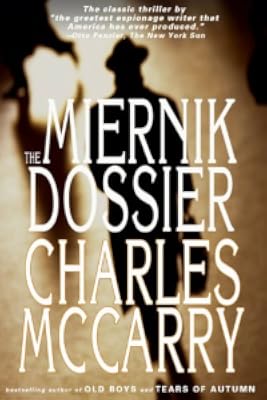
Related as a collection of dossier notes written by the five characters, The Miernik Dossier reveals a complicated web in which each spins his or her own deception: each is a spider, and each is a spy. The Miernik Dossier is a thoroughgoing masterpiece.Tags
Recommendations









Member Recommendations

JohnWCuluris Similar in concept--using transcripts to tell the story--though obviously Anderson is crime and Miernik is espionage.
Member Reviews
This time I was not as dubious. The first time I encountered a novel fashioned solely of various reports from a variety of sources, it was a book called The Anderson Tapes by Lawrence Sanders, and I responded, in part, with: “I have to admit I had my doubts: a novel told entirely through the transcripts of various wiretaps? I had forgotten that this man was a master of the form.” This is my first exposure to Charles McCarry but apparently he was as equally accomplished.
The story begins with Tadeusz Miernik and his small group of friends, all associated with the World Research Organization, an agency of the United Nations in Geneva, Switzerland. The year is sometime around 1959 (though the book was written in 1973) and the middle of show more the cold war era makes the WRO the perfect environment for deep-cover spies. Most of this group are exactly that--and each automatically assume the same of the others. The African, a prince of a Sudanese Muslim sect, is legitimate. As is the Pakistani, who drops out of the story quickly. The American, the Englishman and the Frenchman are all spies, and along with their superiors and allies, it is their reports that make up the “dossier” of the title. The initial question is whether Miernik, apparently in fear of being forced to return home to Russia-occupied Poland, is also an operative.
The cast promptly expands to include relatives, lovers and old family friends, not all of whom are innocent. Simultaneously the story expands to include road trips, defections and a terrorist organization. And we follow along as these various levels of espionage interconnect.
Following isn’t always easy. A Russian enforcer and an ally of Miernik’s have similar names. As do an informant among the terrorist and the Chief Inspector who is hunting them. And the ending doesn’t clear up everything. With the last, though, some of the fault may be mine; I am a slow and not-always-continuous reader. I may have missed something.
I recommend the work anyway. McCarry effortlessly displayed significant depth of character, and did so in spite of the impersonal means of communication inherent in the novel’s concept. In the end--even with some things left unexplained--I enjoyed having traveled with these characters. show less
The story begins with Tadeusz Miernik and his small group of friends, all associated with the World Research Organization, an agency of the United Nations in Geneva, Switzerland. The year is sometime around 1959 (though the book was written in 1973) and the middle of show more the cold war era makes the WRO the perfect environment for deep-cover spies. Most of this group are exactly that--and each automatically assume the same of the others. The African, a prince of a Sudanese Muslim sect, is legitimate. As is the Pakistani, who drops out of the story quickly. The American, the Englishman and the Frenchman are all spies, and along with their superiors and allies, it is their reports that make up the “dossier” of the title. The initial question is whether Miernik, apparently in fear of being forced to return home to Russia-occupied Poland, is also an operative.
The cast promptly expands to include relatives, lovers and old family friends, not all of whom are innocent. Simultaneously the story expands to include road trips, defections and a terrorist organization. And we follow along as these various levels of espionage interconnect.
Following isn’t always easy. A Russian enforcer and an ally of Miernik’s have similar names. As do an informant among the terrorist and the Chief Inspector who is hunting them. And the ending doesn’t clear up everything. With the last, though, some of the fault may be mine; I am a slow and not-always-continuous reader. I may have missed something.
I recommend the work anyway. McCarry effortlessly displayed significant depth of character, and did so in spite of the impersonal means of communication inherent in the novel’s concept. In the end--even with some things left unexplained--I enjoyed having traveled with these characters. show less
Charles McCarry may not be as well known as some of the masters of the spy lit genre, but his work has been every bit as interesting and entertaining as any of the bigger names for over three decades. In The Miernik Dossier, first released in 1973, McCarry introduces American spook Paul Christopher.
The book is supposed to be a file of a "complete picture of typical operation" requested by a Congressional chairman (remember, it's 1973). This dossier consists of memos, reports from field agents and their case officers, transcripts of post-operation interviews, and intercepts of Soviet transmissions.
Set in 1959, the book begins at the UN HQ in Geneva where Christopher holds some unspecified cover job. The UN is rife with representatives of show more national spy agencies. In addition to Christopher, there's a Brit and a French spy - and possibly others.
Christopher's active social group (they appear to all be in their late 20's) includes members of the British and French spookeries and an enchantingly beautiful and sensuous Russian as we almost certainly learn later as well as a Sudanese Muslim prince and Tadeusz Miernik, a Pole of uncertain provenance. The book centers on the efforts of Christopher and Nigel Collins (the British spy) to figure out if Miernik is a Polish spy run by the Soviets or really just a strange self-doubting low-level Polish diplomat.
McCarry sends them all together on an unlikely journey to deliver a new Cadillac to the prince's father, the ruler of Sudan. It sounds absurd, but somehow it works. McCarry is brilliant at describing characters and situations. The reader joins the other characters in their repugnance and annoyance at Miernik (even his sister, brought out of Czechoslovakia by Christopher, agrees). Ilona Bentley fairly oozes sensuality. Christopher is the epitome of the cool, accomplished professional. In the Sudan, Christopher, et al are drawn into the middle of a fight against Arab Muslim terrorist group backed by the Soviets (remember, this book was published in 1973 about events set in 1959).
Even when McCarry drifts off course, he excels. A bar scene in Naples involving former Waffen SS officers toying with their violin-playing waiter (apparently a concentration camp survivor) is masterful, if entirely unnecessary to the rest of the book.
I think what I most enjoyed was the decided lack of clear answers, which strikes me as entirely realistic. Think spies are ever entirely certain of anything important? I don't; they live in a house of mirrors. Christopher moves back and forth between thinking that Miernik is just an oddly gross Pole with some admittedly unusual talents to being convinced Miernik is working for the Soviets.
In a recent NYT story, Alan Furst that listed the Miernik Dossier as one of his top five favorite spy works. (The others: Our Man in Havana (Penguin Classics) by Graham Greene, The Levanter by Eric Ambler, The Honourable Schoolboy by John le Carré, and Moura: The Dangerous Life of the Baroness Budberg by Nina Berberova (as Furst notes Moura is not actually a spy novel, but is rather nonfiction written by a novelist). I would add McCarry's brilliant Tears of Autumn: A Paul Christopher Novel (Paul Christopher Novels) to that list.
As well-written and entertaining a spy novel as you will find anywhere, but don't look for tidy endings. McCarry is the best American spy novelist. Tip-top recommendation. show less
The book is supposed to be a file of a "complete picture of typical operation" requested by a Congressional chairman (remember, it's 1973). This dossier consists of memos, reports from field agents and their case officers, transcripts of post-operation interviews, and intercepts of Soviet transmissions.
Set in 1959, the book begins at the UN HQ in Geneva where Christopher holds some unspecified cover job. The UN is rife with representatives of show more national spy agencies. In addition to Christopher, there's a Brit and a French spy - and possibly others.
Christopher's active social group (they appear to all be in their late 20's) includes members of the British and French spookeries and an enchantingly beautiful and sensuous Russian as we almost certainly learn later as well as a Sudanese Muslim prince and Tadeusz Miernik, a Pole of uncertain provenance. The book centers on the efforts of Christopher and Nigel Collins (the British spy) to figure out if Miernik is a Polish spy run by the Soviets or really just a strange self-doubting low-level Polish diplomat.
McCarry sends them all together on an unlikely journey to deliver a new Cadillac to the prince's father, the ruler of Sudan. It sounds absurd, but somehow it works. McCarry is brilliant at describing characters and situations. The reader joins the other characters in their repugnance and annoyance at Miernik (even his sister, brought out of Czechoslovakia by Christopher, agrees). Ilona Bentley fairly oozes sensuality. Christopher is the epitome of the cool, accomplished professional. In the Sudan, Christopher, et al are drawn into the middle of a fight against Arab Muslim terrorist group backed by the Soviets (remember, this book was published in 1973 about events set in 1959).
Even when McCarry drifts off course, he excels. A bar scene in Naples involving former Waffen SS officers toying with their violin-playing waiter (apparently a concentration camp survivor) is masterful, if entirely unnecessary to the rest of the book.
I think what I most enjoyed was the decided lack of clear answers, which strikes me as entirely realistic. Think spies are ever entirely certain of anything important? I don't; they live in a house of mirrors. Christopher moves back and forth between thinking that Miernik is just an oddly gross Pole with some admittedly unusual talents to being convinced Miernik is working for the Soviets.
In a recent NYT story, Alan Furst that listed the Miernik Dossier as one of his top five favorite spy works. (The others: Our Man in Havana (Penguin Classics) by Graham Greene, The Levanter by Eric Ambler, The Honourable Schoolboy by John le Carré, and Moura: The Dangerous Life of the Baroness Budberg by Nina Berberova (as Furst notes Moura is not actually a spy novel, but is rather nonfiction written by a novelist). I would add McCarry's brilliant Tears of Autumn: A Paul Christopher Novel (Paul Christopher Novels) to that list.
As well-written and entertaining a spy novel as you will find anywhere, but don't look for tidy endings. McCarry is the best American spy novelist. Tip-top recommendation. show less
An epistolary spy novel told in dispatches and field reports from 1972 right at the heart of the Cold War. This was sophisticated and witty and charming and sexy. I forget that the Cold War was often fought by people who had experienced real war. In this crazy narrative American spies work alongside African princes and concentration camp survivors in a plot concerning Russian sponsorship of a Communist uprising in the Sudan. It never felt like it should work as a novel but it came together more satisfyingly than thought it might.
The peculiar epistolary medium of Charles McCarry's The Miernik Dossier was off-putting for me for the first ten pages or so, then the novel seemed to open up and became difficult to put down. The novel is mostly a search into the true identity of Tadeusz Miernik, a fascinating character. The protagonist, of sorts, is Paul Christopher, a CIA operative. We are certain of two other agents, Nigel Collins of M16, and Ilona a Soviet agent and concentration camp survivor. The most admirable character is Tadeusz's sister, Zofia who tells a debriefer , "Ordinary life, for you, is pornography. No, no, I'm not blaming you or any of the others who are like you from Russia to America. The South Pole as well, I suppose." The novel is a riveting show more search for truth but it the truth it reveals are mostly ambiguities show less
I must confess that after the Berlin Wall came down, I had this feeling that that was it for the Cold War spy novel. So I was truly happy to find this book, which was written in 1971, so I could once again relive the Cold War spy experience.
The Miernik Dossier (the first of the Paul Christopher series), is written in a style that one would find if they could infiltrate the files of an espionage agency and open up an actual dossier. The story is told through reports of various agents, intercepted communications, a diary, letters, etc. It tells the story of a mixed group of intelligence agents who normally met for lunch once a week in Geneva among other interactions, who find themselves brought together on a trip to the Sudan. The point show more of the trip, for Paul Christopher (an American agent under deep cover at the time), is to determine whether or not one of the group, Tadeusz Miernik, is indeed a spy from behind the Iron Curtain and mixed up with a small band of terrorists in the Sudan called the Anointed Liberation Front (ALF). It all starts when Miernik requests to remain working for the World Research Organization in Geneva, after he is contacted from Poland and called back home. His story is that he will be put into prison if he returns, but others think he is Soviet spy who is possibly going to defect to the West as a cover. The trip to the Sudan, ostensibly to take a Cadillac to the father of one of the group provides the vehicle through which Paul can watch Miernik and make reports on his status.
I won't add any more about the plot line, but McCarry is a talented writer who lets the suspense build page after page, and who allows the reader to make up his or her own mind. The characters are very well drawn, and the whole atmosphere of intrigue, deception and spycraft quickly engaged me so that I did not want to put this book down.
Definitely recommended for those who enjoy Cold War-era spy fiction, and anyone who has maybe read McCarry's later works in the Paul Christopher series and missed this one.
Highly recommended. show less
The Miernik Dossier (the first of the Paul Christopher series), is written in a style that one would find if they could infiltrate the files of an espionage agency and open up an actual dossier. The story is told through reports of various agents, intercepted communications, a diary, letters, etc. It tells the story of a mixed group of intelligence agents who normally met for lunch once a week in Geneva among other interactions, who find themselves brought together on a trip to the Sudan. The point show more of the trip, for Paul Christopher (an American agent under deep cover at the time), is to determine whether or not one of the group, Tadeusz Miernik, is indeed a spy from behind the Iron Curtain and mixed up with a small band of terrorists in the Sudan called the Anointed Liberation Front (ALF). It all starts when Miernik requests to remain working for the World Research Organization in Geneva, after he is contacted from Poland and called back home. His story is that he will be put into prison if he returns, but others think he is Soviet spy who is possibly going to defect to the West as a cover. The trip to the Sudan, ostensibly to take a Cadillac to the father of one of the group provides the vehicle through which Paul can watch Miernik and make reports on his status.
I won't add any more about the plot line, but McCarry is a talented writer who lets the suspense build page after page, and who allows the reader to make up his or her own mind. The characters are very well drawn, and the whole atmosphere of intrigue, deception and spycraft quickly engaged me so that I did not want to put this book down.
Definitely recommended for those who enjoy Cold War-era spy fiction, and anyone who has maybe read McCarry's later works in the Paul Christopher series and missed this one.
Highly recommended. show less
Cold war spy novel that works on many levels, and is interesting on all of them. The way in which the story is told is unusual: a collection of reports, transcripts, and other materials presumably drawn from the files of an espionage agency. The characters are compellingly drawn, yet ambiguous -- who is working for who? And the morality of the whole enterprise becomes an issue. Great read.
A very brave first book in the Paul Christopher series. It eschews the normal novel form, instead shifting from viewpoint to viewpoint of the characters and the intelligence agencies involved. The uncertainties of this strange world are drawn out and maintained throughout the book, even past the last chapter. Much more satisfying than the neat edges of Bond or much other spy fiction.
Members
- Recently Added By
Author Information

36+ Works 3,451 Members
Albert Charles McCarry Jr. was born in Pittsfield, Massachusetts on June 14, 1930. He enlisted in the Army, where he wrote for Stars and Stripes and edited a weekly Army newspaper in Bremerhaven, Germany. He was a dishwasher and newspaper reporter before becoming an assistant and speechwriter to Secretary of Labor James P. Mitchell. After two show more years, McCarry was recruited by the C.I.A. He worked for nine years as a deep cover operative in Europe, Asia and Africa. He became an author of both fiction and nonfiction. His fiction works included Ark and The Paul Christopher series. His nonfiction works included Citizen Nader and three memoirs - two written with Alexander Haig Jr. and one written with Donald T. Regan. McCarry died from complications of a cerebral hemorrhage caused by a fall on February 26, 2019 at the age of 88. (Bowker Author Biography) show less
Series

Common Knowledge
- Canonical title
- The Miernik Dossier
- Original title
- The Miernik Dossier
- Original publication date
- 1973
- People/Characters
- Paul Christopher; Tadeusz Miernik; Ilona Bentley; Kalash el Khatar
- Important places
- Geneva, Geneva, Switzerland
- Dedication
- For Nancy
- First words
- The attached dossier is submitted to the Committee in response to the request by its Chairman for "a complete picture of a typical operation".
- Last words
- (Click to show. Warning: May contain spoilers.)So what I have is Sasha's money and Tadeusz's ashes, and the absolute conviction that I'm going to live to be an old, old woman.
- Blurbers
- Ambler, Eric
- Canonical DDC/MDS
- 813.54
- Canonical LCC
- PS3563.A2577
Classifications
Statistics
- Members
- 423
- Popularity
- 73,075
- Reviews
- 14
- Rating
- (3.83)
- Languages
- 7 — Danish, Dutch, English, German, Italian, Portuguese, Spanish
- Media
- Paper, Audiobook, Ebook
- ISBNs
- 33
- ASINs
- 11