On This Page
Description
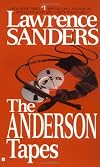
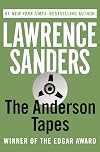
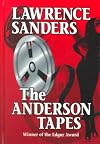
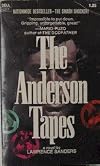
The explosive Edgar Award–winning debut novel—told entirely through surveillance recordings, eyewitness reports, and other "official" documents—by New York Times bestselling author Lawrence SandersNew York City. Summer 1968.Newly sprung from prison, professional burglar John Anderson is preparing for the biggest heist of his criminal career. The mark is a Manhattan luxury apartment building with the tony address of 535 East Seventy-Third Street. Enlisting a crew of scouts, con show more artists, and a getaway driver, Anderson orchestrates what he believes to be a foolproof plan. To pull off the big score, he needs one last thing: the permission of the local mafia, who expect a piece of the action. But no one inside Anderson's operation knows that the police have recorded their conversations. The New York Police Department has hatched a plot of its own—but even its task force may not be enough to stop such a cunningly planned robbery. show less
Tags
Recommendations





















Member Recommendations

JohnWCuluris Similar in concept--using transcripts to tell the story--though obviously Anderson is crime and Miernik is espionage.
Member Reviews
I'm a big Sanders fan, but was leery of this book (his first), which is written almost entirely in the format of transcriptions of secretly-taped conversations. I should have had more faith. It's riveting, a real page-turner with many distinctive characters and most chapters running only a couple of pages. While this book marks the first appearance of Captain Edward X. Delaney, he doesn't turn up until page 262 of 325. Not that he doesn't make an impression nonetheless. But be aware that Delaney is not the main character of The Anderson Tapes, as he is in the Deadly Sins books. Highly recommended.
It’s been a while since I’d read Lawrence Sanders so I decided to try his first novel, originally published in 1969, and I have to admit I had my doubts: a novel told entirely through the transcripts of various wiretaps? I had forgotten that this man was a master of the form. A slow start while setting up the concept and characters, but quite satisfying from then on. Makes me glad there are other Sanders novels I haven’t read.
If this is the book that launched Sander's career, then I have nothing but disgust for his fans.
Anyway, this was a voyeur's heaven. Listening in on partial conversations, twisted sex, crime planning, etc.
Wasn't much of an interesting story to me. Your mileage may vary.
Anyway, this was a voyeur's heaven. Listening in on partial conversations, twisted sex, crime planning, etc.
Wasn't much of an interesting story to me. Your mileage may vary.
This is Sanders first book. While I usually enjoy a good read from this author, I could not finish this book.
Ratings
Members
- Recently Added By
Lists

Epistolary Books
105 works; 27 members

Edgar Award
418 works; 15 members
Author Information

90 Works 15,066 Members
Lawrence Sanders was born in Brooklyn, New York on March 15, 1920. He graduated from Wabash College, Crawfordsville, Indiana, in 1942 and served in the Marine Corps from 1943 to 1946. After years of working as an editor for a number of magazines, including Mechanics Illustrated and Science and Mechanics, Lawrence Sanders wrote and published his show more first novel, The Anderson Tapes (1970), at the age of 50 which won the Edgar Award for Best First Mystery Novel from The Mystery Writers of America. It was made into a film in 1971, as was The First Deadly Sin (1973). Sanders died February 7, 1998 (Bowker Author Biography) show less
Awards and Honors
Awards
Series

Work Relationships
Common Knowledge
- Canonical title
- The Anderson Tapes
- Original title
- The Anderson Tapes
- Original publication date
- 1970
- People/Characters
- John "Duke" Anderson; Ed Brodsky; Billy Brodsky; Gerald Bingham Sr.; Gerald Bingham Jr.; Edward X. Delaney (show all 10); Tommy Haskins; Ernest Heinrich Mann; Irving K. Mandelbaum; Samuel 'Skeets' Johnson
- Important places
- New York, New York, USA
- Related movies
- The Anderson Tapes (1971 | IMDb)
- First words
- AUTHOR'S NOTE
The following account of a crime committed in the City of New York on the night of 31 August and the early morning hours of 1 September, 1968, has been assembled from a variety of sources, including: - Last words
- (Click to show. Warning: May contain spoilers.)On the inside back cover, in the same handwriting as the other entries in the journal, was this inscription: "Crime is the truth. Law is the hypocrisy."
Classifications
Statistics
- Members
- 333
- Popularity
- 95,803
- Reviews
- 4
- Rating
- (3.31)
- Languages
- 8 — Danish, Dutch, English, Finnish, French, German, Italian, Spanish
- Media
- Paper, Audiobook, Ebook
- ISBNs
- 29
- ASINs
- 14