On This Page
Description
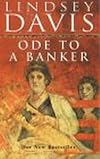
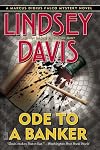
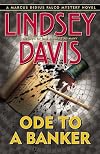
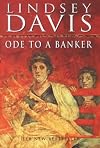
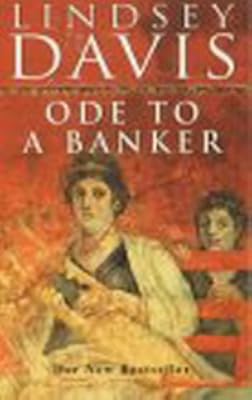
The funny, astute, and hard-boiled detective Marcus Didius Falco now ventures into a new arena, the publishing world of AD 74, to prove that ars longa, vita brevis...and murder is timeless. Can a tough detective possess the soul of a poet? After a public reading brings him rousing applause, Falco receives an offer to have his work published. But his ego takes a beating when the banker Chrysippus demands payment for putting the verse on papyrus. Hell hath no fury like an author scorned, and show more when Chrysippus turns up murdered (in the library, no less), it's poetic justice. Appointed the official investigator, Falco's soon up to his stylus in outraged writers and shifty bankers. Now it's time to employ his real talents: deducing the killer from an assembly of suspects. This classic whodunit is Lindsey Davis' most satisfying mystery yet. show lessTags
Recommendations


















Member Reviews
Murder in the Slush Pile
This episode in the Roman crime saga takes us back to base in Rome for a romp in the worlds of classical publishing and banking, and of patronage. Those worlds have many similarities with their counterparts in our own time and no doubt draw on the author's own experiences at a time in her writing career when her writing has become successful enough to be financially self-sustaining.
Our hero Marcus Didius is headhunted by a wealthy publisher, but turns the proposed deal down as too exploitative. Shortly afterwards Chrysippus the publisher is found brutally murdered in his library - literally a body in the library, signalling that this is going to be in part a clever Agatha Christie spoof with Falco becoming more show more Poirot than Marlowe. Chrysippus is a Greek banker as well as a patron of the arts, but who wants him dead? A disgruntled author or a hard-up bank client? Or someone entirely different with a grievance? The Falcon family saga moves on, with cameos from Ma, Pa and bossy sister Junia as well as Maia the Nice One. Anacrites is scheming and romance comes for Petri. There's a nice swipe at writers groups, and a neat joke that you'll miss if you haven't studied Latin concerning the fate of a manuscript submitted by one Martialis.
If you wanted to meet Marcus Didius Falcon for the first time I'd suggest you didn't start here because in so many ways it's not typical. Best to begin at the beginning anyway. show less
This episode in the Roman crime saga takes us back to base in Rome for a romp in the worlds of classical publishing and banking, and of patronage. Those worlds have many similarities with their counterparts in our own time and no doubt draw on the author's own experiences at a time in her writing career when her writing has become successful enough to be financially self-sustaining.
Our hero Marcus Didius is headhunted by a wealthy publisher, but turns the proposed deal down as too exploitative. Shortly afterwards Chrysippus the publisher is found brutally murdered in his library - literally a body in the library, signalling that this is going to be in part a clever Agatha Christie spoof with Falco becoming more show more Poirot than Marlowe. Chrysippus is a Greek banker as well as a patron of the arts, but who wants him dead? A disgruntled author or a hard-up bank client? Or someone entirely different with a grievance? The Falcon family saga moves on, with cameos from Ma, Pa and bossy sister Junia as well as Maia the Nice One. Anacrites is scheming and romance comes for Petri. There's a nice swipe at writers groups, and a neat joke that you'll miss if you haven't studied Latin concerning the fate of a manuscript submitted by one Martialis.
If you wanted to meet Marcus Didius Falcon for the first time I'd suggest you didn't start here because in so many ways it's not typical. Best to begin at the beginning anyway. show less
Murder in the Slush Pile
This episode in the Roman crime saga takes us back to base in Rome for a romp in the worlds of classical publishing and banking, and of patronage. Those worlds have many similarities with their counterparts in our own time and no doubt draw on the author's own experiences at a time in her writing career when her writing has become successful enough to be financially self-sustaining.
Our hero Marcus Didius is headhunted by a wealthy publisher, but turns the proposed deal down as too exploitative. Shortly afterwards Chrysippus the publisher is found brutally murdered in his library - literally a body in the library, signalling that this is going to be in part a clever Agatha Christie spoof with Falco becoming more show more Poirot than Marlowe. Chrysippus is a Greek banker as well as a patron of the arts, but who wants him dead? A disgruntled author or a hard-up bank client? Or someone entirely different with a grievance? The Falcon family saga moves on, with cameos from Ma, Pa and bossy sister Junia as well as Maia the Nice One. Anacrites is scheming and romance comes for Petri. There's a nice swipe at writers groups, and a neat joke that you'll miss if you haven't studied Latin concerning the fate of a manuscript submitted by one Martialis.
If you wanted to meet Marcus Didius Falcon for the first time I'd suggest you didn't start here because in so many ways it's not typical. Best to begin at the beginning anyway. show less
This episode in the Roman crime saga takes us back to base in Rome for a romp in the worlds of classical publishing and banking, and of patronage. Those worlds have many similarities with their counterparts in our own time and no doubt draw on the author's own experiences at a time in her writing career when her writing has become successful enough to be financially self-sustaining.
Our hero Marcus Didius is headhunted by a wealthy publisher, but turns the proposed deal down as too exploitative. Shortly afterwards Chrysippus the publisher is found brutally murdered in his library - literally a body in the library, signalling that this is going to be in part a clever Agatha Christie spoof with Falco becoming more show more Poirot than Marlowe. Chrysippus is a Greek banker as well as a patron of the arts, but who wants him dead? A disgruntled author or a hard-up bank client? Or someone entirely different with a grievance? The Falcon family saga moves on, with cameos from Ma, Pa and bossy sister Junia as well as Maia the Nice One. Anacrites is scheming and romance comes for Petri. There's a nice swipe at writers groups, and a neat joke that you'll miss if you haven't studied Latin concerning the fate of a manuscript submitted by one Martialis.
If you wanted to meet Marcus Didius Falcon for the first time I'd suggest you didn't start here because in so many ways it's not typical. Best to begin at the beginning anyway. show less
Falco again. This time we learn about banking in Greece and Rome, not so different from banking today, as well as the publishing industry in Rome, not so different from publishing today, both with nasty sides. Falco is called in to solve the violent murder of a publisher, who probably deserved it. His current and former wives, his son, and his authors are among the suspects. As usual, Falco has a flair all his own. And the novel ends with a classic 'everyone gather in the murder room' flourish. I did suspect the right person, but it was fun getting there.
Roman informer Marcus Didius Falco has been known to write a few poems for his own entertainment or the enjoyment of his intimate circle. He has a chance to perform his work in public when the owner of a scriptorium is in the audience. The scriptorium owner, a Greek immigrant called Chrysippus, shows an interest in publishing Falco’s work, but the financial terms are insulting. When Chrysippus is found murdered shortly after Falco had visited his home, Falco must clear himself before taking on the case for the vigiles under his friend Petronius.
Initially the focus in on Greek and Latin authorship and manuscript production in first century Rome, but the focus soon shifts to banking customs. The narrative shift is a bit awkward. show more Falco’s extended family’s domestic troubles provide the background for the novel, and this aspect of the book interested me more than the main plot did. All of the plot threads eventually came together nicely. The ending was particularly fun, with Falco gathering all of the suspects at the scene of the crime for the big reveal. It’s a nice nod to Golden Age mysteries like Rex Stout’s Nero Wolfe series. show less
Initially the focus in on Greek and Latin authorship and manuscript production in first century Rome, but the focus soon shifts to banking customs. The narrative shift is a bit awkward. show more Falco’s extended family’s domestic troubles provide the background for the novel, and this aspect of the book interested me more than the main plot did. All of the plot threads eventually came together nicely. The ending was particularly fun, with Falco gathering all of the suspects at the scene of the crime for the big reveal. It’s a nice nod to Golden Age mysteries like Rex Stout’s Nero Wolfe series. show less
Neat little critique of the publishing world. Some things haven't changed in 2000 years. Loved the sly humor. Falco took his time solving this case though, which I found a little unbelievable. But the ending was solid.
I really like mysteries set in non-modern times because the sleuths can't rely on things like fingerprints or DNA to solve the crime.
In this one the detective Falco has to find out who murdered a wealthy banker/publisher while he was reading in his library. Although there are lots of possibilities at the start they keep being winnowed down as alibis are checked and no bloodstained clothing appears. I like the fact that Falco relies on his wife, mother and sisters for as much help as his male friends and relatives. And the final uncovering is reminiscent of Hercule Poirot's methods, another favourite of mine.
In this one the detective Falco has to find out who murdered a wealthy banker/publisher while he was reading in his library. Although there are lots of possibilities at the start they keep being winnowed down as alibis are checked and no bloodstained clothing appears. I like the fact that Falco relies on his wife, mother and sisters for as much help as his male friends and relatives. And the final uncovering is reminiscent of Hercule Poirot's methods, another favourite of mine.
This has the old Falco flair and the ever-amusing Falco family, but the plot is less compelling than in many of the earlier works. Indeed, it sometimes seems a bit like a succession of shticks.
Members
- Recently Added By
Lists

Books Read in 2020
4,379 works; 124 members
Author Information

57+ Works 26,508 Members
Lindsey Davis lives in London, England. (Publisher Provided) Lindsey Davis was born in Birmingham, England in 1949. She earned her English degree at Oxford. Her published works include The Course of Honour and The Silver Pigs, the first in the Falco series which won the Authors' Club Best First Novel award in 1989. In 1999 she received the show more Sherlock Award for Best Comic Detective for her creation, Marcus Didius Falco. (Publisher Provided) show less
Some Editions
Awards and Honors
Series

Common Knowledge
- Canonical title
- Ode to a Banker
- Original title
- Ode to a Banker
- Original publication date
- 2000-09-26
- People/Characters
- Marcus Didius Falco; Helena Justina; Anacrites (spy); Aristagoras; Aulus Camillus Aelianus (Helena Justina's brother); Avienus (historian) (show all 34); Blitis; Bos; Aurelius Chrysippus; Constrictus (poet); Cotta (bathhouse contractor); Diomedes; Domitian; Euschemon (scroll-seller); Fusculus; Gloccus (bathhouse contractor); Junia (Falco's sister); Junilla Tacita (Falco's mother); Lucrio (banker); Lysa (Chrysippus' first wife); Maia Favonia (Falco's sister); Marcus Didius Favonius (Falco's father, Geminus); Nothokleptes (banker); Pacuvius (satirist); Passus; Perella (dancer); L. Petronius Longus; Philomelus; Pisarchus (shipping magnate); Rutilius Gallicus (ex-consul); Sergius (bruiser); Turius; Urbanus Trypho (writer); Vibia (Chrysippus' second wife)
- Important places
- Rome, Italy
- Important events
- Reign of Vespasian (69 AD | 79 AD)
- Dedication
- To Simon King
(another of my "Dear Simon" notes...)
On your retirement from Random House.
With thanks for your friendship, patience, and loyal support for Falco - and in memory of the smoked eel. - First words
- Poetry should have been safe.
- Quotations
- "They may be giggling over propagation pots tonight - but tomorrow is another day."
"Sounds like some daft girl in a romance, trying to console herself." - Last words
- (Click to show. Warning: May contain spoilers.)You never know with secretive, imaginative women what surprises they are dreaming up.
Classifications
Statistics
- Members
- 953
- Popularity
- 27,731
- Reviews
- 20
- Rating
- (3.78)
- Languages
- 6 — Czech, English, German, Italian, Japanese, Spanish
- Media
- Paper, Audiobook, Ebook
- ISBNs
- 31
- ASINs
- 7