On This Page
Description
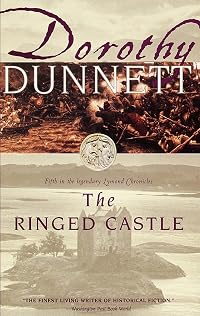
For the first time Dunnett's Lymond Chronicles are available in the United States in quality paperback editions.Fifth in the legendary Lymond Chronicles, The Ringed Castle leaps from Mary Tudor's England to the barbaric Russia of Ivan the Terrible. Francis Crawford of Lymond moves to Muscovy, where he becomes advisor and general to the half-mad tsar. Yet even as Lymond tries to civilize a court that is still frozen in the attitudes of the Middle Ages, forces in England conspire to enlist show more this infinitely useful man in their own schemes.
From the Trade Paperback edition.
. show less
Tags
Recommendations
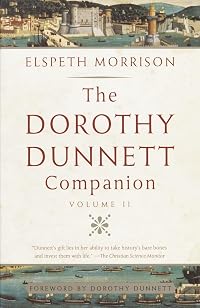


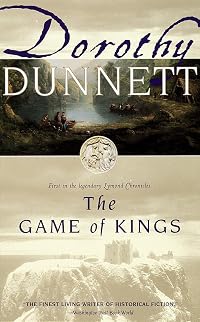









Member Reviews
“There is a prospect of employment, entertainment, and riches, but I can guarantee none of it, and least of all your personal safety.”
This goes for both the characters and readers of Dunnett’s books! And I wanted this book to last a very long time. It’s an interesting creature, this fifth novel. It’s a more introspective one, more thoughtful, with more focus on Lymond. The writing is impeccable, with descriptions and scenes that are pure magic. Of course, we were also treated to some great action, tension, heartbreak, and layers of intrigues in a nail-biting plot. But they were all toned down (somewhat) and tamed (a little).
Lymond has emotional damage and baggage aplenty from the previous books. Dunnett decided to put him show more under a magnifying glass here, and study how he handles it. Or, rather, how he is not handling it. I lost count of all the times I wanted to hit Lymond on the head. With a shovel. The Lymond solution is to deny and destroy his humanity, deny family, deny friends. Throughout the book, people try to save him, in any way they can (sometimes clumsily), while Lymond kicks, bites, and screams “don’t tell me what to do”. Naturally, the latter is put much more beautifully, as verbal arrows to the heart.
If you plan to lose your humanity, then Ivan the Terrible’s court is a great place to do it in. So, Lymond and his men come to the service of the Tsar of All Russia. Violently. Brutally. I wanted to hide under the table every time anyone was talking to Ivan the Terrible. Especially Lymond. They were well-matched, but it was like watching someone trying to cuddle with a wild boar.
I love those Dunnett phrases, though:
“The princes, probing a little now with the chilly delicate probing, might have been empty of all things but malice.”
Dunnett is remarkably clear-eyed about Russia, the Orthodox Church, and the things they make Lymond do, to himself and others. Reading this today, I was thinking how unintended things seep into really good books and take a life of their own.
The English court was as fascinating and poisonous as ever, and I loved Philippa in it. There were so many clever, witty, challenging conversations that made my brain very happy. Philippa continues to meddle, meddle, meddle, with the best intentions in the world. I did want to hit her on the head too. But her intrigue skills are getting better, and I like her character arc very, very much.
Here is Philippa, explaining her meddling to Lymond:
“It’s my business because I love your family and you love your own, stately, self-perpetuated miseries.”
The very poignant ending made me want to grab the next book and take a break, all at once. show less
This goes for both the characters and readers of Dunnett’s books! And I wanted this book to last a very long time. It’s an interesting creature, this fifth novel. It’s a more introspective one, more thoughtful, with more focus on Lymond. The writing is impeccable, with descriptions and scenes that are pure magic. Of course, we were also treated to some great action, tension, heartbreak, and layers of intrigues in a nail-biting plot. But they were all toned down (somewhat) and tamed (a little).
Lymond has emotional damage and baggage aplenty from the previous books. Dunnett decided to put him show more under a magnifying glass here, and study how he handles it. Or, rather, how he is not handling it. I lost count of all the times I wanted to hit Lymond on the head. With a shovel. The Lymond solution is to deny and destroy his humanity, deny family, deny friends. Throughout the book, people try to save him, in any way they can (sometimes clumsily), while Lymond kicks, bites, and screams “don’t tell me what to do”. Naturally, the latter is put much more beautifully, as verbal arrows to the heart.
If you plan to lose your humanity, then Ivan the Terrible’s court is a great place to do it in. So, Lymond and his men come to the service of the Tsar of All Russia. Violently. Brutally. I wanted to hide under the table every time anyone was talking to Ivan the Terrible. Especially Lymond. They were well-matched, but it was like watching someone trying to cuddle with a wild boar.
I love those Dunnett phrases, though:
“The princes, probing a little now with the chilly delicate probing, might have been empty of all things but malice.”
Dunnett is remarkably clear-eyed about Russia, the Orthodox Church, and the things they make Lymond do, to himself and others. Reading this today, I was thinking how unintended things seep into really good books and take a life of their own.
The English court was as fascinating and poisonous as ever, and I loved Philippa in it. There were so many clever, witty, challenging conversations that made my brain very happy. Philippa continues to meddle, meddle, meddle, with the best intentions in the world. I did want to hit her on the head too. But her intrigue skills are getting better, and I like her character arc very, very much.
Here is Philippa, explaining her meddling to Lymond:
“It’s my business because I love your family and you love your own, stately, self-perpetuated miseries.”
The very poignant ending made me want to grab the next book and take a break, all at once. show less
This takes place in the mid 1550s. After the events of Pawn in Frankincense, Francis Crawford of Lymond is determinedly avoiding feelings, family and friendships. He heads to Russia to train an army for the Tsar, Ivan Vasilievich. Back home Philippa Somerville investigates Crawford secrets, searching for a key to reconcile Lymond to his family, and is offered a position at the Tudor court of Queen Mary.
The first half of this book contains things which interested interested me -- a few scenes which interested me a lot -- but also sections which had me wondering “Oh Dororthy, WHY couldn’t you turn your masterful prose to describing things I’d care about more?” Then halfway something clicked. I had a better sense of the shape of show more the plot and the politics; I could see why some of those earlier sections had been important; I’d discovered I cared about characters like the explorer Diccon Chancellor. I was captivated.
Much of what happens after that is not smooth sailing, both literally and metaphorically, and Lymond dramatically fails to avoid painful things like family and feelings, but that’s compelling, and also satisfying -- not because I want Lymond to be hurt but because his mission of turning into a human icicle wasn’t healthy.
Dunnett has a way of dropping lines like ”And what,” said Robert Best, irritably sleepy, “on earth has chess got to do with [Lymond being sick]?” and assuming that her reader will appreciate the full impact without further explanation.
And I was gleeful to see a more mature, more educated Philippa in action. Such as when, having failed to stop a fight with her words, she intervenes in an unexpected fashion.
Like the jaws of a crocodile, two capable feminine hands closed on Austin Grey’s arms over the elbow, rendering him for the moment totally helpless. And a capable feminine voice, directed past Austin Grey’s ear to his opponent, said baldly, “Hit him.”
Lymond, already balanced on the upswing to hurl himself forward, dropped his arm and said, with dawning reproof, “I was going to.”
“I know,” said Philippa. “And it’ll take half an hour and end with an audience. Hit him.”
Under her hands, Austin Grey suddenly struggled.
“Hit him!” said Philippa sharply. “It’s the only way he can stop now, with honour.”
Which was not only perceptive, but practical.
I’m so glad I wasn’t deterred by the devastating ending to Pawn in Frankincense! show less
The first half of this book contains things which interested interested me -- a few scenes which interested me a lot -- but also sections which had me wondering “Oh Dororthy, WHY couldn’t you turn your masterful prose to describing things I’d care about more?” Then halfway something clicked. I had a better sense of the shape of show more the plot and the politics; I could see why some of those earlier sections had been important; I’d discovered I cared about characters like the explorer Diccon Chancellor. I was captivated.
Much of what happens after that is not smooth sailing, both literally and metaphorically, and Lymond dramatically fails to avoid painful things like family and feelings, but that’s compelling, and also satisfying -- not because I want Lymond to be hurt but because his mission of turning into a human icicle wasn’t healthy.
Dunnett has a way of dropping lines like ”And what,” said Robert Best, irritably sleepy, “on earth has chess got to do with [Lymond being sick]?” and assuming that her reader will appreciate the full impact without further explanation.
And I was gleeful to see a more mature, more educated Philippa in action. Such as when, having failed to stop a fight with her words, she intervenes in an unexpected fashion.
Like the jaws of a crocodile, two capable feminine hands closed on Austin Grey’s arms over the elbow, rendering him for the moment totally helpless. And a capable feminine voice, directed past Austin Grey’s ear to his opponent, said baldly, “Hit him.”
Lymond, already balanced on the upswing to hurl himself forward, dropped his arm and said, with dawning reproof, “I was going to.”
“I know,” said Philippa. “And it’ll take half an hour and end with an audience. Hit him.”
Under her hands, Austin Grey suddenly struggled.
“Hit him!” said Philippa sharply. “It’s the only way he can stop now, with honour.”
Which was not only perceptive, but practical.
I’m so glad I wasn’t deterred by the devastating ending to Pawn in Frankincense! show less
When we left Francis Crawford of Lymond he had just married Philippa Somerville and sent her home to England with his two year old son, Kuzum. Meanwhile, he hooked up with harem head, Kiaya Khatien, the former mistress of Dragus Rais. Because of her, his next adventure takes him to the crude and unforgiving lands of Russia where he becomes advisor to Tsar Ivan (later, Ivan the Terrible). It becomes Crawford's mission to create, muster, train and equip a professional Russian army. Francis, now called the Voedoda Bolshoia, is becoming even calmer and more complicated but he remains just as cool and cruel as always. Typical, his motives are constantly questioned. I find his relationship with a golden eagle under his command is fascinating. show more I enjoyed best the scenes with this bird despite the cruel end.
Meanwhile, back in London, Philippa digs into her husband's heritage and uncovers some troubling secrets, which by the way, sets up the final book, Checkmate, perfectly. show less
Meanwhile, back in London, Philippa digs into her husband's heritage and uncovers some troubling secrets, which by the way, sets up the final book, Checkmate, perfectly. show less
After the heated intensity of Pawn in Frankincense, this fifth (and penultimate) volume of the Lymond Chronicles comes across as cool and subdued – which might be owing to it taking place in the more temperate climates of Russia and England instead of the sun-drenched Middle East of the previous novel. This does not mean, however, that The Ringed Castle is not an exciting novel, or that tension and emotions would not run high, quite to the contrary.
Things do start somewhat slowly, but that is a welcome breather after the events that concluded Pawn in Frankincense and which are likely to have left the reader reeling and possibly somewhat numb with shock, even several months after reading that novel. But while there is a distinct shift show more in mood, plotwise events pick up almost right where the previous novel ended, with Philippa returning home. She is even more of a presence here than in the preceding instalment, her narrative weight almost equal to Lymond’s, and at least to my taste, considerably less annoying. Although it has to be said that for the first time in the series I found Lymond neither cringe- nor eyeroll-inducing through the course of a whole novel – I am not sure whether by this volume Dorothy Dunnett has matured as a writer, or whether Lymond has matured as a character but his usual melodramatic histrionics seem to be completely absent from The Ringed Castle. But maybe I am just getting used to him…
Lymond is trying to wipe the slate of his life clean, break with his past and start over, and to that purpose he is moving as far away from everything he knows – and that knows him – as possible and beginning a career as military advisor to Tsar Ivan of Russia (also known to later generations as Ivan the Terrible). But of course his past will not stay quiet and will not let him rest, embroiling not only him but also Phillipa who at the same time is starting to begin her own life at the court of Queen Mary of England (also known to later generations as Bloody Mary). The story relentlessly gathers momentum as events unfold, and what began slowly ends in an action-packed, fast-moving finale that, if not quite as heart-wrenching as the ending of Pawn in Frankincense, ends on an almost tragic note that does not bode well at all for the next, concluding volume of the Lymond Chronicles.
The Ringed Castle, like the other volumes in the series, is a true historical novel: The characters are not modern people placed in front of a historical wallpaper to act out 20th century drama. Dunnett does not attempt to make her characters familiar, strictly refuses to give them motivations that our contemporary psychologies could relate to. Instead, they are steeped in their period, in and of their time, and Dorothy Dunnett throughout maintains a respectful distance towards them, showing us her protagonist Lymond never other than from an outside perspective, and taking care to keep some residue of opacity even for those characters from whose point of view she describes events – we might be as close to them as we ever get to anyone in the series, but they still grow never quite familiar, never wholly transparent to us. This is what gives the novels their occasionally elliptic feel, as if we readers were being withheld essential pieces of information and need to piece things together by ourselves. We are indeed missing something here, because we are not Renaissance men and women, and the author never lets us forget that.
Having accomplished this much would be quite enough of a feat for any author who of course is herself not contemporary to the Renaissance, but Dorothy Dunnett does not stop there, and what makes her writing (apart from its immense learning that yet never weakens the stunning beauty of it) truly astonishing is that even as she keeps her characters at a distance from the readers, she still manages to make us care for them (yes, even for annoying Lymond), to weave a plot that, even as we struggle to follow all its intricacies, makes us excited and lets our hearts beat faster, to move us with the fate of characters that, even as we struggle to comprehend what drives their actions, touches us and moves us to laughter and tears. Only very few writers of historical novels manage to appeal to our modern sensitivities without compromising on their representation of the past, but Dorothy Dunnett does so in unparalleled splendour and her Lymond Chronicles are a must-read for anyone even marginally interested in historical fiction and what it can achieve. show less
Things do start somewhat slowly, but that is a welcome breather after the events that concluded Pawn in Frankincense and which are likely to have left the reader reeling and possibly somewhat numb with shock, even several months after reading that novel. But while there is a distinct shift show more in mood, plotwise events pick up almost right where the previous novel ended, with Philippa returning home. She is even more of a presence here than in the preceding instalment, her narrative weight almost equal to Lymond’s, and at least to my taste, considerably less annoying. Although it has to be said that for the first time in the series I found Lymond neither cringe- nor eyeroll-inducing through the course of a whole novel – I am not sure whether by this volume Dorothy Dunnett has matured as a writer, or whether Lymond has matured as a character but his usual melodramatic histrionics seem to be completely absent from The Ringed Castle. But maybe I am just getting used to him…
Lymond is trying to wipe the slate of his life clean, break with his past and start over, and to that purpose he is moving as far away from everything he knows – and that knows him – as possible and beginning a career as military advisor to Tsar Ivan of Russia (also known to later generations as Ivan the Terrible). But of course his past will not stay quiet and will not let him rest, embroiling not only him but also Phillipa who at the same time is starting to begin her own life at the court of Queen Mary of England (also known to later generations as Bloody Mary). The story relentlessly gathers momentum as events unfold, and what began slowly ends in an action-packed, fast-moving finale that, if not quite as heart-wrenching as the ending of Pawn in Frankincense, ends on an almost tragic note that does not bode well at all for the next, concluding volume of the Lymond Chronicles.
The Ringed Castle, like the other volumes in the series, is a true historical novel: The characters are not modern people placed in front of a historical wallpaper to act out 20th century drama. Dunnett does not attempt to make her characters familiar, strictly refuses to give them motivations that our contemporary psychologies could relate to. Instead, they are steeped in their period, in and of their time, and Dorothy Dunnett throughout maintains a respectful distance towards them, showing us her protagonist Lymond never other than from an outside perspective, and taking care to keep some residue of opacity even for those characters from whose point of view she describes events – we might be as close to them as we ever get to anyone in the series, but they still grow never quite familiar, never wholly transparent to us. This is what gives the novels their occasionally elliptic feel, as if we readers were being withheld essential pieces of information and need to piece things together by ourselves. We are indeed missing something here, because we are not Renaissance men and women, and the author never lets us forget that.
Having accomplished this much would be quite enough of a feat for any author who of course is herself not contemporary to the Renaissance, but Dorothy Dunnett does not stop there, and what makes her writing (apart from its immense learning that yet never weakens the stunning beauty of it) truly astonishing is that even as she keeps her characters at a distance from the readers, she still manages to make us care for them (yes, even for annoying Lymond), to weave a plot that, even as we struggle to follow all its intricacies, makes us excited and lets our hearts beat faster, to move us with the fate of characters that, even as we struggle to comprehend what drives their actions, touches us and moves us to laughter and tears. Only very few writers of historical novels manage to appeal to our modern sensitivities without compromising on their representation of the past, but Dorothy Dunnett does so in unparalleled splendour and her Lymond Chronicles are a must-read for anyone even marginally interested in historical fiction and what it can achieve. show less
It took me a little while to settle into this 5th volume of the Lymond Chronicles, after the story arc that had done most to drive the last two volumes had come to a devastating conclusion. I knew that there was a story behind that story that must play out, that the big questions that underpin this whole sequence of novels had to be answered and that those two things were in all probability linked; but I needed time to adjust to such a dramatic shift, and to new directions that were intriguing but didn’t move that story forward with the same momentum that I had come to expect.
Lymond had travelled to Russia in the company of Kiaya Khátún, sometimes known as Güzel, mistress of the Harem of Dragut Rais. They took up residence in show more Moscow where he set about creating and training a new military force to serve the Tsar. How this came about was far from clear. I saw more than enough reasons for him: he knew that he had the ability to create a fighting force in a country that had no army to speak of; that doing that could establish something lasting of his own, with no ties to his troubled past; and that staying away from his homeland was probably the best thing to do in the light of the prophecy that him. I was less sure of her: establishing a residence and a presence in a new country, however strategically places, was surely not enough.
I have learned though, from the books that brought me to this place, that everything happens for a reason and that it usually takes times for those reasons to become clear, and so I stored that question away with others and continued to read.
It didn’t take long for me to be captivated by the story that played out in Russia.
The intrigue, and the balancing of a fictional story was real history, was as fine as anything in this series. The descriptions, the evocation of the world that Lymond entered, was as glorious as anything that had come before. And – in time – there would be enough to suggest that Lymond could not – would not – escape his past.
I loved that the world of this book was completely historical, and that every person and every thing in that world was completely and utterly of its time; so that reading really is looking through a window into the past without ever thinking that there is distance, that there is a frame …. The use of perspective is part of this with Lymond always seen through the eyes of others who have knowledge of him but not complete understanding; so that even as knowledge is gained there is always a feeling that there is more to come. That was wonderfully effective is this book, with Lymond first seen through the eyes of the men he had summoned from St Mary’s, his elite mercenary company, to train and form a new force to serve the Tsar; and then, even more effectively, through the eyes of a real historical figure, an Englishman who had come to Russia, who was both a fascinating character in this own right and maybe the man Lymond could have been had his history been less troubled.
Back in England, Phillipa was trying to uncover and untangle that history. Her scenes were a lovely reminder of the unresolved story arc that began at the very start of the first book in this series and that was a little lacking in the Russian story; a new view of familiar history to balance the less familiar Russian history; and enjoyable for their own sake because Phillipa has grown into a remarkable young woman, and while it is clear that she has learned much it is equally clear that she has many more lessons still to be learned.
Lymond had no wish to set foot on the British Isles again, but when the Tsar wishes him to accompany his first ambassador to England, and to help the English merchants who want to form a trading company in Russia, he recognised that he must do just that. There was much drama, on the journey and at the destination; certain characters who had not been seen for some time reappeared; and there were signs that some questions might be answered as I expected, but the answers to the most important questions continued to tantalise.
This was the part of the book that I enjoyed the least; and, much as I want to know what happens next, I think I need to take a break from the richness, the intensity and the elusiveness of these books before I pick up the very last one.
The ending though was fascinating. Lymond set out on a course that his friends and allies believed was fundamentally flawed. They pulled against him, he resisted; and I couldn’t help thinking that there had been a time when they wouldn’t have dared and that he would have reacted far more harshly.
That told me he has matured over the course of five books, how much everything that that happened had affected him and the people around him, and how deeply involved I have become.
When reflected on the first book on the series my overriding thought was that it was was lovely to hear the words of someone so much cleverer than me, who was so articulate, who had a wonderfully rich tale to tell, talking at very great length; and that feeling has grown stronger as I have read more and more.
I don’t want this to be over, but I do want to be ready to pick up the next book …. show less
Lymond had travelled to Russia in the company of Kiaya Khátún, sometimes known as Güzel, mistress of the Harem of Dragut Rais. They took up residence in show more Moscow where he set about creating and training a new military force to serve the Tsar. How this came about was far from clear. I saw more than enough reasons for him: he knew that he had the ability to create a fighting force in a country that had no army to speak of; that doing that could establish something lasting of his own, with no ties to his troubled past; and that staying away from his homeland was probably the best thing to do in the light of the prophecy that him. I was less sure of her: establishing a residence and a presence in a new country, however strategically places, was surely not enough.
I have learned though, from the books that brought me to this place, that everything happens for a reason and that it usually takes times for those reasons to become clear, and so I stored that question away with others and continued to read.
It didn’t take long for me to be captivated by the story that played out in Russia.
The intrigue, and the balancing of a fictional story was real history, was as fine as anything in this series. The descriptions, the evocation of the world that Lymond entered, was as glorious as anything that had come before. And – in time – there would be enough to suggest that Lymond could not – would not – escape his past.
I loved that the world of this book was completely historical, and that every person and every thing in that world was completely and utterly of its time; so that reading really is looking through a window into the past without ever thinking that there is distance, that there is a frame …. The use of perspective is part of this with Lymond always seen through the eyes of others who have knowledge of him but not complete understanding; so that even as knowledge is gained there is always a feeling that there is more to come. That was wonderfully effective is this book, with Lymond first seen through the eyes of the men he had summoned from St Mary’s, his elite mercenary company, to train and form a new force to serve the Tsar; and then, even more effectively, through the eyes of a real historical figure, an Englishman who had come to Russia, who was both a fascinating character in this own right and maybe the man Lymond could have been had his history been less troubled.
Back in England, Phillipa was trying to uncover and untangle that history. Her scenes were a lovely reminder of the unresolved story arc that began at the very start of the first book in this series and that was a little lacking in the Russian story; a new view of familiar history to balance the less familiar Russian history; and enjoyable for their own sake because Phillipa has grown into a remarkable young woman, and while it is clear that she has learned much it is equally clear that she has many more lessons still to be learned.
Lymond had no wish to set foot on the British Isles again, but when the Tsar wishes him to accompany his first ambassador to England, and to help the English merchants who want to form a trading company in Russia, he recognised that he must do just that. There was much drama, on the journey and at the destination; certain characters who had not been seen for some time reappeared; and there were signs that some questions might be answered as I expected, but the answers to the most important questions continued to tantalise.
This was the part of the book that I enjoyed the least; and, much as I want to know what happens next, I think I need to take a break from the richness, the intensity and the elusiveness of these books before I pick up the very last one.
The ending though was fascinating. Lymond set out on a course that his friends and allies believed was fundamentally flawed. They pulled against him, he resisted; and I couldn’t help thinking that there had been a time when they wouldn’t have dared and that he would have reacted far more harshly.
That told me he has matured over the course of five books, how much everything that that happened had affected him and the people around him, and how deeply involved I have become.
When reflected on the first book on the series my overriding thought was that it was was lovely to hear the words of someone so much cleverer than me, who was so articulate, who had a wonderfully rich tale to tell, talking at very great length; and that feeling has grown stronger as I have read more and more.
I don’t want this to be over, but I do want to be ready to pick up the next book …. show less
Francis and Philippa, man and wife, are on either side of the world, providing good service in different ways to different monarchs. The events of the previous book have changed them both, but it's fair to see Francis has been affected most severely. Forced to live by his vow to Philippa, he divests himself of all that is weak, brings out all that is strong, and throws himself into the forging of a nation under Tsar Ivan of Russia. Philippa, through the intervention of Margaret Lennox, is summoned to the court of Queen Mary, who burns heretic and pines to give her husband, Philip of Spain a son. Between them stretch intrigues and ventures and the demands of family and loyalty, but though they are pledged to divorce as soon as possible, show more have they become too alien to each other for any common ground? Or are they more alike than either could even imagine? show less
The fifth volume of the Lymond Chronicles opens in Russia, where Kiaya Khátún (now usually called Güzel) and Lymond take up residence in Moscow. I still don’t quite understand the balance of power between these two and I wonder what Güzel’s own ambitions in Russia are – is it as simple as exercising authority through powerful men? Somehow I doubt it. For Lymond himself, Russia is an intellectual problem and a distraction from the events of Pawn in Frankincense. His first challenge is a military one: Russia has no army to speak of, and so Lymond recalls the men of St Mary’s, his elite mercenary company, to train and form the backbone of a new force to serve the Tsar. But there is more about Russia that appeals to Lymond: he show more is fascinated by its sense of possibility. Haunted by the Dame de Doubtance’s prophecy in Pawn in Frankincense, in which she says that his father’s two sons will never meet again, Lymond has sworn not to return to Scotland in an effort to spare Richard Crawford from any harm. Russia seems a plausible alternative. It’s a young nation, ready to be moulded by a man who has the intelligence and ambition to do so, and Lymond believes himself to be that man. So, when he goes back to London to accompany the Tsar’s first ambassador to England, and to help the English merchants who want to form a trading company in Russia, Lymond also seeks out men who can help him transform his Tsar’s country into an exemplary Renaissance state...
For the full review, please see my blog:
https://theidlewoman.net/2012/07/21/the-ringed-castle-dorothy-dunnett/ show less
For the full review, please see my blog:
https://theidlewoman.net/2012/07/21/the-ringed-castle-dorothy-dunnett/ show less
Members
- Recently Added By
Lists

Books We Love to Reread
688 works; 297 members
Author Information

35+ Works 18,102 Members
Dorothy Dunnett was born on August 25, 1923 in Dunfermline, Fife, Scotland. She attended Gillespie's High School for Girls. After graduation she attended Edinburgh College of Art, and transferred, upon her marriage, to Glasgow School of Art. From 1940-1955, she worked for the Civil Service as a press officer. Her first novel, The Game of Kings, show more was published in the United States in 1961 and in the United Kingdom the year after. During her lifetime, she wrote over 20 books including King Hereafter, the six-part Lymond Chronicles, and the eight-part House of Niccolo series. She was also a professional portrait painter and exhibited at the Royal Scottish Academy. In 1992 she was awarded the Office of the British Empire for services to literature. She died from cancer on November 9, 2001 at the age of 78. (Bowker Author Biography) show less
Some Editions
Series

Work Relationships
Is contained in
Has as a reference guide/companion
Common Knowledge
- Canonical title
- The Ringed Castle
- Original publication date
- 1971
- People/Characters
- Francis Crawford of Lymond and Sevigny; Philippa Somerville; Richard Crawford, Baron Culter; Sybilla Crawford, Dowager Baroness Culter
- Important places
- Moscow, Russia
- First words
- Not to every young girl is it given to enter the harem of the Sultan of Turkey and return to her homeland a virgin.
- Last words
- (Click to show. Warning: May contain spoilers.)They made the whole world to hang in the air.
Classifications
Statistics
- Members
- 1,146
- Popularity
- 22,034
- Reviews
- 16
- Rating
- (4.50)
- Languages
- English, Italian
- Media
- Paper, Audiobook, Ebook
- ISBNs
- 29
- ASINs
- 14