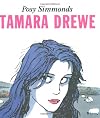
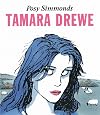
Tamara Drewe
by Posy Simmonds
On This Page
Description
Tamara Drew is loosely inspired by a 19th century novel -- Far From the Madding Crowd. Set in a writers' retreat, it is a thrilling tale of jealousy and desire.Tags
Recommendations


Member Recommendations

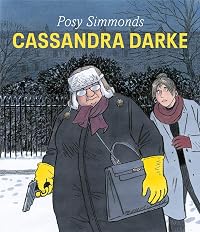
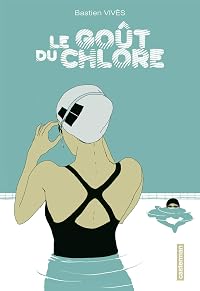
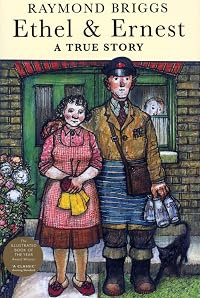
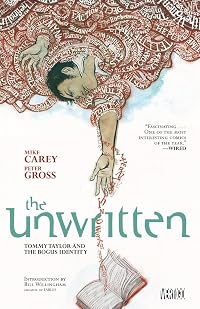
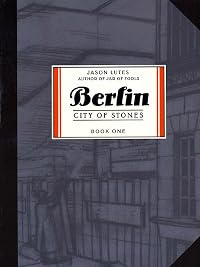
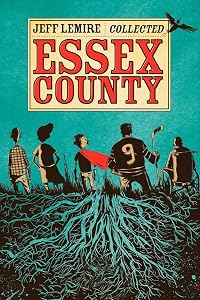
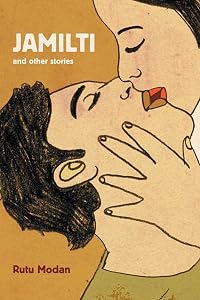
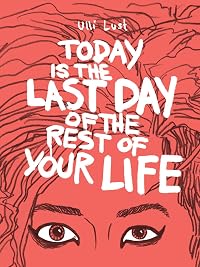
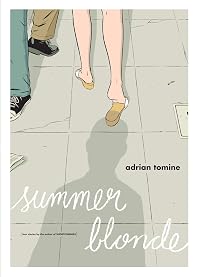
beyondthefourthwall Life at a rural artists' retreat is disrupted when a young woman related to the manager shows up, the guests becomes preoccupied with her, and the consequences destabilize the social environment in some pivotal ways.
Member Reviews
The English countryside. Depending on who you believe you might consider that it has vanished beneath the tarmac of runways or the swooshing blades of wind farms, that it is blighted by second homes or upper class sadists chasing foxes, or is lost in the fog of pesticide being sprayed by tractors slightly larger than houses. The traditional, beautiful English countryside so familiar to us from countless landscape paintings does still exist however, in this particular case it exists between the covers of this book.
This is a stunning piece of work, each turn of the page bringing a new joy. It's not just that the plot and characterisation is captivating and before long the reader is compelled to form predictions and suspicions about which show more of the characters is doomed, which will somehow come undone and which, if any, will live happily ever after, it's that each turn of the page reveals another astonishing illustration by the ridiculously talented Posy, who can write as well as she can draw, and she draws exceptionally well. Her portraits of the characters are simply superb.
This is a book set in a small English village and, in particular, a writers' retreat based on a farm on the edge of that village. And the writers' retreat is very much on the edge of, and certainly not a part of, the village, the theme of native villagers and incommers is one that is thoroughly explored here and one that Andy, a villager who has seen his family home sold off to townies who rarely live there and who now works as an odd job man and gardener on the farm, is a constant reminder of.
The writer in residence at the writers' retreat is a writer in residence because the farm is his home. A successful writer of successful crime novels, he repays the hard work that his wife puts into running the farm, the business, his life and contributing to his work by being a serial adulterer. He is at home in the countryside because he is what is commonly known as a shit.
Setting the book, at least in part, at a writers' retreat, means that there would be, of course, the temptation to write about writers. While various literary types hang out at the farm, Tamara is on a retreat of her own, taking up residence in her childhood home, and Andy's former family home, in the village, and bringing the sort of trouble to the small community that only an attractive but vain person can. Tamara is a tabloid newspaper columnist, the sort who writes about life in the country from a townie perspective, more fun one concludes than writing about life in the country from a country perspective, consisting as that does of culling badgers, inoculating sheep and sticking your arm up a cow's arse for fun and profit.
Despite the beautifully depicted countryside, this is no pastoral idyl. The village itself is more than a collection of farms and well to do columnists, its home to real people who have a real hard time. From the very first page the boredom of kids who live at the the 'rough end' of the village is acknowledged, although much more is made of this in the second half of the book as the plot starts to twist and turn.
This is a good portrait of bored rural youth. Modern rural youth no longer hang around the bus stop doing nothing, they hang around the bus stop (it's a rural bus stop hence deserted) playing on their mobiles, texting one another about how nothing ever happens. There's even drug abuse, although lacking a village crack dealer the kids inhale propellant from cans of shaving foam. Do not try at home because you will inevitably miscalculate and, unless you intend shaving your nostril hair, end up sneezing soapy gunk for forty minutes for no good reason. Though it will make you light headed.
This is a small but beautiful stage, with a small cast of characters in an isolated setting which makes for a melodramatic plot. Posy makes the English countryside look stunning, the landscape as much a character as Tamara, drawn beautifully. show less
This is a stunning piece of work, each turn of the page bringing a new joy. It's not just that the plot and characterisation is captivating and before long the reader is compelled to form predictions and suspicions about which show more of the characters is doomed, which will somehow come undone and which, if any, will live happily ever after, it's that each turn of the page reveals another astonishing illustration by the ridiculously talented Posy, who can write as well as she can draw, and she draws exceptionally well. Her portraits of the characters are simply superb.
This is a book set in a small English village and, in particular, a writers' retreat based on a farm on the edge of that village. And the writers' retreat is very much on the edge of, and certainly not a part of, the village, the theme of native villagers and incommers is one that is thoroughly explored here and one that Andy, a villager who has seen his family home sold off to townies who rarely live there and who now works as an odd job man and gardener on the farm, is a constant reminder of.
The writer in residence at the writers' retreat is a writer in residence because the farm is his home. A successful writer of successful crime novels, he repays the hard work that his wife puts into running the farm, the business, his life and contributing to his work by being a serial adulterer. He is at home in the countryside because he is what is commonly known as a shit.
Setting the book, at least in part, at a writers' retreat, means that there would be, of course, the temptation to write about writers. While various literary types hang out at the farm, Tamara is on a retreat of her own, taking up residence in her childhood home, and Andy's former family home, in the village, and bringing the sort of trouble to the small community that only an attractive but vain person can. Tamara is a tabloid newspaper columnist, the sort who writes about life in the country from a townie perspective, more fun one concludes than writing about life in the country from a country perspective, consisting as that does of culling badgers, inoculating sheep and sticking your arm up a cow's arse for fun and profit.
Despite the beautifully depicted countryside, this is no pastoral idyl. The village itself is more than a collection of farms and well to do columnists, its home to real people who have a real hard time. From the very first page the boredom of kids who live at the the 'rough end' of the village is acknowledged, although much more is made of this in the second half of the book as the plot starts to twist and turn.
This is a good portrait of bored rural youth. Modern rural youth no longer hang around the bus stop doing nothing, they hang around the bus stop (it's a rural bus stop hence deserted) playing on their mobiles, texting one another about how nothing ever happens. There's even drug abuse, although lacking a village crack dealer the kids inhale propellant from cans of shaving foam. Do not try at home because you will inevitably miscalculate and, unless you intend shaving your nostril hair, end up sneezing soapy gunk for forty minutes for no good reason. Though it will make you light headed.
This is a small but beautiful stage, with a small cast of characters in an isolated setting which makes for a melodramatic plot. Posy makes the English countryside look stunning, the landscape as much a character as Tamara, drawn beautifully. show less
(Reprinted from the Chicago Center for Literature and Photography [cclapcenter.com]. I am the original author of this essay, as well as the owner of CCLaP; it is not being reprinted illegally.)
As the graphic novel gets older and older as an artistic format, it of course continues to become more and more diverse and interesting as well, and with there being with each passing year more and more types of full-length image-based narrative tales out there for all of us to enjoy; take for example British writer/illustrator Posy Simmonds, who has been creating a whole series of long-form serial tales for the UK Guardian newspaper since the early 1980s, tales that like the late Victorian Age tend to gently poke fun of the suburban middle-class, show more told not in a traditional comic-book style but rather as an intriguing blend of images and text, often alternating paragraph by paragraph from comics to the written word all the way down a page. It's the exact kind of thing for those interested in the graphic-novel format, but who don't have a penchant for the the types of subjects that usually make up the medium (superheroes, post-apocalyptic worlds, etc etc), and it's no surprise that she's one of the best known graphic artists on the planet right now among her fellow middle-aged urban intellectuals.
Her latest project for the Guardian, in fact, is a rather direct interpretation of an actual late-Victorian book, Far From the Madding Crowd by our old pal Thomas Hardy; her contemporary version is entitled Tamara Drewe, originally published serially in 2005 and '06, then with a British hardback version in '07 and paperback in '08, then finally with the American version in '09, which is why you're just now starting to see it reviewed in the US. And indeed, Simmonds starts out right on the first page with a highly smart and fascinating adaptation decision: she decides to keep the small-town sheep-farm setting of Hardy's original, but instead of the characters being actual feuding sheep farmers like in his book, in Drewe they are all upper-middle-class Londoners who have moved into refurbished sheep farms in order to "get away from it all," kind of like in America the rash of New Yorkers who all now live in WiFi-equipped rustic barns upstate.
This was incredibly wise of Simmonds to do, because it allows her to retain all the humorous and pointless village infighting that makes Hardy's book so adored, even while updating the circumstances to make things both more believable and relatable to her middle-class London readers; for example, in her version the story sort of spiritually revolves around a writers' retreat called Stonefield, made out of one of these rehabbed sheep farms just mentioned, which gives Simmonds the opportunity to introduce all kinds of funny, snotty intellectual types into this rural environment. Like the original, the plot itself revolves around the machinations of a young, self-destructive ingenue (the Tamara Drewe of the book's title), who in this case is a hipster columnist for a Guardian-type liberal London newspaper, who splits her time between her city flat and her aunt's old rural cottage; over the course of the 150-page manuscript, then, she ends up in complicated relationships with a former famous rock guitarist now down on his luck, the Scott-Turow-type wealthy (and married) crime novelist who actually owns Stonefield, the hunky and noble local farmhand who actually tends to all these sheep that are still around for the picturesque pleasure of the city refugees, and more.
Simmonds uses this beguiling antihero and her various entanglements to then spin the tale of the entire town around it -- the bored teens who are the catalyst behind most of the story's drama, the various writers who are in and out of the retreat, the put-upon wife of the crime novelist who is the one actually holding the retreat together, etc. By the end it adds up to a highly complex, highly entertaining look at one small British community, the kind of project you can only get away with by being given two years to let the story organically grow, and I have to say that it's almost like magic that Simmonds ends up with such a thoroughly Victorian-feeling novel by the end of it all, despite you hardly ever thinking of Victorianism when actually reading any particular page. It was a true delight, and comes recommended not just to existing comics fans, but also as that fabled "One Graphic Novel You Should Read This Year, If You're The Type Who Only Reads One Graphic Novel A Year."
Out of 10: 9.3 show less
As the graphic novel gets older and older as an artistic format, it of course continues to become more and more diverse and interesting as well, and with there being with each passing year more and more types of full-length image-based narrative tales out there for all of us to enjoy; take for example British writer/illustrator Posy Simmonds, who has been creating a whole series of long-form serial tales for the UK Guardian newspaper since the early 1980s, tales that like the late Victorian Age tend to gently poke fun of the suburban middle-class, show more told not in a traditional comic-book style but rather as an intriguing blend of images and text, often alternating paragraph by paragraph from comics to the written word all the way down a page. It's the exact kind of thing for those interested in the graphic-novel format, but who don't have a penchant for the the types of subjects that usually make up the medium (superheroes, post-apocalyptic worlds, etc etc), and it's no surprise that she's one of the best known graphic artists on the planet right now among her fellow middle-aged urban intellectuals.
Her latest project for the Guardian, in fact, is a rather direct interpretation of an actual late-Victorian book, Far From the Madding Crowd by our old pal Thomas Hardy; her contemporary version is entitled Tamara Drewe, originally published serially in 2005 and '06, then with a British hardback version in '07 and paperback in '08, then finally with the American version in '09, which is why you're just now starting to see it reviewed in the US. And indeed, Simmonds starts out right on the first page with a highly smart and fascinating adaptation decision: she decides to keep the small-town sheep-farm setting of Hardy's original, but instead of the characters being actual feuding sheep farmers like in his book, in Drewe they are all upper-middle-class Londoners who have moved into refurbished sheep farms in order to "get away from it all," kind of like in America the rash of New Yorkers who all now live in WiFi-equipped rustic barns upstate.
This was incredibly wise of Simmonds to do, because it allows her to retain all the humorous and pointless village infighting that makes Hardy's book so adored, even while updating the circumstances to make things both more believable and relatable to her middle-class London readers; for example, in her version the story sort of spiritually revolves around a writers' retreat called Stonefield, made out of one of these rehabbed sheep farms just mentioned, which gives Simmonds the opportunity to introduce all kinds of funny, snotty intellectual types into this rural environment. Like the original, the plot itself revolves around the machinations of a young, self-destructive ingenue (the Tamara Drewe of the book's title), who in this case is a hipster columnist for a Guardian-type liberal London newspaper, who splits her time between her city flat and her aunt's old rural cottage; over the course of the 150-page manuscript, then, she ends up in complicated relationships with a former famous rock guitarist now down on his luck, the Scott-Turow-type wealthy (and married) crime novelist who actually owns Stonefield, the hunky and noble local farmhand who actually tends to all these sheep that are still around for the picturesque pleasure of the city refugees, and more.
Simmonds uses this beguiling antihero and her various entanglements to then spin the tale of the entire town around it -- the bored teens who are the catalyst behind most of the story's drama, the various writers who are in and out of the retreat, the put-upon wife of the crime novelist who is the one actually holding the retreat together, etc. By the end it adds up to a highly complex, highly entertaining look at one small British community, the kind of project you can only get away with by being given two years to let the story organically grow, and I have to say that it's almost like magic that Simmonds ends up with such a thoroughly Victorian-feeling novel by the end of it all, despite you hardly ever thinking of Victorianism when actually reading any particular page. It was a true delight, and comes recommended not just to existing comics fans, but also as that fabled "One Graphic Novel You Should Read This Year, If You're The Type Who Only Reads One Graphic Novel A Year."
Out of 10: 9.3 show less
Part graphic novel, part plain text story about Tamara Drewe who inherits her mother's country house and moves in, wreaking havoc on the functional and dysfunctional relationships in the village with her flirty eyes and surgically enhanced nose. Engaging story of the clashes between solid country life and the flighty city life - the juxtaposition between pop-stars in flashy sports-cars and farmhands who work the land and pluck the feathers of ducks is acute. The story is loosely based on a Hardy-novel and it is evident that the drama-part is more that of a 19th century novel, but since the all the characters and their problems are distinctly modern, the mix of styles makes the story quite unique.
The serenity of a comfy writers' retreat in a quiet English village is disrupted by the arrival of city hipster Tamara Drewe and her new nose-job. An interesting observational story of middle class weekenders and depressed locals, told with well-balanced prose and pictures from several viewpoints.
Surprisingly good graphic novel (serialized in the UK's Guardian newspaper, originally) and a fun take on the many aspects (good and bad) about writers.
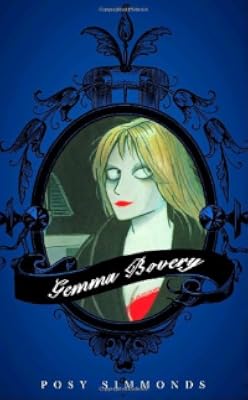
An updated (and loose) take on Far From Maddening Crowd. Easy to read and well worth the time. The illustrations add greatly to the characters involved. Along with Simmonds' earlier book (Gemma Bovary) this made me believe in graphic novels as a form of literature.
My very first graphic novel (it's true) from start to finish. I couldn't put it down. The plot and story is so simple it'd be mundane in print. But the pictures! Whoa! The story was meant to be picturised. I couldn't put it down!
Members
- Recently Added By
Published Reviews
ThingScore 75
I love the way Simmonds incorporates food in memories or settings — that’s the way real people talk of things, over meals, or remember key moments, though smell and taste.
added by lampbane
Lists

Recommended Comics / Graphic Novels
595 works; 120 members
Author Information

25+ Works 1,925 Members
Some Editions
Awards and Honors
Awards
Work Relationships
Is a retelling of
Has the adaptation
Common Knowledge
- Original publication date
- 2007
- People/Characters
- Tamara Drewe; Glen Larson; Beth Hardiman; Nick Hardiman; Andy Cobb; Maggie Larson (show all 9); Ben Sergeant; Casey Show; Jody Long
- Important places
- Stonefield, England (fictional); Winnards Farm, England (fictional); Ewedown, England (fictional); Hadditon, England (fictional); London, England
- Related movies
- Tamara Drewe (2010 | IMDb)
- Dedication
- To Richard
- First words
- Glen : !?!* Assholes!
Beth : O come on, Glen ... they're just bored ... holidays've gone on too long ... just mindless ... - Last words
- (Click to show. Warning: May contain spoilers.)About a WHAT?! Oh my God, no.
- Original language
- English
Classifications
- Genre
- Graphic Novels & Comics
- DDC/MDS
- 741.5942 — Arts & recreation Drawing & decorative arts Drawing Comic books, graphic novels, fotonovelas, cartoons, caricatures, comic strips History, geographic treatment, biography European England & Wales
- LCC
- PN6737 .S46 .T36 — Language and Literature Literature (General) Literature (General) Collections of general literature Comic books, strips, etc.
- BISAC
Statistics
- Members
- 503
- Popularity
- 59,637
- Reviews
- 12
- Rating
- (3.72)
- Languages
- 7 — Dutch, English, French, German, Italian, Spanish, Swedish
- Media
- Paper, Ebook
- ISBNs
- 14
- ASINs
- 4