On This Page
Description
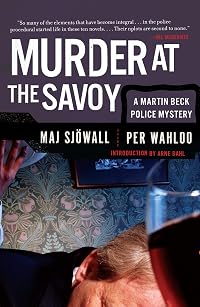
When Viktor Palmgren, a powerful industrialist, is shot during an after-dinner speech, the repercussions—both on the international money markets and on the residents of the small coastal town of Malmö—are widespread. Chief Inspector Martin Beck is called in to help catch a killer nobody, not even the victim, was able to identify. He begins a systemic search for the friends, enemies, business associates and call girls who may have wanted Palmgren dead. But in the process, he finds to his show more dismay that he has nothing but contempt for the victim and sympathy for the murderer.This is the sixth thrilling installment in the Martin Beck detective series from the 1960s, the novels that have inspired all crime fiction written ever since.
. show less
Tags
Recommendations
























Member Reviews
The introduction to this volume (by Michael Carlson) is one of the better ones in this edition – finally someone who does not deem it necessary to a follow a mention of the authors’ Marxist leanings with a disclaimer that they are not preaching party politics.
Unlike communism or socialism, Marxism is not a political movement but a philosophy and an analysis of the workings of capitalist society (which both communism and socialism claim to build on – notice that there is a difference); in fact Marxism is probably to this day the most nuanced and incisive analytical tool in existence if one tries to comprehend the forces driving economy and society. And this is important for Murder at the Savoy, because while earlier novels in the show more series always had a strong element of social realism, it is here that Sjöwall/Wahlöö first attempt to tackle Swedish society as a whole rather than just certain localized aspects of it.
Depicting the whole of contemporary society as based on injustice, driven by corruption and held together by exploitation is of course quite ambitious for a police procedural, and while Murder at the Savoy is still clearly and unambiguously a crime novel, the authors just as clearly were not satisfied with the scope that following standard genre conventions offered them. And I would argue that it’s precisely an underlying Marxist analysis of Swedish society that allows Sjöwall und Wahlöö to open up their perspective here, providing a foundation that grounds their criticism and lends it impetus beyond the range of a crime fiction plot.
Which does not mean that the authors are neglecting that aspect of the novel – just like the previous installments in the series, Murder at the Savoy is an excellent police procedural, combining a compelling mystery with realistic descriptions of police work and plausible character portraits. Interestingly, at the same time as the series begins to present a broader perspective on Swedish society at the time, it also spends increasingly more time filling out the smaller details in the lives of its protagonists, painting small pictures inside the big one. In fact, it might even be the most admirable feature of this series how it manages to strike an almost perfect balance between prodesse and delectare – indeed, there are few works in any genre that mix instruction and delight as well as Maj Sjöwall’s and Per Wahlöö’s series. show less
Unlike communism or socialism, Marxism is not a political movement but a philosophy and an analysis of the workings of capitalist society (which both communism and socialism claim to build on – notice that there is a difference); in fact Marxism is probably to this day the most nuanced and incisive analytical tool in existence if one tries to comprehend the forces driving economy and society. And this is important for Murder at the Savoy, because while earlier novels in the show more series always had a strong element of social realism, it is here that Sjöwall/Wahlöö first attempt to tackle Swedish society as a whole rather than just certain localized aspects of it.
Depicting the whole of contemporary society as based on injustice, driven by corruption and held together by exploitation is of course quite ambitious for a police procedural, and while Murder at the Savoy is still clearly and unambiguously a crime novel, the authors just as clearly were not satisfied with the scope that following standard genre conventions offered them. And I would argue that it’s precisely an underlying Marxist analysis of Swedish society that allows Sjöwall und Wahlöö to open up their perspective here, providing a foundation that grounds their criticism and lends it impetus beyond the range of a crime fiction plot.
Which does not mean that the authors are neglecting that aspect of the novel – just like the previous installments in the series, Murder at the Savoy is an excellent police procedural, combining a compelling mystery with realistic descriptions of police work and plausible character portraits. Interestingly, at the same time as the series begins to present a broader perspective on Swedish society at the time, it also spends increasingly more time filling out the smaller details in the lives of its protagonists, painting small pictures inside the big one. In fact, it might even be the most admirable feature of this series how it manages to strike an almost perfect balance between prodesse and delectare – indeed, there are few works in any genre that mix instruction and delight as well as Maj Sjöwall’s and Per Wahlöö’s series. show less
The murder victim this time is a thoroughly unpleasant capitalist who only barely stops short of wearing a top hat and filling his swimming pool with dollar bills, giving Sjöwall and Wahlöö the chance to push their political agenda a step further. Although the police work of solving the crime remains the most important driver of the story and there are all sorts of interesting details to take in (not least the perceptive look at the operation of a luxury hotel that obviously reflects Sjöwall's background as the daughter of a hotel manager), what this book is really about is not "who did it?" but "why?" - they are digging into the social forces that alienate people from the mainstream and provoke them into desperate acts.
Murder At The Savoy (1970) (Martin Beck #6) by Maj Sjöwall, Per Wahlöö. This is the sixth book out of a total of then that the talented duo of authors wrote. They all star Martin Beck, a Chief Inspector of the National Homicide Squad of Stockholm, Sweden. There is a usual cast of characters Beck works with although this time out he has been sent to Malmo on Sweden’s souther coast, just across the waters from Denmark, so there are some new faces presented. Each of the novels is a political statement about the conditions in 1960/70’s Sweden. Mostly hinting at the rampant corruption that infects all levels of government, and includes the police organizations as well.
At the finest dining establishment in Sweden, Malmo’s world show more renowned Savoy Hotel, a leading industrialist is shot by an unknown assailant. The killer calmly walked through the diners, fired his gun at Victor Palmgran who was giving a little speech. There were about ten people who either work for him or were related to one of the guests seated at the table. The shooter then exited through one of the large windows.
Pressure immediately comes down from high up in the government, is funneled onto Beck, and off he goes.
The case seems impossible. No one can describe the shooter. Was he aligned with some political movement or a rival businessman? What did he even look like. No one can say, but in the usual police procedural way, the grind of police activities soon discovers some clues as to the killer, and the killed. It seems Palmgren was not an innocent victim but rather a vicious businessman who used his property holdings to inflict all manner of terror on his renters. His factories were either very profitable, or they were shut and the workers dismissed without regard.
There is international interest in this case. Foreign agents are soon on site which leads Beck and company to begin looking into the international arm of Palmgren’s business venture, which uncovers dealing arms against government restrictions, but seemingly with it’s tacit approval. And it seems all of Palmgren’s highest ranked associates have tricky dealings to hide.
Eventually the case is solved and all the higher-ups are satisfied with the outcome, but, in true Nordic fashion, Beck is left feeling the wrong people were found guilty.
Just so you know, Maj Sjöwall and Per Wahlöö are considered the godparents of the entire Nordic Noir genre. While they wrote 60 some years ago, the stories hold up even now. The politics have changed, for the better I hope, but there are still many frustrations felt within the population. I highly recommend any of the Martin Beck novels as they do stand the test of time, I have been told that reading them in order of publication is the best way to do so.
I read them as I get them so I don’t know if the “in order” thing will amplify your enjoyment. All I know is that I like them willy-nilly and they give me a little more insight into the newer Nordic writers. show less
At the finest dining establishment in Sweden, Malmo’s world show more renowned Savoy Hotel, a leading industrialist is shot by an unknown assailant. The killer calmly walked through the diners, fired his gun at Victor Palmgran who was giving a little speech. There were about ten people who either work for him or were related to one of the guests seated at the table. The shooter then exited through one of the large windows.
Pressure immediately comes down from high up in the government, is funneled onto Beck, and off he goes.
The case seems impossible. No one can describe the shooter. Was he aligned with some political movement or a rival businessman? What did he even look like. No one can say, but in the usual police procedural way, the grind of police activities soon discovers some clues as to the killer, and the killed. It seems Palmgren was not an innocent victim but rather a vicious businessman who used his property holdings to inflict all manner of terror on his renters. His factories were either very profitable, or they were shut and the workers dismissed without regard.
There is international interest in this case. Foreign agents are soon on site which leads Beck and company to begin looking into the international arm of Palmgren’s business venture, which uncovers dealing arms against government restrictions, but seemingly with it’s tacit approval. And it seems all of Palmgren’s highest ranked associates have tricky dealings to hide.
Eventually the case is solved and all the higher-ups are satisfied with the outcome, but, in true Nordic fashion, Beck is left feeling the wrong people were found guilty.
Just so you know, Maj Sjöwall and Per Wahlöö are considered the godparents of the entire Nordic Noir genre. While they wrote 60 some years ago, the stories hold up even now. The politics have changed, for the better I hope, but there are still many frustrations felt within the population. I highly recommend any of the Martin Beck novels as they do stand the test of time, I have been told that reading them in order of publication is the best way to do so.
I read them as I get them so I don’t know if the “in order” thing will amplify your enjoyment. All I know is that I like them willy-nilly and they give me a little more insight into the newer Nordic writers. show less
ogni volta che ne finisco uno mi viene da dire: "è anche meglio del precedente". Sarà vero o sarà solo smemoratezza? Comunque non ci sono molte serie che mi generino un simile pensiero. Ed è già un grande pregio. Peccato che i suoi auori ne abbiano scritti solo dieci.
Su tutto una polizia svedese incapace, stupida ( e un po' fascista) riscattata solo dall'umanità e dalla perspicacia dei suoi investigatori.
Su tutto una polizia svedese incapace, stupida ( e un po' fascista) riscattata solo dall'umanità e dalla perspicacia dei suoi investigatori.
One of the better entries in the series, as Beck goes to Malmo to investigate the death of a very rich businessman who was murdered at a restaurant in the title hotel. I like that Beck is more of a central character in this one, unlike some of the previous books. In addition to the murder investigation, we also get to catch up on Beck's personal life. Like the other books, there is also lots of social commentary, although it is done more skillfully here than elsewhere and doesn't load down the story.
The sixth book from the Martin Beck series sees the Chief Inspector sent to Malmö to oversee the investigation into the murder of Victor Palmgren, a powerful industrialist with plenty of political connections. A man walked into the restaurant of a high class hotel and shot Palmgren in the head and managed to escape through an open window and managed to evade capture due to the incompetence of a couple of officers that had featured in a previous story. It's going to be a difficult and painstaking case to work as the victim had plenty of enemies, not least those that were closest to him. Was the murder arranged by one of those sitting at the table when it happened? Looking for career advancement or perhaps his wife's lover had had enough show more of being the bit on the side. Was it something to do with his shady business practices, especially from his African interests? Or was it something else entirely? Can Beck and his team unscramble the myriad of possibilities and uncover why the man was killed?
This is another excellent police procedural from this very good series. It's not just a crime novel though as tthe socio-political message is brought much more to the fore in this installment. While the ills of Swedish society from the late 1960's have been touched upon previously it is definitely more prominent here. While using a crime story to look at the ills of society is not a new concept it was handled well throughout this tale here. There's plenty of familiar characters on show with Beck teaming up with Månsson and Skacke in Malmö while Kollberg and Larsson assist back in Stockholm. Åsa Torell is also involved now that she's working in the vice squad. We also get to learn a bit more of the background of some of these people too. As with the other books in this series the investigation unfolds slowly with leads being followed until they hit a dead-end until finally all the connections are put in place and the murder can be solved. This is another excellent episode featuring Martin Beck and his team. show less
This is another excellent police procedural from this very good series. It's not just a crime novel though as tthe socio-political message is brought much more to the fore in this installment. While the ills of Swedish society from the late 1960's have been touched upon previously it is definitely more prominent here. While using a crime story to look at the ills of society is not a new concept it was handled well throughout this tale here. There's plenty of familiar characters on show with Beck teaming up with Månsson and Skacke in Malmö while Kollberg and Larsson assist back in Stockholm. Åsa Torell is also involved now that she's working in the vice squad. We also get to learn a bit more of the background of some of these people too. As with the other books in this series the investigation unfolds slowly with leads being followed until they hit a dead-end until finally all the connections are put in place and the murder can be solved. This is another excellent episode featuring Martin Beck and his team. show less
As you might expect based on the title, this book involves a murder at a fancy hotel known as the Savoy. A major industrialist named Viktor Palmgren is giving a dinner at the hotel restaurant, and someone walks up to him during the speeches, shoots him in the head, and exits through the window. There’s no shortage of suspects, and Palmgren’s death could have political implications, meaning Martin Beck and the gang have to tread carefully.
This was all right. The writing was excellent when describing the disgustingly hot weather, and I enjoyed the occasional quirky asides and humorous tone of the narration. In that respect it seemed to be a translation that was faithful to the spirit of the original text. (On a side note, I love the show more original Swedish title, “Polis, polis, potatismos!”)
In terms of the content, I could have done without the sex scene (and the nude sunbathing, which just doesn’t sound like a good idea for anybody). The sex scenes that show up in this series often have physical descriptions of the women that make me think those are Wahlöö’s doing :-/
I compare all the other books in the series to The Laughing Policeman, and this one too fails to surpass that book. It’s not bad, but not my favourite (except maybe my favourite cover, with a lovely purple in the Vintage / Black Lizard edition). show less
This was all right. The writing was excellent when describing the disgustingly hot weather, and I enjoyed the occasional quirky asides and humorous tone of the narration. In that respect it seemed to be a translation that was faithful to the spirit of the original text. (On a side note, I love the show more original Swedish title, “Polis, polis, potatismos!”)
In terms of the content, I could have done without the sex scene (and the nude sunbathing, which just doesn’t sound like a good idea for anybody). The sex scenes that show up in this series often have physical descriptions of the women that make me think those are Wahlöö’s doing :-/
I compare all the other books in the series to The Laughing Policeman, and this one too fails to surpass that book. It’s not bad, but not my favourite (except maybe my favourite cover, with a lovely purple in the Vintage / Black Lizard edition). show less
Members
- Recently Added By
Lists

Scandinavian Crime Fiction
224 works; 37 members
Nordic Crime Fiction
66 works; 9 members

Reading List - Scandinavian Fiction
134 works; 3 members

Books Read in 2016
4,666 works; 199 members

Books Read in 2021
5,361 works; 114 members

1970 Club
85 works; 2 members
Author Information

68+ Works 14,656 Members
Writer and journalist Maj Sjöwall was born in Sweden in 1935. She was a reporter and art director at several newspapers and magazines. From 1959 to 1961, she was an editor with the publishing house Wahlström and Widstrad. She met Per Wahlöö in 1961 and they married the following year. Together they wrote all ten novels in the Martin Beck show more Police Mystery series from 1965 to 1975. In 1971, The Laughing Policeman (a translation of Den Skrattande Polisen) won an Edgar Award for Best Novel. (Bowker Author Biography) show less

Writer and journalist Per Wahlöö was born in Sweden on August 5, 1926. He graduated from the University of Lund in 1946 and found work covering criminal and social issues for numerous newspapers and magazines. He also wrote a number of television and radio plays and was managing editor for several magazines. His first book, Himmelsgeten, was show more published in 1956 and numerous novels followed. He also wrote all ten novels in the Martin Beck Police Mystery series with his wife Maj Sjöwall. In 1971, The Laughing Policeman (a translation of Den Skrattande Polisen) won an Edgar Award for Best Novel. He died from cancer on June 22, 1975. (Bowker Author Biography) show less
Some Editions
Awards and Honors
Series

Belongs to Publisher Series
Work Relationships
Is contained in
Common Knowledge
- Canonical title
- Murder at the Savoy
- Original title
- Polis, polis, potatismos!
- Original publication date
- 1970; 2013-08-15
- People/Characters
- Martin Beck; Per Månsson; Gunvald Larsson; Benny Skacke; Karl Kristiansson; Kurt Kvant (show all 21); Sten Lennart Kollberg; Åsa Torell; Stig Malm; Bo Zachrisson; Backlund; Viktor Palmgren; Charlotte Palmgren; Mats Linder; Hampus Broberg; Helena Hansson; Edvardsson; Paulsson; Ole Hoff-Jensen; Bertil Svensson; Eva Svensson
- Important places
- Stockholm, Sweden; Malmö, Sweden; Lund, Sweden; Copenhagen, Denmark; Dragør, Denmark
- Related movies
- Murder at the Savoy (1993 | IMDb)
- First words
- The day was hot and stifling, without a breath of air.
- Last words
- (Click to show. Warning: May contain spoilers.)He wondered if he'd be able to sleep on the train.
- Original language
- Swedish
- Disambiguation notice*
- La première édition française est parue en 1972 aux éditions Planète sous le titre "Le Meurtre du Savoy"
*Some information comes from Common Knowledge in other languages. Click "Edit" for more information.
Classifications
- Genres
- Fiction and Literature, Mystery
- DDC/MDS
- 839.7374 — Literature & rhetoric German & related literatures Other Germanic literatures Swedish literature Swedish fiction 1900-1999 1945-1999
- LCC
- PT9876.29 .J63 .P613 — Language and Literature German, Dutch and Scandinavian literatures Swedish literature Individual authors or works 1961-2000
- BISAC
Statistics
- Members
- 1,214
- Popularity
- 20,376
- Reviews
- 29
- Rating
- (3.73)
- Languages
- 14 — Czech, Danish, Dutch, English, Finnish, French, German, Italian, Norwegian (Bokmål), Norwegian, Polish, Russian, Spanish, Swedish
- Media
- Paper, Audiobook, Ebook
- ISBNs
- 70
- ASINs
- 23