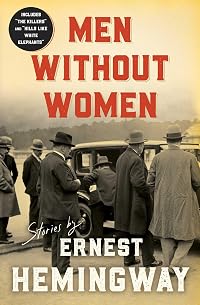
Men Without Women
by Ernest Hemingway 
On This Page
Description
Originally published in October 1927, the second short-story collection published by Pulitzer Prize winner and Nobel Laureate Ernest Hemingway contains the following fourteen stories: The Undefeated In Another Country Hills Like White Elephants The Killers Che Ti Dice La Patria? Fifty Grand A Simple Enquiry Ten Indians A Canary for One An Alpine Idyll A Pursuit Race Today is Friday Banal Story Now I Lay Me Themes and subject matter range from bullfighting, boxing, and prizefighting to show more divorce, infidelity, and death. Critics at the time praised Hemingway's concise language and powerful prose. Content Warning: As a part of the public domain, Men Without Women is a literary work that reflects the time in which it was published-both its good and its ill. The original text of Men Without Women contains slurs and depictions that represent prejudiced and harmful beliefs regarding race, ethnicity, and religion. To erase or bury this representation of inequity and prejudice would be akin to pretending it never existed, a denial that only perpetuates and extends the original harm done. Thus, in the interest of preserving and documenting both the faults and highlights of literary history-an instrumental, crucial function of works entering the public domain-this text is unedited and uncensored in this audiobook recording. Please proceed with discretion. show lessTags
Recommendations










Member Reviews
These 14 short stories from Ernest Hemingway, first published collectively in 1927, are not entirely devoid of women, but they certainly are bent towards the masculine. There is a certain rugged pathos to stories about an aging bullfighter (“The Undefeated”), a boxer who decides to throw a fight (“Fifty Grand”), soldiers maimed in WW1 (“In Another Country”), a drug addict (“A Pursuit Race”), and hitmen terrorizing a diner while waiting for their target (“The Killers”, my overall favorite). Hemingway gets in a direct critique of Mussolini and the fascists effect on Italy (“Che Ti Dice La Patria?”), and more subtly given the era, also touches on homosexuality (“A Simple Enquiry”) and abortion (“Hills Like show more White Elephants”).
As with his other work, there is great economy with language, and I liked how what some of the stories were really trying to say required thought and interpretation. There are times when Hemingway provides contrasts without directly linking things, such as that between characters thinking of “Them Indians” as drunken trouble-makers, and a boy secretly loving one of them (“Ten Indians”). In another story, characters view peasants as “beasts,” whereas a couple of skiers had a carefree winter while a poor peasant was snowed in with his wife’s corpse in a shed (“An Alpine Idyll”). In a third, we get the lightweight reporting of a magazine on various topics which also seems like empty chatter, followed by the gravitas of a dying bullfighter known for his courage (“Banal Story”).
Overall, I don’t think there are any masterpieces here, but the quality level is uniformly high, and it’s worth reading. show less
As with his other work, there is great economy with language, and I liked how what some of the stories were really trying to say required thought and interpretation. There are times when Hemingway provides contrasts without directly linking things, such as that between characters thinking of “Them Indians” as drunken trouble-makers, and a boy secretly loving one of them (“Ten Indians”). In another story, characters view peasants as “beasts,” whereas a couple of skiers had a carefree winter while a poor peasant was snowed in with his wife’s corpse in a shed (“An Alpine Idyll”). In a third, we get the lightweight reporting of a magazine on various topics which also seems like empty chatter, followed by the gravitas of a dying bullfighter known for his courage (“Banal Story”).
Overall, I don’t think there are any masterpieces here, but the quality level is uniformly high, and it’s worth reading. show less
Пестеливият, простичък език на Хемингуей е единственото, което заслужава споменаване в тия разкази, които иначе са абсолютно безинтересни и безсмислени. Той използва толкова къси изречения и думи, че написаното звучи като извадено от детска книжка.
Знам, че книгата трябва да е пълна със "символизъм и големи житейски теми", но явно трябва да си много прозорлив литературен мастодонт, за да ги видиш. show more
Разказите представляват някакви случки, които те карат всеки път да си мислиш че ей сега ще почне интересното. А докато го чакаш, разказът свършва и краят е банално антиклимактичен. show less
Знам, че книгата трябва да е пълна със "символизъм и големи житейски теми", но явно трябва да си много прозорлив литературен мастодонт, за да ги видиш. show more
Разказите представляват някакви случки, които те карат всеки път да си мислиш че ей сега ще почне интересното. А докато го чакаш, разказът свършва и краят е банално антиклимактичен. show less
I read a couple of Hemingway novels in high school and since, and I absolutely loathed them... so I was surprised to find I kind of like the stories here! The novels felt stiff and artificial, particularly the female characters -- perhaps this collection is saved by not having any. People think of Hemingway as an icon of indomitable machismo, but I see in these stories an overwhelming panic about masculine performance and the possible failures thereof.
The trouble I have with Hemingway is that I'm just not interested in much of the subject matter, which makes for a tedious read. Bullfighting, boxing, yawn. And there's so much left unsaid, which works some of the time if the reader has knowledge or interest in the context, but not if she doesn't. "Hills Like White Elephants" is told without once naming the literal elephant in the room. But the bullfighting stories, I can't even picture what's happening, although I do get the gist. The stories all have male narrators, with women appearing as minor characters, if at all. But oddly, despite the fact that the story topics don't interest me, I can still feel the seriousness of Hemingway's intention. I can feel that he's trying to say show more something, even if I don't know what it is.
Edit: It's been weeks since I read this collection, and there's one story I still think about. The Major, an army officer who has been wounded in the hand, who has lost his wife, still returns to the medical center where his hand is manipulated by a machine as part of his physical therapy. This image, of the man who has given everything but is still caught up in the machine, has really stuck with me. show less
Edit: It's been weeks since I read this collection, and there's one story I still think about. The Major, an army officer who has been wounded in the hand, who has lost his wife, still returns to the medical center where his hand is manipulated by a machine as part of his physical therapy. This image, of the man who has given everything but is still caught up in the machine, has really stuck with me. show less
**spoilers**
The atmosphere in these stories is raw, without illusions and cynical. Most characters are not too upset about their disenchanted world. Ok, they’re grumpy or gloomy, but they give a shrug and carry on.
The narrator keeps from committing himself, delivering his sober prose stoicly like his characters. But between the lines he shows compassion. Every once in a while he abandons his short sentences for longer ones, more lyrical. This happens with Manuel the aging bullfighter (“The Undefeated”) who is in for a hopeless defeat. Before the bull tosses Manuel, Hemingway slows down the narrative to highlight Manuels competence, one last time. Manuel faces the bull and takes in every detail: ‘He knew all about bulls.’
A show more character resembling Manuel is Jack, the boxer in “Fifty Grand”. Jack is also heading for certain defeat. Not only is he old like Manuel and does he have to fight a young brute, but he also suffers from insomnia which makes it almost impossible to train. But the nice thing about these stories is that characters are never completely the same. Whereas Manuel is victimised by a commercial and cynical organizer of bullfights, Jack is commercial and cynical himself. He bets on his own defeat, putting in fifty grand. What a fright if he almost wins, against all odds, because his opponent commits an enormous ‘foul’, hitting heavily below the belt. Luckily Jack can persuade the referee that it’s insignificant, and the game continues. Afterwards he says: ‘It’s funny how fast you can think when it means that much money.’
The atmosphere is not always determined by sturdy men going about their crude business. In the anti-fascist story ‘Che Ti Dice La Patria?’ the first-person narrator playfully teases his traveling companion. In ‘A pursuit Race’ a just as playful (but also very drunk) racing cyclist gets into an absurd conversation with his coach. And in the famous ‘Hills like white elephants’, one of the few women in this collection utters the maybe not exactly playful, but certainly not sturdy or crude phrase: ‘Will you please please please please please please please stop talking?’
There are many sides to these stories and they all tingle with life. show less
The atmosphere in these stories is raw, without illusions and cynical. Most characters are not too upset about their disenchanted world. Ok, they’re grumpy or gloomy, but they give a shrug and carry on.
The narrator keeps from committing himself, delivering his sober prose stoicly like his characters. But between the lines he shows compassion. Every once in a while he abandons his short sentences for longer ones, more lyrical. This happens with Manuel the aging bullfighter (“The Undefeated”) who is in for a hopeless defeat. Before the bull tosses Manuel, Hemingway slows down the narrative to highlight Manuels competence, one last time. Manuel faces the bull and takes in every detail: ‘He knew all about bulls.’
A show more character resembling Manuel is Jack, the boxer in “Fifty Grand”. Jack is also heading for certain defeat. Not only is he old like Manuel and does he have to fight a young brute, but he also suffers from insomnia which makes it almost impossible to train. But the nice thing about these stories is that characters are never completely the same. Whereas Manuel is victimised by a commercial and cynical organizer of bullfights, Jack is commercial and cynical himself. He bets on his own defeat, putting in fifty grand. What a fright if he almost wins, against all odds, because his opponent commits an enormous ‘foul’, hitting heavily below the belt. Luckily Jack can persuade the referee that it’s insignificant, and the game continues. Afterwards he says: ‘It’s funny how fast you can think when it means that much money.’
The atmosphere is not always determined by sturdy men going about their crude business. In the anti-fascist story ‘Che Ti Dice La Patria?’ the first-person narrator playfully teases his traveling companion. In ‘A pursuit Race’ a just as playful (but also very drunk) racing cyclist gets into an absurd conversation with his coach. And in the famous ‘Hills like white elephants’, one of the few women in this collection utters the maybe not exactly playful, but certainly not sturdy or crude phrase: ‘Will you please please please please please please please stop talking?’
There are many sides to these stories and they all tingle with life. show less
I must admit that, whilst reading parts of this book, I thought that Men Without Women would be the first Hemingway experience I've had that I disliked (it is the seventh book by the man that I have read). A fair proportion of the stories here are simply dull, lacking direction and not even offering any coherent symbolism or thematic depth as redemption. Many other reviewers have praised the included stories 'Hills Like White Elephants' and 'The Killers', and though I liked 'Hills', these two stories didn't exactly blow me away. Others, such as 'Che Ti Dice La Patria?' and 'A Canary for One', don't really have anything to recommend them, whilst 'A Simple Enquiry' was just strange and right out of left-field.
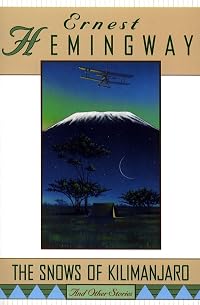
Sometimes the strangeness is show more fine and pleasing, as with 'A Pursuit Race', a story about a drug addict who happens to talk through a white bed-sheet (!?) and 'Today is Friday', which has three Roman soldiers winding down after work and talking about that Jesus bloke they put up on the cross (You see me slip the old spear into him?" (pg. 120)). I did like the two sports-related stories: 'The Undefeated', about a bullfighter, and 'Fifty Grand', about a boxer. I found the latter to be the most accessible and pleasing of the selections on offer. But, all told, if you're looking for a collection of Hemingway's short stories, you might want to check out The Snows of Kilimanjaro first, which I found to be a stronger offering." show less
Sometimes the strangeness is show more fine and pleasing, as with 'A Pursuit Race', a story about a drug addict who happens to talk through a white bed-sheet (!?) and 'Today is Friday', which has three Roman soldiers winding down after work and talking about that Jesus bloke they put up on the cross (You see me slip the old spear into him?" (pg. 120)). I did like the two sports-related stories: 'The Undefeated', about a bullfighter, and 'Fifty Grand', about a boxer. I found the latter to be the most accessible and pleasing of the selections on offer. But, all told, if you're looking for a collection of Hemingway's short stories, you might want to check out The Snows of Kilimanjaro first, which I found to be a stronger offering." show less
I read this collection of 14 short stories in part to compare it to Haruki Murakami's recent collection that borrowed the title. These are indeed primarily stories of men without women. I can see even a few bits to compare, probably coincidental, such as the story of the boxer in '50 Grand' who is off training and misses his wife every day and writes her letters. I enjoyed reading this, but this is not the best Hemingway and some of the stories are just little slips of things that didn't grab me. Still, it is Hemingway. There are enough good ones, thought provoking vignettes, in here to put this at the high end of an OK read so I'm giving this 3 1/2 stars.
Sometimes when I read Hem's stories I feel like a little kid again listening to show more my grandpa tell stories. show less
Sometimes when I read Hem's stories I feel like a little kid again listening to show more my grandpa tell stories. show less
Members
- Recently Added By
Lists

The Guardian's 100 greatest novels of all time
100 works; 16 members

Best Books of 1926-1935
403 works; 10 members
Author Information

667+ Works 174,208 Members
Ernest Miller Hemingway was born in the family home in Oak Park, Ill., on July 21, 1899. In high school, Hemingway enjoyed working on The Trapeze, his school newspaper, where he wrote his first articles. Upon graduation in the spring of 1917, Hemingway took a job as a cub reporter for the Kansas City Star. After a short stint in the U.S. Army as a show more volunteer Red Cross ambulance driver in Italy, Hemingway moved to Paris, and it was here that Hemingway began his well-documented career as a novelist. Hemingway's first collection of short stories and vignettes, entitled In Our Time, was published in 1925. His first major novel, The Sun Also Rises, the story of American and English expatriates in Paris and on excursion to Pamplona, immediately established him as one of the great prose stylists and preeminent writers of his time. In this book, Hemingway quotes Gertrude Stein, "You are all a lost generation," thereby labeling himself and other expatriate writers, including F. Scott Fitzgerald, T.S. Eliot, and Ford Madox Ford. Other novels written by Hemingway include: A Farewell To Arms, the story, based in part on Hemingway's life, of an American ambulance driver on the Italian front and his passion for a beautiful English nurse; For Whom the Bell Tolls, the story of an American who fought, loved, and died with the guerrillas in the mountains of Spain; and To Have and Have Not, about an honest man forced into running contraband between Cuba and Key West. Non-fiction includes Green Hills of Africa, Hemingway's lyrical journal of a month on safari in East Africa; and A Moveable Feast, his recollections of Paris in the Roaring 20s. In 1954, Hemingway won the Nobel Prize in Literature for his novella, The Old Man and the Sea. A year after being hospitalized for uncontrolled high blood pressure, liver disease, diabetes, and depression, Hemingway committed suicide on July 2, 1961, in Ketchum, Idaho. (Bowker Author Biography) show less
Ernest Hemingway has a Legacy Library. Legacy libraries are the personal libraries of famous readers, entered by LibraryThing members from the Legacy Libraries group.
Some Editions
Awards and Honors
Series
Belongs to Publisher Series
The Scribner Library (SL 217)
rororo (279)
Work Relationships
Is contained in
Ernest Hemingway Book-of-the-Month-Club Set of 6: A Farewell to Arms, A Moveable Feast, For Whom the Bell Tolls, The Sun Also Rises, The Old Man and the Sea, The Complete Short Stories by Ernest Hemingway (indirect)
The Complete Short Stories of Ernest Hemingway: The Finca Vigía Edition by Ernest Hemingway (indirect)
The Sun Also Rises / A Farewell to Arms / For Whom the Bell Tolls / The Old Man and the Sea / The Complete Short Stories by Ernest Hemingway (indirect)
The Short Stories of Ernest Hemingway: The First Forty-Nine Stories and the Play The Fifth Column by Ernest Hemingway (indirect)
Contains
Has as a commentary on the text
Common Knowledge
- Canonical title
- Men Without Women
- Original title
- Men without Women
- Original publication date
- 1927 (Englisch) (Englisch); 1965 (Nederlands) (Nederlands); 1958, 1970 (Deutsch) (Deutsch)
- People/Characters
- Nick Adams
- Related movies
- The Killers (1946 | IMDb)
- Dedication
- To
Evan Shipman - First words
- Manuel Garcia climbed the stairs to Don Miguel Retana's office.
(THE UNDEFEATED). - Last words
- (Click to show. Warning: May contain spoilers.)He was going back to America and he was very certain about marriage and knew it would fix up everything.
(NOW I LAY ME) - Original language*
- Engels
*Some information comes from Common Knowledge in other languages. Click "Edit" for more information.
Classifications
Statistics
- Members
- 1,852
- Popularity
- 11,717
- Reviews
- 30
- Rating
- (3.63)
- Languages
- 10 — Bulgarian, Chinese, Dutch, English, Estonian, French, German, Spanish, Thai, Turkish
- Media
- Paper, Audiobook, Ebook
- ISBNs
- 50
- UPCs
- 1
- ASINs
- 58