On This Page
Description
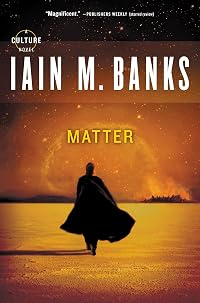
In a distant-future, highly advanced society of seemingly unlimited technological capability, a crime is committed within a war. For one brother it means a desperate flight, and a search for the one--maybe two--people who could clear his name. For his brother it means a life lived under constant threat of treachery and murder. And for their sister, it means returning to a place she'd thought abandoned forever. Only the sister is not what she once was; Djan Seriy Anaplian has become an agent show more of the Culture's Special Circumstances section, charged with high-level interference in civilizations throughout the greater galaxy. Concealing her new identity--and her particular set of abilities--might be a dangerous strategy. In the world to which Anaplian returns, nothing is quite as it seems; and determining the appropriate level of interference in someone else's war is never a simple matter. show lessTags
Recommendations








Member Reviews
Tras ocho años desde la publicación de ‘A barlovento’, Banks retornó con ‘Materia’ al particular universo de La Cultura (cuyas novelas son de lectura independiente y conclusiva), una de las space opera más exitosas de todos los tiempos. No cabe duda de que el subgénero que más y mejor ha perdurado dentro de la ciencia ficción es el de la Space Opera, es decir, y muy sucintamente, esa literatura de temática aventurera ambientada en lejanas galaxias.
Desde un principio, Banks deja claro su saber hacer a la hora de crear mundos y razas alienígenas, dejándote maravillado con su potente imaginación. No nos equivoquemos, Banks es uno de los mejores escritores británicos del momento. Pero como escribe ciencia ficción, se le show more mira como si fuese un escritorzuelo de meras aventurillas espaciales. Sinceramente, habría que leerle para poder hablar con fundamento. Quien le haya leído, no solo en su vertiente de ciencia ficción, sino también en la de mainstream, se dará cuenta de que Banks es muy cuidadoso con el lenguaje, y que cada frase está puesta perfectamente.
‘Materia’ nos presenta Sursamen, un mundo concha, un planeta artificial consistente en varios niveles sostenidos por inmensas torres, cada uno de ellos un mundo en sí mismo. La historia se centra en el nivel de los sarlos, un mundo casi medieval, con algún elemento steampunk, muy similar al que Banks nos presentó en ‘Inversiones’, pero con la diferencia de que los sarlos sí saben de la existencia de La Cultura. Al principio de la historia asistimos a una traición con un testigo involuntario, Ferbin Hausk, que tendrá que viajar a la superficie de Sursamen en busca de ayuda, más concretamente de su hermana Djan Anaplian, agente de la controvertida Circunstancias Especiales de La Cultura. De este modo, tenemos tres hilos narrativos: el de Ferbin y su fiel sirviente Choubris Holse, que recuerdan mucho a Don Quijote y Sancho Panza; el de Oramen, hermano pequeño de Ferbin, que tendrá que lidiar con las responsabilidades de la corte, la traición y la guerra; y el de Djan, que decide viajar a su mundo natal sin saber lo que le espera.
Todos estos argumentos podrían quedar liquidados en una tercera parte de las casi 500 páginas de letra minúscula que tiene la novela, pero no olvidemos que se trata de Banks, todo un estilista del género, al que gusta describir los mundos que crea para dotarles de una cierta verosimilitud. Y es que ‘Materia’ no se trata de una space opera al uso, dinámica y que te arrastra en una vorágine de acción a raudales. ‘Materia’ no es un libro fácil, o no tan fácil como pueda parecer. Banks vuelve a tratar los temas que le interesan, como son la conveniencia o no de una intervención en una cultura menos desarrollada tecnológicamente, y las consecuencia éticas que conlleva, o la pasión por la guerra, como si de un juego se tratase.
Aventuras, sentido de la maravilla, buenos personajes, mundos y razas extraordinarios. Banks no decepciona. show less
Desde un principio, Banks deja claro su saber hacer a la hora de crear mundos y razas alienígenas, dejándote maravillado con su potente imaginación. No nos equivoquemos, Banks es uno de los mejores escritores británicos del momento. Pero como escribe ciencia ficción, se le show more mira como si fuese un escritorzuelo de meras aventurillas espaciales. Sinceramente, habría que leerle para poder hablar con fundamento. Quien le haya leído, no solo en su vertiente de ciencia ficción, sino también en la de mainstream, se dará cuenta de que Banks es muy cuidadoso con el lenguaje, y que cada frase está puesta perfectamente.
‘Materia’ nos presenta Sursamen, un mundo concha, un planeta artificial consistente en varios niveles sostenidos por inmensas torres, cada uno de ellos un mundo en sí mismo. La historia se centra en el nivel de los sarlos, un mundo casi medieval, con algún elemento steampunk, muy similar al que Banks nos presentó en ‘Inversiones’, pero con la diferencia de que los sarlos sí saben de la existencia de La Cultura. Al principio de la historia asistimos a una traición con un testigo involuntario, Ferbin Hausk, que tendrá que viajar a la superficie de Sursamen en busca de ayuda, más concretamente de su hermana Djan Anaplian, agente de la controvertida Circunstancias Especiales de La Cultura. De este modo, tenemos tres hilos narrativos: el de Ferbin y su fiel sirviente Choubris Holse, que recuerdan mucho a Don Quijote y Sancho Panza; el de Oramen, hermano pequeño de Ferbin, que tendrá que lidiar con las responsabilidades de la corte, la traición y la guerra; y el de Djan, que decide viajar a su mundo natal sin saber lo que le espera.
Todos estos argumentos podrían quedar liquidados en una tercera parte de las casi 500 páginas de letra minúscula que tiene la novela, pero no olvidemos que se trata de Banks, todo un estilista del género, al que gusta describir los mundos que crea para dotarles de una cierta verosimilitud. Y es que ‘Materia’ no se trata de una space opera al uso, dinámica y que te arrastra en una vorágine de acción a raudales. ‘Materia’ no es un libro fácil, o no tan fácil como pueda parecer. Banks vuelve a tratar los temas que le interesan, como son la conveniencia o no de una intervención en una cultura menos desarrollada tecnológicamente, y las consecuencia éticas que conlleva, o la pasión por la guerra, como si de un juego se tratase.
Aventuras, sentido de la maravilla, buenos personajes, mundos y razas extraordinarios. Banks no decepciona. show less
As a mark of how much I enjoyed the story, let's count how many passages I marked by turning over a page corner. Fifteen! That is a very good ratio. The first such favourite passage occurs after page 100. So, it does take the story quite a while to get underway.
The
The epilogue of the story was absolutely delightful. Indeed, the epilogue could well serve as the jumping off point for an entirely separate sequel novel.
Another entry in Banks' annals of the Culture, and once again, it's something different and new. The point of view is from a dynastic ruling family occupying a realm which is on one level of a sort of nested Dyson sphere (except there's sixteen levels, all told). A power struggle erupts when the monarch is assassinated by an ambitious courtier, and the displaced princes - one of which witnessed the assassination and has to run - try to cope with the new situation. But to complicate matters, their sister has left the world and has become a Special Circumstances operative for the Culture. And as events unfold, it becomes clear that there is more going on than just some swordplay and steampunkish fantasy.
As ever, the world-building and show more characterisation is good. The Shellworld is well-realised, and the reactions of the inhabitants to their position is interesting; they know how their world is structured, they know that the greater world is run and guarded by other races whose ways and motives they don't fully grasp, and they know that there are other civilisations out there who are more advanced than they are. How that affects their actions and attitudes is one of the interesting things about this book.
The plotting is fairly linear, even though the viewpoint character keeps changing. The ending, however, is rather abrupt - all die (O the embarrassment) (except for those who are from the Culture, as they are backed up fairly regularly). It would be interesting to know what the political fallout was from the events of this novel, as various races are shown to be interfering in ways that they really shouldn't have been. The one thing that turned out as I rather suspected was Choubris Holse, faithful retainer of one of the princes, who manages to get out alive and suddenly finds himself to be a bit of a player, as a) he found the worlds of the Culture to be rather stimulating when he finally came across them, and b) suddenly there's no royal family left to run things, so Special Circumstances take a steadying hand in local affairs. Whether that is a good thing or not remains to be seen. I warmed to Holse quite a bit, and would like to see him return at some point in the future so we can see how things turned out for him and his corner of his world.
Don't miss the final chapter in the book, which can be found after a set of appendices detailing worlds, ship names, characters and some other useful information for anyone dabbling in the Culture - something Banks hasn't really done so far, but which I suspect others have and put pressure on him to do the job for them this time round!
-------------------------------------------------------------------------------
I returned to this book three years after I first read it, this time whilst engaged on a memorial re-read following Banks' death last year. I'd forgotten the steampunky bits, which are fun if you like that sort of thing, but what I really noticed was the perspective of Djan Seriy, as a character who left the royal family that the novel opens with to join Special Circumstances. Others have said that she spends too much time trying to be Diziet Sma (the SC operative from 'Use of Weapons'); I rather felt, instead, that whilst SC might have wanted her to be more like Ms. Sma, Djan Seriy persisted in being her father's daughter, a princess of the royal family of Sarl, and she took a particular outsider's view of the Culture in general and SC in particular. The role of her "familiar" drone, one Terminder Xuss, is rather downplayed; so many writers in SF of all sorts over the years have given their heroes ultra-competent and/or ultra-powerful machine companions, only to find them being overused as devices to move the plot on or rescue the hero from a hopeless situation, so it's good to see that Banks resisted that temptation.
Overall, I think I enjoyed this on re-read more than I did the first time round. show less
As ever, the world-building and show more characterisation is good. The Shellworld is well-realised, and the reactions of the inhabitants to their position is interesting; they know how their world is structured, they know that the greater world is run and guarded by other races whose ways and motives they don't fully grasp, and they know that there are other civilisations out there who are more advanced than they are. How that affects their actions and attitudes is one of the interesting things about this book.
The plotting is fairly linear, even though the viewpoint character keeps changing. The ending, however, is rather abrupt - all die (O the embarrassment) (except for those who are from the Culture, as they are backed up fairly regularly). It would be interesting to know what the political fallout was from the events of this novel, as various races are shown to be interfering in ways that they really shouldn't have been. The one thing that turned out as I rather suspected was Choubris Holse, faithful retainer of one of the princes, who manages to get out alive and suddenly finds himself to be a bit of a player, as a) he found the worlds of the Culture to be rather stimulating when he finally came across them, and b) suddenly there's no royal family left to run things, so Special Circumstances take a steadying hand in local affairs. Whether that is a good thing or not remains to be seen. I warmed to Holse quite a bit, and would like to see him return at some point in the future so we can see how things turned out for him and his corner of his world.
Don't miss the final chapter in the book, which can be found after a set of appendices detailing worlds, ship names, characters and some other useful information for anyone dabbling in the Culture - something Banks hasn't really done so far, but which I suspect others have and put pressure on him to do the job for them this time round!
-------------------------------------------------------------------------------
I returned to this book three years after I first read it, this time whilst engaged on a memorial re-read following Banks' death last year. I'd forgotten the steampunky bits, which are fun if you like that sort of thing, but what I really noticed was the perspective of Djan Seriy, as a character who left the royal family that the novel opens with to join Special Circumstances. Others have said that she spends too much time trying to be Diziet Sma (the SC operative from 'Use of Weapons'); I rather felt, instead, that whilst SC might have wanted her to be more like Ms. Sma, Djan Seriy persisted in being her father's daughter, a princess of the royal family of Sarl, and she took a particular outsider's view of the Culture in general and SC in particular. The role of her "familiar" drone, one Terminder Xuss, is rather downplayed; so many writers in SF of all sorts over the years have given their heroes ultra-competent and/or ultra-powerful machine companions, only to find them being overused as devices to move the plot on or rescue the hero from a hopeless situation, so it's good to see that Banks resisted that temptation.
Overall, I think I enjoyed this on re-read more than I did the first time round. show less
Let's have a confession first. This is my first Culture novel ever, and my very first book by Iain M. Banks. Why is that, you may ask? Well, x years ago I happened to pick up one of his books (can't remember which one) at a bookstore. I read a couple of pages, did not understand anything and put it back in disgust. Since then I had the words "this is not my kind of author and I'm not reading anything by him ever" imprinted in my brain. Now I don't know what said brain was thinking.
Thank you, book club!
- This is great space opera: I loved the scope, the ideas, the very weird aliens (I wish there was a chance to see more of them though).
- The characters were terrific.
- I enjoyed the writing style, the dialogues were especially show more masterfully done.
I just had a couple of minor complaints:
- There was a certain quality to the writing that made the reading rather slow, I kept getting distracted.
- When it comes to plot, it felt like there was too much build-up and too little resolution.
Anyway, I am very happy I got over my prejudices. I am now ready to read more Culture books :-) show less
Thank you, book club!
- This is great space opera: I loved the scope, the ideas, the very weird aliens (I wish there was a chance to see more of them though).
- The characters were terrific.
- I enjoyed the writing style, the dialogues were especially show more masterfully done.
I just had a couple of minor complaints:
- There was a certain quality to the writing that made the reading rather slow, I kept getting distracted.
- When it comes to plot, it felt like there was too much build-up and too little resolution.
Anyway, I am very happy I got over my prejudices. I am now ready to read more Culture books :-) show less
One of the bittersweet joys of a favourite author dying is the impulse to revisit them, to pay tribute by rediscovering what made them so special to you. Or even, if you’d lost touch with them a little, to fill in the holes in their work that you missed. I rediscovered the joys of Banks the winter before he died via a charity shop copy of Stonemouth and randomly picking up Transition, which had been sitting on my shelves for a couple of years. So I’ve since been on a random voyage through his back catalogue, to look for the spark plucking Use Of Weapons from a library gave me. It spoiled me a little; that it essentially ended in the middle of the story meant it deftly avoided what’s usually been Banks’ big weakness, that his show more books usually seem to stop rather than end.
Being a Banks SF novel this is a book of bold ideas. The big one here is the Shellworld, a world comprised of different levels with different inhabitants on each level and God at its heart. The central story begins with a regicide and the plot strands revolve around the three surviving children of the king Orestin, the prince regent who gradually becomes aware of plots against him, Fermin, the heir to the throne who witnesses his father’s death who goes offworld to seek help against the regicide tyl Loesp, and Djal, who’s become a Culture Special Circumstances agent. For much of the novel it appears that this is of paramount concern to us, tyl Loesp’s regicide and its consequences driving the actions of the main characters. This being a Culture novel though things aren’t quite so simple – if nothing else we’d probably end up with a similar book to Inversions and Banks has never been interested in going over old ground. Instead the last quarter or so of the book reveals a SF Big Dumb Object (well, being a Culture novel a Big Intelligent Object) which puts everything into galactic perspective. We might wonder initially what’s so important about a relatively primitive king on a backwater planet being overthrown . Banks, with his universe scaled sense of perspective, has us asking the wrong question. As Djal muses late on (she’s given to didactic musing) she doesn’t really matter on any grand scale. And this is where what appears to be a broken backed structure, where the last quarter of the book has entirely different concerns to the first three quarters, is actually clever. The people are mere ants. What at first appears world-consumingly important is actually insignificant in the face of world changing events. In that regard it’s very much a novel of the first decade of the 21st century, echoing 9/11. Our small, petty concerns were put into perspective by the attacks on the World Trade Centre and the Pentagon. Banks ups the ante on that, putting events on one world into a galactic scale. The title can be seen as a question rather than a statement: how much do any of us really matter? We might not like the answer he gives us. show less
Being a Banks SF novel this is a book of bold ideas. The big one here is the Shellworld, a world comprised of different levels with different inhabitants on each level and God at its heart. The central story begins with a regicide and the plot strands revolve around the three surviving children of the king Orestin, the prince regent who gradually becomes aware of plots against him, Fermin, the heir to the throne who witnesses his father’s death who goes offworld to seek help against the regicide tyl Loesp, and Djal, who’s become a Culture Special Circumstances agent. For much of the novel it appears that this is of paramount concern to us, tyl Loesp’s regicide and its consequences driving the actions of the main characters. This being a Culture novel though things aren’t quite so simple – if nothing else we’d probably end up with a similar book to Inversions and Banks has never been interested in going over old ground. Instead the last quarter or so of the book reveals a SF Big Dumb Object (well, being a Culture novel a Big Intelligent Object) which puts everything into galactic perspective. We might wonder initially what’s so important about a relatively primitive king on a backwater planet being overthrown . Banks, with his universe scaled sense of perspective, has us asking the wrong question. As Djal muses late on (she’s given to didactic musing) she doesn’t really matter on any grand scale. And this is where what appears to be a broken backed structure, where the last quarter of the book has entirely different concerns to the first three quarters, is actually clever. The people are mere ants. What at first appears world-consumingly important is actually insignificant in the face of world changing events. In that regard it’s very much a novel of the first decade of the 21st century, echoing 9/11. Our small, petty concerns were put into perspective by the attacks on the World Trade Centre and the Pentagon. Banks ups the ante on that, putting events on one world into a galactic scale. The title can be seen as a question rather than a statement: how much do any of us really matter? We might not like the answer he gives us. show less
This is my sixth Culture novel, and I have definitely had mixed reviews for the first five I read. Upon the advice of many, I skipped Consider Phlebas and was very impressed with A Player of Games. I found the next two titles, Use of Weapons and Excession to be overly complex and difficult to follow, given my reading pattern of 20-30 pages/night.
The next book in the series, Inversions, was not even science fiction, and only extremely tangentially Culture. Thankfully, Look to Windward was excellent and spurred me to continue with the next book in the series, Matter.
Now, it should be noted that each book in the Culture series stands on its own. There are no common characters are set of events, beyond the setting in the Culture universe. show more In my opinion, A Player of Games gives the best overview of Culture and is a good starting point. While I found A Player of Games and Look to Windward to be both outstanding, Use of Weapons, Excession and Inversions could be skipped, with no loss of continuity.
I have a major issue with this book, and it is largely the same one that I had with Inversions, though on a lesser scale; much of it is not science fiction. In effect, much of the book takes place on a planet featuring a human civilization in a roughly late 19th century technological state, with elements of fantasy inserted.
We are thousands of years in the future. The human race has colonized the stars and contacted a number of alien species. Any humans found throughout the galaxy were necessarily transported there by starship, with access to all the technology found within Culture. How is it that they have reverted to levels of technology thousands of years in the past? In Excession, the entire book centers on kingdoms with medieval technology. Much of Matter occurs on (actually in) a planet with a human civilization of pre-20th century technology.
In both cases, the Special Circumstances department of Culture monitors these civilizations and intervenes when and in what manner it deems appropriate. The question remains, however, that if they are human (and every indication is that they are) how did they so drastically devolve and why would Culture sit back and allow such devolution when they are not shy about intervening in other cases.
It is possible that in the Culture universe, humans did not originate on Earth, but the thought that multiple human civilizations would develop on widely separated planets throughout the galaxy along the same technological path is virtually impossible, and in any event, humans originated somewhere, and if they are to be found on different planets, they had to get there somehow, which again raises the question of how a star traveling species reverts to medieval existence.
Of course, if they are NOT human, the thought that an alien civilization would evolve in exactly the same manner as Earth civilization is too absurd to even consider.
As I said, this is the second instance that the author has used the same nonsensical basis for his book. Both suffer as a result. It is no coincidence that so far, the best two novels in the Culture series are purely science fiction, without these elements of fantasy and devolution. And I will say, the balance of the book, dealing with the Special Circumstances unit of Culture is very good. Fortunately, this aspect of the book predominates in the last half. show less
The next book in the series, Inversions, was not even science fiction, and only extremely tangentially Culture. Thankfully, Look to Windward was excellent and spurred me to continue with the next book in the series, Matter.
Now, it should be noted that each book in the Culture series stands on its own. There are no common characters are set of events, beyond the setting in the Culture universe. show more In my opinion, A Player of Games gives the best overview of Culture and is a good starting point. While I found A Player of Games and Look to Windward to be both outstanding, Use of Weapons, Excession and Inversions could be skipped, with no loss of continuity.
I have a major issue with this book, and it is largely the same one that I had with Inversions, though on a lesser scale; much of it is not science fiction. In effect, much of the book takes place on a planet featuring a human civilization in a roughly late 19th century technological state, with elements of fantasy inserted.
We are thousands of years in the future. The human race has colonized the stars and contacted a number of alien species. Any humans found throughout the galaxy were necessarily transported there by starship, with access to all the technology found within Culture. How is it that they have reverted to levels of technology thousands of years in the past? In Excession, the entire book centers on kingdoms with medieval technology. Much of Matter occurs on (actually in) a planet with a human civilization of pre-20th century technology.
In both cases, the Special Circumstances department of Culture monitors these civilizations and intervenes when and in what manner it deems appropriate. The question remains, however, that if they are human (and every indication is that they are) how did they so drastically devolve and why would Culture sit back and allow such devolution when they are not shy about intervening in other cases.
It is possible that in the Culture universe, humans did not originate on Earth, but the thought that multiple human civilizations would develop on widely separated planets throughout the galaxy along the same technological path is virtually impossible, and in any event, humans originated somewhere, and if they are to be found on different planets, they had to get there somehow, which again raises the question of how a star traveling species reverts to medieval existence.
Of course, if they are NOT human, the thought that an alien civilization would evolve in exactly the same manner as Earth civilization is too absurd to even consider.
As I said, this is the second instance that the author has used the same nonsensical basis for his book. Both suffer as a result. It is no coincidence that so far, the best two novels in the Culture series are purely science fiction, without these elements of fantasy and devolution. And I will say, the balance of the book, dealing with the Special Circumstances unit of Culture is very good. Fortunately, this aspect of the book predominates in the last half. show less
This is one of those horribly complicated books that is simultaneously strong and weak in the same exact areas at the same time. *groan*
I mean, it starts off strongly with fantasy-type trials and tribulations in the empire, a king dying and his son being supplanted by the king's best friend, taking over the kingdom. Pretty standard... but then the whole other part of this novel is chock-full of purely wonderful heavy SF ideas that isn't entirely obvious at first but then becomes an infodump masterpiece of oddness and wonder and a world that really belongs as a movie just because the visual elements are completely amazing.
The world. Oh my lord, the world. Layers and layers and layers with ancient species and high tech and even ascended show more species. These humans are only on some outer layer. The infodumping doesn't do it justice.
Just... wow. Plus there's also different factions of the Culture, Special Circumstances against the rest, and no one seems to agree how to deal with people. :) And then there's the rogue Culture fragments that may or may not be in with the actual culture (either side), and the sister of the poor deposed kingling decided to quit Special Circumstances to help him out.
Everything else just devolves into a huge technothriller with huge stakes and ships and some really amazing descriptions and adventure.
So why am I only giving this a 4 star?
Because while the ideas are amazing and this author is known for his wonderful characters and his ability with traditional fiction, too, the character's names are too difficult and the ideas are too info-dumpy rather than a flowing masterpiece.
And to be entirely fair, I don't know how he could have done it better except by turning this novel into something much longer and gentle.
So it feels flawed and utterly brilliant at the same time. Which is a shame. I really want to LOVE this novel, not just appreciate it to death. Which I do. Hell, I want to kind of worship it, but I can't quite LOVE it. How frustrating.
I'll keep going! For straight ideas, Banks is one of those grand masters of SF. :) His characters, for their flaws, are still some of the most richly imagined. The plots are usually mind blowing.
And if he could ever keep it all flowing and working together right without tripping over each other, I might start worshipping the man as a god. :) show less
I mean, it starts off strongly with fantasy-type trials and tribulations in the empire, a king dying and his son being supplanted by the king's best friend, taking over the kingdom. Pretty standard... but then the whole other part of this novel is chock-full of purely wonderful heavy SF ideas that isn't entirely obvious at first but then becomes an infodump masterpiece of oddness and wonder and a world that really belongs as a movie just because the visual elements are completely amazing.
The world. Oh my lord, the world. Layers and layers and layers with ancient species and high tech and even ascended show more species. These humans are only on some outer layer. The infodumping doesn't do it justice.
Just... wow. Plus there's also different factions of the Culture, Special Circumstances against the rest, and no one seems to agree how to deal with people. :) And then there's the rogue Culture fragments that may or may not be in with the actual culture (either side), and the sister of the poor deposed kingling decided to quit Special Circumstances to help him out.
Everything else just devolves into a huge technothriller with huge stakes and ships and some really amazing descriptions and adventure.
So why am I only giving this a 4 star?
Because while the ideas are amazing and this author is known for his wonderful characters and his ability with traditional fiction, too, the character's names are too difficult and the ideas are too info-dumpy rather than a flowing masterpiece.
And to be entirely fair, I don't know how he could have done it better except by turning this novel into something much longer and gentle.
So it feels flawed and utterly brilliant at the same time. Which is a shame. I really want to LOVE this novel, not just appreciate it to death. Which I do. Hell, I want to kind of worship it, but I can't quite LOVE it. How frustrating.
I'll keep going! For straight ideas, Banks is one of those grand masters of SF. :) His characters, for their flaws, are still some of the most richly imagined. The plots are usually mind blowing.
And if he could ever keep it all flowing and working together right without tripping over each other, I might start worshipping the man as a god. :) show less
Members
- Recently Added By
Published Reviews
ThingScore 25
[...] it rapidly becomes heart-sinkingly clear that here, the particular society in which the Culture might or might not intervene is one of faux-medieval fantasy fiction. The uniquely hopeless odour of leather, horse-like animals, stale sweat and tortured syntax wafts from the pages, and there is a tedious drizzle of invented proper names. [...] The story's highly intriguing last act could show more perhaps have been fruitfully expanded into a greater space, and the long setup could have been compressed. Having front-loaded the novel with so much talky scene-setting, Banks might have ended up relying slightly too much on his (and our) favourite gadgets. show less
added by Widsith
Lists

Best Science Fiction Novels
816 works; 430 members

NPRs your picks: top 100 Sci-Fi/Fantasy books
297 works; 80 members

Favourite Science Fiction Books of the 21st Century
47 works; 8 members

Books Read in 2015
3,299 works; 126 members

ALA The Reading List
490 works; 28 members
Talk Discussions
Past Discussions
MATTER discussion (The Culture group read) in 75 Books Challenge for 2014 (June 2015)
Author Information

66+ Works 93,101 Members
Iain Banks was born in Fife in 1954 and was educated at Stirling University where he studied English Literature, Philosophy and Psychology. Banks came to widespread and controversial public note with the publication of his first novel, The Wasp Factory, in 1984. His first science fiction novel, Consider Phlebas, was published in 1987. He continued show more to write both mainstream fiction (as Iain Banks) and science fiction (as Iain M. Banks). Banks' mainstream fiction included The Wasp Factory (1984), Walking on Glass (1985), The Bridge (1986), Espedair Street (1987), Canal Dreams (1989), The Crow Road (1992), Complicity (1993), Whit (1995), A Song of Stone (1997), The Business (1999), Dead Air (2002) and The Steep Approach to Garbadale (2007). His final book, The Quarry, was released posthumously on June 20, 2013. Banks died on June 9, 2013 of terminal gall bladder cancer. (Bowker Author Biography) show less
Some Editions
Awards and Honors
Awards
Distinctions
Series

Work Relationships
Common Knowledge
- Canonical title*
- Trames
- Original title
- Matter
- Original publication date
- 2008-01-31
- People/Characters
- Djan Seriy Anaplian; Ferbin; Mertis tyl Loesp; Choubris Holse; Oramen; King Hausk Nerieth (show all 7); Turminder Xuss
- Important places
- Sursamen
- Dedication
- For Adèle
With thanks to everybody who helped:
Adèle, Les, Mic, Simon, Tim, Roger,
Gary, Lara and Dave le Taxi - First words
- A light breeze produced a dry rattling sound from some nearby bushes. (Prologue)
The place had to be some sort of old factory or workshop or something.
Senble Holse was hunched over a tub with a washboard, furiously scrubbing, when her husband walked in. (Epilogue) - Quotations
- A temple was worth a dozen barracks; a militia man carrying a gun could control a small unarmed crowd only for as long as he was present; however, a single priest could put a policeman inside the head of every one of their fl... (show all)ock, for ever.
Djan Seriy's discomfiture was being caused by the fact that some of the Culture's more self-congratulatingly clever Minds (not in itself an underpopulated category), patently with far too much time on their platters, had come... (show all) up with the shiny new theory that the Culture was not just in itself completely spiffing and marvellous and a credit to all concerned, it somehow represented a sort of climactic stage for all civilisations, or at least for all those which chose to avoid heading straight for Sublimation as soon as technologically possible (Sublimation meant your whole civilisation waved farewell to the matter-based universe pretty much altogether, opting for a sort of honorary godhood).
Avoid self-destruction, recognize -- and renounce -- money for the impoverishing ration system it really was, become a bunch of interfering, do-gooding busybodies, resist the siren call of self-promotion that was Subliming and free your conscious machines to do what they did best -- essentially, running everything -- and there you were; millenia of smug self-regard stretched before you, no matter what species you had started from.
Anaplian realised they had got rather rapidly to the point that all such conversations regarding the strategic intentions of the Culture tended to arrive at sooner or later, where it became clear that the issue boiled down to... (show all) the question What Are The Minds Really Up To? This was always a good question, and it was usually only churls and determinedly diehard cynics who even bothered to point out that it rarely, if ever, arrived paired up with an equally good answer.
The normal, almost ingrained response of people at this point was to metaphorically throw their hands in the air and exclaim that if *that* was what it really all boiled down to then there was no point in even attempting to pursue the issue further because as soon as the motivations, analyses and stratagems of Minds become the defining factor in a matter, all bets were most profoundly off, for the simple reason that any and all efforts to second-guess such infinitely subtle and hideously devious devices were self-evidentally futile.
Anaplian was not so sure about this. It was her suspicion that it suited the purposes of the Minds rather too neatly that people believed this so unquestioningly. Such a reaction represented not so much the honest appraisal of further enquiry as being pointless as an unthinking rejection of the need to enquire at all.
Shoum: "As I say, news osmoses. And where news is concerned, the Culture is of a very low pressure."
Ferbin: "I fail to understand you, ma'am."
Shoum: "They tend to hear everything." [277] - Last words
- (Click to show. Warning: May contain spoilers.)"After you." (Prologue)
(Click to show. Warning: May contain spoilers.)She let the containment within the little anti-matter reactor inside her head go.
(Click to show. Warning: May contain spoilers.)"Ah, family life, eh?" (Epilogue) - Blurbers
- Gibson, William
- Original language
- English
- Canonical DDC/MDS
- 823.087625
- Disambiguation notice
- This is a Culture novel by Banks-with-an-M released in 2008. "Matter" was also a working title of the "non-M" book "The Steep Approach to Garbadale", but this is not that book. Please do not combine this with Garbadale.
*Some information comes from Common Knowledge in other languages. Click "Edit" for more information.
Classifications
- Genres
- Science Fiction, Fiction and Literature
- DDC/MDS
- 823.087625 — Literature & rhetoric English & Old English literatures English fiction By type Genre fiction Adventure fiction Speculative fiction Science fiction Space opera
- LCC
- PR6052 .A485 .M38 — Language and Literature English English Literature 1961-2000
- BISAC
Statistics
- Members
- 4,136
- Popularity
- 3,717
- Reviews
- 100
- Rating
- (3.86)
- Languages
- 5 — English, French, German, Hungarian, Spanish
- Media
- Paper, Audiobook, Ebook
- ISBNs
- 27
- ASINs
- 18