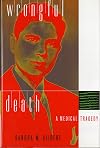
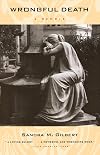
Wrongful Death: A Memoir
by Sandra M. Gilbert
On This Page
Description
On February 10, 1991, Elliot Gilbert, a sixty-year-old professor of English, checked into a major medical center for routine prostate surgery. Twenty-four hours later, he was pronounced dead in the recovery room. To this day, no one from the hospital has told his family how or why he died. In Wrongful Death his widow has produced a searingly frank account of one family's experience with a kind of medical disaster that occurs surprisingly often but is all-too-rarely discussed in a political show more arena dominated by concerns about the escalating costs of malpractice insurance. As her story unfolds, Sandra Gilbert describes the numbing shock into which she and her children were plunged by her husband's inexplicable death as well as the stages of grief they endured as they struggled to come to terms with their loss. But her major focus is on the process of discovery through which, with the help of friends and lawyers, they began to learn something about what had happened to Elliot. What are the implications of such a medical tragedy for the deceased and for his survivors? How does it feel to confront the possibility that a loved one has suffered what the law calls a "wrongful death"? As she examines the bewildering complexity of the legal, social, and medical questions surrounding "adverse events" like the one that killed her husband, Gilbert shows how vulnerable we all are to the power of the health-care establishment. show lessTags
Recommendations





































Member Reviews
Elliot Gilbert, a sixty-year-old professor of English, checked into a major medical center for routine prostate surgery. Twenty-four hours later, he was pronounced dead in the recovery room. To this day, no one from the hospital has told his family how or why he died. In Wrongful Death his widow has produced a searingly frank account of one family's experience with a kind of medical disaster that occurs surprisingly often but is all-too-rarely discussed in a political arena dominated by concerns about the escalating costs of malpractice insurance. As her story unfolds, Sandra Gilbert describes the numbing shock into which she and her children were plunged by her husband's inexplicable death as well as the stages of grief they endured as show more they struggled to come to terms with their loss. But her major focus is on the process of discovery through which, with the help of friends and lawyers, they began to learn something about what had happened to Elliot. What are the implications of such a medical tragedy for the deceased and for his survivors? How does it feel to confront the possibility that a loved one has suffered what the law calls a "wrongful death"? As she examines the bewildering complexity of the legal, social, and medical questions surrounding "adverse events" like the one that killed her husband, Gilbert shows how vulnerable we all are to the power of the health-care establishment. show less
Ratings
Members
- Recently Added By
Author Information

45+ Works 3,484 Members
A poet, feminist critic, and professor of English at the University of California at Davis, Gilbert received her Ph.D. from Columbia University in 1968. Her early work addressed canonical male figures, but in the 1970s she began to focus on women writers from a feminist perspective, teaming up with Susan Gubar in what has proven to be a very show more influential collaboration. In 1979 they published their first joint efforts, a collection of feminist essays on women poets, Shakespeare's Sisters, and The Madwoman in the Attic, an exploration of major nineteenth-century women writers, which has had a major role in defining feminist scholarship. This massive volume takes its title from Jane Eyre's "mad" and monstrous double, Bertha, hidden away in the attic by Jane's would-be lover, Rochester; Gilbert and Gubar see figures like Bertha as resisting patriarchy, subversive surrogates for the docile heroines who populate nineteenth-century fiction by women. Although Gilbert and Gubar's ideas have been very influential, many critics, particularly poststructuralists, have taken issue with them. For Gilbert and Gubar, a woman writer is by definition angry, and her text will express that anger, albeit in disguised or distorted form. Reading hinges on knowing the sex of the author, rather than on a careful analysis of the text itself and the multivalency of its language. Gilbert and Gubar's work is part of a debate about essentialist and antiessentialist feminist theories, which has addressed issues like "the signature" (the significance of knowledge about the author and authorial intentions) and gendered expression in general. (Bowker Author Biography) Sandra M. Gilbert's most recent poetry collection is "Blood Pressure". She teaches at the University of California, Davis. (Bowker Author Biography) show less
Classifications
- Genres
- Nonfiction, Biography & Memoir, Politics and Government, General Nonfiction
- DDC/MDS
- 346.7303 — Society, government, & culture Law Private Law North America United States Topics of private law
- LCC
- RA1056.5 .G54 — Medicine Public aspects of medicine Public aspects of medicine Forensic medicine. Medical jurisprudence. Legal medicine
- BISAC
Statistics
- Members
- 25
- Popularity
- 1,076,876
- Reviews
- 1
- Rating
- (3.83)
- Languages
- English
- Media
- Paper
- ISBNs
- 2