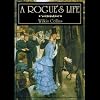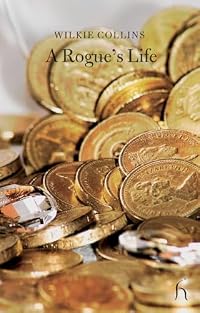
A Rogue's Life
by Wilkie Collins
On This Page
Description
Charming and intelligent but somewhat lacking in the purpose and dedication departments, protagonist Frank Softly just can't seem to find a profession that suits him, much to the chagrin of his family. Still, his journey to find himself is full of entertaining adventures and misadventures. Modern-day readers will find a lot to love in Wilkie Collins' A Rogue's Life..
Tags
Recommendations
















Member Reviews
A Rogue's Life by Wilkie Collins is a highly diverting little read that feels like a cross between Three Men in a Boat and a Jeeves novel. Frank Softly, a self-professed Rogue, tells the story of his escapades on the outskirts of respectability. As a young man finding his way in life, he is prevented from honest labor by the family's high connections but hampered by their distinct lack of money. After breaking with his family, he lightheartedly takes up a variety of legal and illegal pursuits until he suddenly finds himself a captive to a notorious coiner, Dr. Dulcifer (you have to admit Collins has a genius for character names).
It's all written in the most jovial, humorous manner, though the tone changes in the last half of the book show more when things get serious. Frank's adventures as a caricaturist, portrait-painter, picture-forger, secretary, and finally coiner are quite comic told in his Wooster-ish voice. You feel that you ought not to laugh at his easy morality, but it's hard to resist his irrepressible spirits and sly observations on society's foibles. Even his dawning repentance is funny:
"Moralists will be glad to hear that I really suffered acute mental misery at this time of my life. My state of depression would have gratified the most exacting of Methodists, and my penitent face would have made my fortune if I could only have been exhibited by a reformatory association on the platform of Exeter Hall."
All ends happily, despite Frank's transportation to Australia. There he marries his wife (again) and becomes quite a wealthy and happy family man... giving hope to parents of Rogues everywhere, no doubt. This isn't one of Collins' major works, but its infectious humor makes it one that I'll revisit. Fun! show less
It's all written in the most jovial, humorous manner, though the tone changes in the last half of the book show more when things get serious. Frank's adventures as a caricaturist, portrait-painter, picture-forger, secretary, and finally coiner are quite comic told in his Wooster-ish voice. You feel that you ought not to laugh at his easy morality, but it's hard to resist his irrepressible spirits and sly observations on society's foibles. Even his dawning repentance is funny:
"Moralists will be glad to hear that I really suffered acute mental misery at this time of my life. My state of depression would have gratified the most exacting of Methodists, and my penitent face would have made my fortune if I could only have been exhibited by a reformatory association on the platform of Exeter Hall."
All ends happily, despite Frank's transportation to Australia. There he marries his wife (again) and becomes quite a wealthy and happy family man... giving hope to parents of Rogues everywhere, no doubt. This isn't one of Collins' major works, but its infectious humor makes it one that I'll revisit. Fun! show less
Frank Softly is a Rogue. Refusing to follow in his father's footsteps and become a doctor, he has tried out a number of different careers since leaving school – and failed at them all. However, he remains optimistic and sees each failure as an opportunity to make a fresh start. Even when he is sent to a debtors’ prison he simply asks himself, "What of that? Who am I that I should object to being in prison, when so many of the royal personages and illustrious characters of history have been there before me?"
While working as a forger of old paintings, Frank meets Alicia Dulcifer in an art gallery and immediately falls in love. Unfortunately even this relationship seems likely to fail, because Alicia is the daughter of the sinister Dr. show more Dulcifer – a man who lives in a house with bars on the windows, never receives visitors and conducts mysterious experiments in his laboratory. Frank becomes determined to discover Dr. Dulcifer’s secret, at all costs.
As in many Victorian novels, there's also an inheritance involved: Frank's sister Annabella will only receive her three thousand pounds if Frank outlives their grandmother Lady Malkinshaw. This leads to some amusing situations as Annabella’s greedy husband desperately tries to prevent Frank from dying!
This was one of Wilkie Collins' first books to be published (in 1856) and I could tell it was the work of a young, inexperienced writer – the plot was less developed than in his later books and the characters (apart from the Rogue himself) were less memorable. However, his enthusiasm shines through on every page, making this a fun, light-hearted read – but with plenty of suspense and excitement too. Although Frank Softly is dishonest, irresponsible, reckless – and definitely a rogue – he tells his story with so much humour and energy that you can’t help liking him.
Rather changeable this life of mine, was it not? Before I was twenty-five years of age, I had tried doctoring, caricaturing, portrait-painting, old picture-making, and Institution-managing...Surely, Shakespeare must have had me prophetically in his eye, when he wrote about 'one man in his time playing many parts'. What a character I should have made for him, if he had only been alive now!
While I don't think I would recommend this as a first introduction to his work, if you have enjoyed any of Collins' other books there's no reason why you shouldn't enjoy this one too. And the short length of this book – only 150 pages – makes it a quick, fast-paced read, so anyone who has had trouble getting into one of his longer novels may find this one easier to read.
I'm going to leave you with Wilkie's own thoughts on this novel, taken from the author's preface:
The Rogue may surely claim two merits, at least, in the eyes of the new generation – he is never serious for two moments together; and 'he doesn't take long to read'. show less
While working as a forger of old paintings, Frank meets Alicia Dulcifer in an art gallery and immediately falls in love. Unfortunately even this relationship seems likely to fail, because Alicia is the daughter of the sinister Dr. show more Dulcifer – a man who lives in a house with bars on the windows, never receives visitors and conducts mysterious experiments in his laboratory. Frank becomes determined to discover Dr. Dulcifer’s secret, at all costs.
As in many Victorian novels, there's also an inheritance involved: Frank's sister Annabella will only receive her three thousand pounds if Frank outlives their grandmother Lady Malkinshaw. This leads to some amusing situations as Annabella’s greedy husband desperately tries to prevent Frank from dying!
This was one of Wilkie Collins' first books to be published (in 1856) and I could tell it was the work of a young, inexperienced writer – the plot was less developed than in his later books and the characters (apart from the Rogue himself) were less memorable. However, his enthusiasm shines through on every page, making this a fun, light-hearted read – but with plenty of suspense and excitement too. Although Frank Softly is dishonest, irresponsible, reckless – and definitely a rogue – he tells his story with so much humour and energy that you can’t help liking him.
Rather changeable this life of mine, was it not? Before I was twenty-five years of age, I had tried doctoring, caricaturing, portrait-painting, old picture-making, and Institution-managing...Surely, Shakespeare must have had me prophetically in his eye, when he wrote about 'one man in his time playing many parts'. What a character I should have made for him, if he had only been alive now!
While I don't think I would recommend this as a first introduction to his work, if you have enjoyed any of Collins' other books there's no reason why you shouldn't enjoy this one too. And the short length of this book – only 150 pages – makes it a quick, fast-paced read, so anyone who has had trouble getting into one of his longer novels may find this one easier to read.
I'm going to leave you with Wilkie's own thoughts on this novel, taken from the author's preface:
The Rogue may surely claim two merits, at least, in the eyes of the new generation – he is never serious for two moments together; and 'he doesn't take long to read'. show less
In the whole of this novella I was only bored during an unnecessarily detailed passage about portraits. Oddly, just as my patience was running out and I felt tempted to skip on, it comes to an end and the narrating character – Frank Softly – apologises for the diversion!
Apart from the above, my attention was engaged throughout. Frank Softly – the rogue – is a strong main character and first-person narrator. He lives a shameless existence for much of his life, until he’s struck by the lovebug.
Much of the first half reads like a memoir. Frank moves from occupation to occupation until his love interest leads him to a dangerous situation.
Detective elements are apparent throughout the narrative. Most of the mysteries are not show more predictable – to me, anyway – which makes for engaging reading.
Humour is often at the forefront. The scene that amused me most is when Frank is painting his brother-in-law’s portrait and his sister pays him a begrudging visit. The sister is one of those fussy, complaining types who are a nightmare in real life, but wonderful in fiction. It’s a shame she doesn’t feature more than in this one short scene, which is fantastic.
If you fancy a quick read/listen, this is well worth checking out. show less
Apart from the above, my attention was engaged throughout. Frank Softly – the rogue – is a strong main character and first-person narrator. He lives a shameless existence for much of his life, until he’s struck by the lovebug.
Much of the first half reads like a memoir. Frank moves from occupation to occupation until his love interest leads him to a dangerous situation.
Detective elements are apparent throughout the narrative. Most of the mysteries are not show more predictable – to me, anyway – which makes for engaging reading.
Humour is often at the forefront. The scene that amused me most is when Frank is painting his brother-in-law’s portrait and his sister pays him a begrudging visit. The sister is one of those fussy, complaining types who are a nightmare in real life, but wonderful in fiction. It’s a shame she doesn’t feature more than in this one short scene, which is fantastic.
If you fancy a quick read/listen, this is well worth checking out. show less
This is a charming and very readable novel written in the mid 19th century by a contemporary of Charles Darwin. Written around the time of Voltaire's Candide and Flaubert's A Sentimental Education, this novel also mixes the adventure and unexpected turns of a picaresque work with the protagonist being from a mildly upper class lineage. Like those others, A Rogue's Life trades on the main character's one foot in the noble's world and one foot in the workingman/adventurer's world to shed light on the inconsistencies and moral hazards that appear when those two spheres meet. A Rogue's Life also includes a 'lifelong' love story as well, although this one, fortunately, rewards the reader heaps more than the other works mentioned.
In the book, show more Frank Softly is a grandson of a somewhat well-known British lady who is the recipient of a less well-known slow denuding of her funds. As such, her grandson must keep up appearances while barely able to pay for boarding school, and is thus left without a proper career with no college and no entry fees to other clerical or ministerial work. Thus begins his life as a rogue, for in his pursuit of staying fed and sheltered he ends up bouncing through a number of jobs and positions; which course becomes soon enough not driven as much by food or shelter as by getting close to the woman he has fallen for. The story follows on to a series of jail terms, counterfeiters, 'Bow Street Runners' (police detectives), and greedy relatives. At the end of the book it seems clear why the author could achieve such success as a mystery writer as the plot is well-turned, with exotic and believable characters, and an appeal to sensibility and some insight on personalities. A fast read and neat picture into Victorian life without the stuffiness thereof. show less
In the book, show more Frank Softly is a grandson of a somewhat well-known British lady who is the recipient of a less well-known slow denuding of her funds. As such, her grandson must keep up appearances while barely able to pay for boarding school, and is thus left without a proper career with no college and no entry fees to other clerical or ministerial work. Thus begins his life as a rogue, for in his pursuit of staying fed and sheltered he ends up bouncing through a number of jobs and positions; which course becomes soon enough not driven as much by food or shelter as by getting close to the woman he has fallen for. The story follows on to a series of jail terms, counterfeiters, 'Bow Street Runners' (police detectives), and greedy relatives. At the end of the book it seems clear why the author could achieve such success as a mystery writer as the plot is well-turned, with exotic and believable characters, and an appeal to sensibility and some insight on personalities. A fast read and neat picture into Victorian life without the stuffiness thereof. show less
This early novella by Wilkie Collins is a picaresque story of a young many from a good family who goes through a series of professions, from publishing anonymous caricatures of his unwitting friends to forging old masters to counterfeiting. His family isn't exactly blameless either: in a typical Collins device, a will leaves money to the rogue's sister and brother-in-law only if he outlasts his grandmother -- which becomes their motivation for checking in on the rogue every now and then.
The picaresque meanderings are interrupted by the rogue falling in love, an exciting escape/pursuit, and his becoming an honest man by getting married and settling down in Australia (the later location, against his will).
This novella provides only a show more distant glimpse of the best of Collins, which was eventually to come. But it is enjoyable and worthwhile on its own terms. show less
The picaresque meanderings are interrupted by the rogue falling in love, an exciting escape/pursuit, and his becoming an honest man by getting married and settling down in Australia (the later location, against his will).
This novella provides only a show more distant glimpse of the best of Collins, which was eventually to come. But it is enjoyable and worthwhile on its own terms. show less
This early novella by Wilkie Collins is a picaresque story of a young many from a good family who goes through a series of professions, from publishing anonymous caricatures of his unwitting friends to forging old masters to counterfeiting. His family isn't exactly blameless either: in a typical Collins device, a will leaves money to the rogue's sister and brother-in-law only if he outlasts his grandmother -- which becomes their motivation for checking in on the rogue every now and then.
The picaresque meanderings are interrupted by the rogue falling in love, an exciting escape/pursuit, and his becoming an honest man by getting married and settling down in Australia (the later location, against his will).
This novella provides only a show more distant glimpse of the best of Collins, which was eventually to come. But it is enjoyable and worthwhile on its own terms. show less
The picaresque meanderings are interrupted by the rogue falling in love, an exciting escape/pursuit, and his becoming an honest man by getting married and settling down in Australia (the later location, against his will).
This novella provides only a show more distant glimpse of the best of Collins, which was eventually to come. But it is enjoyable and worthwhile on its own terms. show less
A gently humorous and clean romance story with a fun ending. Re-reading as I’m disappointed in modern fare. I’ll get over it! 🙃
Well narrated by Bernard Mayes
Well narrated by Bernard Mayes
Members
- Recently Added By
Author Information

396+ Works 39,875 Members
Wilkie Collins was born in London, England on January 8, 1824. He worked first in business and then law, but eventually turned to literature. During his lifetime, he wrote 30 novels, more than 60 short stories, at least 14 plays, and more than 100 non-fiction pieces. His works include Antonia, The Woman in White, The Moonstone, The Haunted Hotel, show more and Heart and Science. He was a close friend of Charles Dickens and collaborated with him. He died on September 23, 1889. (Bowker Author Biography) show less
Some Editions
Series
Belongs to Publisher Series
Common Knowledge
- Canonical title
- A Rogue's Life
- Original title
- A Rogue's Life
- Alternate titles*
- Confessions d'un aventurer;
- Original publication date
- 1856
- People/Characters
- Frank Softly
- First words
- I'm going to try if I can't write something about myself.
- Disambiguation notice
- Do not combine with Volume 30 of The Works of Wilkie Collins, which contains this novel and several other short works.
*Some information comes from Common Knowledge in other languages. Click "Edit" for more information.
Classifications
Statistics
- Members
- 268
- Popularity
- 119,990
- Reviews
- 8
- Rating
- (3.72)
- Languages
- Catalan, English, French, Spanish
- Media
- Paper, Audiobook, Ebook
- ISBNs
- 82
- UPCs
- 1
- ASINs
- 12