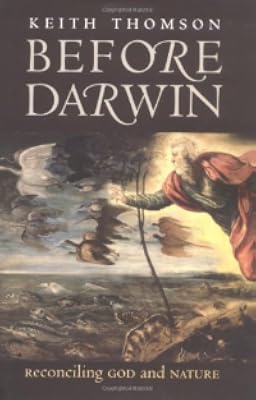
Before Darwin : reconciling God and nature
by Keith Stewart Thomson
On This Page
Description
From the Publisher: For 200 years before the publication of Darwin's On the Origin of Species, findings in the sciences of the earth and of nature threatened religious belief based on the literal truth of the Bible. This book traces out the multiple conflicts and accommodations within religion and the new sciences through the writings of such heroes of the English Enlightenment as David Hume, Robert Hooke, John Ray, Erasmus Darwin (Charles' grandfather), Thomas Burnet, and William Whiston. show more Keith Thomson brings us back to a time when many powerful clerics were also noted scientific scholars and leading scientists were often believers. He celebrates the force and elegance of their prose along with the inventiveness of their arguments, their certitude, and their not infrequent humility and caution. Placing Charles Darwin's work in the context of earlier writers on evolutionary theory, Thomson finds surprising and direct connections between the anti-evolutionary writings of natural theologians like William Paley and the arguments that Darwin employed to turn anti-evolutionist ideas upside-down. This is an illuminating chronicle of an important period in the history of ideas and one that casts interesting light on the anti-evolution/creationist controversies of our own time. show lessTags
Recommendations


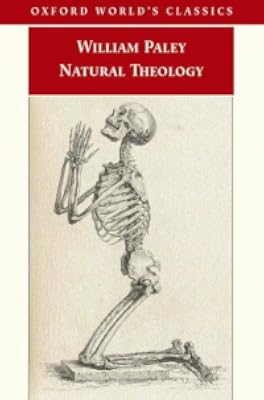





Member Reviews
Although I fear that I'll be unable to recall enough of the detail provided in this book, I am really glad to have read it, having received it as a gift this Christmas.
Keith Thomson traces the history of ideas in the predominantly English discussion between the time of John Ray, born in the early part of the 17th century, and the climactic debate between Huxley and Wilberforce in 1860.
It describes the way in which, in the new scientific conversation, the strongly advocated natural theologies of the period came to give pride of place to the world view which at its centre was embodied by Charles Darwin's theory of natural selection. Much is presented as interplay with the major work of Paley (which summarised scientific and theological show more understanding of the time it was written) and the more complete schism paralleled by Darwin's move from admiration of Paley to complete rejection of his view and a theological agnosticism. The book seeks to show how a more comprehensive understanding of the nature of secondary causes came to challenge understandings of First and Final causes also. Thomson believes that ironically many of the arguments which advanced the cause of natural theology became turned to support natural selection, especially where they considered balancing forces on populations – that which may be ascribed to divine purpose could, apparently, be equally well ascribed to a dynamic equilibrium of natural forces.
Thomson concludes...
"Natural theology was the last great attempt to find a comprehensive answer to the question 'Does God exist and what is his nature?' through the objective, empirical methods of science rather than true revelation, biblical exegesis or the inspiration of God's vicars on earth.
...
Since Paley … religion and science have not been able to agree upon the reformulation of the set of questions that they can attack jointly."
It is well written and fascinating, with much detail and many people of whose names I never even heard let alone their ideas and arguments. Just as scientists and scientifically minded people use a dominant scientific paradigm metaphorically to describe many other areas of life, so Thomson happily draws parallels from the historical events and even the architecture of the Oxford Museum to make and illustrate his points. His awareness of Biblical material and Christian theology makes him a sympathetic and fair presenter of arguments toward which others might have been more dismissive. His knowledge of the wider history of the period reminds us of the attendant rise of Biblical liberalism, the wars of independence and the French revolution.
Ground covered includes: the strengths and weaknesses of Paley's arguments and various other natural theologies', including the question of to what extent the mind of God may be perceived in the natural world especially in terms of purpose vs chance, the place of geology, including a good discussion of plate tectonics as a way of indicating that the discussion still had far to run in terms of resolving the challenges of the geological record as well as the explanatory power or otherwise of the biblical (and other ANE) account of the flood, and Malthus' pessimistic statistical work on population.
Each chapter is introduced by quotations, of which I particularly liked the following insightful comment from Thomas Burnet...
"'Tis a dangerous thing to ingage the authority of Scripture in disputes about the Natural World, in opposition to Reason, lest Time, which brings all things to light, should discover that to be false which we had made Scripture to assert." Eisegesis is always dangerous, although often hard to perceive. If nothing else, the book is a cautionary tale, and one which presses me to read more and to think as honestly and clearly as I can about a whole area of revolutionary thought which has not only changed scientific thinking, but the thinking of every Westerner, and is allied to a wholesale rejection of the Christianity which I hold dear. show less
Keith Thomson traces the history of ideas in the predominantly English discussion between the time of John Ray, born in the early part of the 17th century, and the climactic debate between Huxley and Wilberforce in 1860.
It describes the way in which, in the new scientific conversation, the strongly advocated natural theologies of the period came to give pride of place to the world view which at its centre was embodied by Charles Darwin's theory of natural selection. Much is presented as interplay with the major work of Paley (which summarised scientific and theological show more understanding of the time it was written) and the more complete schism paralleled by Darwin's move from admiration of Paley to complete rejection of his view and a theological agnosticism. The book seeks to show how a more comprehensive understanding of the nature of secondary causes came to challenge understandings of First and Final causes also. Thomson believes that ironically many of the arguments which advanced the cause of natural theology became turned to support natural selection, especially where they considered balancing forces on populations – that which may be ascribed to divine purpose could, apparently, be equally well ascribed to a dynamic equilibrium of natural forces.
Thomson concludes...
"Natural theology was the last great attempt to find a comprehensive answer to the question 'Does God exist and what is his nature?' through the objective, empirical methods of science rather than true revelation, biblical exegesis or the inspiration of God's vicars on earth.
...
Since Paley … religion and science have not been able to agree upon the reformulation of the set of questions that they can attack jointly."
It is well written and fascinating, with much detail and many people of whose names I never even heard let alone their ideas and arguments. Just as scientists and scientifically minded people use a dominant scientific paradigm metaphorically to describe many other areas of life, so Thomson happily draws parallels from the historical events and even the architecture of the Oxford Museum to make and illustrate his points. His awareness of Biblical material and Christian theology makes him a sympathetic and fair presenter of arguments toward which others might have been more dismissive. His knowledge of the wider history of the period reminds us of the attendant rise of Biblical liberalism, the wars of independence and the French revolution.
Ground covered includes: the strengths and weaknesses of Paley's arguments and various other natural theologies', including the question of to what extent the mind of God may be perceived in the natural world especially in terms of purpose vs chance, the place of geology, including a good discussion of plate tectonics as a way of indicating that the discussion still had far to run in terms of resolving the challenges of the geological record as well as the explanatory power or otherwise of the biblical (and other ANE) account of the flood, and Malthus' pessimistic statistical work on population.
Each chapter is introduced by quotations, of which I particularly liked the following insightful comment from Thomas Burnet...
"'Tis a dangerous thing to ingage the authority of Scripture in disputes about the Natural World, in opposition to Reason, lest Time, which brings all things to light, should discover that to be false which we had made Scripture to assert." Eisegesis is always dangerous, although often hard to perceive. If nothing else, the book is a cautionary tale, and one which presses me to read more and to think as honestly and clearly as I can about a whole area of revolutionary thought which has not only changed scientific thinking, but the thinking of every Westerner, and is allied to a wholesale rejection of the Christianity which I hold dear. show less
When we think about the modern biological sciences, one name invariably pops into mind: Charles Darwin. Keith Thomson’s book, “Before Darwin: Reconciling God and Nature,” looks at the approximately two centuries of science that predate Darwin, partially in an attempt to see what influenced him, but mostly because it’s a fascinating history in and of itself. Thomson is almost wholly concerned with an age in which all natural science (then still often called “natural philosophy”) was almost always natural theology – that is, an understanding that the study of science and nature would draw one close to understanding the mind of God. William Paley, the eighteenth-century English naturalist whose book “Natural Theology” had show more a tremendous influence on Darwin’s early career, thought that the ways of God are shown to man through a rigorous and critical study of the natural world.
We get a quick, breathless account of big scientific developments from Copernicus to Newton, and see that the more we learn about God, the less ground natural theologians have to stand on. Thomson rhetorically asks, “Once Pandora’s Box was opened and a new, lesser, role ascribed to God, who could predict where matters would end?” (p. 44).
The rest of the book is taken up with discussing the contributions of several scientists, many of them not nearly as recognized as they should be, including Thomas Burnet, John Ray, Robert Plot, and Martin Lister. Paley and Ray especially built an argument from design, but there was one glaring problem: it’s clear there are many things in nature that are not perfect, and that don’t look like they were designed. The human eye – commonly adduced by modern-day creationists as an example of “irreducible complexity” – has a blind spot that lacks photoreceptors and therefore would make us more susceptible to attacks from predators if we still lived out in the open. The sacroiliac region at the base of the spine is mechanically imperfect to bear our weight, which often results in back pain as we age. Someone convinced that the human body is a perfectly designed machine can’t explain the appendix, a vestigial organ for which there is no observable purpose.
What Thomson seems to be saying is that natural theology had a historical tendency to reverse engineer science to fit its own theological ends. Therefore, what we see here is not so much science as we would understand the term today, but the use of science as a kind of anthropocentric cherry-picking to shore up preformulated beliefs, namely the creation accounts (there are two of them) in Genesis. Ironically, these culminate in a the work of Steno, a Dutch geologist and anatomist who was blithely unconcerned with how much his own work – the work of a Catholic bishop, mind you – confirmed or denied the accounts in Genesis.
There’s tons of other fascinating stuff in here that I won’t get into about interpretations of the fossil record (apparently people used to think that fossils just grew in place in the ground and that their resemblance to animals was purely coincidental), geology, paleontology, and what everyone thought about the Great Flood. It could also serve as a reference work if you’re interested enough in the history of natural science in the seventeenth and eighteenth centuries. It’s pretty much rekindled my long-dormant interest in the history of science. show less
We get a quick, breathless account of big scientific developments from Copernicus to Newton, and see that the more we learn about God, the less ground natural theologians have to stand on. Thomson rhetorically asks, “Once Pandora’s Box was opened and a new, lesser, role ascribed to God, who could predict where matters would end?” (p. 44).
The rest of the book is taken up with discussing the contributions of several scientists, many of them not nearly as recognized as they should be, including Thomas Burnet, John Ray, Robert Plot, and Martin Lister. Paley and Ray especially built an argument from design, but there was one glaring problem: it’s clear there are many things in nature that are not perfect, and that don’t look like they were designed. The human eye – commonly adduced by modern-day creationists as an example of “irreducible complexity” – has a blind spot that lacks photoreceptors and therefore would make us more susceptible to attacks from predators if we still lived out in the open. The sacroiliac region at the base of the spine is mechanically imperfect to bear our weight, which often results in back pain as we age. Someone convinced that the human body is a perfectly designed machine can’t explain the appendix, a vestigial organ for which there is no observable purpose.
What Thomson seems to be saying is that natural theology had a historical tendency to reverse engineer science to fit its own theological ends. Therefore, what we see here is not so much science as we would understand the term today, but the use of science as a kind of anthropocentric cherry-picking to shore up preformulated beliefs, namely the creation accounts (there are two of them) in Genesis. Ironically, these culminate in a the work of Steno, a Dutch geologist and anatomist who was blithely unconcerned with how much his own work – the work of a Catholic bishop, mind you – confirmed or denied the accounts in Genesis.
There’s tons of other fascinating stuff in here that I won’t get into about interpretations of the fossil record (apparently people used to think that fossils just grew in place in the ground and that their resemblance to animals was purely coincidental), geology, paleontology, and what everyone thought about the Great Flood. It could also serve as a reference work if you’re interested enough in the history of natural science in the seventeenth and eighteenth centuries. It’s pretty much rekindled my long-dormant interest in the history of science. show less
Ratings
Members
- Recently Added By
Lists

Ideas for "Science, Religion, and History" group reads
29 works; 9 members
Author Information

14 Works 620 Members
Awards and Honors
Common Knowledge
- Canonical title
- Before Darwin : reconciling God and nature
- Original publication date
- 2005
- People/Characters
- Charles Darwin; William Paley; Galileo Galilei; Robert Boyle; Robert Hooke; Erasmus Darwin (show all 22); John Locke; David Hume; John Toland; John Ray; Robert Plot; Edward Lhuyd; Thomas Burnet; William Whiston; Steno; James Hutton; William Buckland; Jean Baptiste Lamarck; Philip Henry Gosse; Thomas Henry Huxley; Thomas Malthus; Joseph Hooker
- Epigraph
- Knowledge . . . concerning God . . . may be obtained by the contemplation of his creatures; which knowledge may be truly divine in respect of the object, and natural in respect of the light.
--Francis Bacon, The Adv... (show all)ancement of Learning, 1605
All religious systems . . . are subject to great and insuperable difficulties. Each disputant triumphs in his turn; while he carries on an offensive war, and exposes the absurdities, barbarities, and pernicious tenets o... (show all)f his antagonists. But all of them, on the whole, prepare a complete triumph for the skeptic; who tells them, that no system ought ever to be embraced with regard to such subjects: for this plain reason, that no absurdity ought ever to be assented to with regard to any subject.
David Hume, Dialogues Concerning Natural Religion, 1779
I do not think I hardly ever admired a book more than Paley's "Natural Theology". I could almost formerly have said it by heart.
Charles Darwin, letter to John Lubbock, 15 November, 1859 - Dedication
- In memory of
The Reverand Ronald William Thomson (1908-2002) - First words
- When Charles Robert Darwin entered the University of Cambridge in 1828, it was not with the expectation of studying science but rather with every intention of becoming a Church of England priest. (Preface)
One enters Christ's College, Cambridge, through a richly carved sixteenth-century gateway and under a pair of painted heraldic beasts, all contrasting markedly with the sober courtyard of grey buildings within. - Quotations
- That wonderful polymath Benjamin Franklin was one of those who first thought of this mechanism {plate tectonics}: "I imagined . . . that the internal part might be a fluid . . . [and that the solid crust] might swim in or upo... (show all)n that fluid. Thus the surface of the earth would be a shell, capable of being broken and disordered by any evident movements of the fluid on which it rest.' {added}
quoting Franklin, Benjamin, 'Conjectures Concerning the Formation of the Earth', American Philosophical Society Transactions 3 (1793), pp.1-5 - Last words
- (Click to show. Warning: May contain spoilers.)But in it's unfinished state, it makes a different, more modern, metaphor about the work of science and the reconciliation of science with religion. [about the Oxford University Museum]
Classifications
- Genres
- Nonfiction, Science & Nature, Religion & Spirituality, History, General Nonfiction, Philosophy
- DDC/MDS
- 509.4209033 — Natural sciences & mathematics Science History, geographic treatment, biography Europe England & Wales
- LCC
- BL240.3 .T48 — Philosophy, Psychology and Religion Religions. Mythology. Rationalism Religions. Mythology. Rationalism Natural theology Religion and science
- BISAC
Statistics
- Members
- 78
- Popularity
- 407,033
- Reviews
- 2
- Rating
- (4.00)
- Languages
- English
- Media
- Paper
- ISBNs
- 3