On This Page
Description
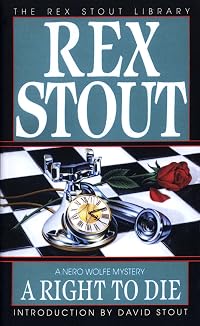
Fiction. Mystery. Suspense. Thriller. HTML:When a bright young heiress with a flair for romance and one too many enemies is found brutally murdered, Nero Wolfe and his sidekick, Archie, find themselves embroiled in a case that is not as black and white as it first appears.Susan Brooke has everything going for her. Men would have killed themselves to marry her, and, in fact, one did.
Susan came to New York to find love and fulfillment, and ended up dead on a tenement floor. The show more police say her black fiance did it, but Wolfe has other ideas. Before he's done, he'll prove that good intentions and bad deeds often go hand in hand and that the highest ideals can sometimes have the deadliest consequences. show less
Tags
Recommendations














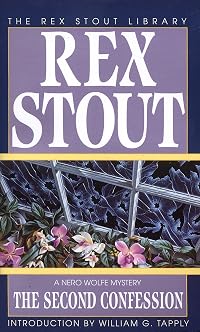



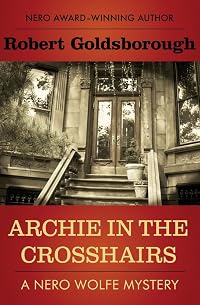







Member Recommendations

benfulton Claire Conrad and Maggie Hill are a female Wolfe and Goodwin.
Member Reviews
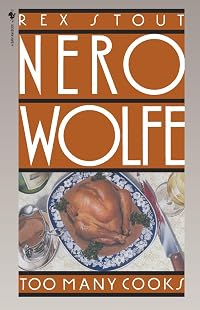
Wolfe's client, Paul Whipple, is a blast from the past - last seen as a key witness is #5 Too Many Cooks, he has come to Wolfe on behalf of his son, Dunbar. Dunbar is deep in the civil rights struggle and has fallen in love with a rich white woman, Susan Brooke, who is volunteering for the same organization, the ROCC. Daddy Whipple doesn't like the idea of the interracial marriage and wants Wolfe to look into Susan's background and make sure she's not trying to Make A Pronouncement with this decision to marry across race. Archie duly meets with Miss Brooke and scours her background, finding nothing wanting, only to be called back to New York because Susan has been found dead - and Dunbar made the discovery.
The case shifts now to show more Dunbar's defense, as he has been arrested on suspicion of murder. Wolfe doesn't believe Dunbar would kill his future fiancee, but he discovers plenty of people in their lives who also disapprove of an interracial marriage - including Susan's own family. Only when a second person ends up dead does the answer finally become clear, and it's a race against time before a third person is in the killer's crosshairs.
This is about what you'd expect for Nero Wolfe Takes on Civil Rights. He infamously has no regard for women at all, so the question is but a theoretical one to him, but he has a rather unique point of view, as he is not a white American or of the class for whom this is such a thorny issue. He more or less stays out of the racial aspect, but it gets predictably ugly when the murderer shows their true colors.
I should like the idea of the final clue being a linguistic one, but honestly it felt like such a reach after 150 pages of tail-chasing that it falls a little flat for me. I'd consider this a pretty middle of the road offering for a series perhaps already past its prime. Worthy of reading, but maybe not one to specifically seek out. show less
The case shifts now to show more Dunbar's defense, as he has been arrested on suspicion of murder. Wolfe doesn't believe Dunbar would kill his future fiancee, but he discovers plenty of people in their lives who also disapprove of an interracial marriage - including Susan's own family. Only when a second person ends up dead does the answer finally become clear, and it's a race against time before a third person is in the killer's crosshairs.
This is about what you'd expect for Nero Wolfe Takes on Civil Rights. He infamously has no regard for women at all, so the question is but a theoretical one to him, but he has a rather unique point of view, as he is not a white American or of the class for whom this is such a thorny issue. He more or less stays out of the racial aspect, but it gets predictably ugly when the murderer shows their true colors.
I should like the idea of the final clue being a linguistic one, but honestly it felt like such a reach after 150 pages of tail-chasing that it falls a little flat for me. I'd consider this a pretty middle of the road offering for a series perhaps already past its prime. Worthy of reading, but maybe not one to specifically seek out. show less
Perhaps the best 39th book in a series that I have ever read. Published in 1964, this book tackles some tough interracial issues that are still unsolved today, and it wasn't twenty years ago that I was working with folks who would have been ready to go after an interracial couple with a shotgun. Nero Wolfe isn't prejudiced, but of course the fact of color - or gender, for that matter - in 1964 couldn't be ignored, and when the murderer is eventually unmasked the motive rings true without getting preachy about it. Archie Goodwin is always fun to read about, and the action is nonstop as it should be, but the clue that eventually leads to the denouement seems a little unlikely to me. Still, one has to make allowances for book #39 - show more anything that will be really logical will have already been done. But reading Rex Stout is like eating potato chips - you can't stop after just one. show less
The beginning of this entry in the Nero Wolfe series brought to my attention something that I had not really considered much before (unrelated to the plot). This book was published 30 years after the first book in the series & in all that time, none of the inhabitants on the brownstone on 35th Street have really aged (none of the regular or semi-regular characters have). Archie is still going out dancing and flirting with the women he meets as he did in the early books. What brought this to my notice was that the client in this book was Paul Whipple, someone who had, as a very young man, helped Wolfe in "Too Many Cooks" (book 5 of the series). Now he is a middle-aged man with a son in his 20s engaged to be married.
Now, if Paul Whipple show more is somewhere between 45 and 50, Archie should be 60 and Wolfe even older. One would think that Stout would have struggled with this dilemma but in true Nero Wolfe style, he dismisses it as beneath notice. By nary a word is this breach in logic even hinted at. And he pulls it off!
As for the plot of this book - I vacillated between 3.5 and 4 stars. I thought that the mystery was 3.5* but the social commentary about the Civil Rights movement and race relations during the early 1960s made it worth the extra half star. Wolfe truly does not care what color a man's skin is - just what his character and intellect are. Ironically, several of the black suspects feel that he is treating them badly because of their race, not realizing that he acts that way with everyone! show less
Now, if Paul Whipple show more is somewhere between 45 and 50, Archie should be 60 and Wolfe even older. One would think that Stout would have struggled with this dilemma but in true Nero Wolfe style, he dismisses it as beneath notice. By nary a word is this breach in logic even hinted at. And he pulls it off!
As for the plot of this book - I vacillated between 3.5 and 4 stars. I thought that the mystery was 3.5* but the social commentary about the Civil Rights movement and race relations during the early 1960s made it worth the extra half star. Wolfe truly does not care what color a man's skin is - just what his character and intellect are. Ironically, several of the black suspects feel that he is treating them badly because of their race, not realizing that he acts that way with everyone! show less
2020 review of audiobook edition, narrated by Michael Pritchard:
The beginning of this entry in the Nero Wolfe series brought to my attention something that I had not really considered much before (unrelated to the plot). This book was published 30 years after the first book in the series & in all that time, none of the inhabitants on the brownstone on 35th Street have really aged (none of the regular or semi-regular characters have). Archie is still going out dancing and flirting with the women he meets as he did in the early books. What brought this to my notice was that the client in this book was Paul Whipple, someone who had, as a very young man, helped Wolfe in "Too Many Cooks" (book 5 of the series). Now he is a middle-aged man show more with a son in his 20s engaged to be married.
Now, if Paul Whipple is somewhere between 45 and 50, Archie should be 60 and Wolfe even older. One would think that Stout would have struggled with this dilemma but in true Nero Wolfe style, he dismisses it as beneath notice. By nary a word is this breach in logic even hinted at. And he pulls it off!
As for the plot of this book - I vacillated between 3.5 and 4 stars. I thought that the mystery was 3.5* but the social commentary about the Civil Rights movement and race relations during the early 1960s made it worth the extra half star. Wolfe truly does not care what color a man's skin is - just what his character and intellect are. Ironically, several of the black suspects feel that he is treating them badly because of their race, not realizing that he acts that way with everyone! show less
The beginning of this entry in the Nero Wolfe series brought to my attention something that I had not really considered much before (unrelated to the plot). This book was published 30 years after the first book in the series & in all that time, none of the inhabitants on the brownstone on 35th Street have really aged (none of the regular or semi-regular characters have). Archie is still going out dancing and flirting with the women he meets as he did in the early books. What brought this to my notice was that the client in this book was Paul Whipple, someone who had, as a very young man, helped Wolfe in "Too Many Cooks" (book 5 of the series). Now he is a middle-aged man show more with a son in his 20s engaged to be married.
Now, if Paul Whipple is somewhere between 45 and 50, Archie should be 60 and Wolfe even older. One would think that Stout would have struggled with this dilemma but in true Nero Wolfe style, he dismisses it as beneath notice. By nary a word is this breach in logic even hinted at. And he pulls it off!
As for the plot of this book - I vacillated between 3.5 and 4 stars. I thought that the mystery was 3.5* but the social commentary about the Civil Rights movement and race relations during the early 1960s made it worth the extra half star. Wolfe truly does not care what color a man's skin is - just what his character and intellect are. Ironically, several of the black suspects feel that he is treating them badly because of their race, not realizing that he acts that way with everyone! show less
This book is a fascinating addition to the canon for two reasons...first of all, it's one of the rare cases that harkens back to one of the earlier books. Second, it deals with issues of civil rights, which is somewhat impressive since it was written in the early 60s, before it was certain which way the country would come down on the issue. While there are some questionable phrases and terminology, I think, at the end of the day, the book comes down to our villains being racist, while our heroes are not, and that's the important takeaway.
Rex Stout's Nero Wolfe stories are always enjoyable for so many reasons. I love Archie and the interactions he has with Nero, clients and suspects. The stories are quick and easy but still have me guessing up until close to the end.
In this installment Nero receives a visit from Mr. Whipple, an African American Anthropology Professor who is worried about his son. Nero owes Mr. A Whipple a favor and he's calling it in. Mr. Whipple's son is engaged to a white woman and Mr. Whipple thinks there must be something wrong with her.
Of course she does before any dirt can be dug-up and Nero must know find-out who did it so Mr. Whipple's son isn't convicted of her murder.
This is not a book for those who find race issues and the treatment of show more African Americans offensive. The N___ word is used many times but I think in this case and in the era it was written was necessary to show the unreasonable hatred people in these times had. I don't think we would understand the irrational and unjustified hatred one person could have if we used modern language. It astounds me that people can hate so easily and for nothing but the skin color or accent a person might have. show less
In this installment Nero receives a visit from Mr. Whipple, an African American Anthropology Professor who is worried about his son. Nero owes Mr. A Whipple a favor and he's calling it in. Mr. Whipple's son is engaged to a white woman and Mr. Whipple thinks there must be something wrong with her.
Of course she does before any dirt can be dug-up and Nero must know find-out who did it so Mr. Whipple's son isn't convicted of her murder.
This is not a book for those who find race issues and the treatment of show more African Americans offensive. The N___ word is used many times but I think in this case and in the era it was written was necessary to show the unreasonable hatred people in these times had. I don't think we would understand the irrational and unjustified hatred one person could have if we used modern language. It astounds me that people can hate so easily and for nothing but the skin color or accent a person might have. show less
Great book, too short though. It has been a long time since we've listened to a Nero Wolfe mystery. We have missed Michael Prichard and Rex Stout. A fabulous mystery. Some wonderful laughs and a satisfactory conclusion. I wish there were many more. Delighted to find one we had missed.
Members
- Recently Added By
Lists

Crime and Mysteries to Read
746 works; 31 members
Author Information

377+ Works 50,429 Members
Author Rex Stout was born on December 1, 1886. A child prodigy with a gift for mathematics, Stout drifted as he became an adult, holding odd jobs in many places---cook, cabinetmaker, bellhop, hotel manager, salesman, bookkeeper, and even a guide in a pueblo. But his true talent lay in storytelling; he sold his first story, about William Howard show more Taft, in 1912. His most famous creation is Nero Wolfe, a 286-pound detective genius who, with sidekick Archie Goodwin, can often solve a case without leaving his room. It is the way in which the puzzle is solved that intrigues Nero Wolfe, who is much like Sherlock Holmes in his ability to use deductive reasoning. More than 60 million copies (in 24 languages) of Stout's books have been sold. Stout writes quickly, drawing upon a lifetime of impressions. He neither uses an outline nor revises; he lets his characters take over as the story develops. The classy, erudite Nero Wolfe presents for readers an alternative to the hard-boiled branch of the genre. He died on October 27, 1975 (Bowker Author Biography) show less

Rex Stout has a Legacy Library. Legacy libraries are the personal libraries of famous readers, entered by LibraryThing members from the Legacy Libraries group.
Some Editions
Series

Belongs to Publisher Series
Work Relationships
Is contained in
Common Knowledge
- Canonical title
- A Right to Die
- Original title
- A Right to Die
- Original publication date
- 1964
- People/Characters
- Nero Wolfe; Archie Goodwin; Saul Panzer; Lily Rowan
- Important places
- New York, New York, USA; Racine, Wisconsin, USA; Evansville, Indiana, USA
- Important events
- African-American Civil Rights Movement
- First words
- He had no appointment and, looking at him across the doorsill, it didn't seem likely that he would be bringing the first big fee of 1964.
- Last words
- (Click to show. Warning: May contain spoilers.)As I said, I gave up long ago trying to figure out how his mind works.
- Canonical LCC
- PS3537.T733
Classifications
Statistics
- Members
- 969
- Popularity
- 27,397
- Reviews
- 17
- Rating
- (3.87)
- Languages
- 8 — Czech, English, Estonian, Finnish, German, Italian, Spanish, Swedish
- Media
- Paper, Audiobook, Ebook
- ISBNs
- 17
- UPCs
- 1
- ASINs
- 24