On This Page
Description
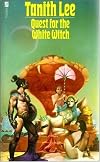
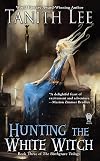
Fantasy. Fiction. HTML:Vazkor, who assumed the name of the warrior father he had never known, seeks his mother, a survivor of the hated Old Race known as the White Witch. He has sworn to kill her, to avenge his father and all the humans who had suffered at the hands of the Old Race. But as he searches, his own powers—his fearful heritage—grow. Can Vazkor rid the world once and for all of his own creator?Hunting the White Witch is the concluding volume of the Birthgrave Trilogy. show more Rediscover this realm of brilliant cruel beauty and seductive immortal ruins, of savage war and grand conquest, of falling stars and silver gods—with these 40th anniversary editions of legendary fantastist Tanith Lee's debut book series. show less
Tags
Recommendations

















Member Reviews
The end of this final book of Tanith Lee's Birgthgrave trilogy makes an interesting contrast/complement to the end of the first. Where The Birthgrave ended with something like a deus ex machina that in some ways tore open the narrative, Quest for the White Witch concludes in a way that seems retrospectively inevitable, and completely within the frame of the larger story. Still, as with the first book, I can imagine some readers being outraged by the "twist" of the ending.
The trilogy as a whole defies the usual three-phase structure of beginning-middle-end, which seems to be consistent with the history of its writing, where the first book was likely conceived as a stand-alone novel. The second book is therefore a second beginning with a show more new protagonist, and the third is a sequel that ties the two earlier ones together. The result is a sort of dialectical progression.
I had remarked that the second book, Vazkor, Son of Vazkor, had a lower level of numinosity than the original novel, but as its protagonist attains near-omnipotence in this third book there is numinosity to spare. There is also a greater sense of historical sweep and the destiny of peoples and nations, not so central as, but akin to that found in Lee's Wars of Vis novels.
One of the odd features of this book is the sustained dramatic irony, since the reader of the first volume necessarily knows more about the object of his quest than does the ambivalent antihero Vazkor Junior. In the first half of the book, though, Lee introduces a fascinating set of events that can make the reader question assumptions about the White Witch of the title, thus maintaining suspense and allowing readers to better appreciate the protagonist's perspective. show less
The trilogy as a whole defies the usual three-phase structure of beginning-middle-end, which seems to be consistent with the history of its writing, where the first book was likely conceived as a stand-alone novel. The second book is therefore a second beginning with a show more new protagonist, and the third is a sequel that ties the two earlier ones together. The result is a sort of dialectical progression.
I had remarked that the second book, Vazkor, Son of Vazkor, had a lower level of numinosity than the original novel, but as its protagonist attains near-omnipotence in this third book there is numinosity to spare. There is also a greater sense of historical sweep and the destiny of peoples and nations, not so central as, but akin to that found in Lee's Wars of Vis novels.
One of the odd features of this book is the sustained dramatic irony, since the reader of the first volume necessarily knows more about the object of his quest than does the ambivalent antihero Vazkor Junior. In the first half of the book, though, Lee introduces a fascinating set of events that can make the reader question assumptions about the White Witch of the title, thus maintaining suspense and allowing readers to better appreciate the protagonist's perspective. show less
This is the third in the Birthgrave trilogy and, like book 2, is narrated by Vazkor, son of the eponymous 'White Witch' whose real name is Karrakaz. It continues where book 2 ended, with him embarking on a sea voyage to follow his mother to the southern continent, on the quest set by what seemed to him to be the spirit of his father, to murder her in revenge for his father's death at her hands.
As his mother did before him, in Book 1, Tuvek/Vazkor grows into his powers. At first, he wields them in a godlike fashion, walking on water, flying, healing, killing with lightning bolts - whatever seems most pleasing at the time, rather than what is necessary. He is profligate with the lives of mortals, such as his devoted servant Long-Eye, and show more when it's too late feels a bit sorry, but not much. He has inherited his mother's ability to heal even from fatal injuries - she is the sole survivor of the godlike Lost Race - and so the sorrows and suffering of humanity have little impact on him.
Vazkor, as he now calls himself, arrives in the main city of an empire established by the Masrimas, formerly a warrior race who conquered the older civilisation of the Hessians. The latter are now mostly slaves in the city or else inhabitants of a benighted slum, the remains of the former capital/port which has sunk into an unhealthy swamp a little way along the coast. Vazkor sets out to become notorious as a wizard by organising public mass-healing sessions for ordinary folk, and to become wealthy by charging the rich large fees to heal their illnesses. Through hubris, he becomes involved in a stunt to rejuvenate a malicious old woman and restore her to fifteen years of age. His subsequent decline of her attentions has serious repercussionswhen her vengeance takes in the whole city, aided by the link he has inadvertently created, enabling her to use his powers against him .
As with the case of his mother, who was transformed mostly against her will into the goddess Uastis for his father's political benefit, he becomes a catalyst in the ongoing political instability whereby the emperor has set aside his first wife and her son Sorem in favour of the elder son of his second wife. Vazkor becomes Sorem's right-hand man and the secret lover of his extremely capable and beautiful mother, a secret that will ultimately lead to a falling out between the two men. In the meantime, Vazkor becomes a key player in the conflict between Sorem and his half-brother, and enables Sorem to win, though at a price. Sorem is about to become emperor when disaster strikes as a direct result of Vazkor's earlier behaviour.
Surviving against enormous odds, Vazkor becomes wiser and feels old beyond his years. He travels away from the city in the company of Gyest, a wise man from an egalitarian tribe, who helps him understand his nature and convinces him not to renounce his Power but to use it for the good of humankind. Eventually, rumours of his mother lead him to a more distant land, and gradually he reaches a full understanding of the isolation from humanity that his power has forced upon him, and his obligation not to misuse his abilities. His earlier thirst for vengeance recedes, but he still wants answers and perhaps retribution for his mother's rejection. Their final face to face confrontation provides surprises for him and for the reader. show less
As his mother did before him, in Book 1, Tuvek/Vazkor grows into his powers. At first, he wields them in a godlike fashion, walking on water, flying, healing, killing with lightning bolts - whatever seems most pleasing at the time, rather than what is necessary. He is profligate with the lives of mortals, such as his devoted servant Long-Eye, and show more when it's too late feels a bit sorry, but not much. He has inherited his mother's ability to heal even from fatal injuries - she is the sole survivor of the godlike Lost Race - and so the sorrows and suffering of humanity have little impact on him.
Vazkor, as he now calls himself, arrives in the main city of an empire established by the Masrimas, formerly a warrior race who conquered the older civilisation of the Hessians. The latter are now mostly slaves in the city or else inhabitants of a benighted slum, the remains of the former capital/port which has sunk into an unhealthy swamp a little way along the coast. Vazkor sets out to become notorious as a wizard by organising public mass-healing sessions for ordinary folk, and to become wealthy by charging the rich large fees to heal their illnesses. Through hubris, he becomes involved in a stunt to rejuvenate a malicious old woman and restore her to fifteen years of age. His subsequent decline of her attentions has serious repercussions
As with the case of his mother, who was transformed mostly against her will into the goddess Uastis for his father's political benefit, he becomes a catalyst in the ongoing political instability whereby the emperor has set aside his first wife and her son Sorem in favour of the elder son of his second wife. Vazkor becomes Sorem's right-hand man and the secret lover of his extremely capable and beautiful mother, a secret that will ultimately lead to a falling out between the two men. In the meantime, Vazkor becomes a key player in the conflict between Sorem and his half-brother, and enables Sorem to win, though at a price. Sorem is about to become emperor when disaster strikes as a direct result of Vazkor's earlier behaviour.
Surviving against enormous odds, Vazkor becomes wiser and feels old beyond his years. He travels away from the city in the company of Gyest, a wise man from an egalitarian tribe, who helps him understand his nature and convinces him not to renounce his Power but to use it for the good of humankind. Eventually, rumours of his mother lead him to a more distant land, and gradually he reaches a full understanding of the isolation from humanity that his power has forced upon him, and his obligation not to misuse his abilities. His earlier thirst for vengeance recedes, but he still wants answers and perhaps retribution for his mother's rejection. Their final face to face confrontation provides surprises for him and for the reader. show less
This is the final book of a trilogy that started in Birthgrave, Lee's first novel. That one was a phantasmagorical journey of a woman without any memory of herself through a landscape with that pulp fiction feel of H Rider Haggard tales of lost civilizations, or perhaps even more akin, Jane Gaskell's Atlan Saga The middle book, Vazkor, Son of Vazkor, as signaled by it's title, is centered on a Conan-like character called Vazkor, son of the heroine of Birthgrave. He retraces her steps, like her tells the story in his own voice, and if the fascination of the first book lies in the mystery of her identity, the fascination of this middle lies a great deal in his so very different perspective. Vazkor is very hard to like in that book--a show more raping sword-swinging barbarian. But there is more to him here, as in his quest--for revenge against his mother--he increasingly comes into his powers and sees the value in others. Lee's style and her world could both be described as lush. Though along with Tanith Lee's poetic prose you're going to get a psychological complexity you're not going to find in Conan the Barbarian. show less
Tuvek, now known as Vazkor continues his quest to find and destroy his mother. Through conquered cities, across the ocean and into strange magical lands, he discovers and shapes his powers, brooding on how he will end his mother's life and avenge his father.
To be honest, this book didn't hold my attention the way the previous two did. It still centered primarily around Vazkor and his journey, and while he did progress as a character, I was more interested in his mother. I found myself getting impatient, just wondering when he was going to find her. Vazkor spends a decent amount of time in book two and three in the same city and I grew bored - none of the more minor characters were very compelling. I wanted to know more about the race show more Vazkor and Uastis were descended from and less about the people living in the land now. I also expected the sci-fi elements to come back into play and sadly they didn't, making their appearance in the first book puzzling and mostly useless. The ending was a let down too, though there was one little twist. I don't regret reading this book but it certainly didn't live up to the quality of the first two for me. show less
To be honest, this book didn't hold my attention the way the previous two did. It still centered primarily around Vazkor and his journey, and while he did progress as a character, I was more interested in his mother. I found myself getting impatient, just wondering when he was going to find her. Vazkor spends a decent amount of time in book two and three in the same city and I grew bored - none of the more minor characters were very compelling. I wanted to know more about the race show more Vazkor and Uastis were descended from and less about the people living in the land now. I also expected the sci-fi elements to come back into play and sadly they didn't, making their appearance in the first book puzzling and mostly useless. The ending was a let down too, though there was one little twist. I don't regret reading this book but it certainly didn't live up to the quality of the first two for me. show less
Next in the Vazkor series, he's roaming the world trying to find the woman who gave birth to him, in order to fulfill a vow to kill her. It's a road story and a tale of how he changes as he experiences the world as a sorcerer. He's oppressed by the humans clamouring for healing and for him to use his killing Power to help them, as well as the betrayals and double crossings as he gets more into politics. He's still pretty misogynistic, but at least we see him caring for some females this time. There are some disturbing bits, but I liked how his parents and his reactions to them wove through the story.
How creepy is this- I took a nap about thirty pages before the ending, and during the nap, I dreamed the key component to the ending- namely, who Ressavan was. The book was slow- there were a lot of lush descriptions and rambling. The book, overall was a coming of age/ understanding of self story, and I did like how it came out in the end- it just took a long time to get there.
Hij noemde zichzelf bij de naam van de vader die hij nooit had gekend, Vazkor, koning van een vergeten land. In zijn aderen mengde zich het bloed van die koninklijke krijger en dat van zijn heksenmoeder, de zilvergemaskerde, sneeuwwitte overlevende van het gehate Oude Ras. Hij had gezworen dat ze door zijn handen zou sterven in naam van zijn vader en alles wat zijn wereld was geworden. Over die barbaarse en door de tijd geteisterde planeet ging zijn zoektocht onvermoeibaar door. Terwijl hij zocht, groeiden zijn eigen krachten, zijn angstaanjagende erfgoed. Over wijde zeeën, in veroverde steden en tussen spookachtige bergen, nam de jacht hem mee. En naarmate hij dichter bij zijn doel kwam, werd de manier waarop ze gedood moest worden show more steeds duidelijker, hoe zekerder zijn vermogen om al haar hekserij en oude wetenschap te verbreken om de wereld eens en voor altijd te verlossen van zijn schepper - de witte heks van de vulkaan. show less
Mar 28, 2025Dutch
Members
- Recently Added By
Author Information

314+ Works 30,297 Members
Tanith Lee, September 19, 1947 - May 24, 2015 Tanith Lee was born on September 19, 1947 in London, England, the daughter of ballroom dancers. She attended various primary schools and had a variety of jobs, from file clerk and assistant librarian to shop assistant and waitress. Lee attended an art college for one year, but felt she would be better show more writing her ideas than painting them. Her first professional sale was "Eustace," a 90 page vignette which appeared in The Ninth Pan Book of Horror Stories in 1968. While Lee was working as an assistant librarian, she wrote a children's story that was accepted for publication. Others of her stories were also bought but never published. In 1971, Macmillan published "The Dragon Hoard," another children's book, which was followed by "Animal Castle" and "Princess Hynchatti and Other Stories" in 1972. Lee was looking for a British publisher for her book "The Birthgrave," but was denied at every House she went. She then wrote to American publisher DAW, known for it's fantasy and horror selections, who immediately accepted her manuscript and published the book in 1975. Thus began a partnership between the two that lasted till 1989 and resulted in 28 books. After the publication of her third book by DAW, Lee quit her job and became a full-time freelance writer. Lee has been nominated for the World Fantasy Award, the August Derleth Award and the Nebula. She has had more than 40 novels published, along with over 200 short stories. Lee died peacefully in her sleep after a long illness on May 24, 2015. (Bowker Author Biography) show less
Some Editions
Awards and Honors
Series

Belongs to Publisher Series
Work Relationships
Is contained in
Common Knowledge
- Original title
- Quest for the White Witch
- Alternate titles
- Hunting the White Witch
- Original publication date
- 1978
- First words
- The boat Zrenn had chosen to steal was a skiff, very similar to Qwef’s craft, but capable of sail. The slave had stepped the mast and unfurled the coarse-woven square, rigging it to catch the ragged morning wind that came s... (show all)lanting from the mainland far behind. He told me after, for he was unusually talkative to me, how his people sailed back and forth over a wide blue river in the course of trading. They understood ships and boats in the same way they understood gods – a hereditary oblique wisdom, passed from father to boy. This blue river lay a million miles distant west and north; he had sculled there in his childhood before the slave levy fell due and he, along with countless others, was taken to black Ezlann, later bartered to So-Ess and finally absorbed, via a raid, into Eshkorek Arnor.
- Last words
- (Click to show. Warning: May contain spoilers.)I will be judged by none but she. No other knows my life, nor how I have been constrained to live it, nor what I have gleaned, nor what I am entitled to. At the end she is mine, and she will not deny me now, for I am no longer ignorant of the fate that binds us. Seeing her there before me, the final gem in the circlet, I half suppose this road was mapped for both of us, before even we were born.
Worship or deny them, we are all, perhaps, in the hands of the gods.
Classifications
Statistics
- Members
- 479
- Popularity
- 63,674
- Reviews
- 7
- Rating
- (3.32)
- Languages
- Dutch, English, French, German
- Media
- Paper, Ebook
- ISBNs
- 12
- ASINs
- 8