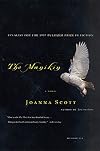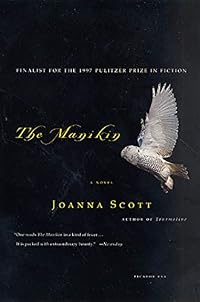
The Manikin
by Joanna Scott
On This Page
Description
A girl's coming of age in the strange world of stuffed animals. Peg Griswood lives in the manor of a famous taxidermist, surrounded by staring, silent creatures, looked after by eccentric servants and groundskeepers. Against this background, various human dramas are played out in what is basically a gothic novel of atmosphere. The setting is New York state early this century.Tags
Recommendations


















Member Reviews
The Manikin is the story of a house and the people who live in it. The house, an old manor filled with the taxiderm animals its deceased owner was famous for, is the most vivid character in the book. The rest of the characters fell short for me, like watching people through a window and trying to guess what they will do next. One unpredictable character makes a novel interesting. A dozen unpredictable characters make it frustrating and remove the reader from the emotional intensity the author attempts. This is unfortunate because there's a lot of potential in this story--Scott's exploration of the impact of race and social class on relationships in the 1920's would be fascinating if we understood the characters well enough to feel the show more full weight of their behaviors and decisions. Instead, major turns of plot appear to be arbitrary and we're left with a clearer understanding of the taxiderm animals than the people.
The author's third-person omniscient narrative viewpoint falls short, too: she foreshadows events that never take place, intentionally leading the reader astray. She flits from event to lengthy poetic description of the weather to difficult-to-follow introspection on behalf of one or another of the characters, to magical realism weirdness (do the taxiderm animals actually come alive, or what?) that left me befuddled as to exactly what type of book I was supposed to be reading. show less
The author's third-person omniscient narrative viewpoint falls short, too: she foreshadows events that never take place, intentionally leading the reader astray. She flits from event to lengthy poetic description of the weather to difficult-to-follow introspection on behalf of one or another of the characters, to magical realism weirdness (do the taxiderm animals actually come alive, or what?) that left me befuddled as to exactly what type of book I was supposed to be reading. show less
Review can also be found in Chill and read
The Manikin is the curious estate of Henry Craxton, Sr. in a rural western New York State. Mary Craxton leaves there, even though she never really wanted to, while her husband is dead and her remaining son, Henry Craxton Jr. is away from her, travelling the world. The family has got its money from taxidermy, since Craxton Institute is supplying the natural history museums with its showpieces. This is the story of the decline of that family, and the rise of its servants, especially the housekeeper Ellen and her daughter Peg.
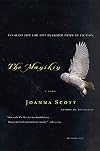
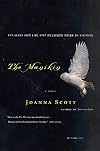
The story begins with the northern owl travelling over the Craxton Lake. Later on, this owl is shot by the houseman's son, and becomes a showpiece itself. This happens a show more little before window Mary Craxton dies and her son returns to find that she's left everything to charity. The servants hate Henry Craxton who decides to take what is rightfully his by law. The have every right to do so, as he is a sin that never loved his mother and has the worst manners ever, especially when it comes to them.
Joanna Scott wrote a book, finalist to the 1997 Pulitzer prize. The characters are deep, with emotions, described in a poetic way. The setting is a romantic one, and the description of the nature flows seamlessly as the story proceeds. Love and passion are in the air, all inside the mansion and its surroundings. Words untold, remaining in the minds of the characters. Discussions that never took place between a mother and a daughter, a woman and a man. Heroes of the small things. show less
The Manikin is the curious estate of Henry Craxton, Sr. in a rural western New York State. Mary Craxton leaves there, even though she never really wanted to, while her husband is dead and her remaining son, Henry Craxton Jr. is away from her, travelling the world. The family has got its money from taxidermy, since Craxton Institute is supplying the natural history museums with its showpieces. This is the story of the decline of that family, and the rise of its servants, especially the housekeeper Ellen and her daughter Peg.
The story begins with the northern owl travelling over the Craxton Lake. Later on, this owl is shot by the houseman's son, and becomes a showpiece itself. This happens a show more little before window Mary Craxton dies and her son returns to find that she's left everything to charity. The servants hate Henry Craxton who decides to take what is rightfully his by law. The have every right to do so, as he is a sin that never loved his mother and has the worst manners ever, especially when it comes to them.
Joanna Scott wrote a book, finalist to the 1997 Pulitzer prize. The characters are deep, with emotions, described in a poetic way. The setting is a romantic one, and the description of the nature flows seamlessly as the story proceeds. Love and passion are in the air, all inside the mansion and its surroundings. Words untold, remaining in the minds of the characters. Discussions that never took place between a mother and a daughter, a woman and a man. Heroes of the small things. show less
Ratings
Members
- Recently Added By
Lists

Pulitzer Prize for Fiction - Finalists
88 works; 9 members
Author Information

Awards and Honors
Awards
Work Relationships
Is abridged in
Common Knowledge
- Canonical title
- The Manikin
- Important places
- New York, USA; Rochester, New York, USA
Classifications
Statistics
- Members
- 128
- Popularity
- 254,233
- Reviews
- 2
- Rating
- (3.35)
- Languages
- Czech, English, Italian
- Media
- Paper, Ebook
- ISBNs
- 7
- ASINs
- 4