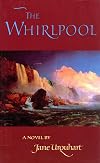
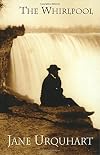
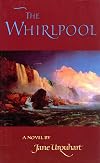
The Whirlpool
by Jane Urquhart
On This Page
Description
Written in luminous prose, The Whirlpool is a haunting tale set in Niagara Falls, Ontario, in the summer of 1889. This is the season of reckless river stunts, a time when the undertaker’s widow is busy with funerals, her days shadowed by her young son’s curious silence. Across the street in Kick’s Hotel, where Fleda and her husband, David McDougal, have temporary rooms, Fleda dreams of the place above the whirlpool where she first encountered the poet, a man who enters her life and, show more unwittingly, changes everything. As the summer progresses, the lives of these characters become entangled, and darker, more sinister currents gain momentum. The Whirlpool, Jane Urquhart’s first novel, received Le prix du meilleur livre étranger (Best Foreign Book Award) in France and marked the brilliant debut of a major voice in Canadian fiction. show lessTags
Recommendations
































Member Reviews
I really like Jane Urquhart's writing.
This novel is set in the late 1890s in Niagara Falls. The undertaker's widow is taking over the business and is busy with the usual summer increase in deaths at the falls. Military historian David McDougal, obsessed with Laura Secord, is studying the war of 1812. His wife, Fleda, is obsessed with poetry, in particular that of Robert Browning. She is living in a tent in the woods and contemplating her life. Patrick, a poet, is in the area for some remedial rest. He becomes obsessed with Fleda.
What is interesting is that David seems happiest when he projects Laura Secord's looks and personality on Fleda. Patrick is happiest when he sees Fleda only from a distance and a silence is maintained between show more them. Neither seemed to see her as herself. As Fleda develops a sense of who she really is and what she really wants, she becomes more distanced from both of them.
This is a very atmospheric, poetic book with a deep message about knowing ourselves. show less
This novel is set in the late 1890s in Niagara Falls. The undertaker's widow is taking over the business and is busy with the usual summer increase in deaths at the falls. Military historian David McDougal, obsessed with Laura Secord, is studying the war of 1812. His wife, Fleda, is obsessed with poetry, in particular that of Robert Browning. She is living in a tent in the woods and contemplating her life. Patrick, a poet, is in the area for some remedial rest. He becomes obsessed with Fleda.
What is interesting is that David seems happiest when he projects Laura Secord's looks and personality on Fleda. Patrick is happiest when he sees Fleda only from a distance and a silence is maintained between show more them. Neither seemed to see her as herself. As Fleda develops a sense of who she really is and what she really wants, she becomes more distanced from both of them.
This is a very atmospheric, poetic book with a deep message about knowing ourselves. show less
This was Jane Urquhart's debut novel and I must say that if I had read this first I probably would not have gone on to read any more of her work (and would have missed out on a great read). Actually this is a haunting book. I continue to think about it so I do think it is a well written and intriguing look at life in late nineteenth century Canada.
In a small town just below Niagara Falls we follow the lives of four characters over a few months - there is the undertaker's widow who continues her husband's business; a military historian and his wife; and a government clerk who is staying at his uncle's farm. There is some connection between the characters but on the whole we follow their separate paths, even when they meet. So there was a show more very disconnected feel to the characters and there isn't really a coherent story. Thinking about it the disconnect can be perceived as a strength - the four characters whose stories are told are all very self absorbed with their own lives and even when interacting with others don't seem to see outside of their own interests.
In conclusion a beautifully written but slightly unsatisfying read. show less
In a small town just below Niagara Falls we follow the lives of four characters over a few months - there is the undertaker's widow who continues her husband's business; a military historian and his wife; and a government clerk who is staying at his uncle's farm. There is some connection between the characters but on the whole we follow their separate paths, even when they meet. So there was a show more very disconnected feel to the characters and there isn't really a coherent story. Thinking about it the disconnect can be perceived as a strength - the four characters whose stories are told are all very self absorbed with their own lives and even when interacting with others don't seem to see outside of their own interests.
In conclusion a beautifully written but slightly unsatisfying read. show less
The lives of four people interlock in the town of Niagara Falls, Ontario, in the summer months of 1889: Maude Grady, the widow of the town undertaker, left to run the business and care for her oddly silent son (never named!) when an epidemic carries off her husband and in-laws; Major David McDougal, an anti-American historian obsessed with the War of 1812 and most especially Laura Secord; his poetically-minded wife Fleda who spends much of her time alone in the woods near the title whirlpool of the Niagara River; and the poet Patrick (is his surname ever given?), in the area for naturalistic pursuits as a rest cure and a break from his wife, who watches Fleda from a distance, then gradually interjects his life into hers and David's. -- show more An odd book. The author has a lovely way with words at times ("There it [the piano] stood, so calm, so monumental, discreetly keeping its potential for music intact during times of silence.") and captures the place so vividly: during thee summer months, Maud's business sees a higher incidence of bodies related to fatalities at Niagara Falls, and she has many mementos/effects of the deceased in her office. The book seems almost haunted by the Whirlpool (Patrick announces his intention to swim it) and Maud's small son, who begins to speak words he has heard...to eerily parrot people whom he hears. Thrown in for good measure, there are also the curious Prologue and Epilogue, which deal with the final hours in Venice of the life of English poet Robert Browning in December 1889. On the whole, however, not an altogether satisfying reading experience -- at least for this reader. I desperately wanted to like this more than I did. show less
This is one of those books that is probably above my "reading age". I like Urquhart's writing very much and found the story interesting despite my general lack of enthusiasm for 'historical' novels. However I'm not generally a big fan of poetry as I don't usually understand it. This story has a focus on poetry, and in particular on the poetry and life of Robert Browning. Quite a bit of the book seemed very mystical to me and I'd rather read something more concrete and down to earth. Nonetheless, Urquhart remains an author of interest and I have three more of her books on my TBR pile.
It's 1889 and this story's quirky Victorian characters are each caught up in their own obsessions; whether for a woman-from-a- distance, nature and poetry, war history, details of death-by the undertaker's widow, or Niagara Falls and the lives its whirpool claims. Robert Browning's last days in Venice are also present as brackets (first and last chapters) to the main story.
Rich language, fascinating historical details. Awarded the Best Foreign Book Award in France. Highly recommended.
I have read 5 of her other novels:
Away***+
The Underpainter****
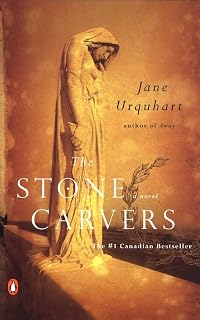
The Stone Carvers*****
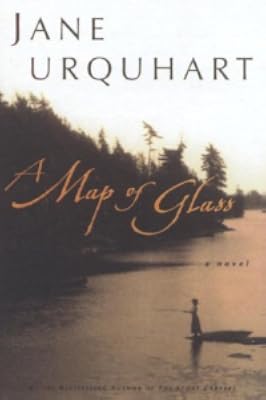
A Map of Glass***** (my favourite)
Santuary Line***+
Jane Urquhart never disappoints
Rich language, fascinating historical details. Awarded the Best Foreign Book Award in France. Highly recommended.
I have read 5 of her other novels:
Away***+
The Underpainter****
The Stone Carvers*****
A Map of Glass***** (my favourite)
Santuary Line***+
Jane Urquhart never disappoints
Ratings
Members
- Recently Added By
Lists

New Canadian Library
191 works; 7 members

Canada
42 works; 3 members

Canadian Historical Fiction 🇨🇦
157 works; 8 members
Author Information

20+ Works 4,046 Members
Jane Urquhart, Poet and novelist Jane Urquhart was born in a small northern Ontario mining community called Little Long Lac. She has been Writer-in-Residence at the University of Ottawa and Memorial University of Newfoundland. In 1997, she held the Presidential Writer-in-Residence Fellowship at the University of Toronto. Urquhart has published show more books of poetry whose titles include "I'm Walking in the Garden of His Imaginary Palace," "False Shuffles," and "The Little Flowers of Madame de Montespan." She has also written the novels "The Whirlpool," which was the first Canadian book to win France's Prix du Meilleur Livre Etranger (Best Foreign Book Award), "Changing Heaven," "Away," which won the 1994 Trillium Award, and "The Underpainter," which won the Governor General's Award in 1997. She has also written a collection of short fiction, "Storm Glass," and several articles and reviews. Urquhart has also received the Marian Engel Award, in 1994, for an outstanding body of prose written by a Canadian woman and was named to France's Order of Arts and Letters as a Chevalier in 1996. Her novel "Away" was also short-listed for the International IMPAC Dublin Literary Award, which is the world's largest literary prized for a single work of fiction, and in 1997, she was asked to serve on the jury for this award. (Bowker Author Biography) show less
Awards and Honors
Awards
Series
Belongs to Publisher Series
Common Knowledge
- Original publication date
- 1986
- People/Characters
- Maude Grady; David McDougal; Fleda McDougal; Patrick; Robert Browning
- First words
- In December of 1889, as he was returning by gondola from the general vicinity of the Palazzo Manzoni, it occured to Robert Browning that he was more than likely going to die soon.
- Last words
- (Click to show. Warning: May contain spoilers.)All that cool white marble in exchange for the shifting sands of Lerici.
Classifications
- Genres
- General Fiction, Fiction and Literature, Historical Fiction
- DDC/MDS
- 813.54 — Literature & rhetoric American literature in English American fiction in English 1900-1999 1945-1999
- LCC
- PR9199.3 .U7 .W45 — Language and Literature English English Literature English literature: Provincial, local, etc.
- BISAC
Statistics
- Members
- 234
- Popularity
- 139,500
- Reviews
- 5
- Rating
- (3.78)
- Languages
- English, French, German
- Media
- Paper, Ebook
- ISBNs
- 15
- ASINs
- 3