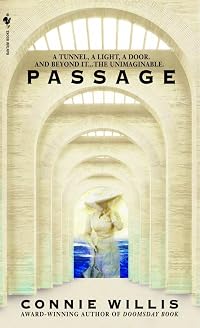
Passage
by Connie Willis
On This Page
Description
One of those rare, unforgettable novels that are as chilling as they are insightful, as thought-provoking as they are terrifying, award-winning author Connie Willis's Passage is an astonishing blend of relentless suspense and cutting-edge science unlike anything you've ever read before.It is the electrifying story of a psychologist who has devoted her life to tracking death. But when she volunteers for a research project that simulates the near-death experience, she will either solve show more life's greatest mystery -- or fall victim to its greatest terror.
At Mercy General Hospital, Dr. Joanna Lander will soon be paged -- not to save a life, but to interview a patient just back from the dead. A psychologist specializing in near-death experiences, Joanna has spent two years recording the experiences of those who have been declared clinically dead and lived to tell about it.
It's research on the fringes of ordinary science, but Joanna is about to get a boost from an unexpected quarter. A new doctor has arrived at Mercy General, one with the power to give Joanna the chance to get as close to death as anyone can.
A brilliant young neurologist, Dr. Richard Wright has come up with a way to manufacture the near-death experience using a psychoactive drug. Dr. Wright is convinced that the NDE is a survival mechanism and that if only doctors understood how it worked, they could someday delay the dying process, or maybe even reverse it. He can use the expertise of a psychologist of Joanna Lander's standing to lend credibility to his study.
But he soon needs Joanna for more than just her reputation. When his key volunteer suddenly drops out of the study, Joanna finds herself offering to become Richard's next subject. After all, who better than she, a trained psychologist, to document the experience?
Her first NDE is as fascinating as she imagined it would be -- so astounding that she knows she must go back, if only to find out why this place is so hauntingly familiar. But each time Joanna goes under, her sense of dread begins to grow, because part of her already knows why the experience is so familiar, and why she has every reason to be afraid....
And just when you think you know where she is going, Willis throws in the biggest surprise of all -- a shattering scenario that will keep you feverishly reading until the final climactic page is turned.
From the Hardcover edition.
. show less
Tags
Recommendations














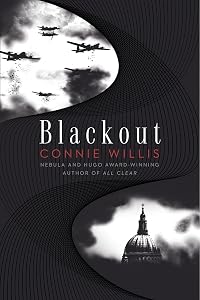




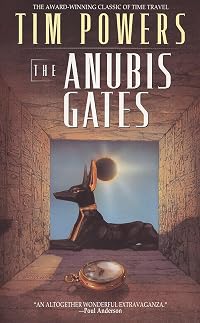

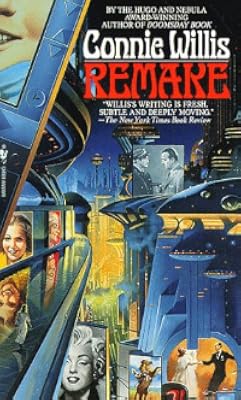








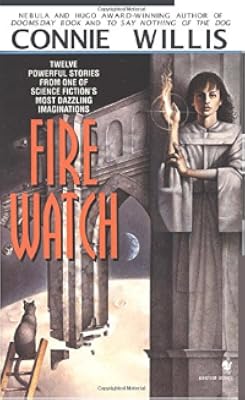









Member Recommendations


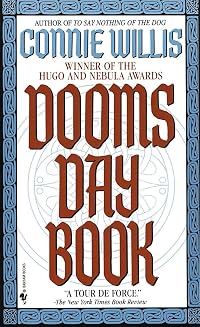
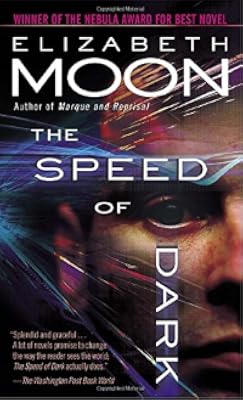
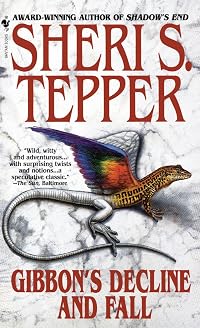
PghDragonMan A little bit of a stretch to say similar themes for these two books, yet both deal with lucid non-waking experiences and how these may influence waking life.
Member Reviews
Dr. Joanna Lander is studying near-death experiences, or NDEs. Dr. Richard Wright has discovered a way to chemically replicate what the brain goes through chemically during an NDE. Richard asks Joanna to confirm that what his volunteers are experiencing are indeed NDEs, but when funding and volunteers become scarce, Joanna goes under herself. I found this book extremely difficult to take, but in a good way: it's extremely suspenseful and the characters are likeable and sometimes infuriatingly realistic. At first I wondered if this lengthy novel could have been shortened, but the various stories and details shared become important eventually, and add even more to the realism. Though at times emotionally harrowing, this was one seriously show more excellent story. A little dark in places - it is largely about death, after all - but it never loses all hope. And now I need to go pick up everything else Willis has ever written. show less
Connie Willis excels at meshing humorously satirical commentary on interpersonal relationships with insights into the human condition that are so true they almost hurt. In 'Passage,' Joanna Lander is a researcher at a large hospital investigating near-death experiences. Her work is complicated by the difficulty of interviewing people who are near-death, but especially by the new-age charlatan who insists on being considered her colleague, Dr. Mandrake. Much of Joanna's time consists of trying to avoid Mandrake, but then she meets Dr. Wright, who has found a way, he believes, to simulate the near-death experience using drugs. Intrigued, Joanna joins him on his project - but a comedy of errors results in the project having not nearly show more enough volunteers, and Joanna herself decides to go under, and experience the NDE. Gradually, the mood changes from comedic to an increasingly frantic, obsessive, chaotic experience, as Joanna believes she is discovering truths about the NDE - but strangely, her experiences all seem to be tied to the Titanic disaster. People can't go to the sinking Titanic when they die - can they? She has the elusive feeling that she is missing some vital connection, always just on the edge of her consciousness. show less
Dr. Joanna Lander is working at Mercy General Hospital. She is not a medical doctor, however, but a cognitive psychologist, someone who investigates how people acquire, store, and process information to understand complex behaviors. To that end, she is focused on NDE’s, or Near Death Experiences, reported by hospital patients who code but are then revived.
She struggles to get to these patients before Maurice Mandrake does. Mandrake, the author of the best-selling book “The Light at the End of the Tunnel,” is also chasing after NDE patients. He seeks material for another lucrative book “proving” the existence of an afterlife - along with guardian angels, out-of-body levitation, entering a tunnel with a bright light at the end show more of it, messages to the living, and other common elements of NDEs generally reflecting specific inculcated religious beliefs.
As the story opens, a new doctor interested in NDE’s has just joined Mercy General, Dr. Richard Wright. Dr. Wright is focused on ascertaining the neurochemical events associated with NDEs, believing that the NDE is a side effect of those events. His work involved artificially inducing NDE’s with a hallucinogen while a patient’s brain activity was monitored by chemical tracers. If he could map the electrochemical activity in an NDE, perhaps he could understand what caused them and how they worked.
Richard and Joanna began to work together, and in addition, Joanna decided to volunteer as one of Richard’s subjects. But what Joanna saw during each NDE took place on the Titanic. She knows that is a clue to what the NDE is, but doesn’t know what it means. She searches for clues from her high school English literature teacher, Mr. Briarley, who used to talk about the Titanic to his class. If she could only find Mr. Briarley, and be reminded of what he said to her about the book, perhaps she could help Richard solve the conundrum of NDEs.
Evaluation: I love the books by Connie Willis. They are notable for riffing on several themes. One is of course the inclusion of actual historical elements that add interest to the plots. Another is that her characters experience myriad communication difficulties: people not listening to one another, speaking over each other’s words, imposing meaning based on preconceptions and different perceptions of reality, missed communications, such as not answering your phone or pager or listening to your answering machine, or being in the wrong place at the wrong time. It happens so much in her books, and it can be so annoying, you want to grab the character and say “keep quiet and listen!” But real life is just like that.
I also like her use of children as major characters, and her understanding of how they speak and act.
Fourth is a focus on the contrast between true and false religiosity - sincere piety versus hypocrisy with all of its self-righteousness. She shows “true” piety as other-oriented, humble, and even marked by a willingness to give up your life to help someone else.
Above it, it seems to me, she knows how to tell a poignant, memorable story. She is adept at helping you feel the characters’ pain or angst or happiness as well as share in their love for each other. And in this book, there is the story of the Titanic, which is still moving and riveting no matter how many times you hear it. show less
She struggles to get to these patients before Maurice Mandrake does. Mandrake, the author of the best-selling book “The Light at the End of the Tunnel,” is also chasing after NDE patients. He seeks material for another lucrative book “proving” the existence of an afterlife - along with guardian angels, out-of-body levitation, entering a tunnel with a bright light at the end show more of it, messages to the living, and other common elements of NDEs generally reflecting specific inculcated religious beliefs.
As the story opens, a new doctor interested in NDE’s has just joined Mercy General, Dr. Richard Wright. Dr. Wright is focused on ascertaining the neurochemical events associated with NDEs, believing that the NDE is a side effect of those events. His work involved artificially inducing NDE’s with a hallucinogen while a patient’s brain activity was monitored by chemical tracers. If he could map the electrochemical activity in an NDE, perhaps he could understand what caused them and how they worked.
Richard and Joanna began to work together, and in addition, Joanna decided to volunteer as one of Richard’s subjects. But what Joanna saw during each NDE took place on the Titanic. She knows that is a clue to what the NDE is, but doesn’t know what it means. She searches for clues from her high school English literature teacher, Mr. Briarley, who used to talk about the Titanic to his class. If she could only find Mr. Briarley, and be reminded of what he said to her about the book, perhaps she could help Richard solve the conundrum of NDEs.
Evaluation: I love the books by Connie Willis. They are notable for riffing on several themes. One is of course the inclusion of actual historical elements that add interest to the plots. Another is that her characters experience myriad communication difficulties: people not listening to one another, speaking over each other’s words, imposing meaning based on preconceptions and different perceptions of reality, missed communications, such as not answering your phone or pager or listening to your answering machine, or being in the wrong place at the wrong time. It happens so much in her books, and it can be so annoying, you want to grab the character and say “keep quiet and listen!” But real life is just like that.
I also like her use of children as major characters, and her understanding of how they speak and act.
Fourth is a focus on the contrast between true and false religiosity - sincere piety versus hypocrisy with all of its self-righteousness. She shows “true” piety as other-oriented, humble, and even marked by a willingness to give up your life to help someone else.
Above it, it seems to me, she knows how to tell a poignant, memorable story. She is adept at helping you feel the characters’ pain or angst or happiness as well as share in their love for each other. And in this book, there is the story of the Titanic, which is still moving and riveting no matter how many times you hear it. show less
Others will tell you the details of this book -- I will tell you why, now, after a second read, Passage is one of my all-time favorites. Passage explores near death experiences through the eyes and experiments of two scientists. It is memorable and remarkable because the haunted, desperate desire to “know” and to “understand” experienced by the protagonist became real to me as reader; the feeling builds during the reading and lingers for days after. In fact, I picked up Passage again not because I remembered the story, but because I remembered that feeling and I wanted to experience it again. That it turned out to be a great story is an added bonus!
I can't write this review without including one obvious fact, so I will start with that: This book is too long. I love Willis' writing style, but this book a has a bunch of unneeded repetition that detracted from the overall impact. I do think that some of the repetition was needed; it helps the reader feel the frustration that the main characters get from running into the same roadblocks and the same questions over and over. But we didn't need all of it. This could have been reduced by 200+ pages easily and still been a deep, impactful book. (My paperback copy is 780 pages.)
Now... about the story. The concept is neat. It's about near death experiences (NDEs) and some of the people trying to make sense of them. On one side we have the show more rather cliched Dr. Mandrake who says everything is proof that angels and Heaven exist even while he manipulates his favorite patients into remembering what he wants them to remember. On the other side, we have Dr. Wright, who is convinced he can find a chemical explanation for NDEs. And in the middle, but very much on the side of science, we have Dr. Lander who is trying to understand NDEs, and eventually asks Dr. Wright to include her as one of his study patients in an effort to get a better understanding. Throw in all kinds of side characters—from Dr. Lander's BFF ER nurse, to a girl who needs a heart transplant and spends her time in the hospital researching disasters, to a WWII vet who just wants someone to listen, to a young woman who is caring for her aging uncle with Alzheimer's—and the hospital where most of the action takes place really comes alive.
While I still think the page count could have been reduced by a third and been a stronger book for it, I did like where the plot went and the various discoveries the characters made along the way—both about science and about themselves. I liked the conceit of starting each chapter with the last words of various famous people. I liked the characters, some of them a lot. I like Willis' writing style, and the masterful way she weaves together the plot details along with seemingly irrelevant things that turn out to be foreshadowing. I think this is a good book that just needed more trimming down & editing to be a great book. But honestly? It really needs that trimming. show less
Now... about the story. The concept is neat. It's about near death experiences (NDEs) and some of the people trying to make sense of them. On one side we have the show more rather cliched Dr. Mandrake who says everything is proof that angels and Heaven exist even while he manipulates his favorite patients into remembering what he wants them to remember. On the other side, we have Dr. Wright, who is convinced he can find a chemical explanation for NDEs. And in the middle, but very much on the side of science, we have Dr. Lander who is trying to understand NDEs, and eventually asks Dr. Wright to include her as one of his study patients in an effort to get a better understanding. Throw in all kinds of side characters—from Dr. Lander's BFF ER nurse, to a girl who needs a heart transplant and spends her time in the hospital researching disasters, to a WWII vet who just wants someone to listen, to a young woman who is caring for her aging uncle with Alzheimer's—and the hospital where most of the action takes place really comes alive.
While I still think the page count could have been reduced by a third and been a stronger book for it, I did like where the plot went and the various discoveries the characters made along the way—both about science and about themselves. I liked the conceit of starting each chapter with the last words of various famous people. I liked the characters, some of them a lot. I like Willis' writing style, and the masterful way she weaves together the plot details along with seemingly irrelevant things that turn out to be foreshadowing. I think this is a good book that just needed more trimming down & editing to be a great book. But honestly? It really needs that trimming. show less
The science in this work of science fiction is neurochemistry; researchers in a US hospital are exploring the mechanics of near-death experiences (NDEs) and find themselves having to battle psychics, people trying too hard to be helpful, an eccentric hospital ground plan best described as "a maze of twisty passages, all alike", and the urge to research reported experiences to establish their verisimilitude and in the process contaminating the subject.
At times, I swung between irritation and fascination with this novel. Ms. Willis was getting into full stride with her favourite device, the 'running around in a complex setting and trying to contact people who themselves are running around in the same setting and so are never in one place show more long enough to be found' device. We first saw it in 'Doomsday Book', there was a bit of it in 'To say nothing of the dog', and she really went completely overboard on it in 'Blackout'/'All Clear', to the detriment of those novels. In this book, though, it works; my last visit to a hospital resulted in my being unable to find my way out of it, so I readily sympathised with the characters. Some of the running around began to get a bit tiresome and I found myself resigning myself to a descent into irritation, but for the most part it actually all came good and there was a point to it all.
As the central characters stumble towards a solution to the research problems, Ms. Willis cleverly manipulates the language of the text to suggest people groping towards a solution that is just out of reach, sensed dimly but which refuses to come into sharp focus. This is very well done indeed. The cast of characters is engaging; if they seem slightly stereotyped, they are nonetheless believable stereotypes. It does not, however, turn into a hospital romance. And the research into NDEs starts out as pure science in a tone of scepticism, pitched against purveyors of psychic bunkum; but in a major twist about two-thirds of the way through, everything becomes very serious - indeed, literally a matter of Life and Death.
For a book weighing in at the thick end of 800 pages, this was nonetheless a fairly straightforward read, though it pulls no punches in the neurochemistry department. The theory and explanation put forward in the novel does not appear to match any current research thinking on the subject, but seems as plausible as any other (if you do not accept spiritual explanations). The setting is very end of century; characters have pagers and watch VHS tapes, but this really isn't a problem.
In all, an engrossing and worthwhile read, but not in any way lightweight. show less
At times, I swung between irritation and fascination with this novel. Ms. Willis was getting into full stride with her favourite device, the 'running around in a complex setting and trying to contact people who themselves are running around in the same setting and so are never in one place show more long enough to be found' device. We first saw it in 'Doomsday Book', there was a bit of it in 'To say nothing of the dog', and she really went completely overboard on it in 'Blackout'/'All Clear', to the detriment of those novels. In this book, though, it works; my last visit to a hospital resulted in my being unable to find my way out of it, so I readily sympathised with the characters. Some of the running around began to get a bit tiresome and I found myself resigning myself to a descent into irritation, but for the most part it actually all came good and there was a point to it all.
As the central characters stumble towards a solution to the research problems, Ms. Willis cleverly manipulates the language of the text to suggest people groping towards a solution that is just out of reach, sensed dimly but which refuses to come into sharp focus. This is very well done indeed. The cast of characters is engaging; if they seem slightly stereotyped, they are nonetheless believable stereotypes. It does not, however, turn into a hospital romance. And the research into NDEs starts out as pure science in a tone of scepticism, pitched against purveyors of psychic bunkum; but in a major twist about two-thirds of the way through, everything becomes very serious - indeed, literally a matter of Life and Death.
For a book weighing in at the thick end of 800 pages, this was nonetheless a fairly straightforward read, though it pulls no punches in the neurochemistry department. The theory and explanation put forward in the novel does not appear to match any current research thinking on the subject, but seems as plausible as any other (if you do not accept spiritual explanations). The setting is very end of century; characters have pagers and watch VHS tapes, but this really isn't a problem.
In all, an engrossing and worthwhile read, but not in any way lightweight. show less
Another good suspenseful character study from Connie Willis. Not quite up to par with The Doomsday Book or To Say Nothing of the Dog, it shares with those two novels the ability to have a whole lot of nothing happening for pages and pages, yet still build up the suspense. The novel tells of doctors researching Near Death Experiences in order to discover their scientific causes and purposes. While the research experiments here should be taken with a grain of salt, the scenes do set up some good comic moments and help with character development. And here too is how Willis builds the suspense, bit by bit showing more of Dr. Joanna Lander's NDE's, and building a parallel story of the sinking of the Titanic (where Joanna's NDE's take her). show more Of course, the big twist (albeit heavily foreshadowed) is when a patient in the ER kills Joanna. Then the suspense is whether Dr. Wright and friends can discover the secret of Joanna's last words, alternating with illusory descriptions of Joanna's deteriorating death experience (she takes a loooooong time to die). Most of the rest of the novel consists of the characters running around the maze-like hospital trying to avoid other people, which gets kind of annoying, but is tied up at the end when Dr. Wright finally makes a map of the hospitals. Mostly, this book works on the characters - no matter how many times they're set up to move the plot forward, you still can't help loving them. show less
Members
- Recently Added By
Published Reviews
ThingScore 100
Connie Willis’ “Passage” is a suspense novel in the same way that Alfred Hitchcock’s “Psycho” is a slasher movie; it defies the genre while still delivering its thrills. I’m tempted to dub “Passage” a neurological detective story with metaphysical leanings, but even that description goes too far in nailing down this mercurial work. I’m sure, though, that it’s one of the show more smartest books I’ve read in years; its construction is a marvel of ingenuity and — what’s even more remarkable, given the wizardry of Willis’ storytelling — its intellectual honesty is impeccable.
“Passage” begins on a typically frazzled workday for Joanna Lander, a research psychologist who works at a large, rambling city hospital and who has for two years been collecting the oral accounts of people who have “coded” — become clinically dead — and then returned to life: near-death experiences. Richard Wright, a new neurologist at the institution, asks her to team up with him in his studies of a drug that can simulate an NDE. Richard uses a new technology called a “RIPT scan” that “simultaneously photographs the electrochemical activity in different subsections of the brain for a 3-D picture of neural activity in the working brain. Or the dying brain.” He can manage the technological aspects of the research, but he needs her to help him map the images in the RIPT scans to the distinctive sensations reported by people undergoing NDEs. . . . show less
“Passage” begins on a typically frazzled workday for Joanna Lander, a research psychologist who works at a large, rambling city hospital and who has for two years been collecting the oral accounts of people who have “coded” — become clinically dead — and then returned to life: near-death experiences. Richard Wright, a new neurologist at the institution, asks her to team up with him in his studies of a drug that can simulate an NDE. Richard uses a new technology called a “RIPT scan” that “simultaneously photographs the electrochemical activity in different subsections of the brain for a 3-D picture of neural activity in the working brain. Or the dying brain.” He can manage the technological aspects of the research, but he needs her to help him map the images in the RIPT scans to the distinctive sensations reported by people undergoing NDEs. . . . show less
added by PLReader
Lists

Science fiction novels with a female protagonist
105 works; 30 members

Best Science Fiction Novels
816 works; 430 members

Locus Award for Best Novel/SF Novel
53 works; 6 members
Arthur C. Clarke Award Winners and Shortlisted Books
219 works; 14 members

Ten+ Books About the Afterlife
13 works; 2 members

Female Author
1,234 works; 67 members

Tracks of my tears ~ novels that I sobbed through
15 works; 2 members

Speculative Fiction to Read
706 works; 32 members

Books Read in 2013
1,630 works; 51 members

Meditations on Death
18 works; 3 members
Favorite Long Books
330 works; 42 members

Used books to buy next
565 works; 1 member

Allie's Wishlist
217 works; 2 members

Biggest Disappointments
606 works; 164 members

Recommended Speculative Fiction by Women and People of Color
298 works; 45 members
Author Information

97+ Works 40,859 Members
Connie Willis lives in Greeley, Colorado, with her family. (Publisher Provided) Connie Willis was born on December 31, 1945. She graduated from Colorado State College in 1967. Her first story, The Secret of Santa Titicaca, was published in Worlds of Fantasy in 1971. After receiving an NEA grant in 1982, she left her teaching job to become a show more full-time writer. Her works include Doomsday Book, Lincoln's Dreams, Bellwether, To Say Nothing of the Dog, Fire Watch, Blackout, and All Clear. She has received 10 Hugo Awards, 11 Locus Poll Awards and 6 Nebula Awards. In 2009, she was inducted into the Science Fiction Hall of Fame. (Bowker Author Biography) show less
Some Editions
Awards and Honors
Awards
Distinctions
Notable Lists
Series
Belongs to Publisher Series
Work Relationships
Is contained in
Contains
Common Knowledge
- Canonical title*
- Passage
- Original title
- Passage
- Original publication date
- 2001
- People/Characters
- Joanna Lander; Richard Wright; Maurice Mandrake; Maisie Nellis; Vielle Howard; Pat Briarley (show all 8); Kit Gardiner; Greg Menotti
- Important places
- Mercy General Hospital, Denver; Titanic; Atlantic Ocean; North Atlantic Ocean; USS Yorktown
- Important events
- Gilded Age; Sinking of the Titanic (1912); Hindenburg disaster (1937-05-06); Hartford circus fire (1944-07-06)
- Epigraph
- I will remember it forever,
the darkness and the cold.
--Edith Haisman,
A Titanic Survivor
"What is it like down there, Charides?"
"Very dark."
"And what of return?"
"All lies."
--Callimachus - Dedication
- In loving memory
of
Erik Felice,
the Tinman - First words
- "I heard a noise," Mrs. Davenport said, "and then I was moving through this tunnel."
- Quotations
- “That's what literature is. It's the people who went before us, tapping out messages from the past, from beyond the grave, trying to tell us about life and death! Listen to them!”
- Last words
- (Click to show. Warning: May contain spoilers.)Not today.
- Original language
- English
*Some information comes from Common Knowledge in other languages. Click "Edit" for more information.
Classifications
Statistics
- Members
- 2,543
- Popularity
- 7,528
- Reviews
- 84
- Rating
- (3.75)
- Languages
- English, French, Polish, Spanish
- Media
- Paper, Audiobook, Ebook
- ISBNs
- 14
- ASINs
- 10