Watchfiends & Rack Screams: Works from the Final Period
by Antonin Artaud
On This Page
Description
Antonin Artaud's last large-scale work, published in its complete form in English for the first time. Drawings on texts and letters dating from 1946, some of them written while he was still confined at the Rodez psychiatric hospital, Artaud devoted the months of November 1946 to February 1947 to completing his book through a long series of vocal improvisations titled Interjections, dictated at his pavilion on the edge of Paris. He cursed the assassins he believed were on their way there to show more steal his semen, to make his brain go "up in smoke as under the action of one of those machines created to suck up filth from the floor," and finally to erase him. The publisher who had commissioned the book, Louis Broder, was horrified at reading its incandescent, fiercely obscene, and anti-religious manuscript and refused to publish it. Ambitious and experimental in scale, fragmentary and ferocious in intent, it was not published until 1978, in an edition prepared by Artaud's close friend Paule Thévenin. Artaud commented that it was an "impossible" book, and that "nobody has ever read it from end to end, not even its own author." Clayton Eshleman, together with his translation collaborators such as David Rattray, began to work soon after 1978 on an English-language edition, with extracts appearing especially in Eshleman's poetry magazine, Sulfur. This volume presents his translations with additional ones by Paul Buck, and Catherine Petit it in its complete form in English for the first time. show lessTags
Recommendations




















Member Recommendations

ABAlexander Edizioni Neri dual-language French/Italian edition with the cassette of his original reading recorded by the BBC, then suppressed by the BBC. Chilling stuff....
Member Reviews
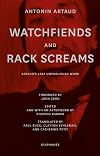
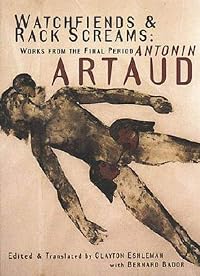
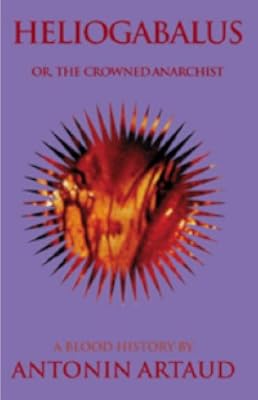
[a: Antonin Artaud|23378|Antonin Artaud|https://images.gr-assets.com/authors/1288988690p2/23378.jpg] is a very strange author at any period of his life, but at the very end of it - the final period that this book covers - he has truly descended into the depths of his own delirium. Electroshock and opium, schizophrenia untreated for years and the undernourishment and abuses that came from life in a series of uncaring asylums had reduced him to this: the unnerving artwork that dons the cover of this book and the ravings inside. Too often work from the final period of Artaud's life has gone untranslated, and largely denied any true regard. But is that a fair assessment?
What's to be found in this book is a man attempting to put his mind show more back together, and the strange ways in which he does so. This book is a cry for meaning, sometimes finding it, sometimes not, and the very alchemical act of attempting to create new languages, new ways of expression when all else was failing him.
While I would hesitate to recommend this book to anyone unfamiliar with Artaud, and indeed understand why this work has been ignored for as long as it has, I do think it has meaning. It has interest, and through the dregs of delirium at times there are passages that truly chill the bones. This is fascinating, very much of its time, and influential in ways that still haven't fully been understood in the development of the 60s artistic movements. Artaud lives on, at times in strange ways, and I'm sure of that he would have been - if not proud - then perhaps grateful. Grateful that even now we're still seeking to understand. show less
What's to be found in this book is a man attempting to put his mind show more back together, and the strange ways in which he does so. This book is a cry for meaning, sometimes finding it, sometimes not, and the very alchemical act of attempting to create new languages, new ways of expression when all else was failing him.
While I would hesitate to recommend this book to anyone unfamiliar with Artaud, and indeed understand why this work has been ignored for as long as it has, I do think it has meaning. It has interest, and through the dregs of delirium at times there are passages that truly chill the bones. This is fascinating, very much of its time, and influential in ways that still haven't fully been understood in the development of the 60s artistic movements. Artaud lives on, at times in strange ways, and I'm sure of that he would have been - if not proud - then perhaps grateful. Grateful that even now we're still seeking to understand. show less
Including the fabled text “To Have Done with the Judgment of God,” this collection compiles the scatalogical writings of Artaud's final yearsClayton Eshleman's translations are the finest and most authentic which have yet been made from Artaud's writing. Artaud's final work is his strongest and most enduring, and this collection has been wisely selected and magnificently realized. Artaud is being taken into the 21st century." –Stephen BarberAmong Antonin Artaud's most brilliant works are the scatological glossolalia composed in the final three years of his life (1945–48), during and after his incarceration in an asylum at Rodez. These represent some of the most powerful outpourings ever recorded, a torrent of speech from the show more other side of sanity and the occult. In this collection, the most complete representation of this period of Artaud's work ever presented in English, and the first new anthology of Artaud published in the US since Helen Weaver's 1976 Selected Writings, cogent statements of theory are paired with the raving poetry of such pieces as “Artaud the Momo,” “Here Lies” and “To Have Done with the Judgment of God.” These are translated with drama and accuracy by Clayton Eshleman, whose renditions of Vallejo and Césaire have won widespread acclaim, including a National Book Award. show less
Ratings
Members
- Recently Added By
Author Information

215+ Works 4,227 Members
An early associate of the surrealists, Antonin Artaud broke with them to form the "theater of cruelty" in 1932. His goal, set forth in his long essay The Theater and Its Double (1938), was to replace the contemporary theater, with its emphasis on psychology, by a theater of myth that would reintroduce the sacred into modern life. Experiments with show more drugs, coupled with a long history of psychiatric trouble, led to Artaud's commitment to a mental hospital for nine years. He remains a contemporary heir to the nineteenth-century antiestablishment poets and an inspiration to contemporary theoreticians of the theater. (Bowker Author Biography) show less
Common Knowledge
- Original title
- Oeuvres Complètes d'Antonin Artaud XI, XII, XIII, XIV
- Original publication date
- 1974; 1978
- Dedication
- The Translators dedicate this translation of Antonin Artaud's writings to the greatest of the "daughters of [his] heart," Paule Thévenin. From 1946 until her death in 1993, she dedicated her life to deciphering thousands of... (show all) pages of Artaud's handwritten texts and letters, and anonymously editing thirty volumes - Artaud's Complete Works - for Gallimard.
- First words
- Rodez, 7 March 1946
Dear Sir,
I have just read, in Fontaine magazine, two articles by you on Gerard de Nerval, which made a strange impression on me. - Last words
- (Click to show. Warning: May contain spoilers.)for all the stinking phantasmagorical bestializations.
- Publisher's editor
- Kurkowski, Damon; Yang, Naomi
Classifications
Statistics
- Members
- 161
- Popularity
- 202,770
- Reviews
- 2
- Rating
- (4.28)
- Languages
- English
- Media
- Paper
- ISBNs
- 2
- ASINs
- 1