On This Page
Description
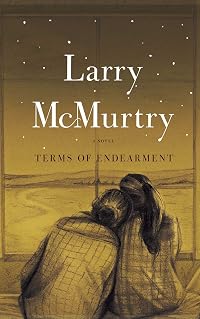
HTML:In this acclaimed novel that inspired the Academy Award–winning motion picture, Larry McMurtry created two unforgettable characters who won the hearts of readers and moviegoers everywhere: Aurora Greenway and her daughter Emma.Aurora is the kind of woman who makes the whole world orbit around her, including a string of devoted suitors. Widowed and overprotective of her daughter, Aurora adapts at her own pace until life sends two enormous challenges her way: Emma's hasty marriage and show more subsequent battle with cancer.
Terms of Endearment is the Oscar-winning story of a memorable mother and her feisty daughter and their struggle to find the courage and humor to live through life's hazards—and to love each other as never before.
"special ... very winning ... it will make you laugh and cry."—New York Times. Literature. Fiction. show less
Tags
Recommendations







Member Reviews
"Relations on this block are certainly getting soap-opera-ish." (pg. 249)
Trust Aurora Greenway, who speaks the line quoted above, to cut the slightly silly and superfluous Terms of Endearment to its core. Described in the author's somewhat defensive preface – never a good sign – as a 'social comedy' (pg. 6), the novel is oriented around the overbearing, outspoken Aurora and her relationship with her adult daughter Emma and a circle of rather pathetic male suitors. Aurora grates on the reader for the longest time, until the penny drops about halfway through the book that everyone else is just as wretched, self-centred, tawdry, obnoxious and arrogant as she is, and then you begin to enjoy her ruthless dismissals of them. She keeps show more Larry McMurtry's miscalculated whirligig spinning through sheer force of will.
McMurtry has proved, in much better books, that he can truly inhabit his characters – young, old, male, female, 19th-century or contemporary – which is why it's a shame that in Terms of Endearment none of them are likeable (with the exception of Rosie, though I hated that she so easily allows herself to become a doormat). They are all well-drawn, and McMurtry can't help but write well (for one thing, the book's too easy to read to ever become boring), but the reader is not in pleasant company here. The book is a parade of WASP wankery: the characters spend all their time belittling each other or cheating on each other, and, with no self-awareness, criticise others for doing the same to them. With the dominant Aurora, it's like a weekend with the most clichéd mother-in-law ("on the whole, men who stood in awe of her were even worse than men who didn't" (pg. 59); "it was her habit, on occasion, to toss out nets of accusation just to see what she could drag in" (pg. 61)). With her daughter Emma and the others ("it's not my place to say [what's wrong]… If you really care, then it's your place to find things out" (pg. 43)), it's like a dinner party with 'friends' you secretly hate.
Now, characters in books don't have to be likeable – in fact, it's a bit of a crutch that too many self-styled 'bookworms' rely on – and that's certainly the case when it comes to assessing a piece of genuine literature. But while Terms of Endearment makes a play at literature – its opening line imitates Jane Austen's famous opening line, and the book tries for an observant, high-society comic tone akin to 19th-century European literature – it doesn't achieve literary status. McMurtry even writes, in that revealing preface, that he had hoped Aurora "would plunge into a moral dilemma worthy of Anna Karenina or Dorothea Brooke, but no such dilemma arose" (pg. 6). The result is a piece of enjoyable fluff and melodrama, but no more than that. There's little nourishment for readers wanting to approach this on a literary level, and even the ending, which brings a tear, does so in a Hallmark-movie kind of way. Though imbalanced structurally, and populated with characters you can't wait to say goodbye to, it's never a bad read, only a miscalculation. McMurtry's talent is enough to elevate Terms of Endearment above the soap-opera crudity that Aurora identifies – but only just. show less
Trust Aurora Greenway, who speaks the line quoted above, to cut the slightly silly and superfluous Terms of Endearment to its core. Described in the author's somewhat defensive preface – never a good sign – as a 'social comedy' (pg. 6), the novel is oriented around the overbearing, outspoken Aurora and her relationship with her adult daughter Emma and a circle of rather pathetic male suitors. Aurora grates on the reader for the longest time, until the penny drops about halfway through the book that everyone else is just as wretched, self-centred, tawdry, obnoxious and arrogant as she is, and then you begin to enjoy her ruthless dismissals of them. She keeps show more Larry McMurtry's miscalculated whirligig spinning through sheer force of will.
McMurtry has proved, in much better books, that he can truly inhabit his characters – young, old, male, female, 19th-century or contemporary – which is why it's a shame that in Terms of Endearment none of them are likeable (with the exception of Rosie, though I hated that she so easily allows herself to become a doormat). They are all well-drawn, and McMurtry can't help but write well (for one thing, the book's too easy to read to ever become boring), but the reader is not in pleasant company here. The book is a parade of WASP wankery: the characters spend all their time belittling each other or cheating on each other, and, with no self-awareness, criticise others for doing the same to them. With the dominant Aurora, it's like a weekend with the most clichéd mother-in-law ("on the whole, men who stood in awe of her were even worse than men who didn't" (pg. 59); "it was her habit, on occasion, to toss out nets of accusation just to see what she could drag in" (pg. 61)). With her daughter Emma and the others ("it's not my place to say [what's wrong]… If you really care, then it's your place to find things out" (pg. 43)), it's like a dinner party with 'friends' you secretly hate.
Now, characters in books don't have to be likeable – in fact, it's a bit of a crutch that too many self-styled 'bookworms' rely on – and that's certainly the case when it comes to assessing a piece of genuine literature. But while Terms of Endearment makes a play at literature – its opening line imitates Jane Austen's famous opening line, and the book tries for an observant, high-society comic tone akin to 19th-century European literature – it doesn't achieve literary status. McMurtry even writes, in that revealing preface, that he had hoped Aurora "would plunge into a moral dilemma worthy of Anna Karenina or Dorothea Brooke, but no such dilemma arose" (pg. 6). The result is a piece of enjoyable fluff and melodrama, but no more than that. There's little nourishment for readers wanting to approach this on a literary level, and even the ending, which brings a tear, does so in a Hallmark-movie kind of way. Though imbalanced structurally, and populated with characters you can't wait to say goodbye to, it's never a bad read, only a miscalculation. McMurtry's talent is enough to elevate Terms of Endearment above the soap-opera crudity that Aurora identifies – but only just. show less
Terms of Endearment is the kind of book that makes you feel things. Larry McMurtry has the ability to make you change your mind about the people you meet...several times over. In the beginning I saw Terms as a story about a bunch of miserable people. I was shocked by the hatred these people carried around (see 'shocking quotes' below). I didn't think I would like a single character. I saw Aurora as nasty and Emma as just plain pathetic. By the end of the book I had completely changed my mind about everything and everyone.
The premise for Terms of Endearment is really quite simple. It's the story of a mother and daughter and the relationships that orbit around them. Aurora is a Boston widow transplanted to Houston, Texas. She has five show more different "suitors" who tolerate her abrasive tongue and haughty manner and despite all that, continuously vie for her hand in marriage. At first she appears caustic and self-centered. Selfish and conniving, she bends situations to suite her ever-changing needs. Her story takes up the first 324 pages and by the end of it you realize she is a woman of conviction who simply tells it like it is. Emma, her daughter, at first appears to be one of Aurora's victims - always manipulated and belittled. The strength of their relationship and the depth of their love for one another isn't readily apparent until life gets complicated for Emma. Emma hasn't married well. She hasn't been educated and she has bad hair. On the surface she is poor and pathetic. But, true to McMurtry form, by the end Emma is a strong, defiant woman.
My only disappointment about Terms of Endearment is the inclusion of Book II, Emma's story. 324 pages are dedicated to Aurora while Emma gets the last 47. I don't really understand the need for separate "books" when Emma's story - her bad marriage to Flap, her pregnancy, her lifestyle and relationship with her mother - are all woven seamlessly into Aurora's story. Emma's portion of the book seems weak and it's inclusion, an afterthought. show less
The premise for Terms of Endearment is really quite simple. It's the story of a mother and daughter and the relationships that orbit around them. Aurora is a Boston widow transplanted to Houston, Texas. She has five show more different "suitors" who tolerate her abrasive tongue and haughty manner and despite all that, continuously vie for her hand in marriage. At first she appears caustic and self-centered. Selfish and conniving, she bends situations to suite her ever-changing needs. Her story takes up the first 324 pages and by the end of it you realize she is a woman of conviction who simply tells it like it is. Emma, her daughter, at first appears to be one of Aurora's victims - always manipulated and belittled. The strength of their relationship and the depth of their love for one another isn't readily apparent until life gets complicated for Emma. Emma hasn't married well. She hasn't been educated and she has bad hair. On the surface she is poor and pathetic. But, true to McMurtry form, by the end Emma is a strong, defiant woman.
My only disappointment about Terms of Endearment is the inclusion of Book II, Emma's story. 324 pages are dedicated to Aurora while Emma gets the last 47. I don't really understand the need for separate "books" when Emma's story - her bad marriage to Flap, her pregnancy, her lifestyle and relationship with her mother - are all woven seamlessly into Aurora's story. Emma's portion of the book seems weak and it's inclusion, an afterthought. show less
Oddly, I picked this book up when I was feeling blue, hoping to read something light and cheery. I *knew* that the movie always made me cry (like, UGLY cry), but I also laughed quite a bit when watching it, so I hoped I'd find some laughter in spite of the tears while reading this book.
Amazingly, I found far more laughter than I'd ever expected! I always loved Emma's character (Debra Winger in the film), and I found Aurora to be, at the very least, interesting (Shirley MacLaine). But their characters in this book were far more developed than in the movie. I truly enjoyed reading about each of them individually, as well as their interactions with each other. Naturally, I pictured them looking much like the actors who played them in the show more movie, and that was alright. It worked.
Larry McMurtry certainly wrote a masterpiece with this book. The introduction of the book pointed out that this is actually the third in a trilogy.... I may or may not pick up the other two. All I know for sure is that, from beginning to end, I loved the characters, the descriptions of various scenes, the events, and the relationships! I'm so thrilled that I own a copy of this book, as I'll likely come back to it again in the future!!! show less
Amazingly, I found far more laughter than I'd ever expected! I always loved Emma's character (Debra Winger in the film), and I found Aurora to be, at the very least, interesting (Shirley MacLaine). But their characters in this book were far more developed than in the movie. I truly enjoyed reading about each of them individually, as well as their interactions with each other. Naturally, I pictured them looking much like the actors who played them in the show more movie, and that was alright. It worked.
Larry McMurtry certainly wrote a masterpiece with this book. The introduction of the book pointed out that this is actually the third in a trilogy.... I may or may not pick up the other two. All I know for sure is that, from beginning to end, I loved the characters, the descriptions of various scenes, the events, and the relationships! I'm so thrilled that I own a copy of this book, as I'll likely come back to it again in the future!!! show less
“It was inconsiderate, she thought, how blandly people mentioned the future in the sick rooms. Phrases like next summer were always popping out; people made such assumptions about their own continuity.”
Terms of Endearment is a movie I grew up on and adored. I admit that even though I know every bit of dialogue by now that comes up during the sad scenes, I still sob like a baby during a couple of emotionally crushing scenes.
Terms of Endearment the novel earned my biggest disappointed rating of 2017. Being a big fan of the movie, I was hopeful – and stack on how much I loved reading Lonesome Dove by the author that I had strong belief in his writing ability. What should have been a winning formula instead turned into a story-line show more that was flat and misdirected with generic and dull characters.
The movie added a lot of plot characteristics that made it work - such as the astronaut next door, Aurora finding love she was afraid to find, the fears of commitment, more on the side of the daughter Emma and her life. In the book most of the first 3/4 is part of a long date where Aurora is going back and forth with annoying two men in her life. It's irritating. The distant style writing with dry scenes and the a woman who it was hard to like didn’t help.
Rosie the maid and her strange husband background take a lot of the book up later too, which I ended up having to skim through. Finally Emma's point of view comes in at the very end but its short lived and doesn't earn more stars. Emma as an actual character was much flatter and not nearly as intriguing since the author wants to focus mainly on Aurora and Rosie.
The mother-daughter bond just doesn’t come across as that convincing, and even the ending isn’t that sad in comparison to how it could have been if the story carried more realistic emotion. There wasn’t enough emotion written into Aurora to make me care as much.
Not a pleasant read or even that sad since the ending is almost an abbreviated afterthought. I don’t read – or watch – simple for sad endings, but the journey was dull as well thanks to almost meaningless aims of Aurora and Rosie and lack of emotion and bonding. show less
Terms of Endearment is a movie I grew up on and adored. I admit that even though I know every bit of dialogue by now that comes up during the sad scenes, I still sob like a baby during a couple of emotionally crushing scenes.
Terms of Endearment the novel earned my biggest disappointed rating of 2017. Being a big fan of the movie, I was hopeful – and stack on how much I loved reading Lonesome Dove by the author that I had strong belief in his writing ability. What should have been a winning formula instead turned into a story-line show more that was flat and misdirected with generic and dull characters.
The movie added a lot of plot characteristics that made it work - such as the astronaut next door, Aurora finding love she was afraid to find, the fears of commitment, more on the side of the daughter Emma and her life. In the book most of the first 3/4 is part of a long date where Aurora is going back and forth with annoying two men in her life. It's irritating. The distant style writing with dry scenes and the a woman who it was hard to like didn’t help.
Rosie the maid and her strange husband background take a lot of the book up later too, which I ended up having to skim through. Finally Emma's point of view comes in at the very end but its short lived and doesn't earn more stars. Emma as an actual character was much flatter and not nearly as intriguing since the author wants to focus mainly on Aurora and Rosie.
The mother-daughter bond just doesn’t come across as that convincing, and even the ending isn’t that sad in comparison to how it could have been if the story carried more realistic emotion. There wasn’t enough emotion written into Aurora to make me care as much.
Not a pleasant read or even that sad since the ending is almost an abbreviated afterthought. I don’t read – or watch – simple for sad endings, but the journey was dull as well thanks to almost meaningless aims of Aurora and Rosie and lack of emotion and bonding. show less
I pretty much can't stand most of the characters in this book... and yet, every time I read it, I cry at the end. It's not like I don't know what's going to happen; I saw the movie when it was still in the theaters, years before I read this book the first time. And yet.
I know a lot of people who don't like McMurtry's contemporary novels as much as his Westerns. I love the Westerns, but I will always have a soft spot for the funny, awful people who populate the Texas of Larry McMurty's middle age.
I know a lot of people who don't like McMurtry's contemporary novels as much as his Westerns. I love the Westerns, but I will always have a soft spot for the funny, awful people who populate the Texas of Larry McMurty's middle age.
Having recently read "Lonesome Dove" I realized it had been many years since I'd first read this book. A film buff the Oscar winning movie is memorable, especially Shirley McClain's characterization of Aurora Greenwood, one of the most unique characters every created by any author. I'd forgotten the character Jack Nicholson plays in the film isn't originally in the book, though the trio of Aurora's suitors are just as quirky and would love to have seen them in the film. Regardless Larry shows what a master storyteller he is here, much as he has with other books. His characters are unique, and what plays out keeps the reader engaged. Aurora is quite the character in all respects and you can't help laugh when reading her dialog; 'a real show more piece of work' comes to mind. Highly recommended in all respects! show less
I'm not sure what made me pick this up, other than the fact I had wanted to read something by Larry McMurtry and this was the one I saw that I knew best.
I must say, I was a little disappointed that McMurtry himself spoiled the entire book in the introduction. He tells you what happens to the daughter and who the mother ends up with. I'm not sure why you would do that, but I would advise against anyone reading that introduction before finishing the novel.
I had also heard that this was very sad. I was totally delighted with the first 7/8ths of the book, which focus on Aurora and her crazy ways. She's a widower in Texas who is dating any number of men who would love nothing more than to marry her. I'm not sure why, since at first I was show more extremely put off by her selfish nature. After awhile, you see that her selfish nature is a joke more than anything, and the way all the men react to her is pretty funny.
The General was easily my favorite. I did like every single one of the men, but the General was the one who matched Aurora's eccentricities best with his own. They were polar opposites, and I died a little when the two would get into loud, obnoxious arguments over the phone and it would describe the General's arousal.
The millionaire character was also good, but I wound up feeling a little bad for him since he seems to be doing a lot of cleanup and doesn't get appreciated as much as he should.
I also like Rosie, Aurora's housekeeper, a lot. Again, I was confused at first since it described a somewhat hateful relationship between the two, but you quickly find out that one couldn't live without the other. Their relationship is actually quite touching in the end.
Aurora's story is delightful, and I was a little saddened and confused when the very last little bit of the story broke the narrative (most of Aurora's story takes place over the course of a couple weeks, then jumps forward several months for the very end). It tells a condensed version of the life of her daughter, and it is extremely sad and depressing compared to Aurora's story. Not only her life, but what happens to her. I got a little teary, and broke down completely when the Monet changed hands. I have no idea why this part was included in the back, unless it was for contrast.
All of it was wonderful, though. What a great book. show less
I must say, I was a little disappointed that McMurtry himself spoiled the entire book in the introduction. He tells you what happens to the daughter and who the mother ends up with. I'm not sure why you would do that, but I would advise against anyone reading that introduction before finishing the novel.
I had also heard that this was very sad. I was totally delighted with the first 7/8ths of the book, which focus on Aurora and her crazy ways. She's a widower in Texas who is dating any number of men who would love nothing more than to marry her. I'm not sure why, since at first I was show more extremely put off by her selfish nature. After awhile, you see that her selfish nature is a joke more than anything, and the way all the men react to her is pretty funny.
The General was easily my favorite. I did like every single one of the men, but the General was the one who matched Aurora's eccentricities best with his own. They were polar opposites, and I died a little when the two would get into loud, obnoxious arguments over the phone and it would describe the General's arousal.
The millionaire character was also good, but I wound up feeling a little bad for him since he seems to be doing a lot of cleanup and doesn't get appreciated as much as he should.
I also like Rosie, Aurora's housekeeper, a lot. Again, I was confused at first since it described a somewhat hateful relationship between the two, but you quickly find out that one couldn't live without the other. Their relationship is actually quite touching in the end.
Aurora's story is delightful, and I was a little saddened and confused when the very last little bit of the story broke the narrative (most of Aurora's story takes place over the course of a couple weeks, then jumps forward several months for the very end). It tells a condensed version of the life of her daughter, and it is extremely sad and depressing compared to Aurora's story. Not only her life, but what happens to her. I got a little teary, and broke down completely when the Monet changed hands. I have no idea why this part was included in the back, unless it was for contrast.
All of it was wonderful, though. What a great book. show less
Members
- Recently Added By
Lists

Family Drama
56 works; 14 members

Books Featured on Gilmore Girls
307 works; 21 members

1970s
657 works; 23 members

Blue Pyramid 1,276 Best Books of All Time
1,248 works; 32 members

Swinging Seventies
255 works; 18 members

The Complete Rory Gilmore Reading List
506 works; 5 members
Author Information

97+ Works 43,720 Members
Larry McMurtry, winner of the Pulitzer Prize for Fiction, among other awards, is the author of twenty-four novels, two collections of essays, two memoirs, more than thirty screenplays, & an anthology of modern Western fiction. He lives in Archer City, Texas. (Publisher Provided) Novelist Larry McMurtry was born June 3, 1936 in Wichita Falls, show more Texas. He received a B.A. from North Texas State University in 1958, an M.A. from Rice University in 1960, and attended Stanford University. He married Josephine Ballard in 1959, divorced in 1966, and had one son, folksinger James McMurtry. Until the age of 22, McMurtry worked on his father's cattle ranch. When he was 25, he published his first novel, "Horseman, Pass By" (1961), which was turned into the Academy Award-winning movie Hud in 1962. "The Last Picture Show" (1966) was made into a screenplay with Peter Bogdanovich, and the 1971 movie was nominated for eight Oscars, including one for best screenplay adaptation. "Terms of Endearment" (1975) received little attention until the movie version won five Oscars, including Best Picture, in 1983. McMurtry's novel "Lonesome Dove" (1985) won the Pulitzer Prize in 1986 and the Spur Award and was followed by two popular TV miniseries. The other titles in the Lonesome Dove Series are "Streets of Laredo" (1993), "Dead Man's Walk" (1995), and "Comanche Moon" (1997). The other books in his Last Picture Show Trilogy are "Texasville" (1987) and "Duane's Depressed" (1999). McMurtry suffered a heart attack in 1991 and had quadruple-bypass surgery. Following that, he suffered from severe depression and it was during this time he wrote "Streets of Laredo," a dark sequel to "Lonesome Dove." His companion Diana Ossana, helping to pull him out of his depression, collaborated with him on "Pretty Boy Floyd" (1994) and "Zeke and Ned" (1997). He co-won the Best Screenplay Golden Globe and the Academy Award for Best Adapted Screenplay for Brokeback Mountain in 2006. He made The New York Times Best Seller List with his title's Custer and The Last Kind Words Saloon. McMurtry is considered one of the country's leading antiquarian book dealers. (Bowker Author Biography) show less
Awards and Honors
Series

Work Relationships
Is contained in
Has the adaptation
Has as a student's study guide
Common Knowledge
- Canonical title
- Terms of Endearment
- Original publication date
- 1975
- People/Characters
- Emma; Aurora; Rudyard; Rosie; Trever; Vernon (show all 8); Flap; Danny
- Important places
- Houston, Texas, USA
- Related movies
- Terms of Endearment (1983 | IMDb)
- Epigraph
- Thou art thy mother's glass, and she in thee
Calls back the lovely April of her prime;
So thou through windows of thine age shall see,
Despite of wrinkles this thy golden time....
- Shakespeare, Sonnet III - Dedication
- For Cecilia DeGolyer McGhee,
Marcia McGhee Carter,
and Cecilia DeGloyer Carter - First words
- "The success of the marriage invariably depends on the woman," Mrs. Greenway said.
- Last words
- (Click to show. Warning: May contain spoilers.)"There's no point in us standing here like bookends. my dear," Aurora said, and they turned and went to attend to the children and the men.
Classifications
Statistics
- Members
- 1,180
- Popularity
- 21,332
- Reviews
- 18
- Rating
- (3.88)
- Languages
- 7 — English, Finnish, French, Hungarian, Italian, Spanish, Swedish
- Media
- Paper, Audiobook, Ebook
- ISBNs
- 50
- ASINs
- 13