On This Page
Description
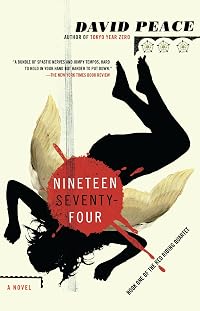
Jeanette Garland, missing Castleford, July 1969. Susan Ridyard, missing Rochdale, March 1972. Claire Kemplay, missing Morley, since yesterday. Christmas bombs and Lord Lucan on the run, Leeds United and the Bay City Rollers, The Exorcist and It Ain't Half Hot Mum. It's winter, 1974, Yorkshire, and Eddie Dunford's got the job he wanted - crime correspondent for the Yorkshire Evening Post. He didn't know it was going to be a season in hell. A dead little girl with a swan's wings stitched into show more her back.In Nineteen Seventy Four, David Peace brings the passion and stylistic bravado of an Ellroy novel to this terrifyingly intense journey into a secret history of sexual obession and greed, and starts a highly acclaimed crime series that has redefined how the genre is approached. show lessTags
Recommendations








Member Reviews
What a disgusting, contemptible, morally repulsive book.
The main character is a garbage human being. He moons over pictures of perfect little school girls a bit too much. His opinions of grown women are disgusting and weak. He ditches his girlfriend when he impregnates her. She's forced to have an abortion without support from him. It's barely believable that he has any sort of relationship with any woman. He uses the word “fuck” until it becomes little more than an irritant rather than a word of emphasis. I found myself wishing for his demise, so he could just die already and be over with the thing.
Ed is an unreliable narrator in a profession that relies on reliability. Told from his POV, the narrative can go from snooze-worthy show more tedium to WTF! in less than a paragraph. This is a person who needs psychiatric meds. Now.
The horror of the book is that all the characters are drowning in shit and piss. They revel in the basest of needs and wants. They are corrupt and self-serving to the point of absurdity. And their helpless victims are butchered because of it.
Let's not say that it is a product of an era. Not on the day after the LISK was finally arrested. Because women and girls are still dying while law enforcement diddles with egos out, treat women with contempt, and upper-class people pearl-clutch about names without actually doing anything for women in danger. Nothing ever changes. Not really.
I did not love the experience of this book, but that doesn't mean that the book is bad.
However, it's an unpleasant book that I wouldn't recommend to anyone. show less
The main character is a garbage human being. He moons over pictures of perfect little school girls a bit too much. His opinions of grown women are disgusting and weak. He ditches his girlfriend when he impregnates her. She's forced to have an abortion without support from him. It's barely believable that he has any sort of relationship with any woman. He uses the word “fuck” until it becomes little more than an irritant rather than a word of emphasis. I found myself wishing for his demise, so he could just die already and be over with the thing.
Ed is an unreliable narrator in a profession that relies on reliability. Told from his POV, the narrative can go from snooze-worthy show more tedium to WTF! in less than a paragraph. This is a person who needs psychiatric meds. Now.
The horror of the book is that all the characters are drowning in shit and piss. They revel in the basest of needs and wants. They are corrupt and self-serving to the point of absurdity. And their helpless victims are butchered because of it.
Let's not say that it is a product of an era. Not on the day after the LISK was finally arrested. Because women and girls are still dying while law enforcement diddles with egos out, treat women with contempt, and upper-class people pearl-clutch about names without actually doing anything for women in danger. Nothing ever changes. Not really.
I did not love the experience of this book, but that doesn't mean that the book is bad.
However, it's an unpleasant book that I wouldn't recommend to anyone. show less
Quite the perfect Christmas read, Peace’s filthy goddamn Yorkshire horror story is fucking fantastic. It’s a real accomplishment when you can return from the adapted material, Channel 4’s excellent three-part series of TV films, to the source material and get a serious kick out of it without going ‘Oh I know where this is all going, so what’s the bloody point?’
Peace’s prose is crystal clear, grimy, yet absolutely ideal for the yarn he spins here - a journalistic style primed to adequately elucidate the plight of his protagonist. You crack open a page of Nineteen Seventeen Four and bile practically seeps out of the page, coagulated blood makes the book so sickly and sticky you can barely pry the thing open. It’s pitch show more perfect nausea, absolutely unrelenting. I mean this thing is pegged as Yorkshire noir, but calling it noir isn’t a sufficient enough term for the blackness found here.
Nineteen Seventeen Four swings like a pendulum between God and his angels and the abject horror of a dead young girl’s leering smile as it emerges from black and white school photos, and the momentum of this thematic swing, this contradiction between the graceful and omnibenevolent movement of a swan to the utterly pitch black corruption of all and sundry creates a giddy sickness and delirium within the (un)fortunate reader. Dreams bubble forth into the narrative, collapsing frameworks of reference, an endless vista of grey nothingness illuminating the entire tragedy.
Mark Fisher’s characterisation of the novels (I’m only at the first so fingers crossed Peace’s own writerly momentum carries through, both thematically and when it comes to being bloody interesting) as Manichaean/Gnostic is spot on. His chapter dedicated to it in Ghosts of my Life is certainly worth a flick through for those interested.
But yeah, fan-fucking-tastic. I devoured this sucker (like our good ol’ character BJ) and will quickly get through the rest. As I bothered doing a review I’ll give the same old music recs to play alongside, even though the book has a sickly discography of its own consisting of Elton John and Bryan Ferry and all that lot if you’re a die hard when it comes to getting the actual diegetic atmosphere.
- Penderecki, Sacred Choral Works
- Branca, World Turned Upside Down
- Branca, Symphony No.5
- Porter Ricks, Porter Ricks
- Akira Rabelais, Spellewauerynsherde show less
Peace’s prose is crystal clear, grimy, yet absolutely ideal for the yarn he spins here - a journalistic style primed to adequately elucidate the plight of his protagonist. You crack open a page of Nineteen Seventeen Four and bile practically seeps out of the page, coagulated blood makes the book so sickly and sticky you can barely pry the thing open. It’s pitch show more perfect nausea, absolutely unrelenting. I mean this thing is pegged as Yorkshire noir, but calling it noir isn’t a sufficient enough term for the blackness found here.
Nineteen Seventeen Four swings like a pendulum between God and his angels and the abject horror of a dead young girl’s leering smile as it emerges from black and white school photos, and the momentum of this thematic swing, this contradiction between the graceful and omnibenevolent movement of a swan to the utterly pitch black corruption of all and sundry creates a giddy sickness and delirium within the (un)fortunate reader. Dreams bubble forth into the narrative, collapsing frameworks of reference, an endless vista of grey nothingness illuminating the entire tragedy.
Mark Fisher’s characterisation of the novels (I’m only at the first so fingers crossed Peace’s own writerly momentum carries through, both thematically and when it comes to being bloody interesting) as Manichaean/Gnostic is spot on. His chapter dedicated to it in Ghosts of my Life is certainly worth a flick through for those interested.
But yeah, fan-fucking-tastic. I devoured this sucker (like our good ol’ character BJ) and will quickly get through the rest. As I bothered doing a review I’ll give the same old music recs to play alongside, even though the book has a sickly discography of its own consisting of Elton John and Bryan Ferry and all that lot if you’re a die hard when it comes to getting the actual diegetic atmosphere.
- Penderecki, Sacred Choral Works
- Branca, World Turned Upside Down
- Branca, Symphony No.5
- Porter Ricks, Porter Ricks
- Akira Rabelais, Spellewauerynsherde show less
The first novel in David Peace's Red Riding Quartet is set in the Northern mining towns of Yorkshire and is relentlessly Noir. There isn't a bright moment, or even a pause for breath in the book. Edward Dunford is a young journalist who, while investigating the brutal torture and murder of a young girl, is drawn into a web of police corruption and brutality. Nobody's hands are clean. I like my crime novels dark and gritty, but this reached the outer edge of my tolerance, less for the violence, which was extensive, than for the bleak, hopeless picture of life in Northern Britain. So much for James Herriott's charming Dales.
Fast paced and not for the faint hearted, Nineteen Seventy-Four is a bleak neo noir that pulls no punches. It takes pride in its own grit, horror, and cruelty which both strengthens and weakens its story.
While there is something admirable about Peace's confidence and his ability to tear visceral reactions from his readers, Nineteen Seventy-Four veers close toward reading like misery porn, and is often grim to the point of absurdity. This would be more palatable if the narrator and main character, Eddie Dunford, was more likeable. Instead, it seems that Peace has gone out of his way to make Eddie as difficult to sympathize with as possible. By the end of the book, I hated him; a disappointment considering I loved Eddie in the film show more adaptation.
Many other characters suffer as well, especially the women who are sympathetic but feel more like props rather than people. This is extremely evident in Eddie's romantic relationships, all of which come across wooden, forced, and lack any sort of chemistry. I did, however, enjoy every scene involving Barry Gannon or BJ, and I think they are two of the most interesting and likeable, to the point that I often caught myself wishing they were the main character instead. It's unfortunate that they had so few scenes.
But despite the character shortcomings, Nineteen Seventy-Four does succeed as a mystery. Despite having a decent idea about where the story would head after having seen the films, the book still did an amazing job keeping me guessing and in full suspense. It's exciting to watch the clues slide into place and to see how all the intricate pieces of the mystery come together to paint a depraved image of murder, greed, and corruption. The repeated symbolism in color and animals as similes is fascinating too, and an interesting way of almost subliminally providing the reader more clues, or to foreshadow future events. I have yet to read the remaining books in the series, but if Peace can tie all of these characters and events together by the final book, I will be very impressed.
Nineteen Seventy-Four is a good, hard-hitting, exciting novel if you're looking for a dark murder mystery. It's a feast of intrigue and shock, no doubt, written in an interesting stream of consciousness style. However I have to give it three stars rather than four purely for how much I ended up hating Eddie. I did not expect nor want him to be an angel, but if I can't feel with the main character, what's the point? show less
While there is something admirable about Peace's confidence and his ability to tear visceral reactions from his readers, Nineteen Seventy-Four veers close toward reading like misery porn, and is often grim to the point of absurdity. This would be more palatable if the narrator and main character, Eddie Dunford, was more likeable. Instead, it seems that Peace has gone out of his way to make Eddie as difficult to sympathize with as possible. By the end of the book, I hated him; a disappointment considering I loved Eddie in the film show more adaptation.
Many other characters suffer as well, especially the women who are sympathetic but feel more like props rather than people. This is extremely evident in Eddie's romantic relationships, all of which come across wooden, forced, and lack any sort of chemistry. I did, however, enjoy every scene involving Barry Gannon or BJ, and I think they are two of the most interesting and likeable, to the point that I often caught myself wishing they were the main character instead. It's unfortunate that they had so few scenes.
But despite the character shortcomings, Nineteen Seventy-Four does succeed as a mystery. Despite having a decent idea about where the story would head after having seen the films, the book still did an amazing job keeping me guessing and in full suspense. It's exciting to watch the clues slide into place and to see how all the intricate pieces of the mystery come together to paint a depraved image of murder, greed, and corruption. The repeated symbolism in color and animals as similes is fascinating too, and an interesting way of almost subliminally providing the reader more clues, or to foreshadow future events. I have yet to read the remaining books in the series, but if Peace can tie all of these characters and events together by the final book, I will be very impressed.
Nineteen Seventy-Four is a good, hard-hitting, exciting novel if you're looking for a dark murder mystery. It's a feast of intrigue and shock, no doubt, written in an interesting stream of consciousness style. However I have to give it three stars rather than four purely for how much I ended up hating Eddie. I did not expect nor want him to be an angel, but if I can't feel with the main character, what's the point? show less
'Nineteen Seventy Four' was much praised when it appeared two decades ago but I suspect that an element of this may have been London-based literary critics wanting to have their instinctive prejudices about life up north confirmed. Peace's novel certainly plays well to that crowd.
The book is undoubtedly (mostly) well written with a staccato style well tuned to 'noir' and an ability to concentrate on action without losing atmosphere. Occasionally, the language goes hysterical and 'poetic' but not so much as to spoil a book which is an above average entertainment.
Peace also manages to contain his desire to set the scene with contemporary references to the Yorkshire of Christmas 1974 after going a little over the top in the first pages. show more So, why is it not quite as great as critics in 2000 liked us to believe that it was (though it is good)?
We can accept the sustained violence, grim and extreme though it is, because nobody said 'noir' should not be bloody and brutal. The violence may tip over into grand guignol towards the end but we can accept that as a concession to the market. It is what fearful middle class punters want.
The problem is the extremity and the hysteria is just too widespread. We all know that Yorkshire Police in the 1970s were often more demons than angels but the unrelenting nature of their evil and local corruption seems more suited to the Bosnian War than British reality.
The 'hero' (not exactly an angel himself), a Northern crime correspondent, is undoubtedly a hysteric. It is very hard to believe that his sexual encounters have much to do with reality. It has to be said though that the news room atmosphere 'up north' feels authentic.
The denouement (which I will not reveal for spoilers) eventually manages to ruin a carefully structured 'noir' ambience to give us the mere shocks and thrills of a aspirant bestseller. The lack of realism in the realism of British 'noir' is much as we have already critiqued in Lewis' 'GBH'.
In other words, Peace has not captured the subtlety in the fantasy underlying classic American noir which emphasised relationships rather than betrayal by numbers and gore. Characterisation is sometimes good here but often stereotypical.
Noir and crime are very different. this book strikes me as straddling the divide and losing something in the process. The protagonist has all the marks of a noir hero, if flawed, but the plot hinges on a serial murder plot, not really the territory of 'noir'.
One suspects that the book arrived at just the right time to feed southern fantasies about the barbarism presumed to be inherent up north and which would contribute to a form of imperial disdain that would led to the shocks of 2016 and 2019.
Such readers also wanted gore and extremity rather than subtlety. That is what they got. Pandering to two fears - of the barbarism lurking within the system that upholds property and of psychopaths preying on us - means that both collapse into the 'cheap thrill' at the end of the day.
If only the book had showed some restraint, it would be on the way to being a classic because there is no doubt that Peace had mastered British 'noir' as a form of language if not quite as plot. From that perspective, the book is a pleasure to read, evocative of place more than of time. show less
The book is undoubtedly (mostly) well written with a staccato style well tuned to 'noir' and an ability to concentrate on action without losing atmosphere. Occasionally, the language goes hysterical and 'poetic' but not so much as to spoil a book which is an above average entertainment.
Peace also manages to contain his desire to set the scene with contemporary references to the Yorkshire of Christmas 1974 after going a little over the top in the first pages. show more So, why is it not quite as great as critics in 2000 liked us to believe that it was (though it is good)?
We can accept the sustained violence, grim and extreme though it is, because nobody said 'noir' should not be bloody and brutal. The violence may tip over into grand guignol towards the end but we can accept that as a concession to the market. It is what fearful middle class punters want.
The problem is the extremity and the hysteria is just too widespread. We all know that Yorkshire Police in the 1970s were often more demons than angels but the unrelenting nature of their evil and local corruption seems more suited to the Bosnian War than British reality.
The 'hero' (not exactly an angel himself), a Northern crime correspondent, is undoubtedly a hysteric. It is very hard to believe that his sexual encounters have much to do with reality. It has to be said though that the news room atmosphere 'up north' feels authentic.
The denouement (which I will not reveal for spoilers) eventually manages to ruin a carefully structured 'noir' ambience to give us the mere shocks and thrills of a aspirant bestseller. The lack of realism in the realism of British 'noir' is much as we have already critiqued in Lewis' 'GBH'.
In other words, Peace has not captured the subtlety in the fantasy underlying classic American noir which emphasised relationships rather than betrayal by numbers and gore. Characterisation is sometimes good here but often stereotypical.
Noir and crime are very different. this book strikes me as straddling the divide and losing something in the process. The protagonist has all the marks of a noir hero, if flawed, but the plot hinges on a serial murder plot, not really the territory of 'noir'.
One suspects that the book arrived at just the right time to feed southern fantasies about the barbarism presumed to be inherent up north and which would contribute to a form of imperial disdain that would led to the shocks of 2016 and 2019.
Such readers also wanted gore and extremity rather than subtlety. That is what they got. Pandering to two fears - of the barbarism lurking within the system that upholds property and of psychopaths preying on us - means that both collapse into the 'cheap thrill' at the end of the day.
If only the book had showed some restraint, it would be on the way to being a classic because there is no doubt that Peace had mastered British 'noir' as a form of language if not quite as plot. From that perspective, the book is a pleasure to read, evocative of place more than of time. show less
I had watched the TV adaptation of this book when it came out, and been rather impressed. The book also did not disappoint, the cloying oppressive atmosphere coming through despite the terseness of the sentences. The ordinariness and expectation of crime and violence the most horrifying thing. The past is another, grimier country, except of course, I was alive then.
A tale of evil people, and it is up to the reader to decide who is the worst, the serial killer, the corrupt police and businessmen, the self-protective journalist... a proper thinking book.
A tale of evil people, and it is up to the reader to decide who is the worst, the serial killer, the corrupt police and businessmen, the self-protective journalist... a proper thinking book.
Finishing this book, I was reminded of my thoughts as I left the theater following my first and only viewing of Darron Aronofsky's Requiem For A Dream: "That was an excellent film, and I never want to see it again."
1974 is an incredibly well-written book about entirely terrible people doing entirely terrible things. I felt like I needed to wash my hands after finishing it. Peace's fast and tight prose pounds away you as you're reading--the setting is bleak, the characters are drunk, corrupt, and filthy, and things end badly for just about everyone involved.
This book is not for everyone, and I would think twice before recommending to anyone. Nonetheless, it's quite good, especially if you're looking for something that took "gritty" and show more "noir" out back, knocked them around, kicked them in the teeth, then went and got drunk and vomited in a public restroom that hadn't been cleaned in weeks. show less
1974 is an incredibly well-written book about entirely terrible people doing entirely terrible things. I felt like I needed to wash my hands after finishing it. Peace's fast and tight prose pounds away you as you're reading--the setting is bleak, the characters are drunk, corrupt, and filthy, and things end badly for just about everyone involved.
This book is not for everyone, and I would think twice before recommending to anyone. Nonetheless, it's quite good, especially if you're looking for something that took "gritty" and show more "noir" out back, knocked them around, kicked them in the teeth, then went and got drunk and vomited in a public restroom that hadn't been cleaned in weeks. show less
Members
- Recently Added By
Lists

The Guardian's 1000 Novels Everyone Must Read
1,005 works; 552 members

1001 Books You Must Read Before You Die
1,448 works; 1,136 members

...read all, pay nowt (Books set in Yorkshire)
86 works; 13 members

100 Best Thrillers of All Time
100 works; 6 members
What A Year: Books titled with a particular year
147 works; 2 members
Author Information

19+ Works 5,478 Members
Some Editions
Awards and Honors
Series


Belongs to Publisher Series
Common Knowledge
- Canonical title
- Nineteen Seventy-Four
- Alternate titles
- 1974
- Original publication date
- 1999
- People/Characters
- Eddie Dunford; John Dawson
- Important places
- Yorkshire, England, UK
- Important events
- Yorkshire Ripper Murders (1975 | 1980)
- Related movies
- Red Riding: 1974 (2009 | IMDb)
- Epigraph
- 'The only thing new in this world is the history you don't know.'
--Harry S. Truman - Dedication
- For Izumi
In memory of Michael and Eiki
With thanks to my family and friends, home and away - First words
- 'All we ever get is Lord fucking Lucan and wingless bloody crows,' smiled Gilman, like this was the best day of our lives:
Friday 13th December 1974. - Last words
- (Click to show. Warning: May contain spoilers.)Ninety miles an hour.
- Blurbers
- Pelecanos, George; Rankin, Ian; Pelecanos, George P.; Simm, John
Classifications
Statistics
- Members
- 1,073
- Popularity
- 24,027
- Reviews
- 35
- Rating
- (3.60)
- Languages
- 9 — Dutch, English, French, German, Italian, Polish, Portuguese, Spanish, Swedish
- Media
- Paper, Audiobook, Ebook
- ISBNs
- 30
- ASINs
- 9