On This Page
Description
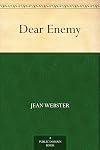
The sequel to Daddy-Long-Legs finds Judy Abbott's best friend Sallie McBride taking total control over the John Grier Home, the orphanage where Judy grew up. Chronicling her hilarious yet heart-felt day-to-day interactions with the permanent residents of the John Grier Home, Sallie spills her heart out in letter after letter to multiple recipients, including the doctor of the JGH-one Robin MacRae, whom she has deemed her enemy and refers to him as such in her letters. Sallie, while often out show more of her element, comes to love the children and works diligently to ensure that they are safe, well-behaved, and offered the best opportunities possible. Despite unavoidable misfortune, she perseveres and even finds love. show lessTags
Recommendations





















Member Reviews
This sequel to Daddy-Long-Legs centers around Judy's college friend Sallie McBride, a cheerful but frivolous young woman whose wealth has prevented her from ever having to work for a living. So when Judy and her husband encourage Sallie to take over the administration of the orphanage where Judy grew up, Sallie is flabbergasted. At first she outright refuses their proposal, but eventually they convince her to give it a try. Sallie is shocked to discover that she has an aptitude for the work; and what's more, she enjoys it! Slowly but surely, she begins to reform the orphanage and give a little joy to the orphans in her care. She also clashes immediately with the local doctor, Robin MacRae, whom she frequently addresses as "Dear Enemy." show more But the more they are forced to work together, the more they come to recognize each other's good qualities, until an unexpected tragedy finally forces Sallie to confront her true feelings.
Like Daddy-Long-Legs before it, this book is a charmingly old-fashioned epistolary novel that I absolutely adored! Sallie is an entertaining correspondent, and her letters (mostly to Judy) are light and chatty and lots of fun to read. I enjoyed the romance a lot as well -- maybe even more so than in DLL (and those who've read DLL will understand why!). The book is also interesting for its exploration of the role of women in the workforce. Sallie encounters a lot of skepticism from the local community about whether she's capable of being a good administrator, but she joyfully and determinedly proves them all wrong. The book is less progressive in its depiction of mental illness: both Sallie and the doctor make a few comments about "feeble-mindedness" and how people with subnormal mental functioning shouldn't reproduce. But aside from that jarring reminder of the book's age (pub date 1915), I really loved this book and would definitely recommend it to fans of older fiction, although I do suggest reading Daddy-Long-Legs first! show less
Like Daddy-Long-Legs before it, this book is a charmingly old-fashioned epistolary novel that I absolutely adored! Sallie is an entertaining correspondent, and her letters (mostly to Judy) are light and chatty and lots of fun to read. I enjoyed the romance a lot as well -- maybe even more so than in DLL (and those who've read DLL will understand why!). The book is also interesting for its exploration of the role of women in the workforce. Sallie encounters a lot of skepticism from the local community about whether she's capable of being a good administrator, but she joyfully and determinedly proves them all wrong. The book is less progressive in its depiction of mental illness: both Sallie and the doctor make a few comments about "feeble-mindedness" and how people with subnormal mental functioning shouldn't reproduce. But aside from that jarring reminder of the book's age (pub date 1915), I really loved this book and would definitely recommend it to fans of older fiction, although I do suggest reading Daddy-Long-Legs first! show less
Dear Enemy is the follow up to the successful Daddy Long Legs. It follows the adventures of Judy Abbott's flighty socialite college friend, Sallie MacBride, as she works to renovate and reform the grim orphanage Judy had grown up in. Sallie doesn't look like the kind of person who would be able to be an orphanage superintendent. She is, by her own admission, silly and too much in love with having fun. But she's goaded into taking the job by the laughter of her boyfriend and now that she's installed in the superintendent's ghastly living quarters, she's going to give it her all to improve the lives of the 113 orphans in her care.
This is a childhood favorite of mine, that I reread every few years. Written as the collected letters and show more notes of Sallie as she gets settled and learns how very much needs to be done, it's amusing in the best possible way. What's interesting as an adult is the picture of how things like genetics were viewed a hundred years ago. There are references to the cutting edge work of that time, including the fantastic The Kallikak Family: A Study in the Heredity of Feeble-Mindedness, which is both laughable and frightening to modern eyes, but was seriously considered in the eugenics movement of that time. So that in between the silly capers and misadventures of Sallie and her orphans and the light romance between Sallie and the dour Scottish doctor is a heap of information on how people back then thought orphanages ought to be run and the role of a child's background in his or her future chances. show less
This is a childhood favorite of mine, that I reread every few years. Written as the collected letters and show more notes of Sallie as she gets settled and learns how very much needs to be done, it's amusing in the best possible way. What's interesting as an adult is the picture of how things like genetics were viewed a hundred years ago. There are references to the cutting edge work of that time, including the fantastic The Kallikak Family: A Study in the Heredity of Feeble-Mindedness, which is both laughable and frightening to modern eyes, but was seriously considered in the eugenics movement of that time. So that in between the silly capers and misadventures of Sallie and her orphans and the light romance between Sallie and the dour Scottish doctor is a heap of information on how people back then thought orphanages ought to be run and the role of a child's background in his or her future chances. show less
This is the lesser-known sequel to Daddy Long Legs. In this epistolary novel, Judy, a rich socialite with lively and original ideas takes over the orphanage that the Daddy Long Legs heroine grew up in. I was charmed to learn that the orphanage is in Dutchess County, where I live. The orphanage is cheerless and unhealthy when Judy arrives, but she manages to transform it into a place where the children can have nice clothes, affection, a gentle education, up-to-date (for the period) medical treatment, and the chance to play outdoors. It’s understood that Judy will just run the orphanage for a little while, and then marry her rich boyfriend and stop working forevermore, but later Judy is not so sure. Judy comes into conflict with the show more orphanage’s crabby Scottish doctor, the “Enemy” of the title. However after a while their animosity turns to friendship and then to...? But the doctor is guarding a sorrowful secret.
This part of the book mirrors Jean Webster’s real life. I don’t know much about her, but I did read her Wikipedia page from top to bottom. In addition to being a supporter of women’s suffrage and various reform movements and education for women, she had a boyfriend who couldn’t divorce his wife because she was mentally ill. (I hear this story over and over, and yet I never hear about the undivorcable mentally ill husband.) Webster’s boyfriend also had a “mentally unstable” child. And it sounds like the boyfriend was not the picture of mental health himself.
Anyway, the least appealing part of Dear Enemy is the lip service granted to the eugenics models of Galton and Goddard, with discussion of the feebleminded Jukes and Kallikaks. Judy eventually concludes that there’s nothing in this heredity business, but because it was the “scientific” idea of the age, Webster gave eugenics quite a bit of air time. It does seem that the whole question of inherited mental illness was one that she had a real personal interest in, and I think she was honestly trying to figure it out rather than just being sensationalistic.
This is one of the books of 1915 that’s still read today, as a fluffy fun book for young people, not as a towering literary classic assigned in school. I think the reason for its endurance is that the main character is spunky and is more like a contemporary woman in terms of her attitude toward education, career, and love. show less
This part of the book mirrors Jean Webster’s real life. I don’t know much about her, but I did read her Wikipedia page from top to bottom. In addition to being a supporter of women’s suffrage and various reform movements and education for women, she had a boyfriend who couldn’t divorce his wife because she was mentally ill. (I hear this story over and over, and yet I never hear about the undivorcable mentally ill husband.) Webster’s boyfriend also had a “mentally unstable” child. And it sounds like the boyfriend was not the picture of mental health himself.
Anyway, the least appealing part of Dear Enemy is the lip service granted to the eugenics models of Galton and Goddard, with discussion of the feebleminded Jukes and Kallikaks. Judy eventually concludes that there’s nothing in this heredity business, but because it was the “scientific” idea of the age, Webster gave eugenics quite a bit of air time. It does seem that the whole question of inherited mental illness was one that she had a real personal interest in, and I think she was honestly trying to figure it out rather than just being sensationalistic.
This is one of the books of 1915 that’s still read today, as a fluffy fun book for young people, not as a towering literary classic assigned in school. I think the reason for its endurance is that the main character is spunky and is more like a contemporary woman in terms of her attitude toward education, career, and love. show less
After reading Daddy Long Legs sometime in the last couple years, I ordered this 1915 edition of Dear Enemy from eBay. I've just now gotten round to reading it.
If anything, this is a good "time capsule" story---one of those that wouldn't be nearly as popular or innocent as it likely was in its day. Several political and social ideologies are presented without any hint of a 21st century politically correct filter---even I, who usually roll my eyes at what some call "snowflakes", found a few things to be seriously offended by.
The main character is pretty harsh on racial and intellectual minorities; even going so far to insist society would be better off if these "feeble minded" ones were segregated into concentration camps. In context, show more this was her way of being sarcastically humorous---but it's a horrible suggestion and nothing any decent person today would find funny in the least.
The story was also an "interesting" look at eugenics from a perspective very different from my own. I've developed no sympathies for the philosophy, but I feel like I've made an excuse for their more "primitive" understanding. These are concessions I would have a very difficult time making for people today, and in the grand scheme of things, 1915 was not that long ago. I think I must just resign myself to the fact that this author had some really yucky views on the sanctity of life (a point I later confirmed when researching her biographical info.)
I did enjoy her humor though, for the most part, and epistolary novels like these always remind me of the "summer camp" books I used to read as a kid where the campers were always writing home (ex. Yours 'Til Niagara Falls, Abby).
New to me word: clishmaclaver. She uses it twice and I've never heard that before. It's a Scottish word for gossip or silly talk. show less
If anything, this is a good "time capsule" story---one of those that wouldn't be nearly as popular or innocent as it likely was in its day. Several political and social ideologies are presented without any hint of a 21st century politically correct filter---even I, who usually roll my eyes at what some call "snowflakes", found a few things to be seriously offended by.
The main character is pretty harsh on racial and intellectual minorities; even going so far to insist society would be better off if these "feeble minded" ones were segregated into concentration camps. In context, show more this was her way of being sarcastically humorous---but it's a horrible suggestion and nothing any decent person today would find funny in the least.
The story was also an "interesting" look at eugenics from a perspective very different from my own. I've developed no sympathies for the philosophy, but I feel like I've made an excuse for their more "primitive" understanding. These are concessions I would have a very difficult time making for people today, and in the grand scheme of things, 1915 was not that long ago. I think I must just resign myself to the fact that this author had some really yucky views on the sanctity of life (a point I later confirmed when researching her biographical info.)
I did enjoy her humor though, for the most part, and epistolary novels like these always remind me of the "summer camp" books I used to read as a kid where the campers were always writing home (ex. Yours 'Til Niagara Falls, Abby).
New to me word: clishmaclaver. She uses it twice and I've never heard that before. It's a Scottish word for gossip or silly talk. show less
I knew beforehand about the eugenics that pervade the plot of this book. For whatever reason, it bothered me enough that I couldn't finish this, because it seemed to be entwined with the romance to the point where I just couldn't ignore it. I may give it another shot at some point, but I somehow doubt it. I do get that these views were seen differently one-hundred years ago but there's only so much I can take sometimes.
I love this book so much. I found it a longer and much more satisfying read than Daddy Long-legs. While still done in the epistolary style, Jean Webster manages to convey much more of the romantic hero's personality, leading to a more satisfying romance.
Because of its time period, there are some dated and rather disgusting references to mental illness and eugenics. This may ruin some people's enjoyment.
Because of its time period, there are some dated and rather disgusting references to mental illness and eugenics. This may ruin some people's enjoyment.
I didn't think it was nearly as good as Daddy-Long-Legs and, even though I understand that the book was reflective of attitudes of the time I was disappointed in Sallie's blatent disregard for "feeble-minded" children and the tacit approval of eugenics theory.
Members
- Recently Added By
Lists

Favorite Childhood Books
1,646 works; 518 members

Best Books Set in Boarding Schools
160 works; 57 members

Books about characters you'd like to know
34 works; 15 members

First published in 1915
87 works; 11 members

Comfort Reads
221 works; 41 members

Female Protagonist
1,056 works; 57 members

Children's Literature 1900 - 1950 in order
413 works; 8 members

Publisher's Weekly Bestsellers Part I - 1895-1939
399 works; 8 members

Favorite Epistolary Fiction
143 works; 144 members

discontinued
10 works; 4 members

Books Read in 2016
4,666 works; 199 members

Books Read in 2018
4,360 works; 110 members
Female Author
1,235 works; 67 members

KayStJ's to-read list
1,616 works; 11 members
Books I've Read More Than Once
602 works; 49 members

Epistolary Books
105 works; 27 members

Espistolary
20 works; 1 member
Author Information

16+ Works 5,190 Members
Some Editions
Awards and Honors
Distinctions
Series

Belongs to Publisher Series
Work Relationships
Is contained in
Common Knowledge
- Canonical title
- Dear Enemy
- Original title
- Dear Enemy
- Original publication date
- 1915
- People/Characters
- Sally McBride [Daddy-Long-Legs]; Jerusha "Judy" Abbott (Judy Pendleton); Jervis Pendleton; Dr. Robin MacRae; Betsy Kindred; Sadie Kate Kilcoyne (show all 7); Punch [Daddy-Long-Legs]
- Important places
- John Grier Orphan Asylum, Dutchess County, New York, USA
- Related movies
- Dear Enemy (1981 | IMDb)
- First words
- STONE GATE, WORCESTER, MASSACHUSETTS,
December 27.
Dear Judy:
Your letter is here. - Quotations
- Aren’t men funny? When they want to pay you the greatest compliment in their power, they naïvely tell you that you have a masculine mind.
I don’t believe any happily married person could ever realize how wonderfully, beautifully alone I felt. I wanted to throw my arms out and embrace the whole waiting world that belonged suddenly to me. - Last words
- (Click to show. Warning: May contain spoilers.)Good-by, Robin lad, I lo'e you weel. -- SALLIE.
Classifications
Statistics
- Members
- 721
- Popularity
- 39,308
- Reviews
- 30
- Rating
- (3.78)
- Languages
- 11 — Dutch, English, Finnish, French, German, Hungarian, Indonesian, Italian, Portuguese, Spanish, Swedish
- Media
- Paper, Audiobook, Ebook
- ISBNs
- 79
- ASINs
- 27